
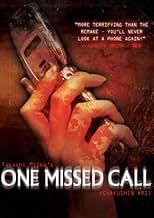
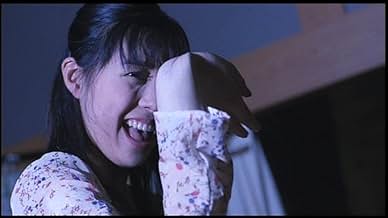
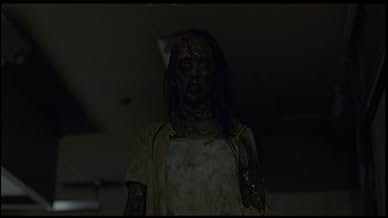
Yumi tries to assuage the fears of a friend, Yoko, who has received a disturbing voice mail from herself. In the message, Yoko screams while chatting with Yumi. Three days later, the exact c... Read allYumi tries to assuage the fears of a friend, Yoko, who has received a disturbing voice mail from herself. In the message, Yoko screams while chatting with Yumi. Three days later, the exact call plays out, and Yoko dies.Yumi tries to assuage the fears of a friend, Yoko, who has received a disturbing voice mail from herself. In the message, Yoko screams while chatting with Yumi. Three days later, the exact call plays out, and Yoko dies.
- Director
- Writers
- Stars



- Director
- Writers
- All cast & crew
- Production, box office & more at IMDbPro
6.220.5K
1
2
3
4
5
6
7
8
9
10
Featured reviews
Good Japanese horror movie
A good Japanese-surprise.
Was looking for something different to watch in Americanized Netherlands, and found this movie. If you have never seen any of the recent Japanese fear movies, then this one is a good compilation of the others (Ring, Dark Water, Kairo...) : strange camera angles, blurry pictures, good sound effects and music and a nice-and-somewhat logical script. I was worried about the Miike's touch, but in fact it was a surprising plus for this kind of movie, where ghosts and gore combine well. Takashi shows he knows a lot about filming methods, and also gives us an overview of the Japanese craziness about mobile phones : I can assure you that you will never look again the same way at your phone after seeing such a movie.
For the ones who have seen other Japanese horror movies, I would advise it as well, as you enjoy seeing again the same old tricks in a different context...and it works again !
So if you have the chance to have this one in a nearby theater...just try it !!
Was looking for something different to watch in Americanized Netherlands, and found this movie. If you have never seen any of the recent Japanese fear movies, then this one is a good compilation of the others (Ring, Dark Water, Kairo...) : strange camera angles, blurry pictures, good sound effects and music and a nice-and-somewhat logical script. I was worried about the Miike's touch, but in fact it was a surprising plus for this kind of movie, where ghosts and gore combine well. Takashi shows he knows a lot about filming methods, and also gives us an overview of the Japanese craziness about mobile phones : I can assure you that you will never look again the same way at your phone after seeing such a movie.
For the ones who have seen other Japanese horror movies, I would advise it as well, as you enjoy seeing again the same old tricks in a different context...and it works again !
So if you have the chance to have this one in a nearby theater...just try it !!
A fascinating hall of mirrors like abstraction of loss, abuse and alienated youth
This just might be the most interesting psychological drama that I've seen since Miike's own masterpiece Audition (1999), and one that it seems has sadly been misinterpreted by many critics and viewers as being a work of simple J-Horror by numbers. Though it has elements of this, the characteristics of J-Horror, which are very much rooted in standard social and spiritual taboos that many Japanese people take incredibly seriously, are used as window dressing here, intended to distract the audience from the more important and subtle ideas at work behind the surface of the narrative.
It certainly isn't a pastiche or a spoof as some viewers have indicated, though you could argue that it works on a certain satirical level, with the odd hint of benign humour that we've come to expect from Miike woven throughout. However, judging from much of the stylistic tone of the film, with its deeper allusions to child abuse and the murky and alienated tone that the director attaches to it, I honestly can't imagine that this is meant to be laughed at. Those who claim that the film is a comedy or a spoof are more likely to be Miike fans that are unfamiliar with the broader aspects of his work and the way in which he puts his films together; instead judging his films simply on the shock-value and tongue-in-cheek triviality of projects like Ichi the Killer (2002) and Dead or Alive (1999). Yes, he does accept any film that is offered to him, and more often than not chooses work that he feels he can do something interesting with; experimenting with the form and content and occasionally adding his own touches that are often subversive and somewhat attention seeking, but he always has in mind an approach that best suits the material.
He doesn't condescend to his work; there's no cynicism here. As ever, Miike is fulfilling the wishes of his producer whilst simultaneously bringing something else to the film that may have been missed by a lesser filmmaker, more interested in the superficial quality of the story. In this case, a sly comment on the media and how it manipulates tragedy for profit; turning horror and pain into spectacle. It also continues the theme of lost youth; something quite prevalent in Japanese cinema, with films like Battle Royale (2000), Visitor Q (2001), Pulse (2001) and All About Lily Chou-Chou (2002) documenting the recent struggles in both social environments and education, with the idea of a generation of Japanese youth overwhelmed by expectations of family and society and cast adrift in such a way as to leave them ultimately more venerable to a greater evil (be it drugs, gang violence, suicide or crime). It's all done metaphorically of course - with the J-horror elements used to mask these ideas - though certainly, in many of the scenes, we see characters, kids even, isolated and with no one to turn to.
Think about the presentation of both the film and the narrative; the absence of responsible adults creating a ghost world that these kids drift in and out of, turning only to each other for solace. The creation of a nocturnal world where school children hang out on railway bridges in the early hours of the morning, watching scenes of abject horror in a way that suggests tragic familiarity. The way that the background characters - the everyday people on the street - huddle under umbrellas watching a televised exorcism in the centre of Shinjuku completely cut off and detached from everything that is happening, becoming an almost representation of the audience even; eating up the pain and suffering as dismissible entertainment and completely missing the personal horror and exploitation of the abuse itself. Likewise, look at the scenes shot during the day. The streets are mostly empty, save for the presence of the adult media, the police (who have a complicated role within the film) and the students who are at the centre of the whole thing.
Those claiming that this is a comedy seem uneducated when it comes to Miike and his work; looking for the vapid cartoon character and his torrents of gore and depraved sex, and not the finely nuanced filmmaker who gave us excellent, multi-layered works like Shinjuku Triad Society (1995), Rainy Dog (1997), The Bird People in China (1998), Audition (1999), Dead or Alive: Birds (2000) and Gozu (2003). As a horror film, this is effective. The scenes in the abandoned hospital, although clichéd, work incredibly well at ramping the tension. However, there's more to the film once we dig beneath the surface. The final act of the film takes place on at least three different levels; taking in the real, the imagined and the abstracted memory of both. The way Miike brings the various elements together - using stylised production design and skewed perspectives - creates a hall of mirrors like sense of abstraction familiar from the final act of Audition. Think about it. Is Gozu simply an absurd spoof on the latent homosexuality of the Yakuza sub-genre, or is there a more interest sub-textual argument about identity and gender being woven within? One Missed Call works on a similar level.
Those who make the effort to watch Miike's work will know that there is always much more to his films than it initially seems, though you really have to work at it. To suggest that this is a spoof because you fail to appreciate the subtle, sub-textual storytelling and ask simply for mere cartoon-like abstraction is a discredit to a great filmmaker and those of us familiar with Miike's work beyond that of Ichi the Killer. With One Missed Call, Miike gives us a multi-layered film; shocking and satirical in equal measures and tied to a truly tragic depiction of loss, abuse and alienated youth.
It certainly isn't a pastiche or a spoof as some viewers have indicated, though you could argue that it works on a certain satirical level, with the odd hint of benign humour that we've come to expect from Miike woven throughout. However, judging from much of the stylistic tone of the film, with its deeper allusions to child abuse and the murky and alienated tone that the director attaches to it, I honestly can't imagine that this is meant to be laughed at. Those who claim that the film is a comedy or a spoof are more likely to be Miike fans that are unfamiliar with the broader aspects of his work and the way in which he puts his films together; instead judging his films simply on the shock-value and tongue-in-cheek triviality of projects like Ichi the Killer (2002) and Dead or Alive (1999). Yes, he does accept any film that is offered to him, and more often than not chooses work that he feels he can do something interesting with; experimenting with the form and content and occasionally adding his own touches that are often subversive and somewhat attention seeking, but he always has in mind an approach that best suits the material.
He doesn't condescend to his work; there's no cynicism here. As ever, Miike is fulfilling the wishes of his producer whilst simultaneously bringing something else to the film that may have been missed by a lesser filmmaker, more interested in the superficial quality of the story. In this case, a sly comment on the media and how it manipulates tragedy for profit; turning horror and pain into spectacle. It also continues the theme of lost youth; something quite prevalent in Japanese cinema, with films like Battle Royale (2000), Visitor Q (2001), Pulse (2001) and All About Lily Chou-Chou (2002) documenting the recent struggles in both social environments and education, with the idea of a generation of Japanese youth overwhelmed by expectations of family and society and cast adrift in such a way as to leave them ultimately more venerable to a greater evil (be it drugs, gang violence, suicide or crime). It's all done metaphorically of course - with the J-horror elements used to mask these ideas - though certainly, in many of the scenes, we see characters, kids even, isolated and with no one to turn to.
Think about the presentation of both the film and the narrative; the absence of responsible adults creating a ghost world that these kids drift in and out of, turning only to each other for solace. The creation of a nocturnal world where school children hang out on railway bridges in the early hours of the morning, watching scenes of abject horror in a way that suggests tragic familiarity. The way that the background characters - the everyday people on the street - huddle under umbrellas watching a televised exorcism in the centre of Shinjuku completely cut off and detached from everything that is happening, becoming an almost representation of the audience even; eating up the pain and suffering as dismissible entertainment and completely missing the personal horror and exploitation of the abuse itself. Likewise, look at the scenes shot during the day. The streets are mostly empty, save for the presence of the adult media, the police (who have a complicated role within the film) and the students who are at the centre of the whole thing.
Those claiming that this is a comedy seem uneducated when it comes to Miike and his work; looking for the vapid cartoon character and his torrents of gore and depraved sex, and not the finely nuanced filmmaker who gave us excellent, multi-layered works like Shinjuku Triad Society (1995), Rainy Dog (1997), The Bird People in China (1998), Audition (1999), Dead or Alive: Birds (2000) and Gozu (2003). As a horror film, this is effective. The scenes in the abandoned hospital, although clichéd, work incredibly well at ramping the tension. However, there's more to the film once we dig beneath the surface. The final act of the film takes place on at least three different levels; taking in the real, the imagined and the abstracted memory of both. The way Miike brings the various elements together - using stylised production design and skewed perspectives - creates a hall of mirrors like sense of abstraction familiar from the final act of Audition. Think about it. Is Gozu simply an absurd spoof on the latent homosexuality of the Yakuza sub-genre, or is there a more interest sub-textual argument about identity and gender being woven within? One Missed Call works on a similar level.
Those who make the effort to watch Miike's work will know that there is always much more to his films than it initially seems, though you really have to work at it. To suggest that this is a spoof because you fail to appreciate the subtle, sub-textual storytelling and ask simply for mere cartoon-like abstraction is a discredit to a great filmmaker and those of us familiar with Miike's work beyond that of Ichi the Killer. With One Missed Call, Miike gives us a multi-layered film; shocking and satirical in equal measures and tied to a truly tragic depiction of loss, abuse and alienated youth.
A stylish addition to Miike's portfolio
After "Audition" and "Ichi The Killer", I had great expectations for this movie. What it delivers is essentially the "greatest hits" of Asian horror. There's more than a passing resemblance to "The Ring", with bits of "Ju-On" and other films thrown in for good measure.
The film revolves around mobile 'phones. A girl has a message left on her mobile 'phone answering service - only it's been left by herself and in the future! To make matters worse, it ends with a blood curdling scream! Well, it soon turns out that the message is the girl's final words on this mortal coil.
The girl is not alone. It's only a matter of time before the body count starts rising and a race against time begins to solve the mystery of the bizarre calls.
Despite being more than a shade Ringu-clone-esquire, I heartily enjoyed this film. It has some great set-pieces (including a memorable death), some spooky moments, a few "jump" sequences, etc. What the film didn't deliver, though, was any real fear. It was a case of "seen it all before" (a criticism that some levelled at "Ju-On").
The plot unravels in a logical manner and there's a decent pay off. It may not be a future classic, but this is a very well made example of Asian horror cinema.
My rating: 8 out of 10 for a stylish addition to Miike's portfolio
The film revolves around mobile 'phones. A girl has a message left on her mobile 'phone answering service - only it's been left by herself and in the future! To make matters worse, it ends with a blood curdling scream! Well, it soon turns out that the message is the girl's final words on this mortal coil.
The girl is not alone. It's only a matter of time before the body count starts rising and a race against time begins to solve the mystery of the bizarre calls.
Despite being more than a shade Ringu-clone-esquire, I heartily enjoyed this film. It has some great set-pieces (including a memorable death), some spooky moments, a few "jump" sequences, etc. What the film didn't deliver, though, was any real fear. It was a case of "seen it all before" (a criticism that some levelled at "Ju-On").
The plot unravels in a logical manner and there's a decent pay off. It may not be a future classic, but this is a very well made example of Asian horror cinema.
My rating: 8 out of 10 for a stylish addition to Miike's portfolio
The Call from Death
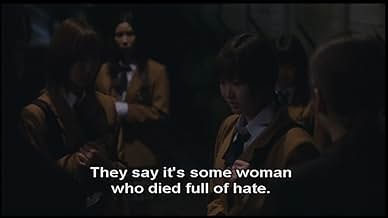
While in a bar with her friends, the teenager Yoko Okazaki (Anna Nagata) receives a call in her cellular with a voice mail from the future telling the date and time when she would die. On the next day, Yumi overhears a group of students talking about the urban legend that people connected in the address book of cellular are mysteriously receiving phone calls with date and time of their death in the near future. In the precise informed hour, Yoko is attacked by a supernatural force in a train station while talking to her friend Yumi Nakamura (Kou Shibasaki) by phone and dies with severed arm and leg. Yumi seeks out Kioto's boyfriend Kenji Kawai (Atsushi Ida), who also received a call, and witnesses his death in an elevator shaft. When her roommate Natsumi Konishi (Kazue Fukiishi) receives a call, Yoko befriends Hiroshi Yamashita (Shin'ichi Tsutsumi), who tells her that his sister Ritsuko (Azusa) that worked in the Child Guidance Center with abused children was the first victim of the phone call. While in the hospital, Yumi hears an asthma pump and recalls that she heard the same noise when Kenji died. They decide to investigate victims of asthma in the hospital and find the name of Marie Mizunuma and her daughters Mimiko and Nanako. They search the family together trying to save Natsumi from her fate.
"Chakushin Ari" is scary like most of the Asian horror movies, and has a promising beginning supported by a great acting and a good plot. However, the last quarter of the movie is confused, not clear, needing interpretation; therefore, the screenplay writer Minako Daira or the cult director Takashi Miike or both failed since they were not able to transmit a clear conclusion of the story to the audience. I glanced in IMDb the most different interpretations for the end of the story to ratify my opinion. My vote is six.
Title (Brazil): "Ligação Perdida" ("Missed Call")
"Chakushin Ari" is scary like most of the Asian horror movies, and has a promising beginning supported by a great acting and a good plot. However, the last quarter of the movie is confused, not clear, needing interpretation; therefore, the screenplay writer Minako Daira or the cult director Takashi Miike or both failed since they were not able to transmit a clear conclusion of the story to the audience. I glanced in IMDb the most different interpretations for the end of the story to ratify my opinion. My vote is six.
Title (Brazil): "Ligação Perdida" ("Missed Call")
Miike Fans, Be Honest
Even fans of Takashi Miike (I'm one) should be honest. He's made some bravura masterpieces like Audition and 13 Assassins but he's also churned out a lot of overlong, incoherent stinkers, of which this is one.
The premise - that people receive cell phone messages from their future selves recorded just before the moment of their deaths - had a lot of potential but Miike spaffs all that up the wall by drowning the film in slow, boring exposition and skimping on the many inventive and creepy deaths this film should have contained.
The biggest problem here is that the backstory behind why all this is happening is uninteresting and revealed in tedious chunks throughout. Instead of making the main events in the present scarier they actually make them seem more mundane. There's also a lack of clarity around how and why these events can be stopped.
Another thing that bugged me was characters behaving irrationally. The victims heard their own words recorded at the moments of their future deaths but didn't appear to make any concerted effort not to robotically repeat those same words when the time came. You'd think that it might occur to them that to be in a hotel room or a cop shop at the predicted instant of their death while definitely not uttering the words on the premonitory recording might keep them safe. But no. No one tries this and they all shamble into the jaws of doom like the pathetic, suicidal sheep they are.
This could have been a great film but it was an opportunity badly missed. Still there's plenty of other Miike to check out. It's not like the man hasn't given us anything else to choose from.
The premise - that people receive cell phone messages from their future selves recorded just before the moment of their deaths - had a lot of potential but Miike spaffs all that up the wall by drowning the film in slow, boring exposition and skimping on the many inventive and creepy deaths this film should have contained.
The biggest problem here is that the backstory behind why all this is happening is uninteresting and revealed in tedious chunks throughout. Instead of making the main events in the present scarier they actually make them seem more mundane. There's also a lack of clarity around how and why these events can be stopped.
Another thing that bugged me was characters behaving irrationally. The victims heard their own words recorded at the moments of their future deaths but didn't appear to make any concerted effort not to robotically repeat those same words when the time came. You'd think that it might occur to them that to be in a hotel room or a cop shop at the predicted instant of their death while definitely not uttering the words on the premonitory recording might keep them safe. But no. No one tries this and they all shamble into the jaws of doom like the pathetic, suicidal sheep they are.
This could have been a great film but it was an opportunity badly missed. Still there's plenty of other Miike to check out. It's not like the man hasn't given us anything else to choose from.


Did you know
- TriviaDuring the opening credit sequence, one of the cell phone ring-tones is the theme song from an earlier Takashi Miike film, Gozu (2003).
- GoofsYumi arrives at the abandoned hospital at 6:45 p.m. on April 24, and it's nighttime. On that date, sunset in Japan ranges from around 6:20 p.m. Japan Standard Time in the east, near Tokyo, to around 6:55 p.m. in the west, near Nagasaki. Depending on what part of Japan she is in, it should be daytime or twilight outside, not full dark.
- Quotes
Yoko Okazaki: Oh no, it's raining.
- ConnectionsFeatured in Chakushin ari meikingu: Chakushin rireki (2003)
- SoundtracksIkutsuka no Sora
(Few Skies)
Vocal by Kô Shibasaki (as Kou Shibasaki)
Written by Yasushi Akimoto
Composed by Jin Nakamura
Arranged by Chokkaku
Universal J / Chimera Energy
- How long is One Missed Call?Powered by Alexa
Details
Box office
- Gross worldwide
- $17,605,379
- Runtime
- 1h 52m(112 min)
- Color
- Sound mix
- Aspect ratio
- 1.85 : 1
Contribute to this page
Suggest an edit or add missing content