IMDb RATING
7.0/10
6.5K
YOUR RATING


A musical of sorts set in Winnipeg during the Great Depression, where a beer baroness organizes a contest to find the saddest music in the world. Musicians from around the world descend on t... Read allA musical of sorts set in Winnipeg during the Great Depression, where a beer baroness organizes a contest to find the saddest music in the world. Musicians from around the world descend on the city to try and win the $25,000 prize.A musical of sorts set in Winnipeg during the Great Depression, where a beer baroness organizes a contest to find the saddest music in the world. Musicians from around the world descend on the city to try and win the $25,000 prize.
- Director
- Writers
- Stars
- Awards
- 6 wins & 7 nominations total


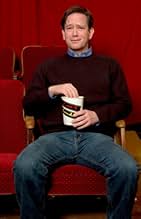
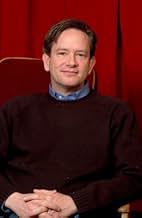



Nancy Jane Drake
- American Mother
- (as Nancy Drake)

- Director
- Writers
- All cast & crew
- Production, box office & more at IMDbPro
7.06.5K
1
2
3
4
5
6
7
8
9
10
Featured reviews
They shoot singers, don't they?
Much like "They Shoot Horses, Don't They?", this movie shows Depression-era people trying to make something of themselves by participating in a contest, even if they have to degrade themselves somewhat. In this case, beer baroness Lady Helen Port-Huntley (Isabella Rossellini) wants to find out who can play the saddest music possible - offering a $25,000 prize - so people from all over the world come to take part.
Sound like a strange idea? I guess that it is, but they do a good job with it. The surreal nature of everything here is accentuated by the camera-work (hand-held and often blurred). "The Saddest Music in the World" is part indictment of capitalism, part look into peoples' desperate lives, but all very perceptive. Another good point for Canadian cinema, and for Isabella Rossellini.
Sound like a strange idea? I guess that it is, but they do a good job with it. The surreal nature of everything here is accentuated by the camera-work (hand-held and often blurred). "The Saddest Music in the World" is part indictment of capitalism, part look into peoples' desperate lives, but all very perceptive. Another good point for Canadian cinema, and for Isabella Rossellini.
`The still, sad music of humanity.'
And I thought `Dogville' was stylized. Canadian writer/director Guy Maddin ("Dracula: Pages from a Virgin's Diary,' "Archangel') has created a film like no other this year except possibly `Triplet's of Belleville.' `The Saddest Music in the World' is a `musical' set in Winnipeg in 1933, where Lady Port-Huntly (Isabella Rossellini) is holding a contest to award $25,000 to the saddest music performer. In `Depression Era dollars,' no less.
Winnipeg has been declared by the London Times `the world capital of sorrow' for the fourth year in a row. What happens in the film can be categorized as surrealism of the sort that marries the Melies brothers in their `Trip-to-the-Moon' wackiest to `The Twilight Zone' in Rod Serling's most hilarious (and that's pretty unusual) moments. Shot in distressed mode with 8 mm blown up to be grainy and silent movieish, `Saddest' has blue-grays and silvers and occasional bursts of washed-out color that give it an otherworldly cast meant to satirize the old movies and create a new look built on nostalgia and freedom from convention that some call expressionism.
Some of the bizarre acts vying for the prize are Fyodor (David Fox), a veteran of World War I representing Canada, who plays a deathlike version of ''The Red Maple Leaves'' on an upright piano he has turned over, and Indian singers in Eskimo costumes, who dance to ''California Here I Come'' with sitars and banjos commemorating a 19th-century kayaking accident. All the time an iris lens blurs the edges of the film to recreate the ancient look of film found in a vault after 50 years.
That Lady Port-Huntly needs artificial legs is not as bizarre as the back story of how she came to need them, and that the new glass legs have local beer coursing through them is just another creative and absurdist touch. With a resemblance to the robot in `Metropolis,' she is an amalgam of strange and prophetic moments in film and culture. I know I'm not making much sense here-Trust me that this film is bizarre enough to satisfy the geekiest cultist in our audience. For the rest of us, just trying to appreciate all the signposts Maddin constructs to further his absurd and funny vision is exhausting. Wordsworth's thoughts apply because we at least hear `the still, sad music of humanity.'
Winnipeg has been declared by the London Times `the world capital of sorrow' for the fourth year in a row. What happens in the film can be categorized as surrealism of the sort that marries the Melies brothers in their `Trip-to-the-Moon' wackiest to `The Twilight Zone' in Rod Serling's most hilarious (and that's pretty unusual) moments. Shot in distressed mode with 8 mm blown up to be grainy and silent movieish, `Saddest' has blue-grays and silvers and occasional bursts of washed-out color that give it an otherworldly cast meant to satirize the old movies and create a new look built on nostalgia and freedom from convention that some call expressionism.
Some of the bizarre acts vying for the prize are Fyodor (David Fox), a veteran of World War I representing Canada, who plays a deathlike version of ''The Red Maple Leaves'' on an upright piano he has turned over, and Indian singers in Eskimo costumes, who dance to ''California Here I Come'' with sitars and banjos commemorating a 19th-century kayaking accident. All the time an iris lens blurs the edges of the film to recreate the ancient look of film found in a vault after 50 years.
That Lady Port-Huntly needs artificial legs is not as bizarre as the back story of how she came to need them, and that the new glass legs have local beer coursing through them is just another creative and absurdist touch. With a resemblance to the robot in `Metropolis,' she is an amalgam of strange and prophetic moments in film and culture. I know I'm not making much sense here-Trust me that this film is bizarre enough to satisfy the geekiest cultist in our audience. For the rest of us, just trying to appreciate all the signposts Maddin constructs to further his absurd and funny vision is exhausting. Wordsworth's thoughts apply because we at least hear `the still, sad music of humanity.'
10/10
What could only be titled as Cinema of the Ridiculous, Maddin's latest masterpiece, about a no-legged beer queen who hosts a Winnipeg-set competition to see which nation has the saddest music in the world, is filled to the gills with wacky ideas, but the reason it's a great film is because of the heartfelt feeling behind it. Maddin's genuine love for the silent cinema that he emulates (and attachment to the pathetic characters he creates) makes it possible for him to sustain a comic tone without it ever becoming mocking.
Maddin manages to balance the grotesque comic caricature of Mark McKinney as the shady mustached businessman who tries to win the competition, and Maria de Medeiros, who gets life advice from her tapeworm, with the pathetic goth character that's McKinney's brother, who's had to deal with the loss of a son, and the glamorous Isabella Rossellini, who's had to deal with the loss of her legs. (I wonder if the fact that Rossellini lost her legs in a car accident caused by her performing fellatio is a nod to the Myth of Murnau.) There's almost a subliminal melodrama taking place with the theme of loss and hilarious depression (during The Depression). It's an exciting movie visually, but unlike the best of the silents that Maddin loves, it's not poetic in that slow, beautiful way -- it's too fast-paced, kinetic, and rough to achieve any sort of traditional beauty -- but it is a feast. The few scenes of gaudy color -- reds, blues, and odd flesh tones -- are as grainy as the black and white. Maddin is truly one of the most imaginative of directors and he has a firm grasp of the medium. In fact, there is at least one scene of slow, beautiful poetry -- a purely silent moment, near the end, that comes alongside the bloody murder of Rossellini's screams. 10/10
Maddin manages to balance the grotesque comic caricature of Mark McKinney as the shady mustached businessman who tries to win the competition, and Maria de Medeiros, who gets life advice from her tapeworm, with the pathetic goth character that's McKinney's brother, who's had to deal with the loss of a son, and the glamorous Isabella Rossellini, who's had to deal with the loss of her legs. (I wonder if the fact that Rossellini lost her legs in a car accident caused by her performing fellatio is a nod to the Myth of Murnau.) There's almost a subliminal melodrama taking place with the theme of loss and hilarious depression (during The Depression). It's an exciting movie visually, but unlike the best of the silents that Maddin loves, it's not poetic in that slow, beautiful way -- it's too fast-paced, kinetic, and rough to achieve any sort of traditional beauty -- but it is a feast. The few scenes of gaudy color -- reds, blues, and odd flesh tones -- are as grainy as the black and white. Maddin is truly one of the most imaginative of directors and he has a firm grasp of the medium. In fact, there is at least one scene of slow, beautiful poetry -- a purely silent moment, near the end, that comes alongside the bloody murder of Rossellini's screams. 10/10
Remarkable filmmaking
Guy Maddin just gets better and better. In this, his latest film, he's outdone himself. The fusion of content and style is so brilliant, clever, and emotional, the film has to rank as one of the best of 2004 even with the year not yet being half over.
Set in 1933, "the depths of the Great Depression", the location is Winnipeg, Canada, home of Lady Port-Huntly (Isabella Rosselini), the astoundingly wealthy beer baroness of Canada, who decides to hold a contest to select the saddest music in the world--for business reasons, of course. Among the entrants are her former lover, Chester Kent (Mark McKinney), his current lover Narcissa (Maria de Medeiros), Chester's estranged brother Roderick (Ross McMillan)--separated from Narcissa, and the men's father, Duncan (Claude Dorge). Duncan represents Canada; Chester, America; and Roderick, Serbia (of all places).
The prize is $25,000, a fortune in those days, so naturally there are entrants from all over the world--among which are Mexico, Siam, and Africa. The music is inspired, but eventually converges on the lilting popular American tune The Song is You, for which there are diverse renditions in the course of the film. The show-stopper is the version by Chester near the end, a big band production that fuses influences, in typical American fashion, from all over the world.
Familial tensions converge with unrequited love, and with the most peculiar prostheses anyone has ever seen--either in real life or on film. Lady Port-Huntly is a double amputee, and he whose reckless mistake resulted in her unfortunate current condition fashions for her a pair of legs that must be seen to be believed.
The entire film is shot using a blue-haze filter, with a faux stereopticon effect that narrows the viewing screen to that resembling what one would see from the early days of film, and with the faintest, subtlest and tiniest of lags in action-speech synchronization that makes this uncannily resonate as a work fusing a 30s setting, a pre-20s style, and a contemporary sensibility that knows how to combine these elements in the first place. This is a truly brilliant--I would even call it genius--approach to filmmaking that noone else in the known world even remotely approaches. Maddin is one of the contemporary masters of cinema and this is the proof.
As soon as this is available on DVD, I will buy it immediately. I suggest you do the same.
Set in 1933, "the depths of the Great Depression", the location is Winnipeg, Canada, home of Lady Port-Huntly (Isabella Rosselini), the astoundingly wealthy beer baroness of Canada, who decides to hold a contest to select the saddest music in the world--for business reasons, of course. Among the entrants are her former lover, Chester Kent (Mark McKinney), his current lover Narcissa (Maria de Medeiros), Chester's estranged brother Roderick (Ross McMillan)--separated from Narcissa, and the men's father, Duncan (Claude Dorge). Duncan represents Canada; Chester, America; and Roderick, Serbia (of all places).
The prize is $25,000, a fortune in those days, so naturally there are entrants from all over the world--among which are Mexico, Siam, and Africa. The music is inspired, but eventually converges on the lilting popular American tune The Song is You, for which there are diverse renditions in the course of the film. The show-stopper is the version by Chester near the end, a big band production that fuses influences, in typical American fashion, from all over the world.
Familial tensions converge with unrequited love, and with the most peculiar prostheses anyone has ever seen--either in real life or on film. Lady Port-Huntly is a double amputee, and he whose reckless mistake resulted in her unfortunate current condition fashions for her a pair of legs that must be seen to be believed.
The entire film is shot using a blue-haze filter, with a faux stereopticon effect that narrows the viewing screen to that resembling what one would see from the early days of film, and with the faintest, subtlest and tiniest of lags in action-speech synchronization that makes this uncannily resonate as a work fusing a 30s setting, a pre-20s style, and a contemporary sensibility that knows how to combine these elements in the first place. This is a truly brilliant--I would even call it genius--approach to filmmaking that noone else in the known world even remotely approaches. Maddin is one of the contemporary masters of cinema and this is the proof.
As soon as this is available on DVD, I will buy it immediately. I suggest you do the same.
So funny I immediately bought another ticket
The credits rolled last night at 11:50 PM at the Sunshine on Houston Street in NYC.
Outside the theatre, I glanced up at the box office board: There was another viewing at 11:55 p.m. I impulsively bought another ticket and saw it again.
This is one of the funniest, most original and absurd movies I have ever seen. I feel like I can't believe I've actually seen it -- waking up dizzy at 2 PM today on a Saturday and pondering this movie.
All I remember is the wonderful music, the great one-liners, and those fanciful legs. Oh, for legs such as those!
Everyone must be forced to sit through this film as punishment for watching any television, ever.
Isabella Rossilini should be so proud of forging through the offers of banal roles and accepting roles such as this. It is not a surprise that the same actresss who allowed David Lynch to strip and bruise her in Blue Velvet would embrace such a role as Port-Huntley. If you're sad, and like beer, she's your woman!
The audience last night was howling with laughter and delight at the absurd and brilliant lines in this movie. There was so much to like about this spectacular musical.
But most of all, there were those intoxicating legs.
Outside the theatre, I glanced up at the box office board: There was another viewing at 11:55 p.m. I impulsively bought another ticket and saw it again.
This is one of the funniest, most original and absurd movies I have ever seen. I feel like I can't believe I've actually seen it -- waking up dizzy at 2 PM today on a Saturday and pondering this movie.
All I remember is the wonderful music, the great one-liners, and those fanciful legs. Oh, for legs such as those!
Everyone must be forced to sit through this film as punishment for watching any television, ever.
Isabella Rossilini should be so proud of forging through the offers of banal roles and accepting roles such as this. It is not a surprise that the same actresss who allowed David Lynch to strip and bruise her in Blue Velvet would embrace such a role as Port-Huntley. If you're sad, and like beer, she's your woman!
The audience last night was howling with laughter and delight at the absurd and brilliant lines in this movie. There was so much to like about this spectacular musical.
But most of all, there were those intoxicating legs.


Did you know
- TriviaSome actors are given an "additional camera" credit, as they shot footage on handheld Super8 cameras.
- Quotes
Lady Port-Huntley: If you are sad and like beer, I'm your lady.
- SoundtracksThe Song is You
Music by Jerome Kern
Lyrics by Oscar Hammerstein II
Used by permission of Universal - Polygram International Publishing, Inc.
- How long is The Saddest Music in the World?Powered by Alexa
Details
- Release date
- Country of origin
- Languages
- Also known as
- La canción más triste del mundo
- Filming locations
- Production companies
- See more company credits at IMDbPro
Box office
- Budget
- CA$3,500,000 (estimated)
- Gross US & Canada
- $699,225
- Opening weekend US & Canada
- $37,743
- May 2, 2004
- Gross worldwide
- $854,994
- Runtime
- 1h 40m(100 min)
- Color
- Sound mix
- Aspect ratio
- 1.85 : 1
Contribute to this page
Suggest an edit or add missing content