IMDb RATING
7.0/10
6.5K
YOUR RATING


A musical of sorts set in Winnipeg during the Great Depression, where a beer baroness organizes a contest to find the saddest music in the world. Musicians from around the world descend on t... Read allA musical of sorts set in Winnipeg during the Great Depression, where a beer baroness organizes a contest to find the saddest music in the world. Musicians from around the world descend on the city to try and win the $25,000 prize.A musical of sorts set in Winnipeg during the Great Depression, where a beer baroness organizes a contest to find the saddest music in the world. Musicians from around the world descend on the city to try and win the $25,000 prize.
- Director
- Writers
- Stars
- Awards
- 6 wins & 7 nominations total


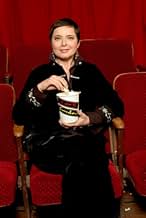
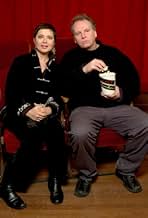
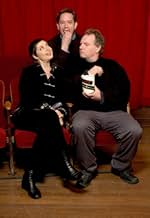
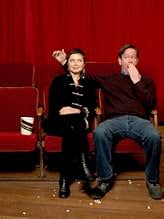
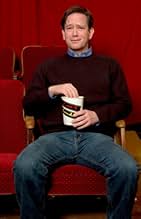
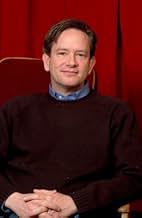



Nancy Jane Drake
- American Mother
- (as Nancy Drake)

- Director
- Writers
- All cast & crew
- Production, box office & more at IMDbPro
Featured reviews
Guy Maddin just gets better and better. In this, his latest film, he's outdone himself. The fusion of content and style is so brilliant, clever, and emotional, the film has to rank as one of the best of 2004 even with the year not yet being half over.
Set in 1933, "the depths of the Great Depression", the location is Winnipeg, Canada, home of Lady Port-Huntly (Isabella Rosselini), the astoundingly wealthy beer baroness of Canada, who decides to hold a contest to select the saddest music in the world--for business reasons, of course. Among the entrants are her former lover, Chester Kent (Mark McKinney), his current lover Narcissa (Maria de Medeiros), Chester's estranged brother Roderick (Ross McMillan)--separated from Narcissa, and the men's father, Duncan (Claude Dorge). Duncan represents Canada; Chester, America; and Roderick, Serbia (of all places).
The prize is $25,000, a fortune in those days, so naturally there are entrants from all over the world--among which are Mexico, Siam, and Africa. The music is inspired, but eventually converges on the lilting popular American tune The Song is You, for which there are diverse renditions in the course of the film. The show-stopper is the version by Chester near the end, a big band production that fuses influences, in typical American fashion, from all over the world.
Familial tensions converge with unrequited love, and with the most peculiar prostheses anyone has ever seen--either in real life or on film. Lady Port-Huntly is a double amputee, and he whose reckless mistake resulted in her unfortunate current condition fashions for her a pair of legs that must be seen to be believed.
The entire film is shot using a blue-haze filter, with a faux stereopticon effect that narrows the viewing screen to that resembling what one would see from the early days of film, and with the faintest, subtlest and tiniest of lags in action-speech synchronization that makes this uncannily resonate as a work fusing a 30s setting, a pre-20s style, and a contemporary sensibility that knows how to combine these elements in the first place. This is a truly brilliant--I would even call it genius--approach to filmmaking that noone else in the known world even remotely approaches. Maddin is one of the contemporary masters of cinema and this is the proof.
As soon as this is available on DVD, I will buy it immediately. I suggest you do the same.
Set in 1933, "the depths of the Great Depression", the location is Winnipeg, Canada, home of Lady Port-Huntly (Isabella Rosselini), the astoundingly wealthy beer baroness of Canada, who decides to hold a contest to select the saddest music in the world--for business reasons, of course. Among the entrants are her former lover, Chester Kent (Mark McKinney), his current lover Narcissa (Maria de Medeiros), Chester's estranged brother Roderick (Ross McMillan)--separated from Narcissa, and the men's father, Duncan (Claude Dorge). Duncan represents Canada; Chester, America; and Roderick, Serbia (of all places).
The prize is $25,000, a fortune in those days, so naturally there are entrants from all over the world--among which are Mexico, Siam, and Africa. The music is inspired, but eventually converges on the lilting popular American tune The Song is You, for which there are diverse renditions in the course of the film. The show-stopper is the version by Chester near the end, a big band production that fuses influences, in typical American fashion, from all over the world.
Familial tensions converge with unrequited love, and with the most peculiar prostheses anyone has ever seen--either in real life or on film. Lady Port-Huntly is a double amputee, and he whose reckless mistake resulted in her unfortunate current condition fashions for her a pair of legs that must be seen to be believed.
The entire film is shot using a blue-haze filter, with a faux stereopticon effect that narrows the viewing screen to that resembling what one would see from the early days of film, and with the faintest, subtlest and tiniest of lags in action-speech synchronization that makes this uncannily resonate as a work fusing a 30s setting, a pre-20s style, and a contemporary sensibility that knows how to combine these elements in the first place. This is a truly brilliant--I would even call it genius--approach to filmmaking that noone else in the known world even remotely approaches. Maddin is one of the contemporary masters of cinema and this is the proof.
As soon as this is available on DVD, I will buy it immediately. I suggest you do the same.
I saw Guy Maddin's film last weekend, not really knowing much about it other than it's premise, which was too absurd to pass up. A double amputee parapalegic beer baroness with glass legs filled with her own beer holding a contest during Prohibition to find the saddest music in the world? Where do people come up with this stuff?
The film is an interesting conglomeration of styles from films before and around the era in which it is set. The 8 mm footage with the stereopticon lens is reminiscent of the earliest films, and the distorted sets created in a studio are reminiscent of the German expressionist films. This is combined with a 30's musical and conversational style, including bits of "Technicolor" thrown in for good measure. I would have to see the film again, but I would like to go back and see it again to determine the link between the scenes which are suddenly shot in color as compared to the grainy black and white images that grace the rest of the film.
Despite the quizzical looks from the three fellow moviegoers who occupied the theatre, I found myself laughing out loud quite a few times at the film's caustic humor. The matches between the music from each country are like something out of a gangland film, with each side advancing toward each other menacingly during their performance. Some of the countries who perform in the competition reflect Maddin's satirical side, including a winning performance from Serbia (of all places) and an entry from the "country" of Africa (as if we in North America don't know any of the individual nations on the continent).
The entwining of satire and comedy continues in the musical performances and the competition's radio commentators. Maybe it's just me, but the funeral dirges from some countries (most notably "Africa" and Scotland) are not really "sad" at all, as they are a bit loud and a bit too upbeat. The greatest offender is the American entry, who turns the competition into a showcase for his Broadway ambitions, eschewing the premise of the competition with the blessing of Lady Port-Huntley, who incidentally is his former-current lover. The idiotic commentators obnoxiously chatter over a loudspeaker even as the musicians are performing, delivering such priceless wisdom as "Siam is known for its dignity, twins, and cats."
The themes of the film revolve around the separation between the rich and the poor (one character enjoys a psychic connection with her tapeworm), American excess, Canadian self-loathing, humanity's relentless desire for the trivial and superficial over the meaningful and spiritual, the global domination of American pop culture, how the mass media controls the world, etc. However, none of these are really fleshed out in the film, but rather touched on briefly then tossed away in favor of the next idea.
Though the film is more style over substance, it is still thoroughly enjoyable for anyone who loves the cinema in all its forms.
The film is an interesting conglomeration of styles from films before and around the era in which it is set. The 8 mm footage with the stereopticon lens is reminiscent of the earliest films, and the distorted sets created in a studio are reminiscent of the German expressionist films. This is combined with a 30's musical and conversational style, including bits of "Technicolor" thrown in for good measure. I would have to see the film again, but I would like to go back and see it again to determine the link between the scenes which are suddenly shot in color as compared to the grainy black and white images that grace the rest of the film.
Despite the quizzical looks from the three fellow moviegoers who occupied the theatre, I found myself laughing out loud quite a few times at the film's caustic humor. The matches between the music from each country are like something out of a gangland film, with each side advancing toward each other menacingly during their performance. Some of the countries who perform in the competition reflect Maddin's satirical side, including a winning performance from Serbia (of all places) and an entry from the "country" of Africa (as if we in North America don't know any of the individual nations on the continent).
The entwining of satire and comedy continues in the musical performances and the competition's radio commentators. Maybe it's just me, but the funeral dirges from some countries (most notably "Africa" and Scotland) are not really "sad" at all, as they are a bit loud and a bit too upbeat. The greatest offender is the American entry, who turns the competition into a showcase for his Broadway ambitions, eschewing the premise of the competition with the blessing of Lady Port-Huntley, who incidentally is his former-current lover. The idiotic commentators obnoxiously chatter over a loudspeaker even as the musicians are performing, delivering such priceless wisdom as "Siam is known for its dignity, twins, and cats."
The themes of the film revolve around the separation between the rich and the poor (one character enjoys a psychic connection with her tapeworm), American excess, Canadian self-loathing, humanity's relentless desire for the trivial and superficial over the meaningful and spiritual, the global domination of American pop culture, how the mass media controls the world, etc. However, none of these are really fleshed out in the film, but rather touched on briefly then tossed away in favor of the next idea.
Though the film is more style over substance, it is still thoroughly enjoyable for anyone who loves the cinema in all its forms.
This is a review of the DVD.
First off, Guy Maddin's films are an acquired taste. Second, it helps to be a film fan and to have a knowledge and love of early cinema to truly appreciate them. Third, you must be willing to give yourself over totally to his particular vision. Don't even try to fight it. Do all this and get ready to enjoy.
"The Saddest Music in the World " is a wonderful amalgam of comedy, drama,
tragedy and farce. It's got a cast of characters that are familiar and yet strange at the same time. Just when you think it's heading in one direction, it yanks you in another. It has an internal logic just like a dream.
The photography, art direction and sound design add to the uniqueness of the
experience. The film feels like an artifact, a lost film that was hidden away by a studio in the '30s because it was too wild and broke too many rules. In fact, it's film-making that defies the system.
The DVD contains a making of featurette that is enjoyable to watch. There are also 3 short films. Only Maddin could make a film with the title "Sissy Boy Slap Party" and make it funny.
Please take a chance and rent/buy this film. It's not the typical Hollywood
product (although it mines Hollywood's past) and for that we should be glad.
I also have to recommend another film by Guy Maddin- "Dracula: Pages from a
Virgin's Diary", a silent film ballet. I got it sight unseen and love it. The director's commentary was worth the price alone.
I'm a Guy Maddin fan. I have developed an addiction for his work. Thank God!
First off, Guy Maddin's films are an acquired taste. Second, it helps to be a film fan and to have a knowledge and love of early cinema to truly appreciate them. Third, you must be willing to give yourself over totally to his particular vision. Don't even try to fight it. Do all this and get ready to enjoy.
"The Saddest Music in the World " is a wonderful amalgam of comedy, drama,
tragedy and farce. It's got a cast of characters that are familiar and yet strange at the same time. Just when you think it's heading in one direction, it yanks you in another. It has an internal logic just like a dream.
The photography, art direction and sound design add to the uniqueness of the
experience. The film feels like an artifact, a lost film that was hidden away by a studio in the '30s because it was too wild and broke too many rules. In fact, it's film-making that defies the system.
The DVD contains a making of featurette that is enjoyable to watch. There are also 3 short films. Only Maddin could make a film with the title "Sissy Boy Slap Party" and make it funny.
Please take a chance and rent/buy this film. It's not the typical Hollywood
product (although it mines Hollywood's past) and for that we should be glad.
I also have to recommend another film by Guy Maddin- "Dracula: Pages from a
Virgin's Diary", a silent film ballet. I got it sight unseen and love it. The director's commentary was worth the price alone.
I'm a Guy Maddin fan. I have developed an addiction for his work. Thank God!
8vdg
Experiments, madness, comedy, drama, musical and some more.
I was unaware of Guy Maddin movies until I saw this one, so from the start to the end I was in awe about a director that came to me from nowhere and managed to surprise me. I am saying this as I have seen quite a few (1000's maybe) movies, and I am very hard to be surprised by something.
Without any doubt the movie IS one of the most original ones I've seen in years, and beside the strange techniques used (black/white grainy film, alternating with color-grainy as well, theater-like sets, etc..) the originality of the director is never the less amazing.
Of course quite a few people left the theater during the movie, but that's understandable, as this is just for the die-hard fans of good/art films. If you thought SALLO was a good movie, beside the cruelty on the screen, or if you actually understood Satyricon, then this movie might appeal you, otherwise don't waste your time on it.
I can't find a movie that can be related to this one, I just cannot!!! Great actors, great music and even a greater director: food for the soul.
8/10
I was unaware of Guy Maddin movies until I saw this one, so from the start to the end I was in awe about a director that came to me from nowhere and managed to surprise me. I am saying this as I have seen quite a few (1000's maybe) movies, and I am very hard to be surprised by something.
Without any doubt the movie IS one of the most original ones I've seen in years, and beside the strange techniques used (black/white grainy film, alternating with color-grainy as well, theater-like sets, etc..) the originality of the director is never the less amazing.
Of course quite a few people left the theater during the movie, but that's understandable, as this is just for the die-hard fans of good/art films. If you thought SALLO was a good movie, beside the cruelty on the screen, or if you actually understood Satyricon, then this movie might appeal you, otherwise don't waste your time on it.
I can't find a movie that can be related to this one, I just cannot!!! Great actors, great music and even a greater director: food for the soul.
8/10
What could only be titled as Cinema of the Ridiculous, Maddin's latest masterpiece, about a no-legged beer queen who hosts a Winnipeg-set competition to see which nation has the saddest music in the world, is filled to the gills with wacky ideas, but the reason it's a great film is because of the heartfelt feeling behind it. Maddin's genuine love for the silent cinema that he emulates (and attachment to the pathetic characters he creates) makes it possible for him to sustain a comic tone without it ever becoming mocking.
Maddin manages to balance the grotesque comic caricature of Mark McKinney as the shady mustached businessman who tries to win the competition, and Maria de Medeiros, who gets life advice from her tapeworm, with the pathetic goth character that's McKinney's brother, who's had to deal with the loss of a son, and the glamorous Isabella Rossellini, who's had to deal with the loss of her legs. (I wonder if the fact that Rossellini lost her legs in a car accident caused by her performing fellatio is a nod to the Myth of Murnau.) There's almost a subliminal melodrama taking place with the theme of loss and hilarious depression (during The Depression). It's an exciting movie visually, but unlike the best of the silents that Maddin loves, it's not poetic in that slow, beautiful way -- it's too fast-paced, kinetic, and rough to achieve any sort of traditional beauty -- but it is a feast. The few scenes of gaudy color -- reds, blues, and odd flesh tones -- are as grainy as the black and white. Maddin is truly one of the most imaginative of directors and he has a firm grasp of the medium. In fact, there is at least one scene of slow, beautiful poetry -- a purely silent moment, near the end, that comes alongside the bloody murder of Rossellini's screams. 10/10
Maddin manages to balance the grotesque comic caricature of Mark McKinney as the shady mustached businessman who tries to win the competition, and Maria de Medeiros, who gets life advice from her tapeworm, with the pathetic goth character that's McKinney's brother, who's had to deal with the loss of a son, and the glamorous Isabella Rossellini, who's had to deal with the loss of her legs. (I wonder if the fact that Rossellini lost her legs in a car accident caused by her performing fellatio is a nod to the Myth of Murnau.) There's almost a subliminal melodrama taking place with the theme of loss and hilarious depression (during The Depression). It's an exciting movie visually, but unlike the best of the silents that Maddin loves, it's not poetic in that slow, beautiful way -- it's too fast-paced, kinetic, and rough to achieve any sort of traditional beauty -- but it is a feast. The few scenes of gaudy color -- reds, blues, and odd flesh tones -- are as grainy as the black and white. Maddin is truly one of the most imaginative of directors and he has a firm grasp of the medium. In fact, there is at least one scene of slow, beautiful poetry -- a purely silent moment, near the end, that comes alongside the bloody murder of Rossellini's screams. 10/10


Did you know
- TriviaSome actors are given an "additional camera" credit, as they shot footage on handheld Super8 cameras.
- Quotes
Lady Port-Huntley: If you are sad and like beer, I'm your lady.
- SoundtracksThe Song is You
Music by Jerome Kern
Lyrics by Oscar Hammerstein II
Used by permission of Universal - Polygram International Publishing, Inc.
- How long is The Saddest Music in the World?Powered by Alexa
Details
- Release date
- Country of origin
- Languages
- Also known as
- La canción más triste del mundo
- Filming locations
- Production companies
- See more company credits at IMDbPro
Box office
- Budget
- CA$3,500,000 (estimated)
- Gross US & Canada
- $699,225
- Opening weekend US & Canada
- $37,743
- May 2, 2004
- Gross worldwide
- $854,994
- Runtime
- 1h 40m(100 min)
- Color
- Sound mix
- Aspect ratio
- 1.85 : 1
Contribute to this page
Suggest an edit or add missing content