IMDb RATING
7.4/10
6.5K
YOUR RATING
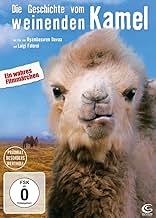
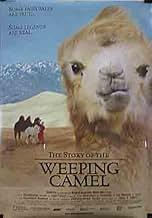
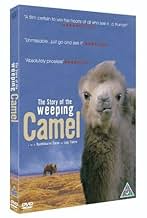
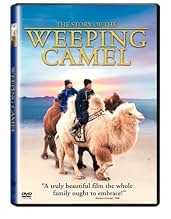
When a Mongolian nomadic family's newest camel colt is rejected by its mother, a musician is needed for a ritual to change her mind.When a Mongolian nomadic family's newest camel colt is rejected by its mother, a musician is needed for a ritual to change her mind.When a Mongolian nomadic family's newest camel colt is rejected by its mother, a musician is needed for a ritual to change her mind.
- Directors
- Writers
- Stars
- Nominated for 1 Oscar
- 10 wins & 9 nominations total
- Directors
- Writers
- All cast & crew
- Production, box office & more at IMDbPro
7.46.5K
1
2
3
4
5
6
7
8
9
10
Featured reviews
A Cinematic Tour De Force
If you are fed up with Hollywood glitz and special effects. If you are tired of hearing overpaid actors whining about how hard life is when having to film away from home, then you would be a fool not to watch this splendid film.
It would be too easy to say it is a documentary or a drama documentary. It is neither. It is, in the old term, 'cinema verite' at its best with good editing. Or even 'fly on the wall'. It is a truly wonderful story that has what many films should have: a beginning, a middle and an end.
I see no point in over analysing components of the film. To do so would destroy the theme. It is a story told in in the style of Aesop but it is far from a fable. The camera work (from a novice!) is stunning. There are no wild hand-held camera angles, just luscious close ups and exquisite panoramic views. Thankfully there are no blurred short depth of field shots - as is common in too many modern films.
It will leave you with a warm glow and hopefully raise many questions about the values that we as a human race share and are losing. If you have seen the Korean "The Way Home" you will love this contribution to the world of film. It is a truly excellent and heart warming experience.
It would be too easy to say it is a documentary or a drama documentary. It is neither. It is, in the old term, 'cinema verite' at its best with good editing. Or even 'fly on the wall'. It is a truly wonderful story that has what many films should have: a beginning, a middle and an end.
I see no point in over analysing components of the film. To do so would destroy the theme. It is a story told in in the style of Aesop but it is far from a fable. The camera work (from a novice!) is stunning. There are no wild hand-held camera angles, just luscious close ups and exquisite panoramic views. Thankfully there are no blurred short depth of field shots - as is common in too many modern films.
It will leave you with a warm glow and hopefully raise many questions about the values that we as a human race share and are losing. If you have seen the Korean "The Way Home" you will love this contribution to the world of film. It is a truly excellent and heart warming experience.
A Great Experience of the Life and Lifestyle of a Different Culture
In the spring of the Gobi Desert, in South Mongolia, a nomadic family of shepherds has troubles when one camel has a tough two days delivery, immediately rejecting the offspring. The family unsuccessfully uses their best efforts trying to force the female to accept and feed the newborn. When there is no further hope of saving the animal, they send their two sons to bring a musician from the nearest town to perform a ritual and save the "baby camel".
I do not know, and I was really curious to know, how could be the original screenplay of this documentary. I believe the first intention of directors Byambasuren Davaa and Luigi Falorni would be to document the lifestyle of a nomadic family of shepherds, showing a different culture for the Westerners. However, fortune gave them the opportunity of sharing a great experience with the viewers with the ritual that brought the camel to accept the offspring. Thank you, Messrs. Byambasuren Davaa and Luigi Falorni, for such touching, beautiful and wonderful film. My vote is nine.
Title (Brazil): "Camelos Também Choram" ("Camels Also Weep")
I do not know, and I was really curious to know, how could be the original screenplay of this documentary. I believe the first intention of directors Byambasuren Davaa and Luigi Falorni would be to document the lifestyle of a nomadic family of shepherds, showing a different culture for the Westerners. However, fortune gave them the opportunity of sharing a great experience with the viewers with the ritual that brought the camel to accept the offspring. Thank you, Messrs. Byambasuren Davaa and Luigi Falorni, for such touching, beautiful and wonderful film. My vote is nine.
Title (Brazil): "Camelos Também Choram" ("Camels Also Weep")
An Excellent Film of a Different Way of Life
In Mongolia in the Gobi desert a four-generation family of herders lives a tough, plain life. One of their camels gives birth but refuses to accept the calf. They care for the calf, try to hand-feed it, and decide to send for a player of music. The belief is that the music may make the camel accept the calf, and if it does the camel will weep.
The movie is classified as a documentary, but it is much more the story of the ways of this particular family, how they live, how they raise their small children, how the experience of the grandparents is used, how they care for their herds. Customs and rituals provide comfort. Electricity, television, ice cream provide temptations, but are more or less accepted as expensive facts of life which they aren't particularly tempted by. The actors all appear to be nonprofessionals.
This is the kind of movie you have to let yourself accept for what it is...a gentle, unobtrusive look at a way of life far different from ours. Well worth seeing.
The movie is classified as a documentary, but it is much more the story of the ways of this particular family, how they live, how they raise their small children, how the experience of the grandparents is used, how they care for their herds. Customs and rituals provide comfort. Electricity, television, ice cream provide temptations, but are more or less accepted as expensive facts of life which they aren't particularly tempted by. The actors all appear to be nonprofessionals.
This is the kind of movie you have to let yourself accept for what it is...a gentle, unobtrusive look at a way of life far different from ours. Well worth seeing.
It takes a village
This is a great opportunity for getting a first eye view about a civilization and a culture so completely different from ours, that it's worth the price of admission.
Living in the remote Gobi desert, we encounter a small family that live from the sheep they raise and their camels, that are used as a form of transportation. The living conditions are primitive, to put it mildly, yet the family in the film seem content with what they have to live with. Most of the activities are centered around the home.
As the film unfolds, we are witnesses to the amazing birth of the last colt of the season. It is an ordeal for the first time mother having this offspring, a labor that goes on forever, until the men of the village take matters into their hands and help with the birth. The white colt that is born in front of our eyes, has to be guided to the mother for his nourishment, only to be rejected by her. We watch as one of the women manages to milk the mother camel in order to feed the colt. When all fails, as the mother camel keeps rejecting the colt, they resort to a sort of a ritual that involves a violin player coming to the family's help to play music for the animal, and ultimately mother and son are miraculously reunited.
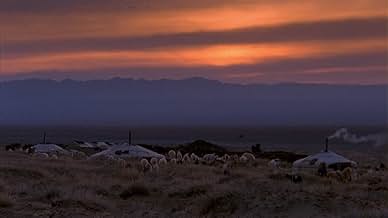
The views of the desert are beautiful in their remoteness and desolation. Somehow we are drawn into this family's life in a way that we never thought we could get to know anyone. The final irony is that after the young children go into the nearest town they finally see their first television broadcast and are fascinated by it.
The film is refreshing as it shows how the different members of this small family care for one another. They are fortunate indeed, because being away from all the consumerism and material things, they manage to stay focused in living under those conditions in that unfriendly environment.
Living in the remote Gobi desert, we encounter a small family that live from the sheep they raise and their camels, that are used as a form of transportation. The living conditions are primitive, to put it mildly, yet the family in the film seem content with what they have to live with. Most of the activities are centered around the home.
As the film unfolds, we are witnesses to the amazing birth of the last colt of the season. It is an ordeal for the first time mother having this offspring, a labor that goes on forever, until the men of the village take matters into their hands and help with the birth. The white colt that is born in front of our eyes, has to be guided to the mother for his nourishment, only to be rejected by her. We watch as one of the women manages to milk the mother camel in order to feed the colt. When all fails, as the mother camel keeps rejecting the colt, they resort to a sort of a ritual that involves a violin player coming to the family's help to play music for the animal, and ultimately mother and son are miraculously reunited.
The views of the desert are beautiful in their remoteness and desolation. Somehow we are drawn into this family's life in a way that we never thought we could get to know anyone. The final irony is that after the young children go into the nearest town they finally see their first television broadcast and are fascinated by it.
The film is refreshing as it shows how the different members of this small family care for one another. They are fortunate indeed, because being away from all the consumerism and material things, they manage to stay focused in living under those conditions in that unfriendly environment.
Fascinating film
The Mongols are a fascinating people who at one time, conquered more of our planet than any other nation or civilization. The supreme irony in all this was that the Mongols themselves were hardly "civilized," i.e., linked to living in cities supported by extensive agricultural complexes, but were traditionally pastoralists. However, they were one of the most efficient fighting forces in history, as they swept from the Chinese coast through the Eastern Mediterranean and up to the banks of the Danube in Europe. But, little is known about these marvelous people who are ancestors to the Manchus, Koreans and Japanese of today. Here is a wonderful little tale, albeit somewhat stylized, which gives us a glimpse of Mongol pastoral life on the brink of globalization. The subtle mixture of their traditional pastoral existence, e.g., yurts, herding, gathering fuel, etc., with that of the modern, e.g., the musician brings his morinkhuur (Mongol Viola) to camp on a motorcycle to perform an ancient ritual, is marvelously done.
The Mongol Bactria's camel nomads are rather marginal to the great majority of pastoralists, many of which still herd their sheep on their stout Mongol horses. These marvelous two-humped camels are now only found in Mongolia and this film showing their continuing way of life is simply wonderful.
Did you know
- TriviaOfficial submission of Mongolia for the 'Best Foreign Language Film' category of the 76th Academy Awards in 2004.
- ConnectionsFeatured in The 77th Annual Academy Awards (2005)
- How long is The Story of the Weeping Camel?Powered by Alexa
Details
- Release date
- Countries of origin
- Official sites
- Language
- Also known as
- Ağlayan Devenin Öyküsü
- Filming locations
- Production companies
- See more company credits at IMDbPro
Box office
- Gross US & Canada
- $1,763,052
- Opening weekend US & Canada
- $21,767
- Jun 6, 2004
- Gross worldwide
- $9,328,652
- Runtime
- 1h 33m(93 min)
- Color
- Sound mix
- Aspect ratio
- 1.85 : 1
Contribute to this page
Suggest an edit or add missing content