IMDb RATING
7.4/10
6.5K
YOUR RATING


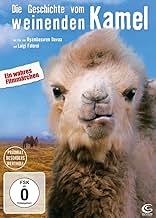
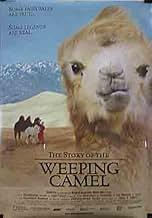
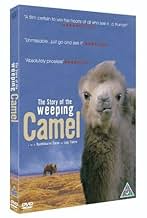
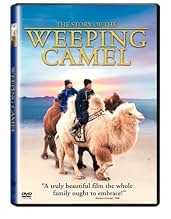
When a Mongolian nomadic family's newest camel colt is rejected by its mother, a musician is needed for a ritual to change her mind.When a Mongolian nomadic family's newest camel colt is rejected by its mother, a musician is needed for a ritual to change her mind.When a Mongolian nomadic family's newest camel colt is rejected by its mother, a musician is needed for a ritual to change her mind.
- Directors
- Writers
- Stars
- Nominated for 1 Oscar
- 10 wins & 9 nominations total



- Directors
- Writers
- All cast & crew
- Production, box office & more at IMDbPro
7.46.5K
1
2
3
4
5
6
7
8
9
10
Featured reviews
It takes a village
This is a great opportunity for getting a first eye view about a civilization and a culture so completely different from ours, that it's worth the price of admission.
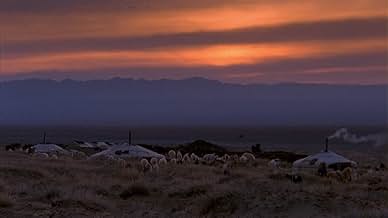
Living in the remote Gobi desert, we encounter a small family that live from the sheep they raise and their camels, that are used as a form of transportation. The living conditions are primitive, to put it mildly, yet the family in the film seem content with what they have to live with. Most of the activities are centered around the home.
As the film unfolds, we are witnesses to the amazing birth of the last colt of the season. It is an ordeal for the first time mother having this offspring, a labor that goes on forever, until the men of the village take matters into their hands and help with the birth. The white colt that is born in front of our eyes, has to be guided to the mother for his nourishment, only to be rejected by her. We watch as one of the women manages to milk the mother camel in order to feed the colt. When all fails, as the mother camel keeps rejecting the colt, they resort to a sort of a ritual that involves a violin player coming to the family's help to play music for the animal, and ultimately mother and son are miraculously reunited.
The views of the desert are beautiful in their remoteness and desolation. Somehow we are drawn into this family's life in a way that we never thought we could get to know anyone. The final irony is that after the young children go into the nearest town they finally see their first television broadcast and are fascinated by it.
The film is refreshing as it shows how the different members of this small family care for one another. They are fortunate indeed, because being away from all the consumerism and material things, they manage to stay focused in living under those conditions in that unfriendly environment.
Living in the remote Gobi desert, we encounter a small family that live from the sheep they raise and their camels, that are used as a form of transportation. The living conditions are primitive, to put it mildly, yet the family in the film seem content with what they have to live with. Most of the activities are centered around the home.
As the film unfolds, we are witnesses to the amazing birth of the last colt of the season. It is an ordeal for the first time mother having this offspring, a labor that goes on forever, until the men of the village take matters into their hands and help with the birth. The white colt that is born in front of our eyes, has to be guided to the mother for his nourishment, only to be rejected by her. We watch as one of the women manages to milk the mother camel in order to feed the colt. When all fails, as the mother camel keeps rejecting the colt, they resort to a sort of a ritual that involves a violin player coming to the family's help to play music for the animal, and ultimately mother and son are miraculously reunited.
The views of the desert are beautiful in their remoteness and desolation. Somehow we are drawn into this family's life in a way that we never thought we could get to know anyone. The final irony is that after the young children go into the nearest town they finally see their first television broadcast and are fascinated by it.
The film is refreshing as it shows how the different members of this small family care for one another. They are fortunate indeed, because being away from all the consumerism and material things, they manage to stay focused in living under those conditions in that unfriendly environment.
What a surprise!
If anyone had ever told me that a movie about nomadic shepherds in Mongolia and a couple of camels could hold my interest and feelings the way this movie did I would have suggested they see a shrink.
It can only be described as a wonderful story that makes the most complex of Hollywood screen-plays look silly.
Great for all generations.
It can only be described as a wonderful story that makes the most complex of Hollywood screen-plays look silly.
Great for all generations.
Fascinating film
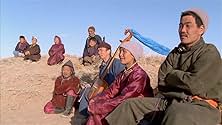
The Mongols are a fascinating people who at one time, conquered more of our planet than any other nation or civilization. The supreme irony in all this was that the Mongols themselves were hardly "civilized," i.e., linked to living in cities supported by extensive agricultural complexes, but were traditionally pastoralists. However, they were one of the most efficient fighting forces in history, as they swept from the Chinese coast through the Eastern Mediterranean and up to the banks of the Danube in Europe. But, little is known about these marvelous people who are ancestors to the Manchus, Koreans and Japanese of today. Here is a wonderful little tale, albeit somewhat stylized, which gives us a glimpse of Mongol pastoral life on the brink of globalization. The subtle mixture of their traditional pastoral existence, e.g., yurts, herding, gathering fuel, etc., with that of the modern, e.g., the musician brings his morinkhuur (Mongol Viola) to camp on a motorcycle to perform an ancient ritual, is marvelously done.
The Mongol Bactria's camel nomads are rather marginal to the great majority of pastoralists, many of which still herd their sheep on their stout Mongol horses. These marvelous two-humped camels are now only found in Mongolia and this film showing their continuing way of life is simply wonderful.
The Mongol Bactria's camel nomads are rather marginal to the great majority of pastoralists, many of which still herd their sheep on their stout Mongol horses. These marvelous two-humped camels are now only found in Mongolia and this film showing their continuing way of life is simply wonderful.
A beautiful film out of time and step with a lesser world outside.
In the Gobi desert, where a nomadic tribe tends its camels like Jay Leno his automobiles, a mother rejects a white calf just delivered with difficulty. The society's initiative to bring mother to nurse the child is the center of an otherwise simple plot. The astounding cinematography (Yes, the desert is stunning even after 90 minutes) and the scrubbed-face happiness of the family are the real stars of this half documentary, half reenactment of a crisis every bit as important to this family as a birth is to a tightly-knit family anywhere in the rest of the world.
And yet a theme appears as I reflect on the happiness of this attractive clan: the emergence of modernism even in Mongolia. In two young men's 50-kilometer journey to find help for the camel, they discover television and computer games. The younger boy, fascinated by the technology, asks his father to purchase a TV. The grandfather gently offers his concern that the boy would be watching fleeting glass images-the case is closed, a powerful reminder of the benign presence of grandparents in this culture, the wisdom of elders, and the fresh-aired innocence of the clan, which will not give itself up easily to modern distractions. Besides, it is abundantly clear they don't need passive entertainment.
The ceremony to reconcile the mother and calf includes primitive music by a teacher and impressive solo singing by a young woman. No one could possibly turn to TV while watching this transcendent act. `Whale Rider's' heightened sense of the magical in the mundane and the unbelievable bond of young and old is the only other recent film I can think of to approach this film's simple power.
`The Story of the Weeping Camel' is as slow as the culture it shows, so be cautious about bringing restless city children. The story lingers on the actual birth of the white calf, possibly disconcerting to the younger, inexperienced members of the audience. Then why do the film's characters get such joy out of the minor warnings I just gave? It is their life, as blessed and happy as any you will see on film or anywhere else on earth.
The camel's soulful cry in the vast desert will stay with you. As Lafcadio Hearn said, `If you ever become a father, I think the strangest and strongest sensation of your life will be hearing for the first time the thin cry of your own child.' And that goes for the mother's cry as well.
A beautiful film out of time and step with a lesser world outside.
And yet a theme appears as I reflect on the happiness of this attractive clan: the emergence of modernism even in Mongolia. In two young men's 50-kilometer journey to find help for the camel, they discover television and computer games. The younger boy, fascinated by the technology, asks his father to purchase a TV. The grandfather gently offers his concern that the boy would be watching fleeting glass images-the case is closed, a powerful reminder of the benign presence of grandparents in this culture, the wisdom of elders, and the fresh-aired innocence of the clan, which will not give itself up easily to modern distractions. Besides, it is abundantly clear they don't need passive entertainment.
The ceremony to reconcile the mother and calf includes primitive music by a teacher and impressive solo singing by a young woman. No one could possibly turn to TV while watching this transcendent act. `Whale Rider's' heightened sense of the magical in the mundane and the unbelievable bond of young and old is the only other recent film I can think of to approach this film's simple power.
`The Story of the Weeping Camel' is as slow as the culture it shows, so be cautious about bringing restless city children. The story lingers on the actual birth of the white calf, possibly disconcerting to the younger, inexperienced members of the audience. Then why do the film's characters get such joy out of the minor warnings I just gave? It is their life, as blessed and happy as any you will see on film or anywhere else on earth.
The camel's soulful cry in the vast desert will stay with you. As Lafcadio Hearn said, `If you ever become a father, I think the strangest and strongest sensation of your life will be hearing for the first time the thin cry of your own child.' And that goes for the mother's cry as well.
A beautiful film out of time and step with a lesser world outside.
The Story of the Weeping Camel provides a universal message of how we all need love to survive delicately laced into the tale of a sad little camel
There's a new style of film eking into the film biz called "Narrative Documentary." What? An oxymoron you tutt-tutt silently as you read.Well, yes and no. It describes a documentary that has been embellished with narrative scenes to ultimately create the arc-drama one finds in a feature film with the intelligence of a documentary.
Narrative documentary is truly an appropriate expression for this wonderfully unique and intriguing little gem, The Story of the Weeping Camel.
As you watch the fairly simple tale of a camel that after a grueling birthing of her albino calf, she decides she's not interested in the ideas of motherhood and abandons the newborn to fend for itself.
Sounds positively dull until you start to watch this young mother and the footage the filmmakers gathered and you are pulled in - mesmerized, "How did the film crew get this?" It feels like a documentary, looks like a documentary but then there's the story obviously running along side the remarkable footage that you realize is scripted, storyboarded and a team behind the lens have planned. Amazing.
Narrative documentary is truly an appropriate expression for this wonderfully unique and intriguing little gem, The Story of the Weeping Camel.
As you watch the fairly simple tale of a camel that after a grueling birthing of her albino calf, she decides she's not interested in the ideas of motherhood and abandons the newborn to fend for itself.
Sounds positively dull until you start to watch this young mother and the footage the filmmakers gathered and you are pulled in - mesmerized, "How did the film crew get this?" It feels like a documentary, looks like a documentary but then there's the story obviously running along side the remarkable footage that you realize is scripted, storyboarded and a team behind the lens have planned. Amazing.


Did you know
- TriviaOfficial submission of Mongolia for the 'Best Foreign Language Film' category of the 76th Academy Awards in 2004.
- ConnectionsFeatured in The 77th Annual Academy Awards (2005)
- How long is The Story of the Weeping Camel?Powered by Alexa
Details
- Release date
- Countries of origin
- Official sites
- Language
- Also known as
- Ağlayan Devenin Öyküsü
- Filming locations
- Production companies
- See more company credits at IMDbPro
Box office
- Gross US & Canada
- $1,763,052
- Opening weekend US & Canada
- $21,767
- Jun 6, 2004
- Gross worldwide
- $9,328,652
- Runtime
- 1h 33m(93 min)
- Color
- Sound mix
- Aspect ratio
- 1.85 : 1
Contribute to this page
Suggest an edit or add missing content