IMDb RATING
6.5/10
1.3K
YOUR RATING
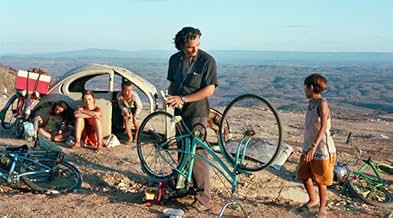
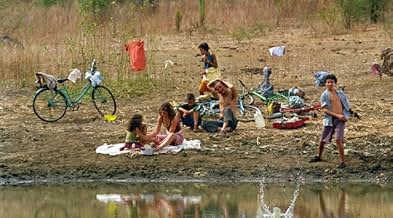
A man and his family travel 3200km (1984 miles) by bicycle, from the State of Paraíba to Rio de Janeiro, Brazil, in search of a job.A man and his family travel 3200km (1984 miles) by bicycle, from the State of Paraíba to Rio de Janeiro, Brazil, in search of a job.A man and his family travel 3200km (1984 miles) by bicycle, from the State of Paraíba to Rio de Janeiro, Brazil, in search of a job.
- Awards
- 1 win & 9 nominations total
Manoel Sebastião Alves Filho
- Rodney
- (as Manoel Sebastião)
Felipe Newton Silva Rodrigues
- Clévis
- (as Felipe Newton)
Cícera Cristina Almino de Lima
- Suelena
- (as Cristina de Lima)
Cícero Wesley A. Ferreira
- Cícero
- (as Cicero Wallyson e Ciceero Wesley)
Alexandre Zacchia
- Porfirio
- (as Alexandre Zachia)
- Director
- Writer
- All cast & crew
- Production, box office & more at IMDbPro
6.51.2K
1
2
3
4
5
6
7
8
9
10
Featured reviews
realistic family drama
I've lived in Northeast Brazil, where this movie is set. Viewers get a realistic picture of small-town life, including devotion to Padre Cicero, a priest who died in 1934, in Juazeiro do Norte, Ceara. It shows the importance of the music of Roberto Carlos, the romantic singer who is Brazil's highest-selling recording artist, in the characters' lives. I've known people who have made similar journeys, and seen their devotion to their children and their struggle to preserve their dignity, just like the characters in this movie.
It's more low-key than ""Bye Bye Brasil," "Central Station," "O Auto da Compadecida," and "Eu, Tu, Eles" (Me, You, Them). It's most similar in tone to "Central Station."
A very touching movie!
Just saw the movie and was touched and traumatized. Beautifully made and very realistic.
At first I got the idea of a visionary hard working father that wants to provide for his wife and children,soon to find out he is not...
Those 5 kids just wonderful! All 5 of them!
I loved the way they would all take turns caring for their little brother... The way they sang together with their mom in the middle of nowhere...and making the best out of the circumstances. Enjoyed the "rebel" on the older son and his failures...
The mother was very talented just a bit too naive and submissive...maybe too in love with the looser...
What did not sit well at all with me was how the father would let his family beg all along but would be ashamed of a little add job he got (temporary) where he could have earned at least a meal for his kids and not let them go to sleep hungry...
The movie is dedicated to Roberto Carlos ( as in the singer)? and why would that be for?
At first I got the idea of a visionary hard working father that wants to provide for his wife and children,soon to find out he is not...
Those 5 kids just wonderful! All 5 of them!
I loved the way they would all take turns caring for their little brother... The way they sang together with their mom in the middle of nowhere...and making the best out of the circumstances. Enjoyed the "rebel" on the older son and his failures...
The mother was very talented just a bit too naive and submissive...maybe too in love with the looser...
What did not sit well at all with me was how the father would let his family beg all along but would be ashamed of a little add job he got (temporary) where he could have earned at least a meal for his kids and not let them go to sleep hungry...
The movie is dedicated to Roberto Carlos ( as in the singer)? and why would that be for?
10kridas
bicycle road movie of a poor famaily
it's the best road movie after Thelma and Louise. It's lovely in tempo, pictures, acting performance even of the very small kids, nice music, good mixture of action, drama, laughter, hope and despair, and getting out of your life the best possible....
Poor family migrates from northwest Brazil to Rio
This is the (based on a true) story of a peasant family from northwest Brazil that migrates to Rio. They travel not how people usually do it, but as a family, on bicycles. Five children, mom and Dad, on five bicycles. Six months it takes them, and 3000 kilometers.
It's a wonderful premise for a movie, and I was disposed to like it. I've liked other films about NE Brazil. Vidas Secas by Nelson Pereira dos Santos; Me, You, Them by Andrucha Waddington; Central Station by Walter Salles. I'd like to take another look at the Glauber Rocha films if they ever become available.
But this well intentioned film just didn't make it for me. The actors were too pretty, too handsome, their teeth too perfect and white, their bodies conditioned in a gym, their faces unburnt by a lifetime in the sun. They were too clearly actors in a created scene that was too foreign to them. They just failed to meaningfully embody their characters. It felt like they were following a recipe for acting: recite lines, add so much of this or that emotion, make meaningful glances, and voila, soufflé.
In general, the "acted" scenes filmed in a studio didn't' feel right. They felt more like a mediocre made-for-TV telenovela.
The filmmakers missed the real grit of the sturm und drang of surviving on the road by your wits and your faith. Very few close-ups. The bicycles, for example: we never saw a greasy hand or a wrench or a spoke. The rich texture of the side of the road was strangely missing, such as the people who make huge pots of tripe and rice and beans and sell it to the truck drivers, half the price of restaurant food.
But the gravest mistake was the filmmakers attempt to make the picaresque, true story of a migration/pilgrimage fit into ready-made story lines, including one especially lame subplot about the coming-of-age of the oldest boy, Antonio, his conflict with the father. The eventual resolution of the conflict between father and son was downright bathetic. Saccharin-sweet sentimentality.
The scenes of Brazil were great. The roads, the berm, the sand, the daub and wattle, the life-beside-the-flow of the river/road, the landscape, the cactus, the hot dreamy little towns and villages with their brick streets and bright colors. But still, a little too pretty. I know the scene. I lived in rural northwest Brazil for 4 years and did 80,000 kilometers of traveling in Bahia. I lived in Feira de Santana for a few months, and that city is part of the movie. I love that part of the country and its people. I liked the scenes of Juazeiro.
One scene that totally failed for me was the whole "Panama" episode. It felt like it was written into the script.
The script as a whole was predictable. The attempts at character development seemed to come from the writing. Each time our travelers learn a new lesson, the filmmakers make them stand up and announce it.
The film would have worked better in documentary style, like say Slumdog Millionaire. Imagine if the filmmakers had paused a little more to explore the details of the roadside in northeast Brazil?
It's a wonderful premise for a movie, and I was disposed to like it. I've liked other films about NE Brazil. Vidas Secas by Nelson Pereira dos Santos; Me, You, Them by Andrucha Waddington; Central Station by Walter Salles. I'd like to take another look at the Glauber Rocha films if they ever become available.
But this well intentioned film just didn't make it for me. The actors were too pretty, too handsome, their teeth too perfect and white, their bodies conditioned in a gym, their faces unburnt by a lifetime in the sun. They were too clearly actors in a created scene that was too foreign to them. They just failed to meaningfully embody their characters. It felt like they were following a recipe for acting: recite lines, add so much of this or that emotion, make meaningful glances, and voila, soufflé.
In general, the "acted" scenes filmed in a studio didn't' feel right. They felt more like a mediocre made-for-TV telenovela.
The filmmakers missed the real grit of the sturm und drang of surviving on the road by your wits and your faith. Very few close-ups. The bicycles, for example: we never saw a greasy hand or a wrench or a spoke. The rich texture of the side of the road was strangely missing, such as the people who make huge pots of tripe and rice and beans and sell it to the truck drivers, half the price of restaurant food.
But the gravest mistake was the filmmakers attempt to make the picaresque, true story of a migration/pilgrimage fit into ready-made story lines, including one especially lame subplot about the coming-of-age of the oldest boy, Antonio, his conflict with the father. The eventual resolution of the conflict between father and son was downright bathetic. Saccharin-sweet sentimentality.
The scenes of Brazil were great. The roads, the berm, the sand, the daub and wattle, the life-beside-the-flow of the river/road, the landscape, the cactus, the hot dreamy little towns and villages with their brick streets and bright colors. But still, a little too pretty. I know the scene. I lived in rural northwest Brazil for 4 years and did 80,000 kilometers of traveling in Bahia. I lived in Feira de Santana for a few months, and that city is part of the movie. I love that part of the country and its people. I liked the scenes of Juazeiro.
One scene that totally failed for me was the whole "Panama" episode. It felt like it was written into the script.
The script as a whole was predictable. The attempts at character development seemed to come from the writing. Each time our travelers learn a new lesson, the filmmakers make them stand up and announce it.
The film would have worked better in documentary style, like say Slumdog Millionaire. Imagine if the filmmakers had paused a little more to explore the details of the roadside in northeast Brazil?
The road to Rio
This is a hypnotic Brazilian film. Directed by Vicente Amorim, it's set in the wide open expanses of the North of the country as a poor family is seen traveling toward Rio on bicycles. The movie gives us a sense of the enormity of some of the arid landscape the family traverses in order to get to a place where the father, Romao, could get a decent job that would pay him, at least, a sum, that in his mind will be enough to take care of his wife and five children.
The movie is made so appealing by the cinematography of Gustavo Hadba, whose camera loves to show the emptiness of the regions the family is seen traversing. The music of Andre Abujamra blends perfectly with the action.
The only thing that is incomprehensible is the way that Romao will not try to get a job, doing whatever, to support his family. Romao is a stoic father who believes his problems will be solved when they arrive in Rio, but along the way, he shows he is a beaten man who will let his family perform for whatever coins are thrown at them, and even starve, without moving a finger to remedy the situation. At the same time, Romao shows a faith in the miraculous Father Cicero, whose sanctuary they visit along the way, but alas, when opportunities arise, Romao doesn't take advantage of them.
The suffering mother Rosa is a model of loyalty to her husband. Even if she knows that it's because of Romao they are in the position one sees them. Antonio, the oldest son, is clearly an intelligent boy who will make it in life because he appears to have a resolve that will fight to survive.
The director got good performances all around from his cast. Wagner Moura, Claudia Abreu and Ravi Ramos Lacerda, the three principals, are perfect in their roles.
The film will not disappoint because it shows a good director at the helm.
The movie is made so appealing by the cinematography of Gustavo Hadba, whose camera loves to show the emptiness of the regions the family is seen traversing. The music of Andre Abujamra blends perfectly with the action.
The only thing that is incomprehensible is the way that Romao will not try to get a job, doing whatever, to support his family. Romao is a stoic father who believes his problems will be solved when they arrive in Rio, but along the way, he shows he is a beaten man who will let his family perform for whatever coins are thrown at them, and even starve, without moving a finger to remedy the situation. At the same time, Romao shows a faith in the miraculous Father Cicero, whose sanctuary they visit along the way, but alas, when opportunities arise, Romao doesn't take advantage of them.
The suffering mother Rosa is a model of loyalty to her husband. Even if she knows that it's because of Romao they are in the position one sees them. Antonio, the oldest son, is clearly an intelligent boy who will make it in life because he appears to have a resolve that will fight to survive.
The director got good performances all around from his cast. Wagner Moura, Claudia Abreu and Ravi Ramos Lacerda, the three principals, are perfect in their roles.
The film will not disappoint because it shows a good director at the helm.
Did you know
- TriviaCarol Castro's debut.
- ConnectionsReferenced in A Dona da História (2004)
Details
- Release date
- Country of origin
- Official site
- Languages
- Also known as
- The Path of the Clouds
- Filming locations
- Production companies
- See more company credits at IMDbPro
Box office
- Gross worldwide
- $13,278
- Runtime
- 1h 25m(85 min)
- Color
- Sound mix
- Aspect ratio
- 1.66 : 1
Contribute to this page
Suggest an edit or add missing content