
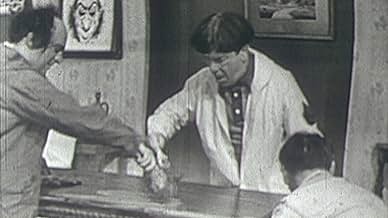
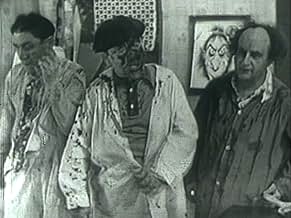
Television pilot for a Three Stooges situation comedy, where the Stooges are painters and paperhangers and completely wreck a hapless couple's home.Television pilot for a Three Stooges situation comedy, where the Stooges are painters and paperhangers and completely wreck a hapless couple's home.Television pilot for a Three Stooges situation comedy, where the Stooges are painters and paperhangers and completely wreck a hapless couple's home.


Larry Fine
- Larry
- (as The Three Stooges)

Moe Howard
- Moe
- (as The Three Stooges)

Shemp Howard
- Shemp
- (as The Three Stooges)


Dink Trout
- Mr. Phink, Pressure-Cooker Salesman
- (uncredited)
- Director
- Writer
- All cast & crew
- Production, box office & more at IMDbPro
Featured reviews
I noticed that one reviewer gave this one a 10. Well, based on my 2, it's obvious that there are some very divergent views on this failed TV pilot. As for me, I thought it was dreadful--tedious and completely unfunny in every way.
This show has a VERY broad sort of plot--in fact, very little plot. The three are house painters and wallpaperers. When they are hired to work on a house, they make a mess of things. There really is no other plot. Now although this may sound VERY familiar for the Three Stooges, there were three fundamental problems. First, as Curly was no longer a member of the group, Shemp is the 'point-man'. He wasn't terrible but was no Curly. Any true Stooge fan would agree that Curly was best. Second, there were no jokes--none. Much of this is because the trio were restricted to a very small set and had very few props--as the budget and size limitations of early TV were severe. Third, the timing and chemistry was off. The boys were fine on film--here they just looked out of place and awkward--and often they missed their cues. As a result of these factors, it's painful to watch and terribly unfunny. I can easily see why this show was shelved and never aired over the air.
By the way, the pilot is an early kinescope--a type of recording system that preserved the images for rebroadcast but, frankly, is pretty ugly. While it's less than ideal, at the time it was about the only way to preserve the footage. You cannot blame the filmmakers for doing this--just make some allowances when you watch. In addition, it was shot in front of a live audience (the norm for 1949)--but this is a problem as there is one person in the audience who seems to laugh very loudly at the least provocation. Again, I don't blame the filmmakers--but it is bothersome.
This show has a VERY broad sort of plot--in fact, very little plot. The three are house painters and wallpaperers. When they are hired to work on a house, they make a mess of things. There really is no other plot. Now although this may sound VERY familiar for the Three Stooges, there were three fundamental problems. First, as Curly was no longer a member of the group, Shemp is the 'point-man'. He wasn't terrible but was no Curly. Any true Stooge fan would agree that Curly was best. Second, there were no jokes--none. Much of this is because the trio were restricted to a very small set and had very few props--as the budget and size limitations of early TV were severe. Third, the timing and chemistry was off. The boys were fine on film--here they just looked out of place and awkward--and often they missed their cues. As a result of these factors, it's painful to watch and terribly unfunny. I can easily see why this show was shelved and never aired over the air.
By the way, the pilot is an early kinescope--a type of recording system that preserved the images for rebroadcast but, frankly, is pretty ugly. While it's less than ideal, at the time it was about the only way to preserve the footage. You cannot blame the filmmakers for doing this--just make some allowances when you watch. In addition, it was shot in front of a live audience (the norm for 1949)--but this is a problem as there is one person in the audience who seems to laugh very loudly at the least provocation. Again, I don't blame the filmmakers--but it is bothersome.
This is a TV pilot from 1949 with Shemp in the 3rd role that ABC filmed and was considering for broadcast, until the Columbia Shorts Division took legal action. In the end, they settled by allowing ABC to air their old shorts instead. Today this pilot is in public domain and available on YouTube as well as DVD.
Oddities noticed would include the audience laughter, something missing in their shorts. While not normal for the Stooges, when looked at through the lens of television, its a normal thing to hear. It seems many of the lower rated reviews don't appreciate the audience and would prefer the pilot without it. I would agree that after nearly 200 shorts without it, the show might have been more appreciated without an audience. Another oddity was the sets, and lack of detail. This reminded me of old Honeymooners episodes with the plain sets. I'm sure this was cost cutting, as they boys dealt with that in their movies often as well, just not to this extreme. These "oddities" brought to mind the trios days in Vaudeville, as this lineup would of been more likely to have the live stage work experience. As such, Larry stands out a bit more as his reactions seem a little bolder than in the shorts. Moe is seen as trying to say too much, al.ost as if he was worried about dead air. In the shorts the trio would use more sight gags, and a lol in dialog often allowed for a scene to build visually. Here that doesn't happen in the same manner. Using Emil Sitka as the main foil was brilliant. The familiarity of working with the boys likely helped in the pilot, as well as having Symona Boniface in one of her last filmed roles, another Stooges regular. Most of the jokes have been seen in many other shorts, such as the painting of the table. A highlight (dare I say scene stealer) was the salesman who stopped by. While not at the top of the game in this pilot, it clearly set up a premise that likely would run well as a TV show in the 50s. Not the place to be introduced to the Three Stooges, but a nice peek into how they were back in their Vaudeville days. Real fans of the boys will find it interesting.
Oddities noticed would include the audience laughter, something missing in their shorts. While not normal for the Stooges, when looked at through the lens of television, its a normal thing to hear. It seems many of the lower rated reviews don't appreciate the audience and would prefer the pilot without it. I would agree that after nearly 200 shorts without it, the show might have been more appreciated without an audience. Another oddity was the sets, and lack of detail. This reminded me of old Honeymooners episodes with the plain sets. I'm sure this was cost cutting, as they boys dealt with that in their movies often as well, just not to this extreme. These "oddities" brought to mind the trios days in Vaudeville, as this lineup would of been more likely to have the live stage work experience. As such, Larry stands out a bit more as his reactions seem a little bolder than in the shorts. Moe is seen as trying to say too much, al.ost as if he was worried about dead air. In the shorts the trio would use more sight gags, and a lol in dialog often allowed for a scene to build visually. Here that doesn't happen in the same manner. Using Emil Sitka as the main foil was brilliant. The familiarity of working with the boys likely helped in the pilot, as well as having Symona Boniface in one of her last filmed roles, another Stooges regular. Most of the jokes have been seen in many other shorts, such as the painting of the table. A highlight (dare I say scene stealer) was the salesman who stopped by. While not at the top of the game in this pilot, it clearly set up a premise that likely would run well as a TV show in the 50s. Not the place to be introduced to the Three Stooges, but a nice peek into how they were back in their Vaudeville days. Real fans of the boys will find it interesting.
While The Three Stooges were busy making their short films for Columbia Pictures, they also appeared on television in the early days of the medium. Their first TV appearance was on the popular Milton Berle variety show 'Texaco Star Theater' on October 19, 1948. Ever the entertainer, Berle was comfortably acting alongside the untamed Stooges at their wildest best. Two months later the three were guests on The Morey Amsterdam Show New Year's Eve Special airing live on December 31,1948. The program was basically a two-hour vaudeville show which featured the Stooges acting their zany best. Loving to act before the camera just as they did on their live stage shows, the Stooges were offered a television series on ABC-TV which was planned to be titled "Jerks of All Trades." As all prospective TV series had to do at the time, the Stooges made a 20-minute pilot before a live audience shot on October 12, 1949. Their proposed series placed them in different jobs for each episode, a format similar to their short films. In the pilot they posed as interior decorators and painters, and gave fits to office and home owners Emil Sitka (Mr. Pennyfeather), Symona Boniface (his wife), and Dink Trout (Mr. Fink). The primary shortcoming of television was the lack of sound effects whenever one of the Stooges was hit, eliminating a crucial dimension from their short films which made them so entertaining.
The Stooges found themselves in hot water with their contracted Columbia Pictures because they never received permission to embark on a TV career. The studio felt their television preparation and shooting would get in the way of spending time making their popular film series, and threatened to sue them in court and cancel their contract. Intimidated, the Stooges withdrew from the proposed series, and the pilot was never seen on TV. Today it can be viewed on the internet. Columbia, however, allowed the three to continue to make guest appearances on television, which they took advantage of a number of times.
The Stooges found themselves in hot water with their contracted Columbia Pictures because they never received permission to embark on a TV career. The studio felt their television preparation and shooting would get in the way of spending time making their popular film series, and threatened to sue them in court and cancel their contract. Intimidated, the Stooges withdrew from the proposed series, and the pilot was never seen on TV. Today it can be viewed on the internet. Columbia, however, allowed the three to continue to make guest appearances on television, which they took advantage of a number of times.
Pretty stilted attempt from Stooges in the infant days of T.V. Worth a look from die hard fans....that's about it
7tavm
I first read of this Three Stooges-Moe, Larry, and Shemp-rarity in a book from the late '80s called "The Stooges' Lost Episodes". The authors of that book didn't like this TV pilot they made though they did like Larry's performance since he rarely rehearsed meaning his spontaneous take appealed to them more than Shemp's "tired robot-like manner" or Moe being "stiff, overbearing, and screechy, more so than usual". But having gotten used to seeing them being that way during their shorts, I laughed heartily most of the time when just watching this again on YouTube. Also appearing were Stooges patsies Emil Sitka and Symona Boniface who'd pass away not long after this. It's true their film performances, where they have more space either on location or in backlots as opposed to being on a limited stage, are better than this early TV one. Still, much of the material was funny enough to me. So on that note, I recommend Jerks of All Trades for anyone interested in all things Stooges.


Did you know
- TriviaFilmed on 12 October 1949. This pilot for ABC TV was never broadcast, and was unseen by the public until producer Phil Berle made it available in the 1990s. It made its DVD debut in 1999.
- ConnectionsReferenced in Honest Trailers: Back to the Future (2015)
Details
- Release date
- Country of origin
- Official site
- Language
- Also known as
- The Three Stooges
- Production company
- See more company credits at IMDbPro
- Runtime
- 21m
- Color
- Sound mix
- Aspect ratio
- 1.33 : 1
Contribute to this page
Suggest an edit or add missing content