IMDb RATING
6.8/10
16K
YOUR RATING
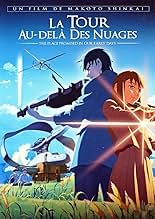
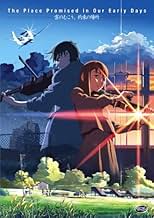
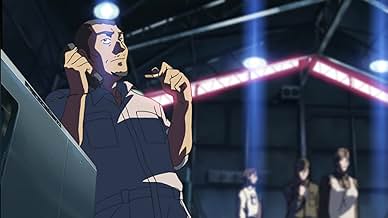
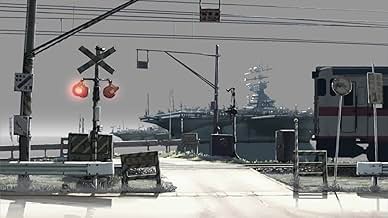
In an alternate postwar timeline, Japan is divided into the Union-controlled North and the US-controlled South.In an alternate postwar timeline, Japan is divided into the Union-controlled North and the US-controlled South.In an alternate postwar timeline, Japan is divided into the Union-controlled North and the US-controlled South.
- Awards
- 1 win & 1 nomination total
Yuka Nanri
- Sayuri Sawatari
- (voice)
- (as Yuuka Nanri)
Unshô Ishizuka
- Okabe
- (voice)
Kazuhiko Inoue
- Tomizawa
- (voice)
Risa Mizuno
- Maki Kasahara
- (voice)
Hidenobu Kiuchi
- Arisaka
- (voice)
Takeshi Maeda
- Daigakuinsei
- (voice)
- …
Rie Nakagawa
- Joshi Seito
- (voice)
- …
Yûki Nakao
- Joshi Seito
- (voice)
Maki Saito
- Joshi Seito
- (voice)
- (as Maki Saitou)
- …
Kousuke Kujirai
- Danshi Seito
- (voice)
Bretto Coleman
- Beigunjin
- (voice)
Ian O'Neal
- NSA
- (voice)
- Director
- Writer
- All cast & crew
- Production, box office & more at IMDbPro
6.815.9K
1
2
3
4
5
6
7
8
9
10
Featured reviews
awful
I gave 4 stars just for the art and the music, but I really got bored a lot watching this, the story makes no sense, it's all so dreamy, so epic, the author wants you to deeply feel all this emotions but to me the result it's an hollow movie with hollow character. I've never fallen asleep watching something, but with this I barely succeeded to end it. I definitively suggest not to watch it, there are so many other beautiful anime to see out there. One thing I've enjoyed is the artwork, the landscapes are really intense and make you dream, but also there sometimes there is too much over production, too many light effects, it seems like a punch in the eye. And I hate when authors use science fiction in this way, by throwing here and there some gibberish theory and then making a mess with a convoluted plot, so that people at the end can say that it leave you with the freedom to interpret it, I find this technique over abused lately, and by the way I've never seen using it so badly like in this case
Simultaneously beautiful and disappointing.
Approaching this from the perspective of a sci-fi enthusiast, I was pleasantly surprised to discover that, despite the complexity of its theories on divergent realities and their harmonic coexistence with dreams, there was a far simpler coming-of-age story that centered on a childhood promise. The score is haunting. The visuals and animation are stunning and the characters are charmingly awkward. Although there are some action sequences and a pint of blood thrown in for measure, the film's pace is decidedly that of a romantic reflection on loneliness and bittersweet affection. In the end, the story telling is adequate, but viewers who were eager to be exposed to fantastic alternate universes will be disappointed.
A Truly Great Movie
The director and writer of The Place Promised in Our Early Days is a certain Makoto Shinkai who is otherwise famous for movies like 5 cm Per Second and Voices of a Distant Star. He has been hailed as one of the greatest anime directors or even the greatest, up there with legends like Hayao Myazaki. Since I saw his other two movies first and absolutely adore them, it is needless to say that my expectations for this movie were sky high. Simply put, I was not let down. Unlike the other two movies under the same direction, The Place Promised in Our Early Days has a very definite plot with clear dips, rises and climaxes. All in all, it is an exciting story that puts you in the center of a divided Japan with different powers controlling both sides. The plot might seem dry and overused on paper, but it is quite intriguing once you actually see it in action. Also driving the storytelling forward is this movie's sci-fi twist on parallel universes and how certain people react with them. Again, this movie certainly brings around one of the uniquer feeling tales around, even if it doesn't sound it. Anyone who has seen another Makoto Shinkai movie however will be able to tell you though, that it is not the story that makes his movies special, but the characters and the emotion that few movies come close to matching. Although it is still a huge distant beyond any other movie in this respect, the power behind to emotions is probably the weakest of all three movies. Don't get me wrong; you will still find the characters and their relations hauntingly and irresistibly real, but you aren't AS horrified when a character's life suddenly changes for the worse. Still, the feelings of loneliness, desperation, or exuberance, all of which Shinkai is famous for, are still found in their distinct, amazing way. Since this was the second of the three movies, it also seems as though it is a technical middle-step between the OK animation of Voices of a Distant Star, and the truly breath-taking visual found in 5 cm Per Second. The animation will not disappoint you, and there are some truly clever tricks that are used that make it look truly wonderful, but they won't stand out among the best in the industry. The music might just do that however with its beautiful, violin-heavy soundtrack that creates a great ambiance for whatever scene is currently playing. Also, the fact that the violin is featured in the soundtrack is of relevance to the plot, and makes both the character progression and the music appear that much sweeter.
Although I have criticized this movie a lot, for every thing it did wrong, it did a million things right. This still stands with the truly great anime movies out there and is a great watch for any fan of sci-fi influenced plots that will bring a surprisingly personal tone to the story.
A huge mess
Mind-bending sci-fi is a staple of Japanese animation, and many of them are complex in a way that makes them difficult to grasp immediately. This one, though, I really don't think the director has any idea how to tell a story. The film is just never coherent. Not only is its science fiction premise (which deals with alternate universes) never clear, nor its world comprehensibly established, but it's terrible at establishing characters and their relationships to each other. All of the characters are quite thin and clichéd. The artwork is nice(the animation is a bit choppy, though), and the music is pretty (but also occasionally too sappy), but this is an annoying mess of a film.
Lovely if a bit convoluted
Read the title a couple of times.
It's lyrical, evocative, even elegiac, and yet could have been expressed in fewer words.
Such is this film.
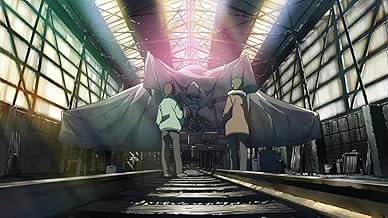
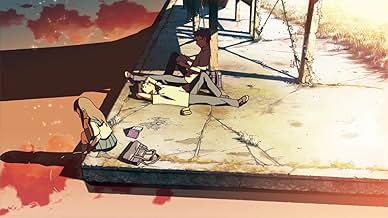
Formally, it's a pure joy to behold. From sweeping countryside panoramas and old, weatherbeaten structures that somehow plumb deep-seated sparks of nostalgia, to sweetly-embellished details like a softly rattling electric fan, Shinkai creates a vibrant, human environment. The soundtrack is equally enveloping, with heart-melting violin and piano work.
Beyond this is quite a decent film, with believable characters in often hard-to-fathom situations. The boyhood friendship of the two male protagonists is very real -- but their ability to engineer, fabricate, and pilot a sophisticated aircraft at age 15 is purely the stuff of anime fantasy.
And yet, everything, no matter how incredible or convoluted, is wrapped in these Shinkai layers of lyricism and beauty. Through a very sensitive and even transcendent treatment, scene after scene is made to appear pivotal, even if it's not.
And thus we have a film that is almost cloying in its presentation -- it's not layered with pure sugar; most of the time it feels genuine, even if it's becoming self-indulgent. But indulge it does, because the director knows how to indulge gracefully.
Normally style over substance kills substance. In "Place," it gently infuses it with some sort of warm, nourishing milk.
It's lyrical, evocative, even elegiac, and yet could have been expressed in fewer words.
Such is this film.
Formally, it's a pure joy to behold. From sweeping countryside panoramas and old, weatherbeaten structures that somehow plumb deep-seated sparks of nostalgia, to sweetly-embellished details like a softly rattling electric fan, Shinkai creates a vibrant, human environment. The soundtrack is equally enveloping, with heart-melting violin and piano work.
Beyond this is quite a decent film, with believable characters in often hard-to-fathom situations. The boyhood friendship of the two male protagonists is very real -- but their ability to engineer, fabricate, and pilot a sophisticated aircraft at age 15 is purely the stuff of anime fantasy.
And yet, everything, no matter how incredible or convoluted, is wrapped in these Shinkai layers of lyricism and beauty. Through a very sensitive and even transcendent treatment, scene after scene is made to appear pivotal, even if it's not.
And thus we have a film that is almost cloying in its presentation -- it's not layered with pure sugar; most of the time it feels genuine, even if it's becoming self-indulgent. But indulge it does, because the director knows how to indulge gracefully.
Normally style over substance kills substance. In "Place," it gently infuses it with some sort of warm, nourishing milk.
Did you know
- TriviaMakoto Shinkai intended to draw the background art himself but with an estimated 1000 cuts needed this would have been impossible for Shinkai to do alone and the film's animation producer, Kiyonori Hiramatsu went to Tokyo Art University to scout for artists. Adding to complications, many of the students were recruited from oil painting classes and had no experience in creating digital backgrounds and many hadn't even used PCs before.
- GoofsEnglish subtitles spell prophecies (used as a noun) as prophesies (the verb).
- Quotes
Hiroki Fujisawa: [Narrating] Living alone, the nights seemed to last forever. When I couldn't pass the time effectively, I went to a nearby train station and pretended to wait for someone.
- Crazy creditsThere's a brief shot after the credits.
- ConnectionsFeatured in WatchMojo: Top 10 Underappreciated Anime Movies (2016)
- How long is The Place Promised in Our Early Days?Powered by Alexa
Details
- Release date
- Country of origin
- Official site
- Language
- Also known as
- Bên Kia Đám Mây, Nơi Ta Hẹn Ước
- Production company
- See more company credits at IMDbPro
Box office
- Gross worldwide
- $90,406
- Runtime
- 1h 30m(90 min)
- Color
- Sound mix
- Aspect ratio
- 1.85 : 1
Contribute to this page
Suggest an edit or add missing content