

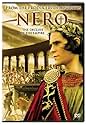
A six-episode mini-series covering five centuries of the Roman Empire.A six-episode mini-series covering five centuries of the Roman Empire.A six-episode mini-series covering five centuries of the Roman Empire.


Ángela Molina
- Domitia
- (as Angela Molina)


Simón Andreu
- Porridus
- (as Simon Andreu Trobat)


Emanuela Garuccio
- Claudia
- (as Emanuela Garruccio)


Klaus Händl
- Pallas
- (as Klaus Haendl)

- Director
- Writers
- All cast & crew
- Production, box office & more at IMDbPro
5.6744
1
2
3
4
5
6
7
8
9
10
Featured reviews
Hans is great as usual but my God the girl who play's Acta
Hans is great as usual but my God the girl who play's Acta what is that?
This film version of the Nero story is fresh and easy evening watch TV but ....
Because (I think) the actress who plays Acta has been dubbed, I am completely annoyed by her gasping and squeaking sounds before she says anything.
Then she has the appearance of a goldfish so I really do not understand who has cast this lady.
For me this role is the most annoying role that I have seen playing in years, so I ruined a very large part of the actually good series.
The rest of the cast plays well and Hans is a Nero who does not fall into the stereotype of the overly insane emperor.
So for a relaxing evening watching TV, this version is great, but not high-quality, unfortunately, because Hans had deserved a better opponent than this gasping girl.
Upcoming in the series....
As a ravenous devourer of all films set in the ancient world, but especially the Roman ones, as soon as I found out this and "Augustus" are part of a larger programme, I had to uncover the remaining pieces to be filmed. As culled from the production company website, they are as follows:
Miniseries completed: Augusto/Augustus and Nerone/Nero Miniseries in production: San Pietro/Saint Peter, Pompei/Pompeii, Costantino/Constantine and La Caduta dell'Impero/The fall of the empire.
So it would appear that the series will not focus only on 'imperium' per se, that is emperors and all that. But instead, it will feature some historical events and important characters peripheral to Rome proper (in this case, St. Peter). Much as I don't like the Christian flicks, one cannot look at all Rome's history and shrug it off. But, for my part, I look forward to the Constantine piece. TThe man hasn't been 'filmed' much and I cannot locate the one that I know of on DVD anywhere.
Miniseries completed: Augusto/Augustus and Nerone/Nero Miniseries in production: San Pietro/Saint Peter, Pompei/Pompeii, Costantino/Constantine and La Caduta dell'Impero/The fall of the empire.
So it would appear that the series will not focus only on 'imperium' per se, that is emperors and all that. But instead, it will feature some historical events and important characters peripheral to Rome proper (in this case, St. Peter). Much as I don't like the Christian flicks, one cannot look at all Rome's history and shrug it off. But, for my part, I look forward to the Constantine piece. TThe man hasn't been 'filmed' much and I cannot locate the one that I know of on DVD anywhere.
Absolute hogwash!
What a disaster! Normally, when one critiques a historical movie, it's always fun to point out the inaccuracies that slip in, usually added by the writers to create more "dramatic" situations. However, "Imperium: Nerone" is a whole 'nuther kind of animal. In this movie you strain to find ANYTHING at all that is confirmed by the historical record amidst the farrago of nonsense and fiction presented as the life of Rome's bad-boy artist-emperor.
And it's a pity, because Nero is one of the most fascinating of all the Roman emperors. His life was filled with enough tumultuous events and interesting people to make a really good movie. The producers of this mess chose another route, which leads only to head-scratching on the part of any informed viewer.
Just a few examples:
1. Nero is depicted as an 6-8 year old boy when Caligula has his father killed for treason, exiles his mother Agrippina, and sends the boy to be raised by slaves in the countryside. "Ten years later," the story resumes just before the assassination of Caligula. Facts: Nero was born about six months after Caligula began his four year reign, and was only three when he was assassinated; Nero's father died of natural causes; Agrippina was briefly exiled for bad behavior, not treason; and Nero was not raised among slaves, but had the typical upbringing of a young member of the imperial family.
2. Okay, according to the writers, Nero is now about 16 when his great uncle Claudius becomes emperor (in fact he was about to turn 4); Agrippina engineers the downfall of the empress Messalina and marries Claudius, who adopts Nero. Then he goes off to conquer Britain, and is poisoned by Agrippina soon after his victorious return. Nero is declared emperor, although he's still perhaps only 18 or 19 years old. Fact: Claudius conquered Britain in 43 A.D., two years after beginning his reign. He lived until 54 A.D. Nero should have been 31 years old by then by any normal chronology, but in fact succeeded to the throne at age 16.
History tells us that there then followed the "Five Good Years," where Nero ruled wisely and well under the tutelage of the philosopher Seneca and the Praetorian commander Burrus. This is shown -- sort of -- except that portraying the Roman Senate as opposing Nero's good measures is false. Senatorial opposition to Nero only commenced when he started to show signs of insanity and began killing Senators for real or imagined treason.
3. Nero's mother Agrippina is the controlling sort, who murdered her uncle-husband to make her son emperor. After a while, Nero tires of her meddling and decides to kill her. In the movie, he sends his henchman Tigellinus to stab her to death. All true enough, but the reality was so much better! Agrippina was a survivor, and didn't go easily. Nero tried three times to poison her, but as an old poisoner herself she was savvy to all that, and he failed. Then he tried to crush her to death by collapsing the ceiling of her bedchamber, but that also failed. Next, he sent her on a voyage on a ship that was deliberately constructed to fall apart and sink; as it went down, she jumped into the sea and swam to shore. Finally, he had her stabbed to death. Now showing all THAT would have definitely improved this movie!
Other errors abound: Nero's lover Acte was not a childhood slave-friend, she never repudiated him, and there is no evidence that she became a Christian. Nero did not commit suicide by slitting his wrists while sitting beside a lake. Etc. etc. etc.
The sources for Nero's life are primarily the Roman historians Tacitus and Suetonius, both of whom were of the senatorial class hostile to him and his memory. But the evidence indicates that he remained very popular with the common people, unlike one of the final scenes where he is pelted by the mob with vegetables as he leaves the city to commit suicide.
WHY did the writers and producers take an inherently interesting story with plenty of good stuff for any movie, and make THIS piece of crap? Oh, and did I mention how cheesy the sets and costumes were? Lol.
One star, because there's no way to rate it lower.
And it's a pity, because Nero is one of the most fascinating of all the Roman emperors. His life was filled with enough tumultuous events and interesting people to make a really good movie. The producers of this mess chose another route, which leads only to head-scratching on the part of any informed viewer.
Just a few examples:
1. Nero is depicted as an 6-8 year old boy when Caligula has his father killed for treason, exiles his mother Agrippina, and sends the boy to be raised by slaves in the countryside. "Ten years later," the story resumes just before the assassination of Caligula. Facts: Nero was born about six months after Caligula began his four year reign, and was only three when he was assassinated; Nero's father died of natural causes; Agrippina was briefly exiled for bad behavior, not treason; and Nero was not raised among slaves, but had the typical upbringing of a young member of the imperial family.
2. Okay, according to the writers, Nero is now about 16 when his great uncle Claudius becomes emperor (in fact he was about to turn 4); Agrippina engineers the downfall of the empress Messalina and marries Claudius, who adopts Nero. Then he goes off to conquer Britain, and is poisoned by Agrippina soon after his victorious return. Nero is declared emperor, although he's still perhaps only 18 or 19 years old. Fact: Claudius conquered Britain in 43 A.D., two years after beginning his reign. He lived until 54 A.D. Nero should have been 31 years old by then by any normal chronology, but in fact succeeded to the throne at age 16.
History tells us that there then followed the "Five Good Years," where Nero ruled wisely and well under the tutelage of the philosopher Seneca and the Praetorian commander Burrus. This is shown -- sort of -- except that portraying the Roman Senate as opposing Nero's good measures is false. Senatorial opposition to Nero only commenced when he started to show signs of insanity and began killing Senators for real or imagined treason.
3. Nero's mother Agrippina is the controlling sort, who murdered her uncle-husband to make her son emperor. After a while, Nero tires of her meddling and decides to kill her. In the movie, he sends his henchman Tigellinus to stab her to death. All true enough, but the reality was so much better! Agrippina was a survivor, and didn't go easily. Nero tried three times to poison her, but as an old poisoner herself she was savvy to all that, and he failed. Then he tried to crush her to death by collapsing the ceiling of her bedchamber, but that also failed. Next, he sent her on a voyage on a ship that was deliberately constructed to fall apart and sink; as it went down, she jumped into the sea and swam to shore. Finally, he had her stabbed to death. Now showing all THAT would have definitely improved this movie!
Other errors abound: Nero's lover Acte was not a childhood slave-friend, she never repudiated him, and there is no evidence that she became a Christian. Nero did not commit suicide by slitting his wrists while sitting beside a lake. Etc. etc. etc.
The sources for Nero's life are primarily the Roman historians Tacitus and Suetonius, both of whom were of the senatorial class hostile to him and his memory. But the evidence indicates that he remained very popular with the common people, unlike one of the final scenes where he is pelted by the mob with vegetables as he leaves the city to commit suicide.
WHY did the writers and producers take an inherently interesting story with plenty of good stuff for any movie, and make THIS piece of crap? Oh, and did I mention how cheesy the sets and costumes were? Lol.
One star, because there's no way to rate it lower.
no history
"Imperium Nero" is the second movie of the series of six productions named "Imperium". I have already unfavorably commented the first one: "Imperium Augustus". This second TV movie produced and broadcast last weekend by the Italian state owned network has the same defects. In addition contains a considerable number of historical errors. Some examples: Nero is a child and Agrippina calls him: "Nero, Nero". At that time is name was Claudius. He was named Nero after his adoption. Nero did not meet Acte when he was young as in the movie but after his marriage with Octavia and his nomination to Emperor. When becoming Emperor his sons where not adults: Britannicus is one month old and Octavia one year old. And many many more. If you are fond of ancient roman history you can find yourselves other examples. "Imperium" series will continue with four more movies : "Titus", "Marcus Aurelius","Costantinus" and"The Fall of the Roman Empire". Finally!
Despite the inaccuracies
This movie was good. It was both entertaining (although long at 3 hours) and refreshing.
I have seen a lot of movies on the Roman Empire, including Augustus (to which I also found great). Although I only have mild university level knowledge on the history of the Roman Republic and Empire, I know very little of Nero, so I watch Nero from an ignorant point of view.
Gladiator had little historical background yet was hailed and given high ratings and great reviews. Although that is a story, one would assume Nero (as well as Augustus) to be an accurate day-to-day recount of the lives of these Emperors. True, there are some parts that seem out-of-date, far-fetched, and alienated from what seems to be 'truth', but you can't hide that this is a story.
I found huge gaps in Augustus, Rome, and Julius Caesar, but I loved every second of them, and as far as I'm concerned, Imperium: Nero is better than Augustus (even though I studied him for quite some time).
If you haven't seen Nero, it's a good movie, and a great night at home with some ice cream, or popcorn! Most of the reviewers cast "hog-wash", but use Historical Inaccuracies as their main attack, then again, "Gladiator" wasn't the most historically accurate film ever made either.
6.7/10
I have seen a lot of movies on the Roman Empire, including Augustus (to which I also found great). Although I only have mild university level knowledge on the history of the Roman Republic and Empire, I know very little of Nero, so I watch Nero from an ignorant point of view.
Gladiator had little historical background yet was hailed and given high ratings and great reviews. Although that is a story, one would assume Nero (as well as Augustus) to be an accurate day-to-day recount of the lives of these Emperors. True, there are some parts that seem out-of-date, far-fetched, and alienated from what seems to be 'truth', but you can't hide that this is a story.
I found huge gaps in Augustus, Rome, and Julius Caesar, but I loved every second of them, and as far as I'm concerned, Imperium: Nero is better than Augustus (even though I studied him for quite some time).
If you haven't seen Nero, it's a good movie, and a great night at home with some ice cream, or popcorn! Most of the reviewers cast "hog-wash", but use Historical Inaccuracies as their main attack, then again, "Gladiator" wasn't the most historically accurate film ever made either.
6.7/10


Did you know
- ConnectionsFollowed by San Pietro (2005)
Details
Contribute to this page
Suggest an edit or add missing content