

Two documentary filmmakers chronicle their time in Sonagchi, Calcutta and the relationships they developed with children of prostitutes who work the city's notorious red light district.Two documentary filmmakers chronicle their time in Sonagchi, Calcutta and the relationships they developed with children of prostitutes who work the city's notorious red light district.Two documentary filmmakers chronicle their time in Sonagchi, Calcutta and the relationships they developed with children of prostitutes who work the city's notorious red light district.
- Won 1 Oscar
- 21 wins & 5 nominations total
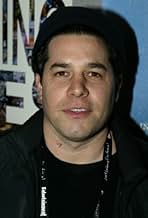
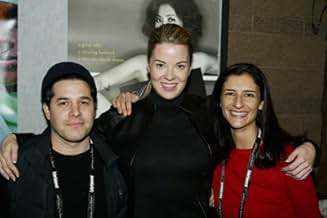
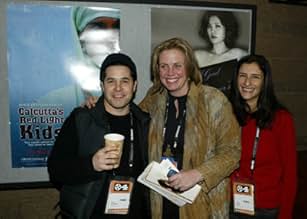
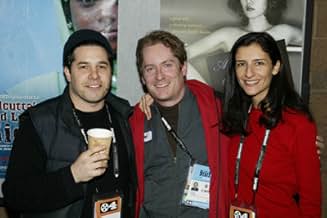


Avijit Halder
- Self
- (as Avijit)
Shanti Das
- Self
- (as Shanti)
Puja Mukerjee
- Self
- (as Puja)

Zana Briski
- Herself "Zana Auntie"
- (uncredited)
Sunil Halder
- Self
- (uncredited)
- …
- Directors
- Writers
- All cast & crew
- Production, box office & more at IMDbPro
7.218.6K
1
2
3
4
5
6
7
8
9
10
Featured reviews
Deeply compelling personal film
This is a beautifully conceived and directed film. I knew little about the red light district of Calcutta and certainly nothing of the amazing children whose photographs are not only dramatic but also a tool of empowerment, albeit not entirely successful. One of the best documentaries of 2004. There certainly have been several excellent movies about the misery and hopeless nature of life in red light districts throughout the world, particularly southeast Asia. But this film's decision to focus on the children who not only are born in the brothels, but essentially live their entire lives within this damp and dismal walls. Director/photographer Zana Briski is to commended for bringing this to light. Several of my friends had deep empathy for her frustrating experiences with the Indian bureaucracy as she tries to get the children's art work noticed. Great film.
An incredible and meaningful experience
This film should be seen by everyone who has any sense of what the world is and can be if we give our attention and empathy to make it a better place --in the background I hear the greed and anger of Donald Trump and it is so jarring (and sad) and disturbing ....it is absolutely amazing the dedication and caring of Zana Briski an Ross Kauffman and their attempt to support and change the destinies of these poor unfortunate children who are doomed to a life of humiliation, poverty and human degradation. It is uplifting to know that there are people who care --who are not driven by greed and avarice-- who will try , no matter what the odds are, no matter what are the bureaucratic difficulties to help and support these poor unfortunate children .. I know that I have been immensely moved by this film and what is going on in a place like the red light district of Calcutta and will do what I can to make some impact with these unfortunate children in all of the various venues that these people have chosen to work in and do these miraculous things that are they are doing.
Documentary at its best
I often disagree with the academy award nominations. It's usually too political to nominate the best movies and performances of the year. Born Into Brothels is an exception, it was nominated and won! The only mistake was not nominating it for best picture.
Brothels is the story of a woman, Zana Briski, who traveled to Calcutta to photograph the brothels. She fell in love with the children and began teaching them photography. The movie is seen through their eyes.
The result is extraordinary in so many ways. Calcutta's red light district is interesting in and of itself. The setting is the first extraordinary feature. The filming makes you feel like you are there. Director Ross Kauffman captures the feeling of being trapped in dark allies with a dark future. Without a director commentary running though the film, you're able to see it all by the way it's been directed. The dark past and future of these families is presented in a beautiful and horrific way.
Secondly, the children are lovable. The story focuses on 8 or 9 children of prostitutes. Each one is unique. Some are incredibly funny, others serious, some are troubled, and at least one has an undeniable talent for photography. You'll leave the theater feeling like you know them.
This is documentary film at its best. It transports us to another country and makes us love the troubled children. What was troubling to me was having to leave the theater never to see these troubled children again. Putting aside the incredible movie-making abilities of these creators, Zana Briski is a true hero.
Brothels is the story of a woman, Zana Briski, who traveled to Calcutta to photograph the brothels. She fell in love with the children and began teaching them photography. The movie is seen through their eyes.
The result is extraordinary in so many ways. Calcutta's red light district is interesting in and of itself. The setting is the first extraordinary feature. The filming makes you feel like you are there. Director Ross Kauffman captures the feeling of being trapped in dark allies with a dark future. Without a director commentary running though the film, you're able to see it all by the way it's been directed. The dark past and future of these families is presented in a beautiful and horrific way.
Secondly, the children are lovable. The story focuses on 8 or 9 children of prostitutes. Each one is unique. Some are incredibly funny, others serious, some are troubled, and at least one has an undeniable talent for photography. You'll leave the theater feeling like you know them.
This is documentary film at its best. It transports us to another country and makes us love the troubled children. What was troubling to me was having to leave the theater never to see these troubled children again. Putting aside the incredible movie-making abilities of these creators, Zana Briski is a true hero.
A sad story
A great documentary, which reveals a sad Indian reality, it makes us think about human rights, especially children. The documentary carries shocking phrases especially because they are spoken by children. At last a great movie even being a sad story.
Moving but flawed Documentary
It would certainly take a filmmaker of much self-consciousness, something which Zana Briski certainly possesses, to make this film the way she has. Having met with uncooperative roadblocks to shooting a documentary about sex-workers and their families within the squalid confines of Calcutta's red-light district, Briski states early on that she decides to have the children themselves tell their story by supplying them with automatic cameras to use in their own personal ways. The film, however, ultimately becomes an account of one outsider's attempt to save these children from their miserable fates - poverty and sexual abuse. With the children's sex-worker mothers and families, many of whom have apparently spent generations in the district with no escape in sight, used as background elements, Briski focuses solely on the children, entering them into an informal photography seminar where they gather to share contact sheets of their pictures and discuss the problems of shooting amidst uncooperative and hostile subjects and why certain pictures work and why some don't. Thankfully, Briski also interviews the children, and while it's not clear they understand her theories on picture composition, they are, despite being denied education and living amidst fairly brutal conditions of abuse, poverty and indentured servitude, very perceptive and wise to the unfortunate conditions in which they live, their prospects and possess an awareness of the possibilities of life outside of the district. Briski becomes further involved with the children by trying to enter them into school, though most will not accept them because they are the children of sex workers. Indeed, it is the indifference of Indian authorities to the children's plight as much as the abuse they receive from their depraved parents that shocks the viewer. Briski, with some help from some photographic arts people in the United States and Amnesty International, is able to use the children's pictures as a commercial vehicle to raise money to enable them to enroll in a private boarding school (the kids are well aware that education is their only way out of the brothels). Here, Briski's movement somewhat takes over the movie from her subjects, proving how futile western notions of compassionate aid often are to endemic and grave third-world situations like we witness here. This is driven home when of the kids accepted into the boarding school, only one eventually remains because of the economic pressures put upon their families in which the children essentially act as indentured servants, performing household tasks day and night and odd jobs for additional income. So, while the film becomes a parade for Briski's noble cause, I would have liked to have seen more background and interaction between the children and their surroundings, other than simply as child photographers who have been given a brief and, for most of them, fleeting reprieve from their depraved surroundings.


Did you know
- SoundtracksSankarabaranam pancha nadai pallavi
Performed by Shenkar and The Epidemics
Details
- Release date
- Country of origin
- Official site
- Languages
- Also known as
- Born Into Brothels
- Filming locations
- Production companies
- See more company credits at IMDbPro
Box office
- Gross US & Canada
- $3,515,061
- Opening weekend US & Canada
- $14,605
- Dec 12, 2004
- Gross worldwide
- $3,529,201
- Runtime
- 1h 25m(85 min)
- Color
- Sound mix
- Aspect ratio
- 1.37 : 1(original negative)
- 1.85 : 1
Contribute to this page
Suggest an edit or add missing content