

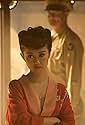
The heartwarming tale of Nitta Sayuri, a young Japanese woman who transcended from her fishing-village roots and became one of Japan's most celebrated geisha.The heartwarming tale of Nitta Sayuri, a young Japanese woman who transcended from her fishing-village roots and became one of Japan's most celebrated geisha.The heartwarming tale of Nitta Sayuri, a young Japanese woman who transcended from her fishing-village roots and became one of Japan's most celebrated geisha.
- Won 3 Oscars
- 32 wins & 47 nominations total





- Director
- Writers
- All cast & crew
- Production, box office & more at IMDbPro
7.3170.3K
1
2
3
4
5
6
7
8
9
10
Featured reviews
Quite enjoyed it!
Having read the book a few years ago and being a bit of a Ziyi fan I just had to see the film. And I wasn't disappointed. I think Rob Marshall did a wonderful job creating a visually beautiful fairytale with a very strong cast. The film was very faithful to the book and even kept the ending I didn't like. I thought the Chinese actresses were quite believable as Japanese and gorgeous, and although, as some reviewers have said, the actors' broken English could not be understood at times, their acting made up for it. It was certainly an entertaining film--a story of a determined young girl (played by a very convincing child actor!) blossoming into a beautiful geisha despite many difficulties.
I am actually quite surprised by the number of people (including a lot of Japanese) who criticise the film for its inaccuracy on the portrayal of Geisha culture. Okay, so the film is not accurate, but Geisha culture is as much a mystery to the Japanese as it is to the Western world. Very little is known about what happened inside the closed world of Gion where the story takes place. Only some of the privileged and respected men were allowed into the teahouses (where geisha entertained men) and it was forbidden for geishas to talk about what went on in the teahouses (Thank god someone broke the rules or we would have never known their story!!).
Actually some of my relatives used to run teahouses in Gion, however I know very little because sadly they went out of business after the War like other teahouses in the film or started what Mameha (played by the very gracious Michelle Yeoh) did 'renting rooms'. The fact is Gion has dwindled into such a sad state these days. Many teahouses, except for the very best, have become merely overpriced souvenir shops and hotels; and real geishas are outnumbered by tourist 'instant geishas' who have no elegance at all (who are comparable to some of the minor geishas in the film).
Anyway, it is unjust to point out what the film did wrong just because it is a Hollywood film. It would be very difficult for a Japanese film maker to recreate an accurate picture of Gion on film anyway. In that sense, I think it was a benefit to the film in not having a Japanese director or Japanese actresses. It liberated it from the burden of portraying Geishas accurately and created a more fairytale-like story.
Not to discredit the filmmakers--- they obviously made a lot of effort in making some of the details very believable. I was quite impressed with the quality of the set. I think it captured the darkness and light of Gion very well. The narrow backstreets and the gloomy okiya (where geishas lived) were believable--my relative's teahouse where they still live is indeed very dark and suffocating by day, but at night the district lights up prettily. Another detail not to be missed: the sumo scene. They actually have a very famous retired sumo wrestler performing!
Anyway, overall I think it's very much worth seeing so don't be put-off by the negative reviews!
I am actually quite surprised by the number of people (including a lot of Japanese) who criticise the film for its inaccuracy on the portrayal of Geisha culture. Okay, so the film is not accurate, but Geisha culture is as much a mystery to the Japanese as it is to the Western world. Very little is known about what happened inside the closed world of Gion where the story takes place. Only some of the privileged and respected men were allowed into the teahouses (where geisha entertained men) and it was forbidden for geishas to talk about what went on in the teahouses (Thank god someone broke the rules or we would have never known their story!!).
Actually some of my relatives used to run teahouses in Gion, however I know very little because sadly they went out of business after the War like other teahouses in the film or started what Mameha (played by the very gracious Michelle Yeoh) did 'renting rooms'. The fact is Gion has dwindled into such a sad state these days. Many teahouses, except for the very best, have become merely overpriced souvenir shops and hotels; and real geishas are outnumbered by tourist 'instant geishas' who have no elegance at all (who are comparable to some of the minor geishas in the film).
Anyway, it is unjust to point out what the film did wrong just because it is a Hollywood film. It would be very difficult for a Japanese film maker to recreate an accurate picture of Gion on film anyway. In that sense, I think it was a benefit to the film in not having a Japanese director or Japanese actresses. It liberated it from the burden of portraying Geishas accurately and created a more fairytale-like story.
Not to discredit the filmmakers--- they obviously made a lot of effort in making some of the details very believable. I was quite impressed with the quality of the set. I think it captured the darkness and light of Gion very well. The narrow backstreets and the gloomy okiya (where geishas lived) were believable--my relative's teahouse where they still live is indeed very dark and suffocating by day, but at night the district lights up prettily. Another detail not to be missed: the sumo scene. They actually have a very famous retired sumo wrestler performing!
Anyway, overall I think it's very much worth seeing so don't be put-off by the negative reviews!
Beautiful Romance
In Japan of the 20's, the nine years old Chyio (Suzuka Ohgo) and her sister Satsu (Samantha Futerman) are sold by her fisherman father to a Geisha house in Miyako. Satsu is not accepted in the house and is sent to a brothel, and along the years, Satsu escapes from he brothel where she lived and the rebel Chyio is left alone, becoming a slave of a geisha. However, six years later, she learns how to become the geisha Sayuri (Ziyi Zhang) with the support of the successful Mameha (Michelle Yeoh), while fighting against the evil and jealousy of the wicked Hatsumomo (Gong Li). While still a child, Chyio falls in love with The Chairman (Ken Watanabe), and in the post-WWII, they meet each other, in a period o changes in Japan with the occupying American forces and the country completely destroyed.
The first half of "Memoirs of a Geisha" is a beautiful drama, telling the story of the country girl Chyio alone and adapting to a new life style in a house of geisha. Then, in the end of World War II, the screenplay becomes a soap-opera and the story becomes lesser and lesser attractive. However, the cinematography, the art direction and the costume design are amazing along the whole movie. But the cast speaking in English and keeping some Japanese words seems quite ridiculous for me. For such a careful production, this seems to be an unforgivable mistake. My vote is eight.
Title (Brazil): "Memórias de uma Gueixa" ("Memoirs of a Geisha")
The first half of "Memoirs of a Geisha" is a beautiful drama, telling the story of the country girl Chyio alone and adapting to a new life style in a house of geisha. Then, in the end of World War II, the screenplay becomes a soap-opera and the story becomes lesser and lesser attractive. However, the cinematography, the art direction and the costume design are amazing along the whole movie. But the cast speaking in English and keeping some Japanese words seems quite ridiculous for me. For such a careful production, this seems to be an unforgivable mistake. My vote is eight.
Title (Brazil): "Memórias de uma Gueixa" ("Memoirs of a Geisha")
A Top-Notch Eye Candy
Can a group of American men and Chinese actresses render the world of a Japanese geisha? The answer is yes, with stunning beauty
and regrettable flaws.
Truth be told, this movie was not as bad as its trailer led me to expect it to be. It had a story to tell (although it crumbles in the end),images to show, and material to present. There were ample displays of exquisite beauty -- the trailing tails of silk kimonos, the subtle allure of hand gestures, and the captivating scene of kabuki dance theater ...
On the other hand, the American director was not able to pull the Japanese out of Chinese actresses. (This movie was so crowded by famous Chinese idols that I found myself inadvertently searching for Joan Chen among the cast.) To be fair, all three main actors (Gong Li in particular) show strong performances that made me sympathetic to Rob Marshall's choices. However, they remain utterly Chinese throughout this movie. The look and accent are not the only problems. They lacked the kind of extreme femininity and excessive felicity of the delicately mechanical gesture and movements of traditional Japanese ladies you see in custom dramas of Japanese production. (Michelle Yeoh seems to be the only one trying a little bit of those, but it did not quite work for some reason.)
So, let me re-address the question: Can a group of American men and Chinese actresses render the world of a geisha? The answer, I guess, really depends on what you are looking for. If you would like a little bit of delight from an aesthetically pleasing picture with a dubious authenticity and realism, this movie delivers it. I would not say Rob Marshall failed completely. Memoirs of a Geisha is not the first, nor the last, movie that subjects another culture to the crude lens of American exoticism. It definitely is not the worst one.
Truth be told, this movie was not as bad as its trailer led me to expect it to be. It had a story to tell (although it crumbles in the end),images to show, and material to present. There were ample displays of exquisite beauty -- the trailing tails of silk kimonos, the subtle allure of hand gestures, and the captivating scene of kabuki dance theater ...
On the other hand, the American director was not able to pull the Japanese out of Chinese actresses. (This movie was so crowded by famous Chinese idols that I found myself inadvertently searching for Joan Chen among the cast.) To be fair, all three main actors (Gong Li in particular) show strong performances that made me sympathetic to Rob Marshall's choices. However, they remain utterly Chinese throughout this movie. The look and accent are not the only problems. They lacked the kind of extreme femininity and excessive felicity of the delicately mechanical gesture and movements of traditional Japanese ladies you see in custom dramas of Japanese production. (Michelle Yeoh seems to be the only one trying a little bit of those, but it did not quite work for some reason.)
So, let me re-address the question: Can a group of American men and Chinese actresses render the world of a geisha? The answer, I guess, really depends on what you are looking for. If you would like a little bit of delight from an aesthetically pleasing picture with a dubious authenticity and realism, this movie delivers it. I would not say Rob Marshall failed completely. Memoirs of a Geisha is not the first, nor the last, movie that subjects another culture to the crude lens of American exoticism. It definitely is not the worst one.
Introducing The Colourful Dark World Of The Geisha
Marshall's adaptation of Golden's 'Memoirs of a Geisha' appears to be concise and a little tepid. It leaves out some crucial parts of the novel. Moreover, the characters in the novel are very well developed. The movie somehow fails to show this. I can understand that there were time constraints and the movie is already longer than the usual 2 hours but some important sequences, like the love story between the Chairman and Sayuri needed more development. As a director, Marshall does not do a bad job at all. He's the one who gives the film an enchanting feeling. With the spectacular visuals he presents a lot of subtle symbolism. Actually, what really makes 'Memoirs of a Geisha' watchable is that it's fascinating to look at. The dazzling colourful visuals and mesmerizing soundtrack are incredible. The shots of the landscape, the costumes, the choreography and the spectacular cinematography are breathtaking.
I wonder why three Chinese actresses were cast in the main roles? I can understand why this would upset some Japanese people. My Japanese friend joked that it was perhaps because Japanese actresses don't speak good English. Though, the most likely reason for Ziyi, Yeoh and Li's casting may be their international appeal (as they are quite well known throughout the world) and that Li and Yeoh are also accomplished actresses while Ziyi is kind of a star.
Among the performances, it is the supporting cast who stand out. Zhang Ziyi lacks the liveliness and curiosity of Sayuri. Ziyi seems to be too conscious of the fact that she's only acting. Even child actress Suzuka Ohgo, who plays young Sayuri, does a better job. Youki Kudoh gets more scope to perform near the end and does a decent job. Gong Li is superb as the wicked fiery Hatsumomo (but, sadly, her character is one-dimensional) and an enigmatic Michelle Yeoh is equally outstanding as the once divine geisha Mameha. Among the men, it is Kôji Yakusho who impresses as the brave but stubborn Nobu. Ken Watanabe is alright.
To sum it up, I loved watching 'Memoirs of a Geisha' mainly because it was very pleasing to the eyes. Marshall has handled plenty of sequences beautifully but it lacks a stronger heart (perhaps this is due to miscasting Zhang Ziyi). Having read the book, I'm not that disappointed as, even though some parts have been left out, not too much has been altered. Thus, it tries to stay true to the book. I think it also introduces the beauty of the ancient Japanese culture quite sensibly. Whether that feels real to some is another point.
I wonder why three Chinese actresses were cast in the main roles? I can understand why this would upset some Japanese people. My Japanese friend joked that it was perhaps because Japanese actresses don't speak good English. Though, the most likely reason for Ziyi, Yeoh and Li's casting may be their international appeal (as they are quite well known throughout the world) and that Li and Yeoh are also accomplished actresses while Ziyi is kind of a star.
Among the performances, it is the supporting cast who stand out. Zhang Ziyi lacks the liveliness and curiosity of Sayuri. Ziyi seems to be too conscious of the fact that she's only acting. Even child actress Suzuka Ohgo, who plays young Sayuri, does a better job. Youki Kudoh gets more scope to perform near the end and does a decent job. Gong Li is superb as the wicked fiery Hatsumomo (but, sadly, her character is one-dimensional) and an enigmatic Michelle Yeoh is equally outstanding as the once divine geisha Mameha. Among the men, it is Kôji Yakusho who impresses as the brave but stubborn Nobu. Ken Watanabe is alright.
To sum it up, I loved watching 'Memoirs of a Geisha' mainly because it was very pleasing to the eyes. Marshall has handled plenty of sequences beautifully but it lacks a stronger heart (perhaps this is due to miscasting Zhang Ziyi). Having read the book, I'm not that disappointed as, even though some parts have been left out, not too much has been altered. Thus, it tries to stay true to the book. I think it also introduces the beauty of the ancient Japanese culture quite sensibly. Whether that feels real to some is another point.
A Visually and Musically Stunning Film
Why there is so much polarity with the audiences of Rob Marshall's cinematic adaptation of Arthur Golden's exquisite novel MEMOIRS OF A GEISHA is puzzling. Even in the theater there were those who left halfway through - reason unknown. Despite disagreements on the casting techniques and on the emphasis changes between the book and the film, MEMOIRS remains one of the most visually arresting, genteel films of the year. That it comes across as somewhat of an epic soap opera is no one's fault but the writers. And what is so wrong with an old-fashioned soap opera of a story afterall? The opening scene of the turbulent sea and heavy rain that accompany the silent selling of two poor sisters to a merchant planning to place the girls in houses in Osaka gives an indication of the importance of water in this story. The sisters are delivered to a house of geishas and only one is selected by the hard madam. Through years of suffering and anguish the chosen one becomes a geisha, finds comfort from her childhood of poverty, gains loving mentoring by a top geisha, becomes the most sought after geisha in Osaka, finds her love, endures WW II and eventually returns to her dreams. The interplay between the girl and the various members of the geisha training and bartering complex add flavor and conflict that keep the story flowing.
The three principal actresses - Ziyi Zhang, Michelle Yeoh, and Gong Li carry the film well. The large cast includes favorite actors Ken Watanabe and Mako. The settings are splendid, the special effects such as the cherry blossoms, the autumnal reunion of Zhang and Watanabe, Zhang's spellbinding dance - all are brilliant. John Williams' musical score blends the best of Japanese folk music with contemporary writing and is greatly abetted by the talent of Yo-Yo Ma and Itzak Perlman.
Part of the brilliance of Golden's novel was the meticulous explanation of the myriad details of geisha training and demeanor and makeup and tradition, and while the film version touches on these, the bulk of them are passed over. For this viewer there is a problem with understanding the dialogue due to the enunciation by the actors and the covering of much of the dialogue with ambient music. But that is a minor complaint. In all, MEMOIRS OF A GEISHA is an enormously beautiful and affecting film, one that multiple viewings will no doubt enhance the viewers' appreciation. Recommended. Grady Harp, February 06
The three principal actresses - Ziyi Zhang, Michelle Yeoh, and Gong Li carry the film well. The large cast includes favorite actors Ken Watanabe and Mako. The settings are splendid, the special effects such as the cherry blossoms, the autumnal reunion of Zhang and Watanabe, Zhang's spellbinding dance - all are brilliant. John Williams' musical score blends the best of Japanese folk music with contemporary writing and is greatly abetted by the talent of Yo-Yo Ma and Itzak Perlman.
Part of the brilliance of Golden's novel was the meticulous explanation of the myriad details of geisha training and demeanor and makeup and tradition, and while the film version touches on these, the bulk of them are passed over. For this viewer there is a problem with understanding the dialogue due to the enunciation by the actors and the covering of much of the dialogue with ambient music. But that is a minor complaint. In all, MEMOIRS OF A GEISHA is an enormously beautiful and affecting film, one that multiple viewings will no doubt enhance the viewers' appreciation. Recommended. Grady Harp, February 06


Did you know
- TriviaThe elements of nature are a running theme through this film and each of the four main Geisha have an elemental character. Sayuri is water, Mameha is wind, Pumpkin is wood (the equivalent of earth) and Hatsumomo is fire.
- GoofsWhen Hatsumomo and Pumpkin are leaving on the night of Pumpkin's debut, neither Mother nor Auntie spark flint on their backs. A Geisha would never leave her okiya without this act being performed as it was believed it brought good luck.
- Crazy creditsNo studio logos are shown at the beginning; they appear shortened after the end credits and are accompanied by the film's score.
- ConnectionsFeatured in The 63rd Annual Golden Globe Awards 2006 (2006)
- SoundtracksAnata No Mono Yo
Written by Takao Saeki and Kôka Sassa
Performed by Noriko Awaya
Courtesy of Columbia Music Entertainment, Inc.
Details
- Release date
- Country of origin
- Official site
- Languages
- Also known as
- Memorias de una geisha
- Filming locations
- California State Railroad Museum - 111 I Street, Sacramento, California, USA(interiors: railroad station)
- Production companies
- See more company credits at IMDbPro
Box office
- Budget
- $85,000,000 (estimated)
- Gross US & Canada
- $57,490,508
- Opening weekend US & Canada
- $682,504
- Dec 11, 2005
- Gross worldwide
- $162,242,962
- Runtime
- 2h 25m(145 min)
- Color
- Sound mix
- Aspect ratio
- 2.39 : 1
Contribute to this page
Suggest an edit or add missing content