IMDb RATING
6.4/10
1.3K
YOUR RATING


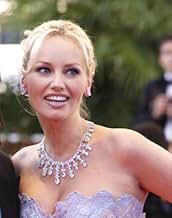
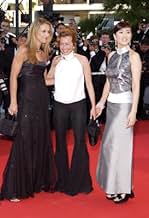
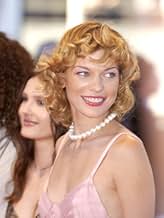
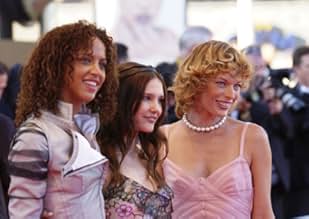
Rosanna Arquette talks to various actresses about the pressures they face as women working in the entertainment industry.Rosanna Arquette talks to various actresses about the pressures they face as women working in the entertainment industry.Rosanna Arquette talks to various actresses about the pressures they face as women working in the entertainment industry.
- Director
- Writer
- Stars
- Awards
- 1 nomination total




- Director
- Writer
- All cast & crew
- Production, box office & more at IMDbPro
6.41.2K
1
2
3
4
5
6
7
8
9
10
Featured reviews
Good Intentions Gone Awry
I wanted to like this movie, I really did, but it's a mess. As well-intentioned as is Roseanna Arquette, there's no real point to this film.
Obviously, Arquette was able to secure the confessions of some of the finest actresses of our times, but instead of drawing on the "Red Shoes" theme, we are subjected to an inchoate collection of let's face it, silly laments.
Though not meant to be, a lot of these diatribes are insulting to women who struggle along in boring jobs, barely able to make ends meet while juggling marriages, kids and art without benefit of nannies, private jets and personal assistants.
Instead of discussing the struggle of art v. children, or career v. marriage as was promised in the opening monologue, this movie is about extraordinarily beautiful women who want our sympathy because they no longer receive the enormous privileges they received when they were more desirable to the men who make movies.
I love Theresa Russell, I really do, but she comes off like a selfish, prom queen who isn't getting enough attention. Laughable but sad is Melanie Griffith who obviously knows the joys of Botox and collagen but still cringes at the sexism to which she is subjected by the industry that made her rich. Jane Fonda, on the other hand, is as loopy as she was when Ed Murrow interviewed her 40 years ago on "Person to Person."
At least two of the screen goddesses interviewed -- Diane Lane and Sharon Stone-- have already altered their pronouncements: Lane who allegedly can't fit a man into her life is remarrying and Stone who finally met the perfect mate is divorcing.
The only person in this documentary who makes any sense at all is Terri Garr. I've always liked her and now I like her even more. The problem is no one is listening to Garr, though she still works all the time, even with a disability. And thankfully, Debra Winger comes off sane and sensible.
Get a grip girls. The rest of us mortal women of a certain age struggle throughout life, not just when we enter menopause. I am competing with 20 year olds in my workplace, just the same as you.
What was it that F. Scott Fitzgerald said? "The rich are different from you and I?" I guess the same is true of actresses.
Obviously, Arquette was able to secure the confessions of some of the finest actresses of our times, but instead of drawing on the "Red Shoes" theme, we are subjected to an inchoate collection of let's face it, silly laments.
Though not meant to be, a lot of these diatribes are insulting to women who struggle along in boring jobs, barely able to make ends meet while juggling marriages, kids and art without benefit of nannies, private jets and personal assistants.
Instead of discussing the struggle of art v. children, or career v. marriage as was promised in the opening monologue, this movie is about extraordinarily beautiful women who want our sympathy because they no longer receive the enormous privileges they received when they were more desirable to the men who make movies.
I love Theresa Russell, I really do, but she comes off like a selfish, prom queen who isn't getting enough attention. Laughable but sad is Melanie Griffith who obviously knows the joys of Botox and collagen but still cringes at the sexism to which she is subjected by the industry that made her rich. Jane Fonda, on the other hand, is as loopy as she was when Ed Murrow interviewed her 40 years ago on "Person to Person."
At least two of the screen goddesses interviewed -- Diane Lane and Sharon Stone-- have already altered their pronouncements: Lane who allegedly can't fit a man into her life is remarrying and Stone who finally met the perfect mate is divorcing.
The only person in this documentary who makes any sense at all is Terri Garr. I've always liked her and now I like her even more. The problem is no one is listening to Garr, though she still works all the time, even with a disability. And thankfully, Debra Winger comes off sane and sensible.
Get a grip girls. The rest of us mortal women of a certain age struggle throughout life, not just when we enter menopause. I am competing with 20 year olds in my workplace, just the same as you.
What was it that F. Scott Fitzgerald said? "The rich are different from you and I?" I guess the same is true of actresses.
Unscripted artists more compelling than their roles
I just want to thank Rosanna Arquette for what was one of the most intriguing documentaries about Hollywood I've seen. Although I live in Los Angeles, I do not work in the film industry, and in general tend to feel as though we, the citizens of the Movie Capital of the World, are frequently over-inundated with media about actors and their films.
But SEARCHING FOR DEBRA WINGER is different. Despite what the reader may feel about Hollywood, the actresses interviewed are some of the most influential performing artists of our era. Through Arquette, we get an opportunity to sit down and have a frank chat about their art, their insights, their ambivalence. The doc is not like a Barbara Walters interview: predictable and formatted and PR-mediated. Interviewed by Arquette, a fellow actress with similar sympathies, over little dinner parties, in restaurants, on lawn chairs -- even in the ladies room (a goofy, then serious Frances McDormand) -- the actresses managed to be more frank, more casual, unguarded with their opinions. Some seemed suspicious that the little documentary would ever be aired at all -- inadvertently freeing them up to be even more honest.
Famous for their beauty, their talent and their projects, you get to see that they are intelligent, clever, funny, angry, uptight, resentful, self-conscious, generous, insightful, even visionary in ways that are only hinted at in their films. The dialogue in SEARCHING FOR DEBRA WINGER is all in the actresses own words: no scripts, no acting, no roles. Its an opportunity to see who they are, in all their brilliance, artistry, egotism and folly. Diane Lane is sharp as a tack. Alfre Woodard deeply reflective, eloquent and mature. My suspicion that Holly Hunter is a genius is confirmed. Theresa Russell cuts loose with quite a bit of rage. Whoopi Goldberg is the antidote to glamour-poisoning. Sharon Stone is at least as ballsy as her onscreen persona. Jane Fonda comes over as a wise and deeply generous doyenne. And Debra Winger is more compelling than she's been in any of her movie roles.
Perhaps the biggest revelation was Rosanna Arquette herself. She really puts herself out there, expressing her own insights, risking the exposure of her doubts, in a way that encourages the other actresses to feel comfortable, to open up, to speak frankly. Arquette gamely drops a lot of the pretensions of the industry to tell her story, and to get the other actresses to tell theirs, and as a result manages to reveal unexpected truths about the people behind the profession.
Because of all the big names, the documentary has star power, glamour, and charm in spades. But it has much more. With the lighting, hair and makeup aspect de-emphasized, one gets a glimpse of the real people underneath the monolithic illusion we know as Hollywood, and I found these people, these artists more fascinating than any scripted characters I've seen in quite some time. Underneath all the glittering surfaces, one discovers a deep, and untapped reservoir of artistic -- and human -- potential.
But SEARCHING FOR DEBRA WINGER is different. Despite what the reader may feel about Hollywood, the actresses interviewed are some of the most influential performing artists of our era. Through Arquette, we get an opportunity to sit down and have a frank chat about their art, their insights, their ambivalence. The doc is not like a Barbara Walters interview: predictable and formatted and PR-mediated. Interviewed by Arquette, a fellow actress with similar sympathies, over little dinner parties, in restaurants, on lawn chairs -- even in the ladies room (a goofy, then serious Frances McDormand) -- the actresses managed to be more frank, more casual, unguarded with their opinions. Some seemed suspicious that the little documentary would ever be aired at all -- inadvertently freeing them up to be even more honest.
Famous for their beauty, their talent and their projects, you get to see that they are intelligent, clever, funny, angry, uptight, resentful, self-conscious, generous, insightful, even visionary in ways that are only hinted at in their films. The dialogue in SEARCHING FOR DEBRA WINGER is all in the actresses own words: no scripts, no acting, no roles. Its an opportunity to see who they are, in all their brilliance, artistry, egotism and folly. Diane Lane is sharp as a tack. Alfre Woodard deeply reflective, eloquent and mature. My suspicion that Holly Hunter is a genius is confirmed. Theresa Russell cuts loose with quite a bit of rage. Whoopi Goldberg is the antidote to glamour-poisoning. Sharon Stone is at least as ballsy as her onscreen persona. Jane Fonda comes over as a wise and deeply generous doyenne. And Debra Winger is more compelling than she's been in any of her movie roles.
Perhaps the biggest revelation was Rosanna Arquette herself. She really puts herself out there, expressing her own insights, risking the exposure of her doubts, in a way that encourages the other actresses to feel comfortable, to open up, to speak frankly. Arquette gamely drops a lot of the pretensions of the industry to tell her story, and to get the other actresses to tell theirs, and as a result manages to reveal unexpected truths about the people behind the profession.
Because of all the big names, the documentary has star power, glamour, and charm in spades. But it has much more. With the lighting, hair and makeup aspect de-emphasized, one gets a glimpse of the real people underneath the monolithic illusion we know as Hollywood, and I found these people, these artists more fascinating than any scripted characters I've seen in quite some time. Underneath all the glittering surfaces, one discovers a deep, and untapped reservoir of artistic -- and human -- potential.
Searching for Roles for Women!
The cast of this film is all women, mostly mature actresses, over 40 years old where Hollywood sees them as grandmothers. Despite the fact that they look great, they reach an age in the business where they are not considered at all and turned down for parts. Hollywood's biggest problem in this industry is the lack of roles about mature women by mature women for mature women audiences. I could see the frustration of having former leading ladies being turned into grandmothers before their time or put out to pasture. They still want to work and have a family if that is there goal. But working in this business is tough enough, you can win Academy Awards like Jane Fonda and Vanessa Redgrave and still be auditioning for roles. The gender gap in Hollywood is quite fierce where the women must be attractive and talent is secondary. Also the roles in the films are quite fierce for women. Yes, this documentary is a feminist but still female as well. This documentary shows how far behind Hollywood is in establishing equality for women in the business.
Interesting, but these women are insulated from real life
I applaud Rosanna Arquestte for approaching these topics and find it interesting to see these actresses as themselves. However, I find myself shaking my head at most of their responses to balancing their careers and motherhood. It is like they have never heard this discussion before, and that they are unique in finding themselves facing this problem. Many woman - and many men who are primary caregivers - are faced with this agonizing dilemma. It is extremely difficult to be both a mother and be passionate about your chosen career. The big difference between these actresses and most women is that most of us can't afford qualified help (such as a nanny) to help ease the burden.
A far more interesting question, which arose out of the interviews, was asking why there are so few roles for women over 40, and why women in Hollywood need to be attractive but men do not.
A far more interesting question, which arose out of the interviews, was asking why there are so few roles for women over 40, and why women in Hollywood need to be attractive but men do not.
privileged beauties kvetch
Roseanne Arquette's personal documentary has a really great idea: several dozen top Hollywood actresses from the 70's, 80's and 90's discuss the difficulties facing women in Hollywood, particularly women over the age of forty. Interviewing them one-on-one or gathering them together in discussion groups, Arquette elicits refreshingly frank, unsanitized criticisms and confessions from some of Hollywood's outstanding actresses and beauties: Jane Fonda, Holly Hunter, Daryl Hannah, Salma Hayak, Angelica Huston, Meg Ryan, Sharon Stone, and many others including Debra Winger (who looks fabulous). The title takes its name from the idea that Winger chose to leave Hollywood at the height of her career in the 80's (though a quick check on IMDb.com shows that the actress has actually worked continuously since then.)
Roger Ebert provides a plausible - though unchallenged - explanation for the lack of good roles for women in their 40's. The audience, he explains, is thought to be comprised of young men 14-24 years old who are disinterested in films about women who might be the age of their mothers. Salma Hayak proposes a solution: she suggests that it will take powerful Hollywood women - like the ones interviewed in this documentary - to create more interesting opportunities for mature women in film.
The lack of meaningful roles for women, particularly mature women is a worthwhile subject and naturally has implications far beyond Hollywood; but Arquette's inquiry is disappointingly shallow. The documentary neglects the broader issues of our obsession with youth and beauty and women's role in society focusing exclusively on the impact of aging on Hollywood stars. (The choppy, MTV editing style and amateurish camera-work don't do a lot to elevate the topic either. But those are minor annoyances.)
At its worst, the film disintegrates into a kind of group kvetch for the over privileged. And watching these beautiful, wealthy women preen in front of paparazzi, compare jewellery, schedule dinner dates and party plans then complain that they don't have enough time to spend with their kids, well, it's kinda hard to feel a ton of sympathy....unless you, too, just happen to be a gorgeous, wealthy forty year old movie star. The irony is there for all to see but is never acknowledged: most of these actresses have clearly benefitted from the system they're now deploring; in their twenties, weren't these actresses eclipsing the previous, aging generation? So the laments come off as self-serving.
Despite these disappointments, SFDW is worth a look for its candid interviews. Debra Winger, Whoopi Goldberg and Jane Fonda are particularly good. Recommend.
Roger Ebert provides a plausible - though unchallenged - explanation for the lack of good roles for women in their 40's. The audience, he explains, is thought to be comprised of young men 14-24 years old who are disinterested in films about women who might be the age of their mothers. Salma Hayak proposes a solution: she suggests that it will take powerful Hollywood women - like the ones interviewed in this documentary - to create more interesting opportunities for mature women in film.
The lack of meaningful roles for women, particularly mature women is a worthwhile subject and naturally has implications far beyond Hollywood; but Arquette's inquiry is disappointingly shallow. The documentary neglects the broader issues of our obsession with youth and beauty and women's role in society focusing exclusively on the impact of aging on Hollywood stars. (The choppy, MTV editing style and amateurish camera-work don't do a lot to elevate the topic either. But those are minor annoyances.)
At its worst, the film disintegrates into a kind of group kvetch for the over privileged. And watching these beautiful, wealthy women preen in front of paparazzi, compare jewellery, schedule dinner dates and party plans then complain that they don't have enough time to spend with their kids, well, it's kinda hard to feel a ton of sympathy....unless you, too, just happen to be a gorgeous, wealthy forty year old movie star. The irony is there for all to see but is never acknowledged: most of these actresses have clearly benefitted from the system they're now deploring; in their twenties, weren't these actresses eclipsing the previous, aging generation? So the laments come off as self-serving.
Despite these disappointments, SFDW is worth a look for its candid interviews. Debra Winger, Whoopi Goldberg and Jane Fonda are particularly good. Recommend.


Did you know
- TriviaScreened as one of "out-of-competition" films at the Cannes Film Festival, May 2002. Director Rosanna Arquette says she made the documentary when she was struck by the fact that Debra Winger, who earned three Oscar nominations, had left the profession in her 30s.
- Quotes
Whoopi Goldberg: Longevity is everything. We have outlasted most of the people that used to hire us.
- Crazy creditsInstead of saying a Rosanna Arquette film, it says a Rosanna Arquette Experience and instead of saying Directed by, it says Experienced by Rosanna Arquette.
- ConnectionsFeatures The Red Shoes (1948)
- SoundtracksAny Day Now
(Guy Garvey / Richard Jupp / Craig Potter / Mark Potter / Pete Turner (as Peter Turner))
Performed by Elbow
Courtesy of V2 Records
- How long is Searching for Debra Winger?Powered by Alexa
Details
Box office
- Budget
- $600,000 (estimated)
- Runtime
- 1h 39m(99 min)
- Color
- Sound mix
- Aspect ratio
- 1.85 : 1
Contribute to this page
Suggest an edit or add missing content