
Three stories of never-ending love.Three stories of never-ending love.Three stories of never-ending love.
- Awards
- 3 wins & 7 nominations total




Kyôko Fukada
- Haruna Yamaguchi, the Pop Star
- (as Kyoko Fukada)


- Director
- Writer
- All cast & crew
- Production, box office & more at IMDbPro
7.517.8K
1
2
3
4
5
6
7
8
9
10
Featured reviews
Interweaving Love stories of a Modern Era
Told through a mixture of old Japanese culture and contemporary film- making, the three separate love stories overlap and interweave cleverly but subtly, too.
Without any sullying from saccharine sweetness or melancholy, all three tales strain the credibility of what we would normally think a person's love for another would go to. But, that's the beauty - this is a dream- felt movie, exaggerating hardship and our emotions to emphasise that extraordinary bond that love can be.
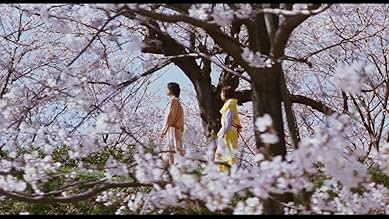
It's all interconnected by symbolisms and the extraordinary cinematography of Katsumi Yanagijima has us shimmering and floating in rose gardens, amongst autumnal leaves and under cherry-tree blossom. It is here that we take breath and sigh, after the often difficult human journeys we've just seen the characters go through. We cannot help but feel that we have journeyed with them - and perhaps suffered too.
To me, it's the first story of the jilted bride who's rejection sends her insane and the subsequent redemption and dedication from her boyfriend to the extent that they become homeless that it the most moving. Their story united the other two stories and adds symbolism at the end. The tale of the ageing Yakuza who finally feels that he needs more than his violent lifestyle to exist as a human being and the fanaticism for a young pop singer also paint vivid pictures on Japan's social and cultural agenda.
It did remind me of south Korea's 'Spring, Summer, Autumn, Winter...' in that often idyllic and contemplative gestures and activities are interspersed with morally questioning random acts that leave cavities in people's lives and the atonement needed to rectify them; or at least to try to, in a soul-satisfying way.
Without any sullying from saccharine sweetness or melancholy, all three tales strain the credibility of what we would normally think a person's love for another would go to. But, that's the beauty - this is a dream- felt movie, exaggerating hardship and our emotions to emphasise that extraordinary bond that love can be.
It's all interconnected by symbolisms and the extraordinary cinematography of Katsumi Yanagijima has us shimmering and floating in rose gardens, amongst autumnal leaves and under cherry-tree blossom. It is here that we take breath and sigh, after the often difficult human journeys we've just seen the characters go through. We cannot help but feel that we have journeyed with them - and perhaps suffered too.
To me, it's the first story of the jilted bride who's rejection sends her insane and the subsequent redemption and dedication from her boyfriend to the extent that they become homeless that it the most moving. Their story united the other two stories and adds symbolism at the end. The tale of the ageing Yakuza who finally feels that he needs more than his violent lifestyle to exist as a human being and the fanaticism for a young pop singer also paint vivid pictures on Japan's social and cultural agenda.
It did remind me of south Korea's 'Spring, Summer, Autumn, Winter...' in that often idyllic and contemplative gestures and activities are interspersed with morally questioning random acts that leave cavities in people's lives and the atonement needed to rectify them; or at least to try to, in a soul-satisfying way.
Too much thinking?-"Dolls" not just aesthetics
Praising or dismissing "Dolls" as pure aesthetics is just a banal way of labeling something that is beautiful which does not lend itself to immediate understanding. Just because any number of the meanings of the film don't jump out and bite the viewer is no reason to dismiss it as only aesthetically pleasing. We've got plenty of nature scenes and people starring blankly into space in cinema. They are not all masterpieces and "Dolls" would not be even half decent if that's all it was. If you feel the need to like this movie, then a better expression of this feeling is need than saying, "It's purdy."
As for myself I found there we several themes running through the film that merit investigation. First of all, the idea of hierarchy in relationships. In all the relationship there was a clearly dominant partner (yakuza, pop-star, groom) and a clear subservient partner (lady on bench, fan, discarder girlfriend). At the beginning of the film their supremacy is flaunted. They come and go as they please and treat the other member of the relationship flippantly and with little regard. They believe themselves to be the more powerful person in the relationship and think they are not as dependent on the so-called weaker member as the weaker member is on them. So times passes, some strange occurrences take place and whom do these people come back to? Who are the most important people in their lives? Those weaker partners. In the end, they and we realize that the stronger or more assertive member in a relationship is just as dependent on the weaker member as the weaker is on the strong. In this context they are seen as both playing roles essential to the relationship, the fact that one is more forceful than the other does not undermine the importance of the less assertive person¡¦s role. Of course this is not to be taken literally and applied to all relationships but it is a comment on or investigation of the idea of stronger and weaker partners in a relationship. The ultimate conclusion is a deconstruction of the hierarchy that shows the partners to be equal or at least codependent.
The next question is: "Why were all of these relationships unsuccessful?" My ascertation is that this plays into the strict nature of Japanese culture and Kitano's own morose sense of destiny, seen most vividly in "Sonatine". All the male characters make major life mistakes in the film. They attempt to rectify them by seeking comfort in the person they have wronged, or in the case of the blind man in the person with the closest connection. Why are they not allowed to start again? Why do they all fail? So many films are about starting over, that it's never too late to turn over a new leaf, old dogs can learn new tricks etc, etc. While I'm quite glad this is not the story of a spunky middle-aged former soccer mom who finds true love the second time around, I don't see the point in the absolute negation of the power of reconciliation. You'll have to ask Kitano about all that. I'm no Japanese cultural expert, though I have been there, but this seems to fall in line with the rather strict and unforgiving personality of Japanese society. If you've made a major mistake you have to accept it and take all the consequences willingly and bow to whatever your fate may be in response to those consequences. Kitano seems to embrace this idea of not being able to escape destiny in many films, I already mentioned "Sonatine" as a particularly poignant example of this.
I still think the ¡§Hanabai¡¨ is Kitano¡¦s best work, although watching a bunch of psychotic Japanese people run into walls and fall flailing into moats on Takeshi¡¦s Castle is good too. Dolls is interesting, worth a look and still better than 99% of films out there.
As for myself I found there we several themes running through the film that merit investigation. First of all, the idea of hierarchy in relationships. In all the relationship there was a clearly dominant partner (yakuza, pop-star, groom) and a clear subservient partner (lady on bench, fan, discarder girlfriend). At the beginning of the film their supremacy is flaunted. They come and go as they please and treat the other member of the relationship flippantly and with little regard. They believe themselves to be the more powerful person in the relationship and think they are not as dependent on the so-called weaker member as the weaker member is on them. So times passes, some strange occurrences take place and whom do these people come back to? Who are the most important people in their lives? Those weaker partners. In the end, they and we realize that the stronger or more assertive member in a relationship is just as dependent on the weaker member as the weaker is on the strong. In this context they are seen as both playing roles essential to the relationship, the fact that one is more forceful than the other does not undermine the importance of the less assertive person¡¦s role. Of course this is not to be taken literally and applied to all relationships but it is a comment on or investigation of the idea of stronger and weaker partners in a relationship. The ultimate conclusion is a deconstruction of the hierarchy that shows the partners to be equal or at least codependent.
The next question is: "Why were all of these relationships unsuccessful?" My ascertation is that this plays into the strict nature of Japanese culture and Kitano's own morose sense of destiny, seen most vividly in "Sonatine". All the male characters make major life mistakes in the film. They attempt to rectify them by seeking comfort in the person they have wronged, or in the case of the blind man in the person with the closest connection. Why are they not allowed to start again? Why do they all fail? So many films are about starting over, that it's never too late to turn over a new leaf, old dogs can learn new tricks etc, etc. While I'm quite glad this is not the story of a spunky middle-aged former soccer mom who finds true love the second time around, I don't see the point in the absolute negation of the power of reconciliation. You'll have to ask Kitano about all that. I'm no Japanese cultural expert, though I have been there, but this seems to fall in line with the rather strict and unforgiving personality of Japanese society. If you've made a major mistake you have to accept it and take all the consequences willingly and bow to whatever your fate may be in response to those consequences. Kitano seems to embrace this idea of not being able to escape destiny in many films, I already mentioned "Sonatine" as a particularly poignant example of this.
I still think the ¡§Hanabai¡¨ is Kitano¡¦s best work, although watching a bunch of psychotic Japanese people run into walls and fall flailing into moats on Takeshi¡¦s Castle is good too. Dolls is interesting, worth a look and still better than 99% of films out there.
10ChrisJPN
Visually beautiful, emotionally brutal.
It takes a while for DOLLS to sink in. Not because of the complexity of the stories intertwined through the film but because of the sheer emotional impact virtually every scene carries with it.
I won't go into details about the three stories but I can say that, above all else, DOLLS is a lesson in love and anguish and it is by far Kitano's most powerful work, even more so than Hana-bi.
I'm baffled by the negative reviews I've seen of this film since it was first aired. I wonder if it might be a case of the viewer needing to understand the way Japanese often tend to act and feel when faced with difficult or unbearable situations and without that understanding you might question if people would ever really act the way they do in DOLLS. The answer is that often they really do.
I've considered Kitano a master film maker for a long time now. The man has only ever made one film that can't be considered good (the embarrassingly poor Getting Any?) and I consider Hana-bi in particular to be one of the finest films ever made. But Dolls almost functions at another level. I don't know how often I will watch it because it genuinely is emotionally draining but this is simply a brilliant piece of film making. The cinematography is exquisite. The acting is fantastic, especially Miho Kanno who gives such a tragic, beautiful performance while hardly saying a world throughout the film. And above all, the emotional bond forged with the viewer is beyond any I think I've ever seen on film.
Anyone who truly loves film should see Dolls. Actors should see Dolls if only to see how little you really need to give in order to portray real emotion. Directors should see Dolls and learn from a master. I genuinely believe Kitano will go down in history as a genius film maker. Dolls may well be his masterpiece.
I won't go into details about the three stories but I can say that, above all else, DOLLS is a lesson in love and anguish and it is by far Kitano's most powerful work, even more so than Hana-bi.
I'm baffled by the negative reviews I've seen of this film since it was first aired. I wonder if it might be a case of the viewer needing to understand the way Japanese often tend to act and feel when faced with difficult or unbearable situations and without that understanding you might question if people would ever really act the way they do in DOLLS. The answer is that often they really do.
I've considered Kitano a master film maker for a long time now. The man has only ever made one film that can't be considered good (the embarrassingly poor Getting Any?) and I consider Hana-bi in particular to be one of the finest films ever made. But Dolls almost functions at another level. I don't know how often I will watch it because it genuinely is emotionally draining but this is simply a brilliant piece of film making. The cinematography is exquisite. The acting is fantastic, especially Miho Kanno who gives such a tragic, beautiful performance while hardly saying a world throughout the film. And above all, the emotional bond forged with the viewer is beyond any I think I've ever seen on film.
Anyone who truly loves film should see Dolls. Actors should see Dolls if only to see how little you really need to give in order to portray real emotion. Directors should see Dolls and learn from a master. I genuinely believe Kitano will go down in history as a genius film maker. Dolls may well be his masterpiece.
A quaint fable of love and despair
Kitano never fails to amaze me, and this movie is an exact epitome of the queer nature of his films. This movie is a collection of three love stories intersecting in the same time-line. The nature of love stories quite different from one-another and each one has a different essence to it.
First story is about a young couple, second story is about fan-idol love and the third one is about an unrequited love. All of these stories are somber and moving, and are not as mushy as typical love stories of Hollywood.
Cinematography in the film is awesome. There many long shots, which again is kind of Kitano's signature. Performance of the actors is quite good. Background score is beautiful and perfectly coherent with the scenes. The use of a puppet show in the movie is quite surreal and symbolic.
If you liked "Amorres Perros"; you will definitely like this movie.
A must watch for Kitano fans and those who admire subtle romance.
First story is about a young couple, second story is about fan-idol love and the third one is about an unrequited love. All of these stories are somber and moving, and are not as mushy as typical love stories of Hollywood.
Cinematography in the film is awesome. There many long shots, which again is kind of Kitano's signature. Performance of the actors is quite good. Background score is beautiful and perfectly coherent with the scenes. The use of a puppet show in the movie is quite surreal and symbolic.
If you liked "Amorres Perros"; you will definitely like this movie.
A must watch for Kitano fans and those who admire subtle romance.
Guilt and Eternal Love
Matsumoto (Hidetoshi Nishijima) and Sawako (Miho Kanno) are in deep love for each other. When the president of the company where Matsumoto works "selects" him to marry his daughter, Matsumoto's parents force him to accept the engagement. On the wedding day, Matsumoto is informed that Sawako has attempted to commit suicide and is slow and catatonic in a clinic. Matsumoto feels guilty, and takes Sawako out of the clinic; his decision affects their lives.
The old Yakuza boss Hiro (Tatsuya Mihashi) misses his girlfriend from thirty years ago that has promised to wait for him in a park while he would chase success. When Hiro visits the park, he sees her on the bench where they used to meet each other.
The pop-star Haruna Yamagushi (Kyôko Fukada) has an obsessive fan called Nukui (Tsutomu Takeshige) that stalks her. After a car accident, Nukui makes a decision to be close to his beloved idol.
"Dolls" is a sad and depressive movie based on the Japanese Puppet Theater Bunraku that tells three tales of guilt and eternal love. Each tragic love story is disclosed in a very slow pace and supported by stunning cinematography and excellent direction and performances. Takeshi Kitano has also a magnificent work promoting the culture of his country overseas. My vote is eight.
Title (Brazil): "Dolls"
The old Yakuza boss Hiro (Tatsuya Mihashi) misses his girlfriend from thirty years ago that has promised to wait for him in a park while he would chase success. When Hiro visits the park, he sees her on the bench where they used to meet each other.
The pop-star Haruna Yamagushi (Kyôko Fukada) has an obsessive fan called Nukui (Tsutomu Takeshige) that stalks her. After a car accident, Nukui makes a decision to be close to his beloved idol.
"Dolls" is a sad and depressive movie based on the Japanese Puppet Theater Bunraku that tells three tales of guilt and eternal love. Each tragic love story is disclosed in a very slow pace and supported by stunning cinematography and excellent direction and performances. Takeshi Kitano has also a magnificent work promoting the culture of his country overseas. My vote is eight.
Title (Brazil): "Dolls"


Did you know
- TriviaThis is the last Takeshi Kitano film to feature music by Joe Hisaishi. Kitano claimed that it became too expensive to hire Hisaishi for soundtracks while Hisaishi claimed that he didn't like the screenplay of the movie. Actually, they both had an argument about some pieces which weren't selected for the soundtrack, and where to put the others in the movie. They stopped working together since then.
- ConnectionsReferenced in Nobody Knows (2004)
Details
Box office
- Gross US & Canada
- $4,067
- Opening weekend US & Canada
- $2,067
- Dec 12, 2004
- Gross worldwide
- $5,405,725
- Runtime
- 1h 54m(114 min)
- Color
- Sound mix
- Aspect ratio
- 1.85 : 1
Contribute to this page
Suggest an edit or add missing content