IMDb RATING
7.1/10
2.9K
YOUR RATING

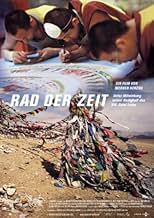
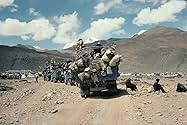
Wheel of Time is Werner Herzog's photographed look at the largest Buddhist ritual in Bodh Gaya, India.Wheel of Time is Werner Herzog's photographed look at the largest Buddhist ritual in Bodh Gaya, India.Wheel of Time is Werner Herzog's photographed look at the largest Buddhist ritual in Bodh Gaya, India.




- Director
- Writer
- All cast & crew
- Production, box office & more at IMDbPro
7.12.8K
1
2
3
4
5
6
7
8
9
10
Featured reviews
The unexpected calmness of Werner Herzog
`Wheel of Time' is a very good film, but I admit that it is different from what I expected from Herzog. He is still very talented, but I doubt if the subject matter is best suited to him. `Wheel of Time' concerns many things, including religion, virtue, and faith, which in this case may not be the best subjects for Herzog. But when `Wheel of Time' deals with some strange and crazy rituals, political oppression, and rugged landscapes, these parts of the film are very satisfying.
Some scenes in `Wheel of Time' are magical, especially the scenes which show vast landscapes and people performing strange rituals. Those scenes are Herzogian, I think. Nobody does this kind of thing better than Herzog. If a cinephile watches these scenes, not knowing who shot them, he or she will guess correctly that they were shot by Herzog. These scenes make `Wheel of Time' rise way above television documentaries.
But other scenes are not as magical as I expect from Herzog's films. I think that maybe the religious subject matter of this film doesn't allow Herzog to be as playful in directing as he was in other films. It is very difficult for any filmmaker, including Herzog, to make an interesting documentary about something virtuous like this. It would be much easier to make an interesting film if the film is about `good vs. evil', or about some strange rituals in which people walk on fire and pierce themselves horrifically.
I think Herzog is like a wizard, and one can hardly makes a more magical film than him if the film is about nature-made or man-made madness, brutality, or suffering in life. But because of the subject matter of `Wheel of Time', this film is not my most favorite of Herzog's. I like `Wheel of Time' as much as Herzog's `How Much Wood Would a Woodchuck Chuck' (1976) and `The Flying Doctors of East Africa' (1969). I think these three films are very good films, but because the people portrayed in these films are not `very' strange nor `very' crazy, these three films lack some kind of excitement I found in other films by Herzog, especially when compared to Herzog's `Gesualdo: Death for Five Voices' (1995), `My Best Fiend' (1999), `The Great Ecstasy of Woodcarver Steiner' (1974), and `Land of Silence and Darkness' (1971), which is my most favorite of Herzog's films.
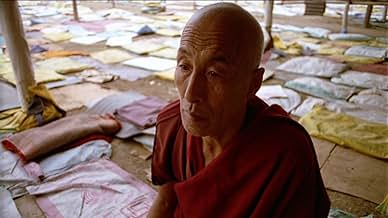
Some parts of Herzog's `Lessons of Darkness' (1992) deal with political madness, and I think Herzog is good at this subject, too. In one scene in `Wheel of Time', a former political prisoner gave an interview about the brutality of the Chinese rule. This scene is very simple. It is just a normal interview. But for me the power of this scene is much more stronger than most scenes in `Wheel of Time'. And it also reminds me of some great scenes in `Lessons of Darkness' in which some people gave their own testimonies to what happened when Saddam invaded Kuwait. I think one thing that makes the scene about the former prisoner stand apart from other scenes in `Wheel of Time' is because this scene talks about `evil forces', while other scenes in `Wheel of Time' are about some kind of virtuous power.
Some scenes in `Wheel of Time' are magical, especially the scenes which show vast landscapes and people performing strange rituals. Those scenes are Herzogian, I think. Nobody does this kind of thing better than Herzog. If a cinephile watches these scenes, not knowing who shot them, he or she will guess correctly that they were shot by Herzog. These scenes make `Wheel of Time' rise way above television documentaries.
But other scenes are not as magical as I expect from Herzog's films. I think that maybe the religious subject matter of this film doesn't allow Herzog to be as playful in directing as he was in other films. It is very difficult for any filmmaker, including Herzog, to make an interesting documentary about something virtuous like this. It would be much easier to make an interesting film if the film is about `good vs. evil', or about some strange rituals in which people walk on fire and pierce themselves horrifically.
I think Herzog is like a wizard, and one can hardly makes a more magical film than him if the film is about nature-made or man-made madness, brutality, or suffering in life. But because of the subject matter of `Wheel of Time', this film is not my most favorite of Herzog's. I like `Wheel of Time' as much as Herzog's `How Much Wood Would a Woodchuck Chuck' (1976) and `The Flying Doctors of East Africa' (1969). I think these three films are very good films, but because the people portrayed in these films are not `very' strange nor `very' crazy, these three films lack some kind of excitement I found in other films by Herzog, especially when compared to Herzog's `Gesualdo: Death for Five Voices' (1995), `My Best Fiend' (1999), `The Great Ecstasy of Woodcarver Steiner' (1974), and `Land of Silence and Darkness' (1971), which is my most favorite of Herzog's films.
Some parts of Herzog's `Lessons of Darkness' (1992) deal with political madness, and I think Herzog is good at this subject, too. In one scene in `Wheel of Time', a former political prisoner gave an interview about the brutality of the Chinese rule. This scene is very simple. It is just a normal interview. But for me the power of this scene is much more stronger than most scenes in `Wheel of Time'. And it also reminds me of some great scenes in `Lessons of Darkness' in which some people gave their own testimonies to what happened when Saddam invaded Kuwait. I think one thing that makes the scene about the former prisoner stand apart from other scenes in `Wheel of Time' is because this scene talks about `evil forces', while other scenes in `Wheel of Time' are about some kind of virtuous power.
A good document/meditation on twin Buddhist ceremonies
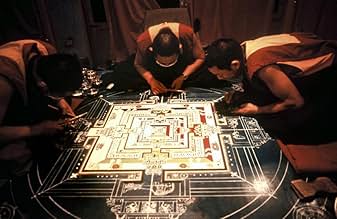
This is the story of the Buddhist initiation ceremonies held in 2002 in India and in Austria during which elaborate sand mandalas (the Wheel of Time of the title) were created. In India we see how half a million pilgrims come from what ever means was at their disposal to come and see the Dalai Lama and be blessed, while in Austria a few thousand people attended the ceremonies.
Difficult to adequately explain fully, the film, part document of the events, part meditation on them and on larger ideas. It is a film that beautifully shows how one religion can transcend place and time. It attempts to show us the length to which the pilgrims will go in order to travel down the path to enlightenment. Since this is a trip that is only really traveled deep inside oneself Werner Herzog keeps his camera ever moving over the landscape of the people who are trying to find nirvana. We are forever looking at the faces of those deep in prayer and meditation as if we might be able to find some clue as to what is going on deep with in each persons soul. It becomes a mediation on meditation.
For the most part this film works wonderfully. It manages to give some clue into the very nature of what the ceremonies are all about. We are also drawn into a contemplative and meditative state that seems akin or to approximate those of some of the pilgrims. While certainly not the real thing it is enough to give one a feel for deep thought.
I do have one problem with the film, and its a minor one, in the central section the film seems to wander about too much with some of the pilgrims. Its a personal thing but I was not as enthralled with the journey to the sacred mountain, and I did get a bit tired of prostrating monks. Its a minor thing, but it decreased my enjoyment of the film ever so slightly.
Still this is good film that is a must see for anyone who is interested in Buddhism or the varieties of religious experience. For those who want to see a slice of life thats not in their neighborhood, I also recommend it. 7 out of 10 because the reaction to it will as varied as the audience.
Difficult to adequately explain fully, the film, part document of the events, part meditation on them and on larger ideas. It is a film that beautifully shows how one religion can transcend place and time. It attempts to show us the length to which the pilgrims will go in order to travel down the path to enlightenment. Since this is a trip that is only really traveled deep inside oneself Werner Herzog keeps his camera ever moving over the landscape of the people who are trying to find nirvana. We are forever looking at the faces of those deep in prayer and meditation as if we might be able to find some clue as to what is going on deep with in each persons soul. It becomes a mediation on meditation.
For the most part this film works wonderfully. It manages to give some clue into the very nature of what the ceremonies are all about. We are also drawn into a contemplative and meditative state that seems akin or to approximate those of some of the pilgrims. While certainly not the real thing it is enough to give one a feel for deep thought.
I do have one problem with the film, and its a minor one, in the central section the film seems to wander about too much with some of the pilgrims. Its a personal thing but I was not as enthralled with the journey to the sacred mountain, and I did get a bit tired of prostrating monks. Its a minor thing, but it decreased my enjoyment of the film ever so slightly.
Still this is good film that is a must see for anyone who is interested in Buddhism or the varieties of religious experience. For those who want to see a slice of life thats not in their neighborhood, I also recommend it. 7 out of 10 because the reaction to it will as varied as the audience.
Werner Herzog does a walk around
It's interesting to read that Werner Herzog wasn't an expert on Buddhism when he filmed this. In a way, that's the charm of this film. Essentially we're given a backstage pass to a Buddhist festival. In Herzog fashion, he holds the camera longer than most, filming his subjects looking for any reaction. In a childlike way, it could be very compelling. Especially since this world is so strange to most westerners that the audience is like any tourists in a strange land. We stare a little too long.
My only complaint is he ended the movie in the wrong place. Just because The Dalai Lama couldn't finish the rituals doesn't mean the movie needs to go to another continent to find a happy ending.
My only complaint is he ended the movie in the wrong place. Just because The Dalai Lama couldn't finish the rituals doesn't mean the movie needs to go to another continent to find a happy ending.
More anthropological than spiritual.
This film is an exploration of several Tibetan Buddhist rituals, and centers around an initiation in India attended by hundreds of thousands of Himalayan devotees, many of whom arrive after punishing pilgrimages that, in one case, took up to three and a half years. As Cinema this film excels. Herzog places himself in the midst of the throng. The faces he captures tell a thousand stories. Yet the actual stories are few and far between. There is a cool detachment in this film that gives it an anthropological feel. Herzog admitted in a live discussion after the screening that he had little familiarization with Buddhism, and reluctantly took this assignment after several requests only after the Dalai Lama himself personally asked him to do it. There is little to be learned here about the ritual itself, as the film focuses mostly on the attendees. Herzog seems uninterested in the meaning behind the sometimes strange-seeming actions of the devoted monks, and focuses instead on observation. While this is a smart approach for a film-maker on one hand, since any attempt to explain this complicated philosophical system would undoubtably fall short, I was left wanting more. If I can make a somewhat strange metaphor: it was like seeing a documentary on the Superbowl, which focused on Americans traveling from all over the country, standing in long lines, paying large sums of money to get in, drinking beer, shouting and cheering at the field, or shouting at television screens, waving strange banners around, and possibly braving rain, snow or blizzard to see it--without ever really going into what football is. Long shots of haggard faces and people doing "the wave" would be compelling to watch, but wouldn't give a true picture of the event. If you're interested in seeing a fly-on-the-wall observation of a very interesting and different aspect of the human experience, this film succeeds. But if you are interested in understanding the Kalachakra ritual, or learning more about Buddhism, then, like me, you'll be left unsatisfied. Perhaps the film is mistitled. The title, "Wheel of Time", somehow promised something different to me. A more apt title would be something like, "Naked Devotion".
One of the great documentaries on the subject of religion.
Werner Herzog's documentaries aren't like the documentaries of anyone else. Perhaps the best documentaries are unique to the people who make them. You can tell a Flaherty from a Wiseman just as you can tell a Maysles Brothers from a Herzog. Werner is interested in extremes, if only the extremes in subject matter. He will go out of his way to show us places and things other film-makers often ignore. "Wheel of Time" is his film about a place and an event not usually seen here in the West.
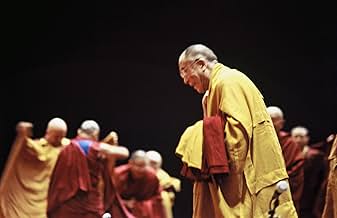
Its subject is a Buddhist initiation rite performed by His Holiness the Dalai Lama and attended by over half a million pilgrims. It's a ceremony of such complexity that Herzog's capturing of it is something of a miracle in itself and, of course, it is a thing of consumate beauty. This is what religion should be but very seldom is and Herzog is a masterful observer. He also narrates the film, informing us about what is happening when we need to know but most of the time simply showing us events as they unfold. Wonderful cinema and one of Herzog's best films.
Its subject is a Buddhist initiation rite performed by His Holiness the Dalai Lama and attended by over half a million pilgrims. It's a ceremony of such complexity that Herzog's capturing of it is something of a miracle in itself and, of course, it is a thing of consumate beauty. This is what religion should be but very seldom is and Herzog is a masterful observer. He also narrates the film, informing us about what is happening when we need to know but most of the time simply showing us events as they unfold. Wonderful cinema and one of Herzog's best films.


Did you know
- Quotes
The Dalai Lama: All religions carry same message. Message of love, compassion, forgiveness, tolerance, contentment, self-discipline. I think we need these qualities, irrespective of whether we are believer or non-believer, because these are the source of a happy life.
- SoundtracksHimal
Performed by Prem Rama Autari
- How long is Wheel of Time?Powered by Alexa
Details
Contribute to this page
Suggest an edit or add missing content