IMDb RATING
6.2/10
1.8K
YOUR RATING


16 years of alcohol is about a skinhead named Frankie; his violent childhood, alcoholism and his love for Ska.16 years of alcohol is about a skinhead named Frankie; his violent childhood, alcoholism and his love for Ska.16 years of alcohol is about a skinhead named Frankie; his violent childhood, alcoholism and his love for Ska.
- Awards
- 4 wins & 9 nominations total


Iain De Caestecker
- Frankie - Boy
- (as Iain De Caestaecker)

Lewis Macleod
- Frankie's Father
- (as Lewis MacLeod)


Noof Ousellam
- Rival Gang Boy 1
- (as Naoufal Ousellam)
- Director
- Writer
- All cast & crew
- Production, box office & more at IMDbPro
6.21.7K
1
2
3
4
5
6
7
8
9
10
Featured reviews
Edinburgh drinking man depicted in hard-etched poetry
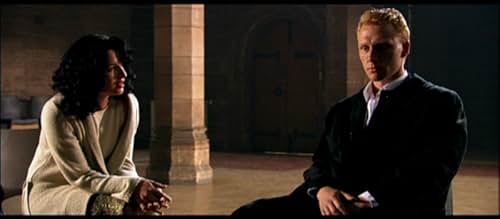
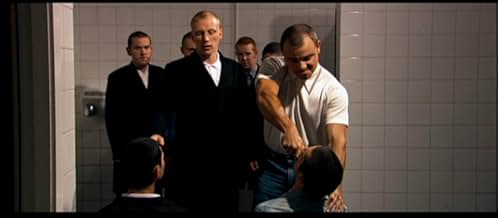
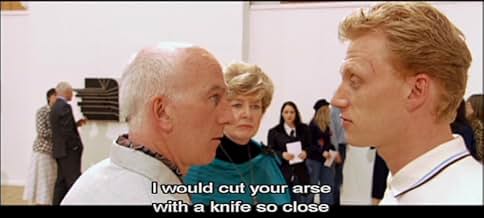
"Sixteen Years of Alcohol" is the Edinburgh story of a guy with a philandering dad who starts to drink at twelve or so, turns into a violent, alcoholic punker, and finally seeks self-reform. Early scenes depict Frankie, the young boy and his father. We then jump forward to the big, muscular Frankie Mack (Kevin McKidd) terrorizing pubs and shops with his three mates like Alex and his dogies in "A Clockwork Orange" but without Alex's archness and glee. Frankie also gets into fights with his own mates and woos Helen (Laura Fraser), who clerks in a record shop.
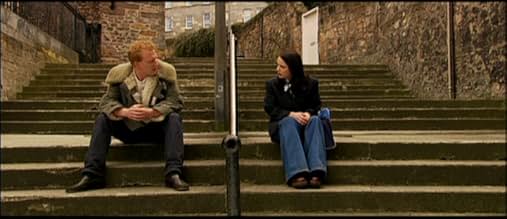
Eventually the hero, whose brooding voice-overs constantly intrude, loses Helen, though for a while she seems to have tamed him and turned him from Mars into Artemis, bearer of good news -- as she puts it in a game they play on a colonnade perched high up above the town. Frankie gets stabbed and kicked senseless (S.O.P. for the hoodlums of this piece) and winds up in a twelve-step group for alcoholics -- but when he shares at a meeting, he tellingly substitutes for the classic AA declaration, "My name is Frankie, and I AM A VIOLENT MAN." He also joins an acting workshop with Mary (Susan Lynch), his new girl -- or recovery pal: there's no lovemaking or physical affection shown. One shot hints that Frankie's employed in a workshop or factory, but specific detail is lacking: the film is deliberately short on connected narrative, going for passion and poetry over mundane realism.
There's truth in the 'Village Voice's' thumbnail description of "Sixteen Years of Alcohol" as a series of "static tableaux," and it's also true that McKidd's better than "the dubious romanticism and hard-man clichés of his role." Parts of the movie fall flat, but what makes it worth watching is an intense clarity about the people and the sharply lit scenes they're in. Also welcome to an American is that unlike some Scottish films this one's English is crystal clear too. There is the power and sincerity of the simple small film in "Sixteen Years of Alcohol," but also a lack of narrative focus and sense of a whole world one finds in England's Sixties "angry young man" films beginning with "Saturday Night and Sunday Morning." Jobson isn't trying for "kitchen sink" realism at all, but for something poetic and expressionistic; and the stark, strikingly lit photography helps him approach that goal and make this a watchable film.
What's less appealing is the simplistic fatalism of the plot structure. One may wind up wishing Frankie had received more practical tips about how to stay off alcohol and violence, rather than focusing on his relationships with women, which aren't developed very far anyway. The "dubious romanticism" shows up in the way a life is ultimately seen as circular (as is the film's "ring" framing device) and doomed, rather than -- what would be equally justified by the story -- moderately hopeful. The chap is still young and healthy, after all, and he wants to get better. Why not suggest he's going in that direction? This is the first film for Jobson, previously known as the front man for the Seventies Scottish art punk band, the Skids, and, later as a poet, model, TV presenter, film producer and critic. He has not disgraced himself in this semi-autobiographical effort (the time-line follows that of his own Sixties childhood and Seventies youth). What one remembers are the stark sometimes beautiful images. The high-flown, overwrought writing can be cloying, but may also point in a fresh new direction. No Danny Boyle here, but rather, perhaps, a new style and voice.
(Seen March 26, 2005 at Cinema Village in New York.)
Eventually the hero, whose brooding voice-overs constantly intrude, loses Helen, though for a while she seems to have tamed him and turned him from Mars into Artemis, bearer of good news -- as she puts it in a game they play on a colonnade perched high up above the town. Frankie gets stabbed and kicked senseless (S.O.P. for the hoodlums of this piece) and winds up in a twelve-step group for alcoholics -- but when he shares at a meeting, he tellingly substitutes for the classic AA declaration, "My name is Frankie, and I AM A VIOLENT MAN." He also joins an acting workshop with Mary (Susan Lynch), his new girl -- or recovery pal: there's no lovemaking or physical affection shown. One shot hints that Frankie's employed in a workshop or factory, but specific detail is lacking: the film is deliberately short on connected narrative, going for passion and poetry over mundane realism.
There's truth in the 'Village Voice's' thumbnail description of "Sixteen Years of Alcohol" as a series of "static tableaux," and it's also true that McKidd's better than "the dubious romanticism and hard-man clichés of his role." Parts of the movie fall flat, but what makes it worth watching is an intense clarity about the people and the sharply lit scenes they're in. Also welcome to an American is that unlike some Scottish films this one's English is crystal clear too. There is the power and sincerity of the simple small film in "Sixteen Years of Alcohol," but also a lack of narrative focus and sense of a whole world one finds in England's Sixties "angry young man" films beginning with "Saturday Night and Sunday Morning." Jobson isn't trying for "kitchen sink" realism at all, but for something poetic and expressionistic; and the stark, strikingly lit photography helps him approach that goal and make this a watchable film.
What's less appealing is the simplistic fatalism of the plot structure. One may wind up wishing Frankie had received more practical tips about how to stay off alcohol and violence, rather than focusing on his relationships with women, which aren't developed very far anyway. The "dubious romanticism" shows up in the way a life is ultimately seen as circular (as is the film's "ring" framing device) and doomed, rather than -- what would be equally justified by the story -- moderately hopeful. The chap is still young and healthy, after all, and he wants to get better. Why not suggest he's going in that direction? This is the first film for Jobson, previously known as the front man for the Seventies Scottish art punk band, the Skids, and, later as a poet, model, TV presenter, film producer and critic. He has not disgraced himself in this semi-autobiographical effort (the time-line follows that of his own Sixties childhood and Seventies youth). What one remembers are the stark sometimes beautiful images. The high-flown, overwrought writing can be cloying, but may also point in a fresh new direction. No Danny Boyle here, but rather, perhaps, a new style and voice.
(Seen March 26, 2005 at Cinema Village in New York.)
Give the guy a break, it was quite good
I'm not a huge film buff but I went to see a screening of this film at the GFT in Glasgow on Monday and Richard Jobson was giving a Q & A afterwards.
Thought his answers to the audience were good and definitely helped make sense of the film a bit much. He made some really good points about the types of films coming out of Scotland these days and how he was trying to get away from that drab reality style we're used to seeing.
it's worth seeing anyway, I wouldn't write it off straight away.
Thought his answers to the audience were good and definitely helped make sense of the film a bit much. He made some really good points about the types of films coming out of Scotland these days and how he was trying to get away from that drab reality style we're used to seeing.
it's worth seeing anyway, I wouldn't write it off straight away.
arty attempt at the 'rehabilitated alcoholic' story
This is on one level a very gritty story of alcohol abuse and violence; on another it is an aesthetically realised elegy to hope and hopelessness. The beautiful images of historic Edinburgh are used unpretentiously as a backdrop to mindlessly savage beatings and physical intimidation, cinematic techniques involving varied use of lighting, colour, slow motion and overt symbolism. In one scene, the dead-end nature of the lives of people in a bar is demonstrated by showing them as corpses, seated with their drinks and covered in cobwebs, as the main protagonist looks on and questions his own downward-spiralling life of drink and vengeance. There is some light in the character of Helen, an art school graduate whose love might inspire hoodlum Frankie to give up his drunken brawling loud-mouthed ways, but ultimately the story of the slow and painful attempts of an alcoholic to reform himself will be too easily forgotten. The artistic attempts of writer/director and former Skids band-member Richard Jobson are what make the biggest impression it remains to be seen whether Jobson can subsequently produce of work of creative genius rather than something that simply suggests considerable talent.
Arguably, a bit better than Hallmark
Films about alcohol are usually depressing. They rob all the enthusiasm for life one might have in just a few hours and leave you staring into the void at the end, wondering what the point was. It's difficult to catalog them in any way, because a good "alcoholics movie" is one which swiftly flows along certain psychological retinues and steadily builds up to a mammoth of self deprivation.
However, this isn't truly a film about alcohol. It's more a film about getting a life (yes, Trainspotting), portrayed in a less imaginative way. It all gravitates around love and the end is helplessly tragic, but "Sixteen Years of Alcohol" isn't that bad. Some sweet imagery and photography might make it worth your time. Also, the story resides within the soul of everyone who suffers due to lack of purpose, not only those subdued to the magic liquor. It's a borderline movie: you may very well dislike it, because the storyline is crap. Like all those films which fit into this part of the movie-specter, "Sixteen..." has good and bad parts. Just to name one, I want to recall the "Clockwork Orange" scenes, which are a homage-like rip-off, that barely prove a point. Moreover, those scenes feel terribly frustrating.
All in all, it's not too bad and it could hardly have been better. No one need to watch it, but everyone is invited. Check out the party. 6/10
However, this isn't truly a film about alcohol. It's more a film about getting a life (yes, Trainspotting), portrayed in a less imaginative way. It all gravitates around love and the end is helplessly tragic, but "Sixteen Years of Alcohol" isn't that bad. Some sweet imagery and photography might make it worth your time. Also, the story resides within the soul of everyone who suffers due to lack of purpose, not only those subdued to the magic liquor. It's a borderline movie: you may very well dislike it, because the storyline is crap. Like all those films which fit into this part of the movie-specter, "Sixteen..." has good and bad parts. Just to name one, I want to recall the "Clockwork Orange" scenes, which are a homage-like rip-off, that barely prove a point. Moreover, those scenes feel terribly frustrating.
All in all, it's not too bad and it could hardly have been better. No one need to watch it, but everyone is invited. Check out the party. 6/10
Pure cinematic poetry - a must-see
From Kevin McKidd's stunning performance to the exquisitely shot Edinburgh exteriors, this is one of the most beautiful and evocative films I've ever seen. Anyone who grew up in Britain during the 1970s will recognise much of what's up on-screen. McKidd and Jobson have captured the teenage experience of those years perfectly and reproduce the entire register of repressed emotions and violent undercurrents with unswerving accuracy.
Naturally, it's a film about redemption - of sorts - but the tantalising, bitter-sweet promise of love and hope that permeates this film is delivered with a genuine toughness that sets it apart from the usual Brit-flick. File alongside some of the best European imports of recent years ... a wonderful and powerful movie that everyone should see.
Naturally, it's a film about redemption - of sorts - but the tantalising, bitter-sweet promise of love and hope that permeates this film is delivered with a genuine toughness that sets it apart from the usual Brit-flick. File alongside some of the best European imports of recent years ... a wonderful and powerful movie that everyone should see.


Did you know
- ConnectionsReferences Enter the Dragon (1973)
- How long is 16 Years of Alcohol?Powered by Alexa
Details
- Release date
- Country of origin
- Language
- Also known as
- Frankie Mac - huliganen
- Filming locations
- Production company
- See more company credits at IMDbPro
Box office
- Gross US & Canada
- $8,046
- Opening weekend US & Canada
- $2,863
- Mar 20, 2005
- Gross worldwide
- $8,046
- Runtime
- 1h 42m(102 min)
- Color
- Sound mix
- Aspect ratio
- 2.35 : 1
Contribute to this page
Suggest an edit or add missing content