IMDb RATING
6.2/10
7.1K
YOUR RATING


A young ballet dancer is poised to become the principal performer in a group of ballet dancers.A young ballet dancer is poised to become the principal performer in a group of ballet dancers.A young ballet dancer is poised to become the principal performer in a group of ballet dancers.
- Director
- Writers
- Stars
- Awards
- 2 nominations total


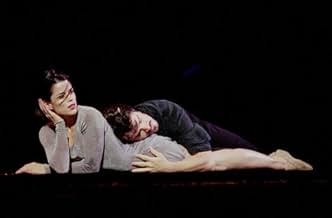
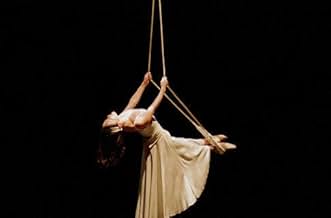


Barbara E. Robertson
- Harriet
- (as Barbara Robertson)


Davis C. Robertson
- Alec - Joffrey Dancer
- (as Davis Robertson)

- Director
- Writers
- All cast & crew
- Production, box office & more at IMDbPro
6.27.1K
1
2
3
4
5
6
7
8
9
10
Featured reviews
This movie was awesome
George, what I think you meant to say was that you are actually a thick-headed mocho-man who has NO appreciation for the arts whatsoever. If you did, you'd understand that the ballet dancing in this movie was beautiful, and entitled a lot of hard work on the dancers' part. I've danced since I was three, and have met many male dancers along the way, and, to inform you, NOT ONE OF THEM WAS GAY! I'm a STRAIGHT female who has dated a male dancer before. Assumptions like that are completely childish. THe acting, dancing, setting, and costumes in this movie were wonderful. If you can't even appreciate fine movie-making, then you are surely at a loss. Even if you would rather be watching sports, which I completely understand, most men would, that's fine: however, it doesn't give you the right to judge an a form of art that you abviously don't understand.
So Everything's Not So Beautiful at the Ballet After All
"The Company" is a lovely commercial for the Joffrey Ballet of Chicago (for New Yorkers this is in fact the same modern ballet company that used to be based at City Center but left the competitive dance fund raising environment here to have the stage to itself in Chicago).
A labor of love for producer/story writer/star/former dancer Neve Campbell, she was determined to make the first film about a whole company, not just using the dance world for a backdrop of individual melodrama, and with long passages of actual performances. So she brought in the primo director of ensembles, Robert Altman. But clearly she made compromises to get the film made that put his creativity as a director in a straight jacket and only lets his trademark talents fleetingly shine through.
The key was getting the Joffrey's cooperation and I can only imagine the tough negotiations that resulted in this pretty much being a whitewash of the ballet world, or of any creative endeavor, in sharp contrast to the behind-the-scenes reality shows "Project Greenlight" on HBO or "The Fire Within" about Cirque du Soleil's "Varekai" that was on Bravo. I surmise a long list of thou shalt not's that appear to include items such as:
-- no views of the non-artistic administrators, board, or fund raisers (there's a passing exhortation to a flashy choreographer Robet Desrosiers to stay within the budget, but he gets the complicated costumes and sets he wants anyway);
-- no homosexual relationships (there's a passing reference to the dancers AIDS has taken including "Bob", which cognoscenti have to know refers to the company's founder Robert Jeffrey, and Malcolm McDowall as the egotistical artistic director "Alberto Antonelli," a stand-in presumably for current company director Gerald Arpino, urges fellow Italian-American men not to make their boys, like he had to, "hide their ballet shoes");
-- no eating disorders (we do twice hear "Mr. A," half-jokingly, urge the company to eat salads and vegetables and there's one fast, quiet exchange in passing that I think was about diet pills);
-- blame dancers' problems on dysfunctional parents and mentors, recalling that vivid song from "A Chorus Line" - "Everything was beautiful at the ballet" as dancers seek to escape messy situations through temporary perfect beauty.
Altman does get to assert his artistic priorities in a few ways. He effectively seizes on the ageism in dance, showing that it's not just the tyranny of aging bodies, as would affect any athlete, but that dancers with experience speak up for themselves and are more difficult to control in a viciously autocratic environment than ambitious, financially desperate, and, literally, pliable young dancers.
It's also the first time I've seen a camera expose the swarm of acolyte assistants to the director, revealing them as ex-dancers whom "Mr. A" still dismissively calls "babies" and who resent the new stars even as they dance vicariously through them.
The other beautiful Altman touch is when the significant character developments take place not center stage in a crowd but through a look or line happening way in the corner of the screen, like the expression on James Franco, as Cambell's chef beau, when she avoids introducing him to her family amidst a rush of congratulators.
But visually and musically the Joffrey is a wonderful choice, as the choreographers represented range from Arpino to Alwin Nikolais to Laura Dean and MOMIX. A centerpiece danced by Campbell is a sexy Lar Lubovitch pas de deux to the signature song "My Funny Valentine" which is used as a leitmotif, for reasons that still seem murky to me after hearing Altman explain why on "Charlie Rose," throughout the film in versions also by Elvis Costello, Chet Baker, and the Kronos Quartet. The music ranges from classical to jazz to the ethereal pop of Julee Cruise, Mark O'Connor's in-between "Appalachia Waltz", and the lovely score by Van Dyke Parks.
A labor of love for producer/story writer/star/former dancer Neve Campbell, she was determined to make the first film about a whole company, not just using the dance world for a backdrop of individual melodrama, and with long passages of actual performances. So she brought in the primo director of ensembles, Robert Altman. But clearly she made compromises to get the film made that put his creativity as a director in a straight jacket and only lets his trademark talents fleetingly shine through.
The key was getting the Joffrey's cooperation and I can only imagine the tough negotiations that resulted in this pretty much being a whitewash of the ballet world, or of any creative endeavor, in sharp contrast to the behind-the-scenes reality shows "Project Greenlight" on HBO or "The Fire Within" about Cirque du Soleil's "Varekai" that was on Bravo. I surmise a long list of thou shalt not's that appear to include items such as:
-- no views of the non-artistic administrators, board, or fund raisers (there's a passing exhortation to a flashy choreographer Robet Desrosiers to stay within the budget, but he gets the complicated costumes and sets he wants anyway);
-- no homosexual relationships (there's a passing reference to the dancers AIDS has taken including "Bob", which cognoscenti have to know refers to the company's founder Robert Jeffrey, and Malcolm McDowall as the egotistical artistic director "Alberto Antonelli," a stand-in presumably for current company director Gerald Arpino, urges fellow Italian-American men not to make their boys, like he had to, "hide their ballet shoes");
-- no eating disorders (we do twice hear "Mr. A," half-jokingly, urge the company to eat salads and vegetables and there's one fast, quiet exchange in passing that I think was about diet pills);
-- blame dancers' problems on dysfunctional parents and mentors, recalling that vivid song from "A Chorus Line" - "Everything was beautiful at the ballet" as dancers seek to escape messy situations through temporary perfect beauty.
Altman does get to assert his artistic priorities in a few ways. He effectively seizes on the ageism in dance, showing that it's not just the tyranny of aging bodies, as would affect any athlete, but that dancers with experience speak up for themselves and are more difficult to control in a viciously autocratic environment than ambitious, financially desperate, and, literally, pliable young dancers.
It's also the first time I've seen a camera expose the swarm of acolyte assistants to the director, revealing them as ex-dancers whom "Mr. A" still dismissively calls "babies" and who resent the new stars even as they dance vicariously through them.
The other beautiful Altman touch is when the significant character developments take place not center stage in a crowd but through a look or line happening way in the corner of the screen, like the expression on James Franco, as Cambell's chef beau, when she avoids introducing him to her family amidst a rush of congratulators.
But visually and musically the Joffrey is a wonderful choice, as the choreographers represented range from Arpino to Alwin Nikolais to Laura Dean and MOMIX. A centerpiece danced by Campbell is a sexy Lar Lubovitch pas de deux to the signature song "My Funny Valentine" which is used as a leitmotif, for reasons that still seem murky to me after hearing Altman explain why on "Charlie Rose," throughout the film in versions also by Elvis Costello, Chet Baker, and the Kronos Quartet. The music ranges from classical to jazz to the ethereal pop of Julee Cruise, Mark O'Connor's in-between "Appalachia Waltz", and the lovely score by Van Dyke Parks.
Lessons in Passive Aggressiveness and how not to care about Characters
Ugh. The problem with The Company is that it's not a Robert Altman film. His touch is evident in the filmmaking and fly-on-the-Wall feel of the movie, but it's not his movie. It's Neve Campbell's, who wrote, produced, and starred in it. Campbell spent years with the national ballet and this movie was a labor of that passion. However, that is precisely where it goes wrong. It shoots for the wrong audience. Dancers will likely love this movie but they are the choir. They know how a dance company works, the back dealing and politics. They don't need this movie. The rest of us don't learn anything, or at least learn just enough to know that professional dancing is a horrible way to live. The dancing was beautiful, including Neve's, although she doesn't look quite as polished as her back ups in the company, but the characters were shallow and you are never given anything to grab onto to care about any of them. The only ones you root for the ones who are injured or fired so they can get out of that horrible horrible place. Such a disappointment on so many levels. The only thing that does come off well is the Joffrey. You actually leave the theater wondering if the Ballet company underwrote the production as a marketing expense.
More truthful than a full documentary
I suppose you can call this splendid movie a documentary showing several months in the life of the Joffrey Ballet of Chicago. However, as there are some dramatized elements (albeit to a minimum), you can't technically call it a documentary. And yet, it's more truthful than many "full" documentaries. Completely free from contamination of melodrama, the movie shows us, in a matter-of-fact manner, things behind the stage dedication and sacrifices, lucky breaks that even the top talents sometimes need, experienced performers arguing anainst new ideas, injury and understudy stepping in at a moment's notice, disappointment from being fired, and much more.
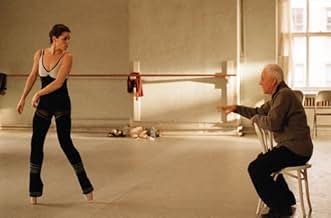
Doing what he does best, master Altman gives you an inconspicuous spot in the rehearsal hall, in the meeting room, back stage, to show you how an idea evolves right from an artist's concept to a successful performance the road that is sometimes painful, sometimes exhilarating and everything in between, the process that affects the lives of the people who are part of the whole. Overlapping dialogue here is not just Altman's artistic and technical trademark, but the way people REALLY speak. Through his amazing deployment of the camera, he also gives the audience a kaleidoscope of events and emotions that are fleeting and fluid, and yet remain with you long after the movie.
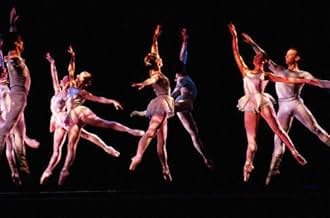
In addition to the insight of the documentary, dance lovers will enjoy the generous helping of dance scenes, particularly the outdoor performance in a thunder storm at the beginning. And although personal story is not the point of this movie, the depiction of the relationship between the characters played by Neve Campbell (the dancer) and James Franco (the chef) is wonderful. The scene of their first meeting is a joy to watch she is playing pool by herself and really enjoying it while he, a drink in hand, regards her somewhat stoically at a distance. The two of them are depicted in so many angles, sometimes in the same frame, sometimes separately. This scene is so mesmerizing that you'll forget the passage of time. At long last, they make eye contact and smile. Then, a cut to the next morning in her apartment when they are just waking up, as he offers to cook breakfast for them. An absolutely beautiful sequence.
Campbell and Franco are simply wonderful. The icon of the movie, however, is artistic director of the company Alberto Antonelli , generally known as "Mr A", who comes off larger than life with the flare of Malcolm McDowell, who undoubted is remembered best from "A clockwork orange".
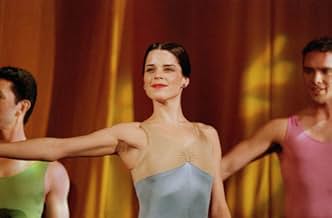
To people who have experienced the joy of stage performance, even in a very modest way of an amateur choir or theatre group, there is the bonus of additional empathy the sometimes not so smooth rehearsals, the panic as the performance approaches and nothing seems to work, the last minute jitters before curtain, the final jubilation when everything miraculously falls into place and the sincere applause of the audience. Such empathy!
Doing what he does best, master Altman gives you an inconspicuous spot in the rehearsal hall, in the meeting room, back stage, to show you how an idea evolves right from an artist's concept to a successful performance the road that is sometimes painful, sometimes exhilarating and everything in between, the process that affects the lives of the people who are part of the whole. Overlapping dialogue here is not just Altman's artistic and technical trademark, but the way people REALLY speak. Through his amazing deployment of the camera, he also gives the audience a kaleidoscope of events and emotions that are fleeting and fluid, and yet remain with you long after the movie.
In addition to the insight of the documentary, dance lovers will enjoy the generous helping of dance scenes, particularly the outdoor performance in a thunder storm at the beginning. And although personal story is not the point of this movie, the depiction of the relationship between the characters played by Neve Campbell (the dancer) and James Franco (the chef) is wonderful. The scene of their first meeting is a joy to watch she is playing pool by herself and really enjoying it while he, a drink in hand, regards her somewhat stoically at a distance. The two of them are depicted in so many angles, sometimes in the same frame, sometimes separately. This scene is so mesmerizing that you'll forget the passage of time. At long last, they make eye contact and smile. Then, a cut to the next morning in her apartment when they are just waking up, as he offers to cook breakfast for them. An absolutely beautiful sequence.
Campbell and Franco are simply wonderful. The icon of the movie, however, is artistic director of the company Alberto Antonelli , generally known as "Mr A", who comes off larger than life with the flare of Malcolm McDowell, who undoubted is remembered best from "A clockwork orange".
To people who have experienced the joy of stage performance, even in a very modest way of an amateur choir or theatre group, there is the bonus of additional empathy the sometimes not so smooth rehearsals, the panic as the performance approaches and nothing seems to work, the last minute jitters before curtain, the final jubilation when everything miraculously falls into place and the sincere applause of the audience. Such empathy!
So realistic it's like a documentary
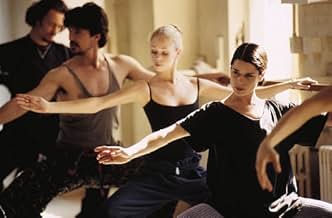
I love movies about dancers, but usually my favorites are a bit more sugarcoated than The Company. This one was a very refreshing change as it portrays dancers in a ballet company so realistically it feels like a documentary. Most of the actors are real dancers, and they don't act like there's a camera following them around. There are long scenes of rehearsals with bickering, silences followed by interrupted dialogue, mumbling, and dead time while we watch men and women stretching or putting on their shoes. If that sounds boring to you, stick with the Step Up franchise.
I really enjoyed The Company because of the realism. I knew Neve Campbell came from a ballet background, and I was very excited to see her showing off her hidden talents. James Franco does not, unfortunately, strap on a pair of flats and join in on the fun; instead he's Neve's boyfriend in the few scenes that show her enjoying her down time. Malcom MacDowell is the company director, and he's very believable as a passionate, demanding choreographer.
There's a scene that has stayed with me through the years: while rehearsing on stage as the performance grows nearer, a dreadful snap is heard, and one of the dancers collapses and cradles her leg. It's not drawn out dramatically or showcased in a closeup, and because of the lack of special attention, it feels so much more real and accidental. If you like ballet documentaries, or you really appreciate realism to the point of boredom, you might want to check out this movie.
I really enjoyed The Company because of the realism. I knew Neve Campbell came from a ballet background, and I was very excited to see her showing off her hidden talents. James Franco does not, unfortunately, strap on a pair of flats and join in on the fun; instead he's Neve's boyfriend in the few scenes that show her enjoying her down time. Malcom MacDowell is the company director, and he's very believable as a passionate, demanding choreographer.
There's a scene that has stayed with me through the years: while rehearsing on stage as the performance grows nearer, a dreadful snap is heard, and one of the dancers collapses and cradles her leg. It's not drawn out dramatically or showcased in a closeup, and because of the lack of special attention, it feels so much more real and accidental. If you like ballet documentaries, or you really appreciate realism to the point of boredom, you might want to check out this movie.


Did you know
- TriviaNeve Campbell lost thousands of dollars of her own money to ensure that her fellow cast members received their wages.
- GoofsAt about 1:10 while counting during a rehearsal, Harriet skips the 6th count of 8.
- Quotes
Alberto Antonelli: Ry, honey, let's scramble some ideas, instead of some asshole who contradicts me.
- Crazy creditsAfter the closing credits begin rolling, the dancers continue to take their final bows, and the audience continues to applaud.
- How long is The Company?Powered by Alexa
Details
- Release date
- Countries of origin
- Official sites
- Language
- Also known as
- Kumpanya
- Filming locations
- Production companies
- See more company credits at IMDbPro
Box office
- Budget
- $15,000,000 (estimated)
- Gross US & Canada
- $2,283,914
- Opening weekend US & Canada
- $93,776
- Dec 28, 2003
- Gross worldwide
- $6,415,017
- Runtime
- 1h 52m(112 min)
- Color
- Sound mix
- Aspect ratio
- 2.35 : 1
Contribute to this page
Suggest an edit or add missing content