

Chen Wing Yan, a policeman, successfully infiltrates a gang while Lau Kin Ming, a triad member, becomes a mole in the police force. However, things change when both of them must seek each ot... Read allChen Wing Yan, a policeman, successfully infiltrates a gang while Lau Kin Ming, a triad member, becomes a mole in the police force. However, things change when both of them must seek each other out.Chen Wing Yan, a policeman, successfully infiltrates a gang while Lau Kin Ming, a triad member, becomes a mole in the police force. However, things change when both of them must seek each other out.
- Directors
- Writers
- Stars
- Awards
- 24 wins & 26 nominations total


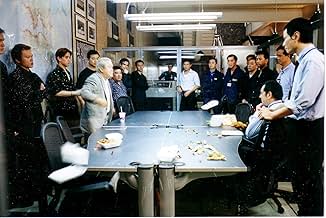
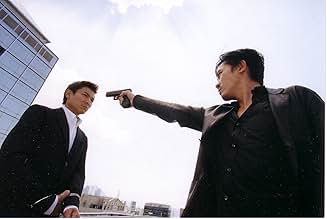
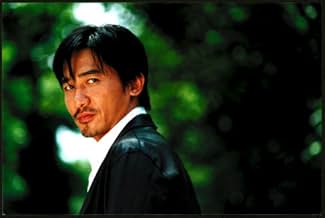
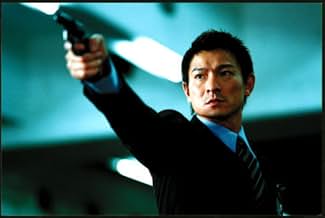
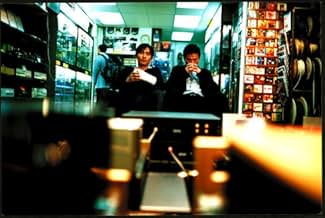


Tony Leung Chiu-wai
- Chen Wing Yan
- (as Tony Leung)

Anthony Chau-Sang Wong
- SP Wong Chi Shing
- (as Anthony Wong)


Ka-Tung Lam
- Inspector B
- (as Lam Ka Tung)

Berg Ting-Yip Ng
- Inspector Cheung
- (as Ng Ting Yip)

Chi-Keung Wan
- Officer Leung
- (as Wan Chi Keung)
Kam Fung Hui
- Cadet School Principal
- (as Hui Kam Fung)


- Directors
- Writers
- All cast & crew
- Production, box office & more at IMDbPro
8.0136.7K
1
2
3
4
5
6
7
8
9
10
Featured reviews
It has changed my expectation on crime drama forever
This movie has been regarded as the cream of Hong Kong gangster and cop movie. And has won 22 awards. But we all know awards don't mean a thing sometimes. The God Father of America cinema "Martin Scorsese" himself is making a American version of the movie, titled: Departed. I'm somewhat happy to see that this movie is being recognized and acknowledged by a true master, but distraught to the possibility of disappointment.
A little history of Hong Kong film industry, being in somewhat government free state for over 100 years, Hong Kong movie industry proliferated to the state of hysteria. On one hand, everything goes as long as people get what they want for 2 hours worth. On the other hand, lack of political drama has afforded the gangster and cop drama to truly grow and mature.
Now back to the movie itself. 3 years ago, when I was still a poor student, I was loitering in the local Chinese video store as usual, looking for something exciting. The owner handed me a VHS copy of this movie, he personally recommended it and said it's new and unique. So I went home and watched it immediately. And then I said in my then dark and dingy apartment for 30 minutes, in utter silence.
There was no plot twist, and no surprise ending, no Mr. M Night's heavy handed gimmicks and Hollywood's camera tricks. But from the beginning to the end, for full 2 hours, you can cut the tension with a knife. In the end, you still don't want it to end. The story goes on in your mind, questions, bits and pieces start to put together, characters start to take shape even after the movie ended.
In my entire life, I've never seen a movie that there isn't a single excessive frame, until I saw this movie. It has forever changed my expectation on crime drama.
The story is genius and simple enough. A mole in police department working against an undercover cop in drug trafficking mafia. They don't know each other's identity, so it is like a invisible tug war between the two competing against each other's wits. I won't reveal too much of it even though like I said, there's no plot twist.
It's a fairly popular movie that has generated huge buzz when it came out, and since been talked, compared and still highly regarded as unsurpassed by countless fans worldwide. It has an all star cast in Hong Kong cinema, and of course, the screenplay, the acting, the editing, the camera work and overall directing is flawless judging by all standards.
If you are adventurous enough to try even one Hong Kong movie, try this one.
A little history of Hong Kong film industry, being in somewhat government free state for over 100 years, Hong Kong movie industry proliferated to the state of hysteria. On one hand, everything goes as long as people get what they want for 2 hours worth. On the other hand, lack of political drama has afforded the gangster and cop drama to truly grow and mature.
Now back to the movie itself. 3 years ago, when I was still a poor student, I was loitering in the local Chinese video store as usual, looking for something exciting. The owner handed me a VHS copy of this movie, he personally recommended it and said it's new and unique. So I went home and watched it immediately. And then I said in my then dark and dingy apartment for 30 minutes, in utter silence.
There was no plot twist, and no surprise ending, no Mr. M Night's heavy handed gimmicks and Hollywood's camera tricks. But from the beginning to the end, for full 2 hours, you can cut the tension with a knife. In the end, you still don't want it to end. The story goes on in your mind, questions, bits and pieces start to put together, characters start to take shape even after the movie ended.
In my entire life, I've never seen a movie that there isn't a single excessive frame, until I saw this movie. It has forever changed my expectation on crime drama.
The story is genius and simple enough. A mole in police department working against an undercover cop in drug trafficking mafia. They don't know each other's identity, so it is like a invisible tug war between the two competing against each other's wits. I won't reveal too much of it even though like I said, there's no plot twist.
It's a fairly popular movie that has generated huge buzz when it came out, and since been talked, compared and still highly regarded as unsurpassed by countless fans worldwide. It has an all star cast in Hong Kong cinema, and of course, the screenplay, the acting, the editing, the camera work and overall directing is flawless judging by all standards.
If you are adventurous enough to try even one Hong Kong movie, try this one.
"If you see someone doing something but at the same time watching you... then he is a cop."
Martin Scorsese's 'The Departed' was probably one of the most critically-acclaimed films of 2006, and, upon hearing the tumult of praise that accompanied its release, it was a film that I desperately wanted to see. However, I couldn't do so until I had seen the 2002 Hong Kong film upon which it was based, 'Mou gaan dou {Infernal Affairs},' directed by Wai-keung Lau and Siu Fai Mak. Fortunately, not too long ago, my local movie rental store was having a sale on their superfluous VHS tapes, at a price of $2.00 apiece. Among the cheap movies that I snapped up was a copy of 'Infernal Affairs' that looked like it had never been opened. Having now watched it, I must say that, despite my limited experience with Asian cinema, I very much enjoyed the film. 'Infernal Affairs' combines an irresistible story of intrigue, loyalty and betrayal with some extremely slick editing and camera-work; it's no surprise that the film has acquired an impressive following in the West.
Tony Leung plays Chan Wing Yan, an overwrought undercover cop who has spent the last ten years infiltrating numerous dangerous gangs and exposing their criminal dealings. On the opposite end of the spectrum, Andy Lau plays Inspector Lau Kin Ming, a police mole who is secretly working the Triad, the same gang with which Yan is currently affiliated. After an expensive drugs transaction goes wrong for both the gang and the police force, each side suspects that they have a traitor in their midst, and, in a bitterly ironic turn, it falls to each of the two moles to find out who it is. Both main actors do a good job of maintaining the intensity of the story. There are certainly countless parallels to be drawn between the characters, but what struck me most were the contrasts between the two: Ming is a cold, devoted and ruthlessly efficient, whilst Yan has been reduced to a tired and neurotic wreck after a decade of living in fear.
The plot of 'Infernal Affairs' moves forward at a ripper pace, probably owing more to Western action cinema than that from its own region. The cinematography is bright and stylish, and the climactic scene on the rooftop, with the vibrant sunlight beaming overhead, was captured to great effect {Australian-born Christopher Doyle, who has worked on such films as '2046' and 'Rabbit-Proof Fence,' contributed to this film, so you already know that the cinematography will be good}. There are several moments when the storytelling was not handled as well as it might have been: the film made too frequent use of unnecessary flashbacks, and, following the death of Superintendent Wong (Anthony Wong), we are treated to a video montage that feels like the final episode of a long-running sitcom. Also, the failed attempts of Ming's wife to finish her novel ("I don't know whether he's good or bad") was a blatantly-obvious attempt to draw parallels with Andy Lau's character. Despite my trivial complaints, 'Infernal Affairs' is an entertaining and thrilling film that I'd certainly recommend to anyone.
Tony Leung plays Chan Wing Yan, an overwrought undercover cop who has spent the last ten years infiltrating numerous dangerous gangs and exposing their criminal dealings. On the opposite end of the spectrum, Andy Lau plays Inspector Lau Kin Ming, a police mole who is secretly working the Triad, the same gang with which Yan is currently affiliated. After an expensive drugs transaction goes wrong for both the gang and the police force, each side suspects that they have a traitor in their midst, and, in a bitterly ironic turn, it falls to each of the two moles to find out who it is. Both main actors do a good job of maintaining the intensity of the story. There are certainly countless parallels to be drawn between the characters, but what struck me most were the contrasts between the two: Ming is a cold, devoted and ruthlessly efficient, whilst Yan has been reduced to a tired and neurotic wreck after a decade of living in fear.
The plot of 'Infernal Affairs' moves forward at a ripper pace, probably owing more to Western action cinema than that from its own region. The cinematography is bright and stylish, and the climactic scene on the rooftop, with the vibrant sunlight beaming overhead, was captured to great effect {Australian-born Christopher Doyle, who has worked on such films as '2046' and 'Rabbit-Proof Fence,' contributed to this film, so you already know that the cinematography will be good}. There are several moments when the storytelling was not handled as well as it might have been: the film made too frequent use of unnecessary flashbacks, and, following the death of Superintendent Wong (Anthony Wong), we are treated to a video montage that feels like the final episode of a long-running sitcom. Also, the failed attempts of Ming's wife to finish her novel ("I don't know whether he's good or bad") was a blatantly-obvious attempt to draw parallels with Andy Lau's character. Despite my trivial complaints, 'Infernal Affairs' is an entertaining and thrilling film that I'd certainly recommend to anyone.
Absorbing and unusual
Beautifully shot, cleverly constructed, humorous, dramatic, and humane. I never felt bored or rushed for a moment. Expect to have to concentrate on who is who, especially at the beginning, who is or might be on to whom and how, and what they might decide to do about it. Others have said that the two leads are excellent and I'm sure they're right, but I especially appreciated Eric Tsang as Sam.
It's elegant without being heartless. I felt the main characters' longing for truth in their lives, and the various different virtues, flaws, loyalties and motivations of many others too.
I was interested to see that virtually all the violence happens off-camera. It reminded me of 'authentic' productions of Classical Greek plays. Their plots often included murders, but violence was not permitted to be shown directly. A character would describe what had happened, and then a tableau of corpses would be revealed, on a wheeled wheels if I remember correctly from one production. Almost the same device is used in this film, and it's very effective when it's done well, as here.
The friend I went with would have liked to the female characters given bigger roles. Personally (I'm a woman myself, if it makes a difference) I don't care about that. I did notice, though, the way the female characters were used as symbols to represent the good and truthful side of life. It struck me, in connection with this, that sex and violence were being treated as opposites, whereas in many US films they are treated almost as two aspects of the same thing and as depending on one another, hardly existing independently. How many plots are driven by the kidnapping or other ill-treatment of the hero's wife/girlfriend/squeeze, so that the violence against her - whether she resists it violently or not - is used to justify and supposedly motivate the whole towering nonsense by virtue of her sexual relationship with the hero? It often seems that the villian's real offence is thought to be less assault on a person, than theft of property. And I wonder if, when the US remake appears, this tedious plot device will have crept in? But I digress - it was just an idea that occurred to me on the way home, and it tells you little about "Infernal Affairs", except that it may be one reason why I found this film refreshing.
An absorbing experience, and has made me more inclined to seek out Asian films in general, as well as films by the same director.
It's elegant without being heartless. I felt the main characters' longing for truth in their lives, and the various different virtues, flaws, loyalties and motivations of many others too.
I was interested to see that virtually all the violence happens off-camera. It reminded me of 'authentic' productions of Classical Greek plays. Their plots often included murders, but violence was not permitted to be shown directly. A character would describe what had happened, and then a tableau of corpses would be revealed, on a wheeled wheels if I remember correctly from one production. Almost the same device is used in this film, and it's very effective when it's done well, as here.
The friend I went with would have liked to the female characters given bigger roles. Personally (I'm a woman myself, if it makes a difference) I don't care about that. I did notice, though, the way the female characters were used as symbols to represent the good and truthful side of life. It struck me, in connection with this, that sex and violence were being treated as opposites, whereas in many US films they are treated almost as two aspects of the same thing and as depending on one another, hardly existing independently. How many plots are driven by the kidnapping or other ill-treatment of the hero's wife/girlfriend/squeeze, so that the violence against her - whether she resists it violently or not - is used to justify and supposedly motivate the whole towering nonsense by virtue of her sexual relationship with the hero? It often seems that the villian's real offence is thought to be less assault on a person, than theft of property. And I wonder if, when the US remake appears, this tedious plot device will have crept in? But I digress - it was just an idea that occurred to me on the way home, and it tells you little about "Infernal Affairs", except that it may be one reason why I found this film refreshing.
An absorbing experience, and has made me more inclined to seek out Asian films in general, as well as films by the same director.
A textbook thriller
A deceptively simple idea lies at the heart of this complex thriller: the Hong Kong police and a triad gang both have an informer in each other's organisation: whoever's man picks the enemies' spy first wins the game for his side. Add to that the customary double-agent-doesn't-know-which-side-he-is-on-anymore subplot (doubled, of course), and you have plenty of ingredients for a plot, although it's to the movie's credit that although a little stylised, it never seems false or contrived. Fast-paced and bold, with a generous score, it never insults the viewer's intelligence either, and features just the right level of moral ambiguity. At one level, it's just another thriller, and there's little in the way of wider political or social subtext; but on the other hand, it's a textbook lesson in the art of making this sort of film.
Absolutely awesome
A seriously refreshing police thriller that cranks up the tension to the max. There's no overblown gunplay or buddy cop crap here, this baby is tight as a drum and will have your nails down to the quick. Superb performances, a tight script and tense direction make this a winner in every department. Pick it up if you can, it's fantastic.
9/10
Niz
9/10
Niz


Did you know
- TriviaWhen Yan and SP Wong are waiting at the elevator, the digital floor counter skips the 4th floor. In China and Hong Kong, the number 4 is considered bad luck because it sounds similar to the word 'death'.
- GoofsShawn Yue (Young Chen Wing Yan) is taller than Anthony Chau-Sang Wong (SP Wong Chi Shing), and there is a brief shot of them standing together. Tony Chiu-Wai Leung (Chen Wing Yan) is clearly shorter than Anthony Chau-Sang Wong, so the character has apparently shrunken.
- Quotes
Lau Kin Ming: Do all undercover cops like rooftops?
Chan Wing Yan: Unlike you, I'm not afraid of light.
- Alternate versionsFor the Chinese version an alternate ("politically correct") ending was used. In it, Lau gets arrested when he leaves the elevator.
- ConnectionsEdited into Infernal Affairs III (2003)
- SoundtracksInfernal Affairs
Composed & Arranged by Ronald Ng
Performed by Andy Lau and Tony Leung Chiu-wai (as Tony Leung)
Produced by Ronald Ng and Kwok-Leung Chan
O.P. BMG Music Publishing Hong Kong, Ltd./Catchy Music Publishing, Ltd.
Details
- Release date
- Country of origin
- Official sites
- Languages
- Also known as
- Vô Gian Đạo
- Filming locations
- Ten Thousand Buddhas Monastery, Sha Tin, New Territories, Hong Kong, China(opening scene: temple)
- Production companies
- See more company credits at IMDbPro
Box office
- Budget
- $6,428,966 (estimated)
- Gross US & Canada
- $169,659
- Opening weekend US & Canada
- $25,680
- Sep 26, 2004
- Gross worldwide
- $8,836,958
- Runtime
- 1h 41m(101 min)
- Color
- Sound mix
- Aspect ratio
- 2.35 : 1
Contribute to this page
Suggest an edit or add missing content