IMDb RATING
6.4/10
2.6K
YOUR RATING

The movie follows 3 Japanese friends from embarking on Yamato, the world's largest battleship, until it's sunk 3 1/2 years later on April 7, 1945 on it's way to Okinawa to stop American adva... Read allThe movie follows 3 Japanese friends from embarking on Yamato, the world's largest battleship, until it's sunk 3 1/2 years later on April 7, 1945 on it's way to Okinawa to stop American advance at the end of WWII.The movie follows 3 Japanese friends from embarking on Yamato, the world's largest battleship, until it's sunk 3 1/2 years later on April 7, 1945 on it's way to Okinawa to stop American advance at the end of WWII.
- Awards
- 6 wins & 7 nominations total




Sôsuke Ikematsu
- Atsushi
- (as Sosuke Ikematsu)
- Director
- Writers
- All cast & crew
- Production, box office & more at IMDbPro
6.42.5K
1
2
3
4
5
6
7
8
9
10
Featured reviews
True thing... that hurts
Screenplay of this movie (of course in Japanese) is excellent and I was enough convinced by its story - why we are living, who fought for the country. It was great tragedy that only 15-17 years old boys required to fight in the war without knowing the meaning/reason of life. This movie (or original book written by Jun Henmi) is now my recommendation to know there were people who fought for our country.
I am not racist nor nationalist. I also am not right wing. I oppose to any wars by any mean. But, I respect the men who fought for us and it is sad that we don't know much about the fact we are living on where these men protected.
I voted this as "5" for actors/actress are not that super... Theme song as the same... Understanding they did their best, but level of acting is miserable. The battle scenes are great.
Sometime it's too stereotype to illustrate the story (ie. Geisha & Japanese Gamble ... that's almost the all the Japanese movie does).
I am not racist nor nationalist. I also am not right wing. I oppose to any wars by any mean. But, I respect the men who fought for us and it is sad that we don't know much about the fact we are living on where these men protected.
I voted this as "5" for actors/actress are not that super... Theme song as the same... Understanding they did their best, but level of acting is miserable. The battle scenes are great.
Sometime it's too stereotype to illustrate the story (ie. Geisha & Japanese Gamble ... that's almost the all the Japanese movie does).
Latitude N30, Longitude L128
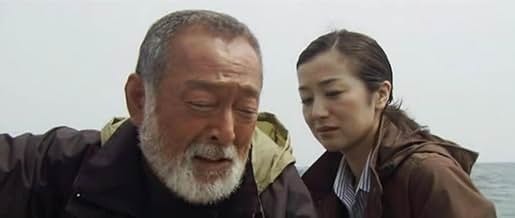
On April, 6th 2005, in Makurazi, Kagoshima, Makiko Uchida (Kyôka Suzuki) seeks a boat in the local fishing cooperative to take her to the latitude N30, longitude L128, where the largest, heaviest and most powerfully armed battleships ever constructed Yamato was sunk on April, 7th 1945; however, her request is denied. She meets by chance the captain Katsumi Kamio (Tatsuya Nakadai) of the fishing vessel Asukamaru and discloses that she is the stepdaughter of Officer Nagoya Uchida (Shidô Nakamura) and Kamio immediately accepts to take her in the risky journey. While traveling with Makiko and the fifteen year-old Atsuchi (Sosuke Ikematsu), Kamio recalls and discloses the story of Yamato and his close friends that served on board of the battleship until the final suicidal mission in Okinawa. When they reach the spot where Yamato was sunk, he considers that he finally reached the end of the Shōwa era.
"Otoko-tachi no Yamato" is a dramatic movie based on the true story of the Battleship Yamato in World War II. This film gives an approach of Japanese relationship in war totally different from the stereotype of American and European movies of this genre that usually treat Japanese soldiers as cold blood killers detached from any emotions. In "Yamato!", the Japanese military are human beings, with beloved ones, families and comradeship between them, giving more credibility to the story. However, director Junya Sato exaggerates in the melodramatic subplots and in many moments the viewer has the sensation of watching a soap-opera instead of a drama. The final battle of Yamato is engaging and one of the best moments of this film. The music score is repetitive and boring and I personally did not like it. Last but not the least, the Shōwa period mentioned by Katsumi Kamio in one of his last lines literally means, in accordance with the Wikipedia, "period of enlightened peace", or Shōwa era, is the period of Japanese history corresponding to the reign of Emperor Shōwa (Hirohito), from December 25th, 1926 to January 7th, 1989. My vote is seven.
Title (Brazil): "Yamato"
"Otoko-tachi no Yamato" is a dramatic movie based on the true story of the Battleship Yamato in World War II. This film gives an approach of Japanese relationship in war totally different from the stereotype of American and European movies of this genre that usually treat Japanese soldiers as cold blood killers detached from any emotions. In "Yamato!", the Japanese military are human beings, with beloved ones, families and comradeship between them, giving more credibility to the story. However, director Junya Sato exaggerates in the melodramatic subplots and in many moments the viewer has the sensation of watching a soap-opera instead of a drama. The final battle of Yamato is engaging and one of the best moments of this film. The music score is repetitive and boring and I personally did not like it. Last but not the least, the Shōwa period mentioned by Katsumi Kamio in one of his last lines literally means, in accordance with the Wikipedia, "period of enlightened peace", or Shōwa era, is the period of Japanese history corresponding to the reign of Emperor Shōwa (Hirohito), from December 25th, 1926 to January 7th, 1989. My vote is seven.
Title (Brazil): "Yamato"
Passionate movie
The movie has a very touching human side, an a sinister historic side.
The human story inside the story also is moving.
The major flaw of it, is that is too long. It gets unnecessary and frequently lost in details.
The human story inside the story also is moving.
The major flaw of it, is that is too long. It gets unnecessary and frequently lost in details.
Good war film that questions the need to fight to the end while paying tribute to fallen comrades
Huge scale tale of the battleship Yamato and its crew. from 1942 to its sinking. Told in flashback as memories are provoked in a survivor by a woman, the daughter of another survivor, wanting to visit the final resting place on the 60th anniversary of its sinking. This is a story of youthful idealism tinged and changed by the course of war and a culture that celebrates death in battle as something glorious. It examines why men fight and what can we hope to get out of war.
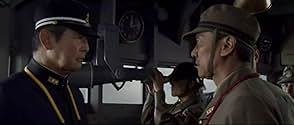
This is a very good and moving film. For all of the clichés (is there a well worn plot device it doesn't have?) it does manage to touch the heart and the head. We really do care about the characters we see up on the screen, and what happens to them, death in a foolish adventure, moves us. At the same time we get to see the waste that is war and was the Japanese war effort in the final days of World War Two. Its made clear that the fight to the end mentality leaves no room for tomorrow. Its best expressed in a simple scene on the bridge of the ship. One of the officers is asked to explain the difference between chivalry, the Western code of war, and Bushido, the Japanese code. Bushido, he says is preparing for a death with no reward, Chivalry is trying to live a noble life. Its a difference that all of the men can see but which very few ever get the chance to live by. Even the survivors, the old man essentially telling the story, is haunted by the fact that he lived and everyone else died.As the film asks plainly, if we all die, who's going to be around to take advantage of our sacrifices? Its a question that needs to be asked in this age of suicide bombers. There is a great many other thematic threads running through this film that lift it out of the typical war movie pile.
The cast is top notch. They manage to take what is often a clichéd script and to infuse it with the power of reality. Modern sequences aside, you care for these people and you are moved by what happens to them. The tears that well up in the final modern scenes come from the fact that the cast of the war sections is so good that you carry over the emotion. I wish that the modern sequences had given the actors something to do other than simply push the story into action.
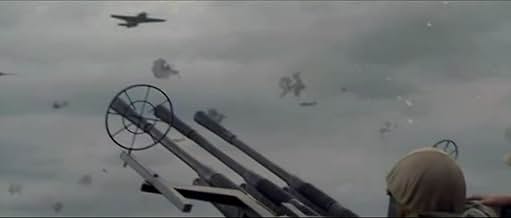
Technically the film is very impressive. The Yamato, is monster of a ship and its plain to see that great care was taken in recreating it. Its a beautiful movie to look at with the entire film having a wonderful sense of place and time. The two battle scenes are graphic in a way that I've never seen in a naval war film (if you don't like blood you may want to look elsewhere.) This is going to be something to rattle the windows with on DVD.
If the film has any real flaw thats its length. The film is about two and a half hours long and to be honest it probably could have been shorter. I was getting fidgety during some of it. Its not that its bad, its just that the films pace allows you too much time to dwell on some of the by the numbers construction of the plot so you just want the film to get to the next bit (what another tearful goodbye?). It doesn't kill the film, it just makes it hard to truly get lost in the story.
If you like war films, or good movies this is one to keep an eye out for. Just be ready to do a little digging since I'm not sure if this is going to get a regular release outside of Asia.
This is a very good and moving film. For all of the clichés (is there a well worn plot device it doesn't have?) it does manage to touch the heart and the head. We really do care about the characters we see up on the screen, and what happens to them, death in a foolish adventure, moves us. At the same time we get to see the waste that is war and was the Japanese war effort in the final days of World War Two. Its made clear that the fight to the end mentality leaves no room for tomorrow. Its best expressed in a simple scene on the bridge of the ship. One of the officers is asked to explain the difference between chivalry, the Western code of war, and Bushido, the Japanese code. Bushido, he says is preparing for a death with no reward, Chivalry is trying to live a noble life. Its a difference that all of the men can see but which very few ever get the chance to live by. Even the survivors, the old man essentially telling the story, is haunted by the fact that he lived and everyone else died.As the film asks plainly, if we all die, who's going to be around to take advantage of our sacrifices? Its a question that needs to be asked in this age of suicide bombers. There is a great many other thematic threads running through this film that lift it out of the typical war movie pile.
The cast is top notch. They manage to take what is often a clichéd script and to infuse it with the power of reality. Modern sequences aside, you care for these people and you are moved by what happens to them. The tears that well up in the final modern scenes come from the fact that the cast of the war sections is so good that you carry over the emotion. I wish that the modern sequences had given the actors something to do other than simply push the story into action.
Technically the film is very impressive. The Yamato, is monster of a ship and its plain to see that great care was taken in recreating it. Its a beautiful movie to look at with the entire film having a wonderful sense of place and time. The two battle scenes are graphic in a way that I've never seen in a naval war film (if you don't like blood you may want to look elsewhere.) This is going to be something to rattle the windows with on DVD.
If the film has any real flaw thats its length. The film is about two and a half hours long and to be honest it probably could have been shorter. I was getting fidgety during some of it. Its not that its bad, its just that the films pace allows you too much time to dwell on some of the by the numbers construction of the plot so you just want the film to get to the next bit (what another tearful goodbye?). It doesn't kill the film, it just makes it hard to truly get lost in the story.
If you like war films, or good movies this is one to keep an eye out for. Just be ready to do a little digging since I'm not sure if this is going to get a regular release outside of Asia.
Japanese modern amnesia
There are two things about this movie that make it more than a little absurd. Of course US movies tell the US perspective, and Japanese movies will tend to tell theirs. But Japan does not even teach what happened in World War II, no one growing up after the war has ever been taught what they did to the subjects under their rule, or that they started hostilities. This is why China and Korea to this day maintain a cold peace with Japan. They have not forgotten.
So this movie once again skips over anything -- Japanese perspective or not -- about the war, and focuses on the only thing Japan has ever focused on since -- their own suffering.
The other thing is that the fight scenes make it look like they are at least making the US pay a heavy price. This is typical Japanese face- saving. If you are going to make a movie about these dead heroes to the state, you have to at least make it look like they died being somewhat competent. In fact, the count for the day was something like 10 US planes downed, and 14 pilots wounded. Considering that 4000 Japanese sailors died, this was an incredibly lopsided fight. So in other words, the battle must have looked very, very different than this movie.
I understand that a Japanese director probably cannot make a movie in which Japanese sailors are dying by the thousands -- and ARE NOT EVEN ABLE to inflict much damage in return. But that isn't US propaganda -- that is what happened. Surely at this point, it's time for someone to tell the young people of Japan something closer to the truth? Yes, Japan paid for its mistake, but it was not an innocent victim.
In 2001 I taught for six weeks in Japan, 2 weeks before, then later 4 weeks after 9/11. My students incredulously asked me in amazement "who would think of using an airplane as a suicide weapon and killing themselves and lots of other people?" They had not even HEARD of kamikazes! I did not have the heart to enlighten them, so I restrained my natural response "Your people invented this!"
Modern pacifist Japan is rooted in ignorance, and this movie contributes nothing to understanding. This is the telling of a war that happened in another dimension, not here. This is a tale from a Japan that still cannot own up to its own history.
So this movie once again skips over anything -- Japanese perspective or not -- about the war, and focuses on the only thing Japan has ever focused on since -- their own suffering.
The other thing is that the fight scenes make it look like they are at least making the US pay a heavy price. This is typical Japanese face- saving. If you are going to make a movie about these dead heroes to the state, you have to at least make it look like they died being somewhat competent. In fact, the count for the day was something like 10 US planes downed, and 14 pilots wounded. Considering that 4000 Japanese sailors died, this was an incredibly lopsided fight. So in other words, the battle must have looked very, very different than this movie.
I understand that a Japanese director probably cannot make a movie in which Japanese sailors are dying by the thousands -- and ARE NOT EVEN ABLE to inflict much damage in return. But that isn't US propaganda -- that is what happened. Surely at this point, it's time for someone to tell the young people of Japan something closer to the truth? Yes, Japan paid for its mistake, but it was not an innocent victim.
In 2001 I taught for six weeks in Japan, 2 weeks before, then later 4 weeks after 9/11. My students incredulously asked me in amazement "who would think of using an airplane as a suicide weapon and killing themselves and lots of other people?" They had not even HEARD of kamikazes! I did not have the heart to enlighten them, so I restrained my natural response "Your people invented this!"
Modern pacifist Japan is rooted in ignorance, and this movie contributes nothing to understanding. This is the telling of a war that happened in another dimension, not here. This is a tale from a Japan that still cannot own up to its own history.


Did you know
- TriviaPart of the foredeck and port side of the Yamato were reconstructed to full scale for the exterior scenes. As the Japan Building Standards Act interfered with re-creating the ship's entire superstructure, images of a one-tenth scale model of the Yamato at its namesake museum in Kure were used in post-production.
- GoofsThe ship is seen firing salvos from its main batteries aimed at approaching US aircraft on several occasions, while lots of the crew are visible on deck, manning the light AA guns as well as performing other duties. While the big guns were in fact used fending off aircraft, at least during the last battle off Okinawa, the shock wave from the blast of the nine 460 mm barrels (the biggest ever on a warship) could kill or severely injure an unprotected sailor, it was therefore forbidden to remain on deck on such occasions.
- Quotes
Mamoru Uchida: [Firing an AA gun defiantly as the ship sinks] I'm not done yet! My last throw!
- How long is Yamato?Powered by Alexa
Details
- Release date
- Country of origin
- Official site
- Language
- Also known as
- The Pacific Battleship: Yamato
- Filming locations
- Production companies
- See more company credits at IMDbPro
Box office
- Gross worldwide
- $39,287,114
- Runtime
- 2h 25m(145 min)
- Color
- Sound mix
- Aspect ratio
- 2.35 : 1
Contribute to this page
Suggest an edit or add missing content