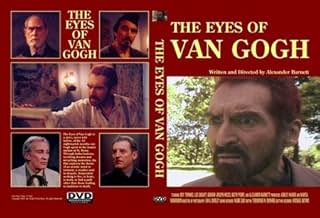
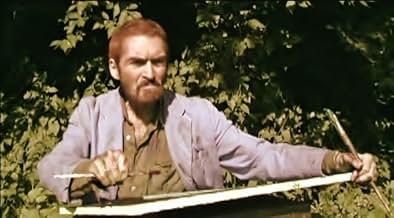
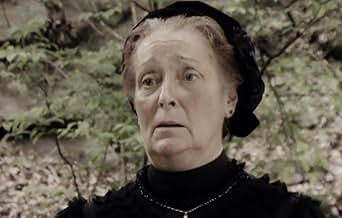
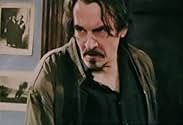
After the disastrous months spent with Gauguin in the yellow house in Arles, Vincent van Gogh, in desperate search for a cure from attacks that increasingly plague him, voluntarily enters an... Read allAfter the disastrous months spent with Gauguin in the yellow house in Arles, Vincent van Gogh, in desperate search for a cure from attacks that increasingly plague him, voluntarily enters an insane asylum.After the disastrous months spent with Gauguin in the yellow house in Arles, Vincent van Gogh, in desperate search for a cure from attacks that increasingly plague him, voluntarily enters an insane asylum.
- Awards
- 1 win & 1 nomination total
Diana Agostini
- Kee Vos
- (as Diane Agostini)
- Director
- Writer
- All cast & crew
- Production, box office & more at IMDbPro
6.3133
1
2
3
4
5
6
7
8
9
10
Featured reviews
10jfischet
An Extensive Tour of Van Gogh's Disturbed Mind
The "Eyes of Van Gogh" was a captivating and depressing portrayal of Van Gogh's final days. I always viewed Van Gogh as an excellent artist with a slightly disturbing life. I clearly did not understood neither the full extent of his despair. From the beginning, it's very clear that Van Gogh is captive to his dark, depressing hallucinations caused by a difficult and lonely life. In fact, it seems as if Van Gogh's life was just one disappointment after another. Friendless, loveless, and entirely dependent upon his brother for living, Van Gogh was not the successful artist that I always imagined him to be. One cannot help but feel sorry for a man whose parents blamed him for the death of his brother, whose true love cruelly rejected him, and whose beautiful paintings were ridiculed by the artistic elite. Such rejection and cruelty would drive anyone crazy.
The drab scenery and music were key to setting the overall tragic setting of this movie. Also, the confusion experienced deciphering actual events from make-believe ones helps one to understand Van Gogh's delirium during his days in the Insane Asylum. It is very fitting that Van Gogh dies soon after he is forbidden from the one activity that brings him joy, painting. The viewer is left with the impression that without art, Van Gogh really had nothing left to live for.
An engaging portrayal of Van Gogh from his own perspective
History tells us that Van Gogh, like many artists, was a very intense and troubled personality. Barnett takes us into the heart and mind of the man in a way that causes us to empathize afresh with his feelings and struggles. Barnett the film-maker deliberately refrains from any cutting from one camera to another, enhancing the viewer's being drawn into the world as viewed from Van Gogh's perspective. The score is also effective in painting an aural picture of what is going on inside the artist's mind. In this film we see Van Gogh, not just as a troubled soul, but as a sensitive and caring person who never quite found the way to break free of the demons from his past that haunted him up to the end of his life. Barnett's portrayal of Van Gogh is both believable and engaging. Despite the film's length of almost two hours, it holds the viewer's attention and moves the heart.
The essence of van Gogh
The viewer who has not encountered Mr. Barnett's work before may at first feel some disorientation, even shock, at the style and emotional intensity of this award-winning movie. The realization may grow, moving into it minute by minute, that what Barnett has done in his own artistic venue is in many ways comparable to what Vincent did in his -- transforming the artist's own clear perception of reality and life (in this case, Vincent's) into forms strikingly different from any seen in that venue before. This is not the kind of commercialized, mundanely Hollywood-slick film making that we are used to, which I find so often boring, in the end. I'd say to those who would be disappointed by that: look elsewhere.
Having had the pleasure of seeing some of Barnett's early work in NY on stage -- Miller and Shakespeare at their best, in my book -- I did not require a period of readjustment of expectation and perception. (At age 33, he did the best King Lear I have ever seen.) What challenged me, in a very positive way, was the complexity and nuance of compressing Vincent's life story, spirit, and values into the remarkably short format of a 111-minute run time. Having known Vincent's story as of decades ago, but not having read the letters of Vincent and Theo, I found it difficult to approach this work with a pristine eye or ear. Would the naive viewer quite understand the context of this or that event (say, the Borinage time), etc? And would the unavoidable constraints of a low budget production detract from the essential experience and value of the work? Impossible for me to know, and anyway, I'm no film critic.
I can say that I have it on good authority that the script remains true to the van Gogh letters, and the portrayal certainly remains uniquely true to Vincent's spirit and work. As film making (his first feature work), it uses the full palette, visually and emotionally. My advice: do not view it casually. That would be a waste.
Nota Bene: Roy Thinnes is so very Peyron. (I really enjoyed his role in X Files, too.) All said and done -- 9 stars. It will sadden me if we don't see more of Barnett on film, as it does that we don't have some earlier work on film.
Having had the pleasure of seeing some of Barnett's early work in NY on stage -- Miller and Shakespeare at their best, in my book -- I did not require a period of readjustment of expectation and perception. (At age 33, he did the best King Lear I have ever seen.) What challenged me, in a very positive way, was the complexity and nuance of compressing Vincent's life story, spirit, and values into the remarkably short format of a 111-minute run time. Having known Vincent's story as of decades ago, but not having read the letters of Vincent and Theo, I found it difficult to approach this work with a pristine eye or ear. Would the naive viewer quite understand the context of this or that event (say, the Borinage time), etc? And would the unavoidable constraints of a low budget production detract from the essential experience and value of the work? Impossible for me to know, and anyway, I'm no film critic.
I can say that I have it on good authority that the script remains true to the van Gogh letters, and the portrayal certainly remains uniquely true to Vincent's spirit and work. As film making (his first feature work), it uses the full palette, visually and emotionally. My advice: do not view it casually. That would be a waste.
Nota Bene: Roy Thinnes is so very Peyron. (I really enjoyed his role in X Files, too.) All said and done -- 9 stars. It will sadden me if we don't see more of Barnett on film, as it does that we don't have some earlier work on film.
A haunting and emotionally draining experience, but a must see.
Having seen some of Barnett's earlier work on stage in N.Y., I was more than familiar with the depth and breadth of his ability as an actor and director; how seemingly effortlessly he brings each of his characters to life. I was fully prepared to be equally moved by his interpretation and portrayal of Vincent van Gogh. I knew that Barnett could be electrifying on stage and I was curious to see how his energy would translate on film.
Nothing, however, prepared me for the emotional shock I experienced by his haunting rendering of the most tortured months in the life of van Gogh. The intensity that Barnett brought to this role can only be described as "insane." One can but imagine the years of research and total immersion into the life of van Gogh it must have required to be able to portray with such shocking clarity what was in van Gogh's heart and mind during this brief period of time. Another commenter describes Barnett's performance as, "as close to insanity as you will ever get." I agree.
The film is not highly polished in the typical sense. The lighting is poor at times, the sets and scenery drab, and while I know nothing about film editing, I found some of the flashbacks unnecessarily confusing. These perceived flaws could be due to budget constraints, but knowing something of Barnett's work, I tend to think there is some intention on his part. The overall effect is that the viewer experiences the bleakness that is Vincent's life at the time. At times in the film, what is reality and what is only in van Gogh's tortured and clouded mind is as indistinguishable to the viewer as it is to Vincent, making the viewing experience all the more haunting and disquieting. An amazing feat, whether intentional or not.
Nothing, however, prepared me for the emotional shock I experienced by his haunting rendering of the most tortured months in the life of van Gogh. The intensity that Barnett brought to this role can only be described as "insane." One can but imagine the years of research and total immersion into the life of van Gogh it must have required to be able to portray with such shocking clarity what was in van Gogh's heart and mind during this brief period of time. Another commenter describes Barnett's performance as, "as close to insanity as you will ever get." I agree.
The film is not highly polished in the typical sense. The lighting is poor at times, the sets and scenery drab, and while I know nothing about film editing, I found some of the flashbacks unnecessarily confusing. These perceived flaws could be due to budget constraints, but knowing something of Barnett's work, I tend to think there is some intention on his part. The overall effect is that the viewer experiences the bleakness that is Vincent's life at the time. At times in the film, what is reality and what is only in van Gogh's tortured and clouded mind is as indistinguishable to the viewer as it is to Vincent, making the viewing experience all the more haunting and disquieting. An amazing feat, whether intentional or not.
10jlasko
Intense and enlightening
Some movies are entertaining. Others are an experience. Alexander Barnett's Van Gogh biopic definitely falls into the latter category. Far from "guilty pleasure" fare, "The Eyes of Van Gogh" is a skillful and passionate portrayal of a talented yet tortured artist. This movie will educate you about the world of this struggling genius, even as it compels you to feel compassion for Van Gogh in his sad state. Competition, debt, insanity, rejection--all of these themes swirl Vincent's reality much like the colors in his paintings...you'll be relieved to view reality for yourself again at the end. But if you let it, the movie may remind you of all you have to be grateful for, and even challenge you to look at your own life through slightly different eyes.
Did you know
- TriviaIn 2015, the Van Gogh Museum in Amsterdam will commemorate the 125th anniversary of van Gogh's death. They will be showing clips from the film The Eyes of Van Gogh throughout the year.
- Quotes
Vincent van Gogh: I must finish my work.
Details
- Runtime
- 1h 51m(111 min)
- Color
Contribute to this page
Suggest an edit or add missing content