

A high-school student feels responsible for a fatal traffic accident and tries to make amends.A high-school student feels responsible for a fatal traffic accident and tries to make amends.A high-school student feels responsible for a fatal traffic accident and tries to make amends.
- Awards
- 10 wins & 18 nominations total




- Director
- Writer
- All cast & crew
- Production, box office & more at IMDbPro
6.519.1K
1
2
3
4
5
6
7
8
9
10
Featured reviews
Needed Some Darlings Killed!
Am I the only one who feels that Anna Paquin's acting is not the best, but probably the worst aspect of this film? For the entirety of the overlong runtime, but most markedly in the several outlandish scenes with Mr. Aaron, a strangely cast Matt Damon, her reading of the lines was overdone and unnatural. The intonation and pitch, among other things, seemed extremely forced and, well, like acting! In one scene, she accuses Emily of being "strident" and when she gets upset, modifies it to "emphatic". Official dictionary definitions would tell us that the key difference between the two words is the negative connotation that accompanies the former. Well, Paquin's acting and delivery of her lines can be described as strident, not emphatic.
The aforementioned scene is actually an example of the cleverness and wit found in Kenneth Lonergan's script, and I am confident that a book version of this film would garner a much higher rating from me. The premise is ingenious and the story engaging. The relevant scenes were insightful and thought provoking, inviting hours of discussion. Unfortunately, the critical word in that sentence is "relevant", because this lost potential of a masterpiece film was full of irrelevant scenes. Even irrelevant characters. A significant amount of time is dedicated to some high school classroom political debates, which would be quite compelling in another context, but distracting and confusing here, given its inapplicability to Lisa Cohen's narrative. Even the film title is irrelevant! I am actually partial to clever or not obvious film titles, but "Margaret" is neither of these. It refers to yet another inconsequential scene that should have been edited out, more specifically to the Gerard Manley Hopkins poem read aloud in her English class. The narrator in the poem speaks to a young girl named Margaret, who is grieving the death of autumn leaves as if they were dying friends explaining to her that although it feels profound, grieving is an inescapable part of the human condition. This scene is not long enough, nor the message prolific enough to warrant the naming of the entire 3 hour film.
From Salon: Rarely has a film with such a great cast and so many moments of terrific writing and such high dramatic goals, overdone but beautiful cinematography, been so messy and disorganized and fundamentally bad... like going to a friend's house for dinner to discover that they've apparently had a breakdown, and bought all sorts of delicious ingredients with no recipe in mind: Ice cream followed by lentil soup followed by sashimi followed by uncooked root vegetables, with half-kneaded bread dough and Pinot Noir poured over your head.
True, I watched the 36 minutes longer extended 3 hours and 6 minutes version, but I suspect I would have actually been even more dissatisfied with the shorter versions, since even more subplots were left hanging. Even in this full extended version, too much was left unresolved. Not surprising, given the labyrinth mess of plots and subplots, arbitrary detours and illogical tangents. "Margaret" is a film that would have dearly benefited from some serious killing of the darlings. And one look into the long process and legal drama surrounding the release of this film will indicate that I'm far from alone in this thinking!
Such loss of potential. Could have been a masterpiece. Alas, the best I can grant is a 6/10, and that's even with the extra points that come with any Mark Ruffalo film (stellar as always, even in his limited character time)!
The aforementioned scene is actually an example of the cleverness and wit found in Kenneth Lonergan's script, and I am confident that a book version of this film would garner a much higher rating from me. The premise is ingenious and the story engaging. The relevant scenes were insightful and thought provoking, inviting hours of discussion. Unfortunately, the critical word in that sentence is "relevant", because this lost potential of a masterpiece film was full of irrelevant scenes. Even irrelevant characters. A significant amount of time is dedicated to some high school classroom political debates, which would be quite compelling in another context, but distracting and confusing here, given its inapplicability to Lisa Cohen's narrative. Even the film title is irrelevant! I am actually partial to clever or not obvious film titles, but "Margaret" is neither of these. It refers to yet another inconsequential scene that should have been edited out, more specifically to the Gerard Manley Hopkins poem read aloud in her English class. The narrator in the poem speaks to a young girl named Margaret, who is grieving the death of autumn leaves as if they were dying friends explaining to her that although it feels profound, grieving is an inescapable part of the human condition. This scene is not long enough, nor the message prolific enough to warrant the naming of the entire 3 hour film.
From Salon: Rarely has a film with such a great cast and so many moments of terrific writing and such high dramatic goals, overdone but beautiful cinematography, been so messy and disorganized and fundamentally bad... like going to a friend's house for dinner to discover that they've apparently had a breakdown, and bought all sorts of delicious ingredients with no recipe in mind: Ice cream followed by lentil soup followed by sashimi followed by uncooked root vegetables, with half-kneaded bread dough and Pinot Noir poured over your head.
True, I watched the 36 minutes longer extended 3 hours and 6 minutes version, but I suspect I would have actually been even more dissatisfied with the shorter versions, since even more subplots were left hanging. Even in this full extended version, too much was left unresolved. Not surprising, given the labyrinth mess of plots and subplots, arbitrary detours and illogical tangents. "Margaret" is a film that would have dearly benefited from some serious killing of the darlings. And one look into the long process and legal drama surrounding the release of this film will indicate that I'm far from alone in this thinking!
Such loss of potential. Could have been a masterpiece. Alas, the best I can grant is a 6/10, and that's even with the extra points that come with any Mark Ruffalo film (stellar as always, even in his limited character time)!
6mbs
Sprawling Cassavettes Like Tale Of Anguished Young Woman's Guilt
The film is just over two and a half hours long and while it doesn't fly on by--it doesn't slowly crawl on by either. There are a lot of scenes that flow really really nicely into other scenes that might not have to do with the main plot line but seem to belong in the movie all the same. I can kind of see why the writer/director had trouble trimming it even at two and a half hours, its hard to tell where or what to trim since the main plot line of the movie isn't really the point so much as all the establishing things that contribute to Lisa's mood and state of mind as the movie progresses. (i think) If you're reading this you probably already know the main plot line--teenage girl Lisa causes massive bus accident resulting in a single death, and spends the rest of the movie both breaking down emotionally and trying to right what she feels she did wrong. (the accident is really, really not entirely her fault, but she feels enormous guilt just the same as she should) Anna Paquin gives an incredible performance here--i don't just mean that Paguin's performance is really emotional (which it is)--or that she feels like a real life teenager here (so confident in her rightness, so prone to outbursts when her rightness isn't so right) i mean that Paquin's performance really, pretty much completely single-handedly holds this entire jumble together into one coherent narrative--and for that she's almost like Kenneth Lonnigran's equivalent to Ben Gazzara here. We follow her as she runs into all sorts of people, and we follow her thru all of her mood swings and somewhat pointless arguments that she picks with some of these people, and completely well reasoned arguments that she picks with others...she's the kind of well intentioned but guilt racked protaginist you would expect to find in a novel or a play, or maybe a really good ongoing TV series--but definitely not a film with a definitive arc which is what makes her character that much more surprising.
The film really did call to mind some of John Cassavettes' films in both its rambling yet always moving forward (but never exactly straight forward) narrative and the many, many set pieces consisting of minute characters just talking....not to mention all the natrualistic scenes of Lisa just hanging out in her element. (meaning in school, with friends, arguing with her mom, etc) Movie is very very dialog heavy and yet somehow it never comes across as trying to strong-arm you into a specific point of view, at least until the last half hour or so--as its main character eventually and forcefully takes one on of her own.
This is a movie that for all of its strengths has plenty of weaknesses in it as well. For one thing I'm not sure what the heck Jean Reno is doing here exactly. I'm only slightly less curious about what the heck Matt Damon is doing here also. (was he supposed to be Lisa's moral compass? because his character doesn't really make any sense really. If there's one character who seems like he should have had more screen time it would have to be him) i'm not enitrely sure why we keep cutting back to Matthew Broderick who outside the scenes of him moderating English class debates (?!?!) doesn't seem to have much of a character to play. i'm not entirely sure the ending justified the extreme buildup--i'm also not sure how realistic that ending decision actually is either, but i'll let that go just because the movie had to have an ending. Even tho I enjoyed the constant cutting back to Lisa's mom's storyline (J Smith Cameron is pretty good here too i should point out)--i'm not even sure all of that was necessary to tell Lisa's story so thoroughly--even if the relationship between the mom and the daughter i think is supposed to be the backbone of the movie...and yet with all of these questionable elements just kind of thrown on in there one on top of the other, (like they're all so tightly wound together that it would be hard to pick one off without feeling like something was missing i should add)--- the movie does remain really quite watchable right up until the end--anchored very nicely by the excellent work of Anna Paquin so really that's a feat just by itself i think. This is a film that will be overrated by some, and too easily dismissed by many others...yet this definitely is a challenging film and one that i think should make a pretty good civics lesson to some high school/college students in the years ahead--provided schools are still teaching civics in the years ahead.
The film really did call to mind some of John Cassavettes' films in both its rambling yet always moving forward (but never exactly straight forward) narrative and the many, many set pieces consisting of minute characters just talking....not to mention all the natrualistic scenes of Lisa just hanging out in her element. (meaning in school, with friends, arguing with her mom, etc) Movie is very very dialog heavy and yet somehow it never comes across as trying to strong-arm you into a specific point of view, at least until the last half hour or so--as its main character eventually and forcefully takes one on of her own.
This is a movie that for all of its strengths has plenty of weaknesses in it as well. For one thing I'm not sure what the heck Jean Reno is doing here exactly. I'm only slightly less curious about what the heck Matt Damon is doing here also. (was he supposed to be Lisa's moral compass? because his character doesn't really make any sense really. If there's one character who seems like he should have had more screen time it would have to be him) i'm not enitrely sure why we keep cutting back to Matthew Broderick who outside the scenes of him moderating English class debates (?!?!) doesn't seem to have much of a character to play. i'm not entirely sure the ending justified the extreme buildup--i'm also not sure how realistic that ending decision actually is either, but i'll let that go just because the movie had to have an ending. Even tho I enjoyed the constant cutting back to Lisa's mom's storyline (J Smith Cameron is pretty good here too i should point out)--i'm not even sure all of that was necessary to tell Lisa's story so thoroughly--even if the relationship between the mom and the daughter i think is supposed to be the backbone of the movie...and yet with all of these questionable elements just kind of thrown on in there one on top of the other, (like they're all so tightly wound together that it would be hard to pick one off without feeling like something was missing i should add)--- the movie does remain really quite watchable right up until the end--anchored very nicely by the excellent work of Anna Paquin so really that's a feat just by itself i think. This is a film that will be overrated by some, and too easily dismissed by many others...yet this definitely is a challenging film and one that i think should make a pretty good civics lesson to some high school/college students in the years ahead--provided schools are still teaching civics in the years ahead.
Hope opera
On the day of its cinema release, Kenneth Lonergan's long-gestating drama was the most successful film in the UK. Problem was, it only opened on one screen. The story of Margaret's production is likely a fascinating story in itself, not least because of Martin Scorsese and Thelma Schoonmaker's input into the final edit, which was presumably a return favour for Lonergan's work on the screenplay for Gangs of New York. But I'll focus on the fascinating story that Lonergan has told with this film.
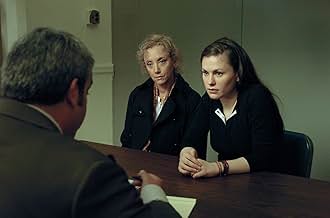
Ostensibly the tale centres on a New York schoolgirl named Lisa (Anna Paquin, defining her young adulthood just as she defined herself in childhood with The Piano), who inadvertently causes a fatal road accident. What follows is the emotional aftermath, fought outwardly with her mother, as a moral and ethical war wages within her hormone-ravaged body.
The performances are excellent throughout, particularly Paquin and J. Smith-Cameron as the daughter and mother caught in gravitational flux. Jean Reno gives fine support as the sad-sack Ramon, while Matthew Broderick delivers the poem (by Gerard Manley Hopkins) that provides the film's title, while suggesting the entire life of his character by the way he eats a sandwich. It's that kind of film.
I recently wrote a review of Winter's Bone, which I described as an anti-youth movie. Margaret could be a companion piece in this regard, cautioning against the bright-eyed naivety of youthful independence, and promoting the importance of family. Like Winter's Ree, Lisa is a lost soul; unlike Ree, Lisa is not someone we admire. But she is always in focus; Lonergan expects not for us to like her, only to understand her. In maintaining this focus, Lonergan himself achieves the admirable: weaving a narrative whose minute details and labyrinthine arguments mirror the broader existential vista against which they are dwarfed.
Margaret goes deeper than Winter's Bone, delivering something pleasingly unexpected: a kind of Sartrean modern fable about the isolating nature of subjectivity. Like her actor mother on the stage, and like us all in our semi-waking lives, Lisa is the main player in her great opera. She performs the social functions that enable her to cling to a sense of belongingness, but something gnaws at her soul. And when, after the accident, she seeks some kind of meaning, she is met at once by indifference, before being seduced by those very institutions that make indifference normal. Nothing in the material world satisfies Lisa; nothing can match her aspirations. The suggestion here, I feel, is that our despair emerges from the disparity between that which we hope for and that which reality can deliver.
No wonder it took so long to find its way to a single UK screen: a three-hour existentialist play is a tough sell. Ten years after the towers sank to Ground Zero, Margaret joins There Will Be Blood, The Assassination of Richard Nixon, and (for some) Zodiac in the pantheon of modern classics that map the American psyche in the post-9/11 world.
Ostensibly the tale centres on a New York schoolgirl named Lisa (Anna Paquin, defining her young adulthood just as she defined herself in childhood with The Piano), who inadvertently causes a fatal road accident. What follows is the emotional aftermath, fought outwardly with her mother, as a moral and ethical war wages within her hormone-ravaged body.
The performances are excellent throughout, particularly Paquin and J. Smith-Cameron as the daughter and mother caught in gravitational flux. Jean Reno gives fine support as the sad-sack Ramon, while Matthew Broderick delivers the poem (by Gerard Manley Hopkins) that provides the film's title, while suggesting the entire life of his character by the way he eats a sandwich. It's that kind of film.
I recently wrote a review of Winter's Bone, which I described as an anti-youth movie. Margaret could be a companion piece in this regard, cautioning against the bright-eyed naivety of youthful independence, and promoting the importance of family. Like Winter's Ree, Lisa is a lost soul; unlike Ree, Lisa is not someone we admire. But she is always in focus; Lonergan expects not for us to like her, only to understand her. In maintaining this focus, Lonergan himself achieves the admirable: weaving a narrative whose minute details and labyrinthine arguments mirror the broader existential vista against which they are dwarfed.
Margaret goes deeper than Winter's Bone, delivering something pleasingly unexpected: a kind of Sartrean modern fable about the isolating nature of subjectivity. Like her actor mother on the stage, and like us all in our semi-waking lives, Lisa is the main player in her great opera. She performs the social functions that enable her to cling to a sense of belongingness, but something gnaws at her soul. And when, after the accident, she seeks some kind of meaning, she is met at once by indifference, before being seduced by those very institutions that make indifference normal. Nothing in the material world satisfies Lisa; nothing can match her aspirations. The suggestion here, I feel, is that our despair emerges from the disparity between that which we hope for and that which reality can deliver.
No wonder it took so long to find its way to a single UK screen: a three-hour existentialist play is a tough sell. Ten years after the towers sank to Ground Zero, Margaret joins There Will Be Blood, The Assassination of Richard Nixon, and (for some) Zodiac in the pantheon of modern classics that map the American psyche in the post-9/11 world.
Attention-seeking teenager goes through death, mortality and innocence
"Margaret" took years to get to us, seemingly even longer to play out, but tells a story so poetic and heartbreakingly real that you couldn't imagine it any other way. Lisa (Anna Paquin) is a teenager; she's lost in her own world by her own misguided arrogance, but she must come to terms with death and the true nature of a tragic accident.
The film starts with Lisa in high school determinedly getting her way even though she probably doesn't deserve to. Nonchalantly waiting 'til class is over and wearing a skirt too short, she saunters her way to the front where her math teacher, Mr. Aaron (Matt Damon), chastises her for her poor grades. But with a slightly flirtatious tone, Lisa settles the matter with a supposedly shared understanding that it's okay because math won't factor into her future.
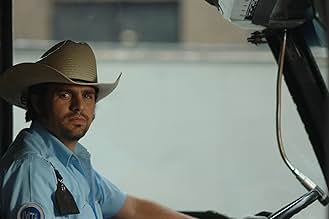
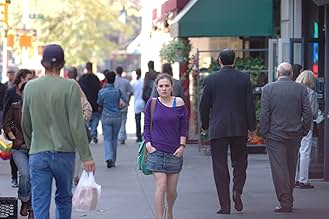
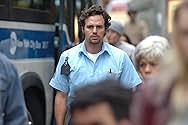
Later, Lisa sets out to find a stylish but functional cowboy hat in the middle of New York City. She is unsuccessful until she spies one on the head of a boyishly handsome bus driver (Mark Ruffalo) and jauntily jogs beside it determined to get his attention to both: find out where he got his hat; and also to quench a teenage girl's desire of just getting his attention. She succeeds; he drives through a red light, and kills a pedestrian in the process.
Lisa immediately feels the pain, guilt and remorse and tries to ease the woman's passage into the afterlife. The film then becomes a character study of a teenage girl determined to get past the pain and aftermath of a tragedy caused by a simple accident. The fascinating parts of this film involve how our lead character becomes less sympathetic but more fragile while remaining equally reckless.
Questions about the cause and nature of mortality are raised, and most interestingly what are the moral and immoral ways to respond to it. The film's title comes from the poem "Spring and Fall: (Margaret, Are You Grieving?)" written by Gerard Manley Hopkins in 1880. Margaret is a child who must come to terms with the loss of her innocence. " And yet you will weep and know why. Now no matter, child, the name; Sorrow's springs are the same." Lisa's English teacher (Matthew Broderick) recites this poem to the class. Lisa is, at times, a typical teenager, bent on having things her way, always having her point heard. But now the shaky foundations which her arrogance is based on begin to crumble and we don't know and she doesn't know if she's still innocent or where she lost it.
The shortened released version of "Margaret" clocks in at over two and a half hours; edited down from the three-hour director's cut. But because of the universal tale of life and death that it tells, it needs the length. It doesn't have a simple plot, and Lisa is not a simple character. It can definitely seem errant with its uneven editing, but that's probably going to be an expected outcome of 6 years' worth of legal and creative battles going on behind the scenes.
Broderick and Ruffalo re-team from Lonergan's previous indie success "You Can Count on Me" (2000), but don't expect any actor to show more range or emotion than Anna Paquin. Everything goes through Lisa.
The film starts with Lisa in high school determinedly getting her way even though she probably doesn't deserve to. Nonchalantly waiting 'til class is over and wearing a skirt too short, she saunters her way to the front where her math teacher, Mr. Aaron (Matt Damon), chastises her for her poor grades. But with a slightly flirtatious tone, Lisa settles the matter with a supposedly shared understanding that it's okay because math won't factor into her future.
Later, Lisa sets out to find a stylish but functional cowboy hat in the middle of New York City. She is unsuccessful until she spies one on the head of a boyishly handsome bus driver (Mark Ruffalo) and jauntily jogs beside it determined to get his attention to both: find out where he got his hat; and also to quench a teenage girl's desire of just getting his attention. She succeeds; he drives through a red light, and kills a pedestrian in the process.
Lisa immediately feels the pain, guilt and remorse and tries to ease the woman's passage into the afterlife. The film then becomes a character study of a teenage girl determined to get past the pain and aftermath of a tragedy caused by a simple accident. The fascinating parts of this film involve how our lead character becomes less sympathetic but more fragile while remaining equally reckless.
Questions about the cause and nature of mortality are raised, and most interestingly what are the moral and immoral ways to respond to it. The film's title comes from the poem "Spring and Fall: (Margaret, Are You Grieving?)" written by Gerard Manley Hopkins in 1880. Margaret is a child who must come to terms with the loss of her innocence. " And yet you will weep and know why. Now no matter, child, the name; Sorrow's springs are the same." Lisa's English teacher (Matthew Broderick) recites this poem to the class. Lisa is, at times, a typical teenager, bent on having things her way, always having her point heard. But now the shaky foundations which her arrogance is based on begin to crumble and we don't know and she doesn't know if she's still innocent or where she lost it.
The shortened released version of "Margaret" clocks in at over two and a half hours; edited down from the three-hour director's cut. But because of the universal tale of life and death that it tells, it needs the length. It doesn't have a simple plot, and Lisa is not a simple character. It can definitely seem errant with its uneven editing, but that's probably going to be an expected outcome of 6 years' worth of legal and creative battles going on behind the scenes.
Broderick and Ruffalo re-team from Lonergan's previous indie success "You Can Count on Me" (2000), but don't expect any actor to show more range or emotion than Anna Paquin. Everything goes through Lisa.
10abneuman
A tragic accident sends one New York City teenager into the throws of a moral dilemma which serves as a catalyst for her own transformation
A truly heart wrenching story, "Margaret" reiterates Kenneth Lonergan's gifts for dialogue, story, and his ability to treat the most dramatic themes with artful humor, awareness and perception. The acting is exceptional; even relatively small parts, (played by actors such as Matthew Broderick, Matt Damon, Mark Ruffalo, and Allison Janey) showcase both the actors' own remarkable abilities as well as Lonergan's attention to detail. It is Matthew Broderick's character who is the only one to utter the movie's title as he recites a poem by Gerard Manley Hopkins. J. Smith Cameron and Anna Paquin, who play mother and daughter, both deliver fierce performances which form the relationship that serves as the backbone of the film. Taking on issues from abortion, divorce, and death to the inherent isolation of being human, the movie has a life and humor to it which cannot be brought down by the weightiness of these issues.


Did you know
- TriviaOriginally scheduled for release in 2007, but writer/director Kenneth Lonergan spent four more years struggling with Fox Searchlight Pictures over the final cut, resulting in several lawsuits.
- GoofsWhen Lisa comes home after the accident, throws up and hugs her mother, there's no blood on her arms and hands. In the next shots under the shower, there is plenty.
- Alternate versionsExtended version released on DVD runs for 178 minutes.
- ConnectionsFeatured in Maltin on Movies: Ice Age: Continental Drift (2012)
Details
Box office
- Budget
- $14,000,000 (estimated)
- Gross US & Canada
- $46,495
- Opening weekend US & Canada
- $7,525
- Oct 2, 2011
- Gross worldwide
- $469,264
- Runtime
- 2h 30m(150 min)
- Color
- Sound mix
- Aspect ratio
- 1.85 : 1
Contribute to this page
Suggest an edit or add missing content