IMDb RATING
5.1/10
4.5K
YOUR RATING
Contestants face 26 sums of money, 26 suitcases, and one question: Deal or no deal?Contestants face 26 sums of money, 26 suitcases, and one question: Deal or no deal?Contestants face 26 sums of money, 26 suitcases, and one question: Deal or no deal?
- Nominated for 1 Primetime Emmy
- 2 wins & 9 nominations total
Browse episodes
5.14.4K
1
2
3
4
5
6
7
8
9
10
Featured reviews
A passable time passer, nothing more than that
Have you ever wanted to win $1,000,000? Well, imagine you were on a set with 26 cases held by hot models, you are choosing your own case and eliminate the others, hoping you win the top prize, while a mysterious figure known as The Banker tries to stop you from winning the million. That's pretty much what Deal or No Deal is in a nutshell.
It's all about being lucky with the cases, the banker and- I have to mention them- the models (don't act you don't know what I'm referring to).
Anyway, the host of this wildly purely luck game show is Howie Mandel, who is pretty decent with a silly premise like this.
So, if you intended to watch a high-stake game show with a million dollars on the line and hot models, then DOND is the show for you!
It's all about being lucky with the cases, the banker and- I have to mention them- the models (don't act you don't know what I'm referring to).
Anyway, the host of this wildly purely luck game show is Howie Mandel, who is pretty decent with a silly premise like this.
So, if you intended to watch a high-stake game show with a million dollars on the line and hot models, then DOND is the show for you!
I'd rather watch paint dry
This is, without doubt, the most boring show I've ever seen.
I admit, I've only watched it once, but once was enough to convince me there is a major void in talented game show producers.
The only way I'd watch again is if it was on late/late night and I was having trouble sleeping.
It might be less boring than counting sheep (I suppose).
And that Howie person? Oh please.
zzzzz
(and seriously, all those models...where did they get those things, Stepford Modeling Agency?)
I admit, I've only watched it once, but once was enough to convince me there is a major void in talented game show producers.
The only way I'd watch again is if it was on late/late night and I was having trouble sleeping.
It might be less boring than counting sheep (I suppose).
And that Howie person? Oh please.
zzzzz
(and seriously, all those models...where did they get those things, Stepford Modeling Agency?)
Surprisingly Exciting "Deal"!
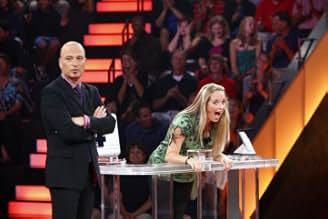
"Deal or No Deal", from Endemol, the folks that gave you "Fear Factor" and "Extreme Makeover", brought this international import to the States for a five-night run on NBC originally back in December 2005. Hosted by Howie Mandel, the show is like a cross between "Let's Make a Deal" and "Russian Roulette", and here's how it works: A contestant out of the audience chooses one numbered briefcase out of 26 for their game. The cases have cash values ranging from one cent all the way up to $1 million (and there are several six-figure prizes starting at $100,000). All the values are posted on a large, projection-screen TV monitor in the studio. The contestant then begins a process of elimination, calling out the numbers of six briefcases. As each number is called, a lovely model opens the numbered case to reveal the cash amount inside (Mandel: "Nikki, open the case."). The cash amount is then removed from the list of cash values on the projection monitor.
Following this, a "banker", seated in a surveillance room above the studio floor, phones the host with an "offer" - a dollar amount he is willing to make for the briefcase the contestant chose at the start of the game. Essentially, the offer is an average of all the cash amounts on the monitor that haven't been yet eliminated - the more low amounts that are eliminated, the higher the offer. The host informs the contestant of the offer - which is posted in large numerals on the projection monitor - and then, after a bit of mathematical banter, the host pops the all-important question to the contestant: "Deal or No Deal?" If the contestant accepts the Deal, he/she wins the value of the offer and the game ends. If not, the contest must open five more briefcases before the next offer is made. If the contestant passes on the Deal at that point, then he/she must open four more cases, then three more, then two more, until in the later points in the game, there is an offer issued after one briefcase is selected.
The tension increases with every round of selections because in many cases, a contestant chooses a case with a large dollar amount, eliminating the possibility of winning that prize. Also adding to the drama - the contestant has three to four other guests (loved ones or friends) on the show to help him/her decide whether or not to take a Deal, usually introduced after the second round of briefcase selections. So there is an emotional aspect to "Deal" as well, one the large studio audience gets pumped up for.
Once the contestant has accepted a Deal, the host has the contestant theoretically play out the rest of the briefcase selections ("Let's see what you would have done...") and then reveals the contents of the briefcase that the contestant chose at the start of the game.
Overall, "Deal or No Deal" offers the best odds for winning $1 million on national TV - 1 in 26. But as host Howie Mandel states at the beginning of each show, the game is a combination of "luck, guts, and a great sense of timing." Part of Mandel's opening spiel: "One million dollars as the top prize. No crazy stunts to perform, no trivia questions to answer. In fact, there's only one question you need to know how to answer, the only question that counts. Deal or No Deal?" At the time of this writing, "Deal or No Deal" was introduced by NBC as a "stripped" broadcast (same time for five consecutive weeknights), airing between 8pm and 9pm Eastern Time. The show's initial ratings for the first two nights were great news for NBC; they handily won their Monday and Tuesday time slots.
Part of the entertainment value of "Deal or No Deal" is watching the contestants agonize over whether to accept a Deal or press their luck; a knowledge (or appreciation) of probability helps a lot, and screen graphics are occasionally shown to help viewers do the numbers (Example: "Kyle has a 25% chance his case contains at least $300,000"). The exchanges between the contestants and their guests are often very funny. Host Howie Mandel, better known for his goofball stand-up comedy and appearances on "The Tonight Show With Jay Leno", is an affable host, not overpowering the show. He has "a great sense of timing" himself, and sets up cliffhangers before each commercial (sending the audience into frustrated groans of anticipation).
And for anyone that doesn't believe there's a play-along element to the show, you get caught up in the moment, screaming at the TV, "Take the deal, you bonehead!" Most NBC affiliates also participated in the "Lucky Case" home game, in which viewers could win $10,000 based on their selection of one of the 26 cases.
Considering "Deal or No Deal" requires no intellectual knowledge (other than, perhaps, a little statistical analysis) nor mastery of a game (such as "Wheel of Fortune" or GSN's "Lingo") it is a surprisingly entertaining show. At the time of this writing, over 30 other countries had their own versions of the show.
Following this, a "banker", seated in a surveillance room above the studio floor, phones the host with an "offer" - a dollar amount he is willing to make for the briefcase the contestant chose at the start of the game. Essentially, the offer is an average of all the cash amounts on the monitor that haven't been yet eliminated - the more low amounts that are eliminated, the higher the offer. The host informs the contestant of the offer - which is posted in large numerals on the projection monitor - and then, after a bit of mathematical banter, the host pops the all-important question to the contestant: "Deal or No Deal?" If the contestant accepts the Deal, he/she wins the value of the offer and the game ends. If not, the contest must open five more briefcases before the next offer is made. If the contestant passes on the Deal at that point, then he/she must open four more cases, then three more, then two more, until in the later points in the game, there is an offer issued after one briefcase is selected.
The tension increases with every round of selections because in many cases, a contestant chooses a case with a large dollar amount, eliminating the possibility of winning that prize. Also adding to the drama - the contestant has three to four other guests (loved ones or friends) on the show to help him/her decide whether or not to take a Deal, usually introduced after the second round of briefcase selections. So there is an emotional aspect to "Deal" as well, one the large studio audience gets pumped up for.
Once the contestant has accepted a Deal, the host has the contestant theoretically play out the rest of the briefcase selections ("Let's see what you would have done...") and then reveals the contents of the briefcase that the contestant chose at the start of the game.
Overall, "Deal or No Deal" offers the best odds for winning $1 million on national TV - 1 in 26. But as host Howie Mandel states at the beginning of each show, the game is a combination of "luck, guts, and a great sense of timing." Part of Mandel's opening spiel: "One million dollars as the top prize. No crazy stunts to perform, no trivia questions to answer. In fact, there's only one question you need to know how to answer, the only question that counts. Deal or No Deal?" At the time of this writing, "Deal or No Deal" was introduced by NBC as a "stripped" broadcast (same time for five consecutive weeknights), airing between 8pm and 9pm Eastern Time. The show's initial ratings for the first two nights were great news for NBC; they handily won their Monday and Tuesday time slots.
Part of the entertainment value of "Deal or No Deal" is watching the contestants agonize over whether to accept a Deal or press their luck; a knowledge (or appreciation) of probability helps a lot, and screen graphics are occasionally shown to help viewers do the numbers (Example: "Kyle has a 25% chance his case contains at least $300,000"). The exchanges between the contestants and their guests are often very funny. Host Howie Mandel, better known for his goofball stand-up comedy and appearances on "The Tonight Show With Jay Leno", is an affable host, not overpowering the show. He has "a great sense of timing" himself, and sets up cliffhangers before each commercial (sending the audience into frustrated groans of anticipation).
And for anyone that doesn't believe there's a play-along element to the show, you get caught up in the moment, screaming at the TV, "Take the deal, you bonehead!" Most NBC affiliates also participated in the "Lucky Case" home game, in which viewers could win $10,000 based on their selection of one of the 26 cases.
Considering "Deal or No Deal" requires no intellectual knowledge (other than, perhaps, a little statistical analysis) nor mastery of a game (such as "Wheel of Fortune" or GSN's "Lingo") it is a surprisingly entertaining show. At the time of this writing, over 30 other countries had their own versions of the show.
A couple of episodes and that'll do ya.
I once used to watch deal or no deal regularly. I watched it every time it came on NBC or any other network, but one day I stopped and thought to myself, did I just succumb to insanity as Einstein defined it, according to Einstein insanity is doing the same thing over and over expecting a different outcome (not verbatim). What does this have to do with this show, well keep reading. Deal or no Deal is a show you become an expert at after watching a couple of episodes. Same story same occurrences but maybe the models might differ from one episode to another but mostly even they are the same. So for me there is no point on watching this show regularly when I can predict what's going to happen. After seeing about five or six episodes of this, I could literally tell what case number the players will choose, and what the banker will offer. For a game show it's not bad. But this is not a show you would never get tired of, or at least be in love with for a long time.
People Pick Random Numbers... That's It... Who Finds This Entertaining?
All that happens in this entire show is models holding numbered briefcases walk out, then the host (that famous and hilarious guy who starred in the movie "Walk Like A Man" in like 1981 then disappeared until now) asks the contestant to randomly pick numbers. Then they open those cases. Wow! That's it. The object is to not open the cases with big dollar amounts in them. A completely random game. After each round, the "banker" (a shadowy figure in a booth overlooking the studio floor - possibly one of the host's "Walk Like A Man" co-stars) calls down with an offer to buy the briefcase the contestant selected. Then they have to decide if they will take the offer or shout "NO DEAL!" and put the smack down on a big red button, which is so dramatic a moment I simply cannot put it into words. This show is almost as boring as watching grass grow. It says nothing but horrible things about our society that this random-numbers-guessing-game is a highly rated TV show.
Did you know
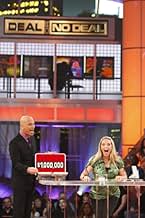
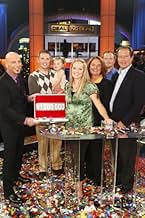
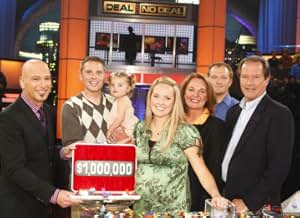
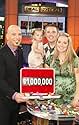
- TriviaOn the 1 September 2008 episode, Jessica Robinson became the first contestant ever to win the $1,000,000. She turned down an offer of $561,000. The only remaining value left was $200,000. (Season 4, Week 2.)
- ConnectionsFeatured in Screenwipe: Episode #1.2 (2006)
Details
- Release date
- Country of origin
- Language
- Also known as
- Сделка
- Filming locations
- Production companies
- See more company credits at IMDbPro
Contribute to this page
Suggest an edit or add missing content