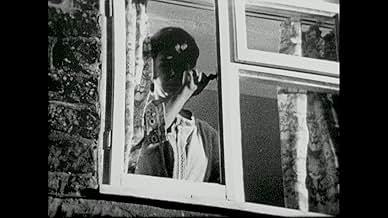
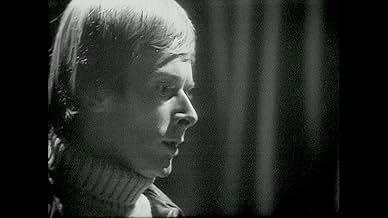
Seeking a new start in life after breaking up with her long-term boyfriend, Norah Palmer, a thirty-something Londoner, moves to a village in a remote part of the countryside. She makes the acquaintance of a good-looking young man who works as a pest controller when she hires him to clear out an infestation of mice at her house. Norah is attracted to the man, whose real name is Edgar, although everybody calls him "Rob", and the two have a brief affair, after which Norah finds herself pregnant. This development marks a change in the way she is seen by the villagers; at first they had seemed friendly, but now Norah begins to believe that she is the victim of a conspiracy to cut her off from the outside world, as her car is vandalised and her telephone line cut.
Like some other early episodes of "Play for Today", such as "The Long-Distance Piano Player", "Robin Redbreast" was originally broadcast in colour but only survives today in a black-and-white version. (Some other early episodes appear to have been lost altogether). I never saw the colour version- I was only a child in 1970, and in any case my family did not have a colour television at that date- but monochrome certainly suits the bleak and mysterious nature of John Bowen's story.
"Robin Redbreast" has a similar theme to the feature film "The Wicker Man" from three years later. Both are examples of what has become known as "folk horror", dealing with pagan rural customs, up to and including human sacrifice, in modern British society. Both feature an outsider who comes into an isolated community where such customs have survived. In both cases there is a shocking surprise ending. The two films, however, deal with their subject-matter in different ways. In "The Wicker Man" the people of Summerisle (a fictitious Hebridean island) are quite open about their pagan beliefs. In "Robin Redbreast" the villagers are at pains to conceal them from Norah and from the outside world- her housekeeper Mrs. Vigo, for example, poses as a church-going Christian- and the full truth only becomes apparent towards the end.
"The Wicker Man" has become something of a cult movie, whereas "Robin Redbreast" is largely forgotten. Yet in my opinion it is considerably better than "The Wicker Man", which asks some interesting questions but suffers from some dodgy acting, especially from Britt Ekland, who wanders through the film as though she does not know what she is doing in it. That film has also suffered from some injudicious editing (apparently without the approval of the director) and seems to exist in numerous versions; I have seen two of them, neither of which flowed easily.
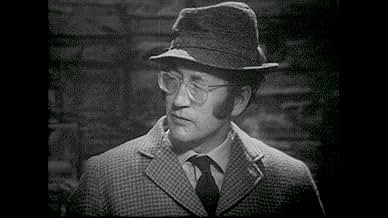
The acting in "Robin Redbreast", however, is far better. I was particularly impressed by Bernard Hepton as the mysterious Mr. Fisher, a local historian and neighbour of Norah's who is our main source (albeit a somewhat cryptic one) of knowledge, about local folklore and the beliefs of the pagan cult. There were also good contributions from Anna Cropper as Norah and Freda Bamford as Mrs Vigo, the sort of servant who seems to be more in control of her mistress than vice versa. The story moves slowly at first but gathers speed as it moves inexorably towards its climax, just as shocking as the one in "The Wicker Man", even if there is less explicit violence shown on screen. (In the early seventies British television could be stricter about such things than the cinema). Like many of the early Plays for Today, this one deserves to be better known. 8/10.