
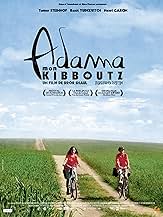
Set in mid-70's, 12-year old Dvir Avni navigates between the equality values of his home-born Kibbutz and the relationship with his undermined mother, whom the Kibbutz members will to denoun... Read allSet in mid-70's, 12-year old Dvir Avni navigates between the equality values of his home-born Kibbutz and the relationship with his undermined mother, whom the Kibbutz members will to denounce.Set in mid-70's, 12-year old Dvir Avni navigates between the equality values of his home-born Kibbutz and the relationship with his undermined mother, whom the Kibbutz members will to denounce.
- Awards
- 9 wins & 7 nominations total



- Director
- Writer
- All cast & crew
- Production, box office & more at IMDbPro
7.1795
1
2
3
4
5
6
7
8
9
10
Featured reviews
Passionate Reactions: Matter of Your Perspective
I saw this film in an audience of about 80 American Jews passionately devoted to Israel. Most had visited Kibbutzim, a number had lived on one or more. Some thought Dror Shaul's theme -- the claustrophobic atmosphere and pressure inflicted on a mentally unstable Kibbutz member -- reflected aspects of kibbutz life they had witnessed. Others saw it as a complete distortion of an Edenic, well-intentioned if ultimately unsuccessful, experiment. One thought it should not be shown to American audiences because it reflected badly on Israel. It is, frankly, an emotionally draining and heart-wrenching story about a youngster (Tomer Steinhof) and his unstable mother (Ronit Yudkevitz), whose instability is seriously aggravated if not caused by the unforgiving atmosphere on the kibbutz. Depending on your perspective, you might hate this film because it doesn't conform to your vision of kibbutz life. You may find it excessively unpleasant and dislike it for that reason. However, though it is undeniably dark, the movie is powerful, well-acted and beautifully directed. It provoked a long discussion among members of the audience whom I saw it with. Many were moved, some were angry. Most thought it was well worth seeing, as do I.
Philadelphia Film Fest Showing
I saw Sweet Mud at the Philadelphia Film Festival last night. My friend and I were expecting something slow-moving and maybe boring at times, but we were pleasantly surprised. The movie sold out (word must have gotten around) and you could tell by the audience's reactions that everyone loved it. This film gives such a detailed view of life on a commune, and at the same time it showed a young boy's struggle with his depressed single mother with plenty of comedic moments. I'm not much of a reviewer but I highly recommend seeing this film... it's playing again in Philadelphia this Tuesday at the Ritz Five, for those of you who live in the area!
Why did this film won so many prizes???
I saw this movie, just now, not when it was released and hailed as best picture of the year here in Israel. and to summarize everything right now, I will just say: this is not a good film.
This is Dror Shaul's second feature film, and I have to admit that his first and the TV drama he made before this picture are much better. further more, this is his first attempt at directing a drama. the early works were comedies, and were funny and effective.
The first thing you have to know if you'll ever see this film: Israel of the 21st century hates the kibbutz and the values it represented since the formation of the state of Israel. the real situation of the kibbutzim is very dire, and some of them disappear one by one. the kibbutz, Hebrew word for collective, was a sort of village for members only, where the values of equality and socialism were the dogma for everyday life. with the change in social values with time, it seems now that the kibbutz was a place where the human spirit was repressed, locked within the dogma rules, with no ticket out. the entrance of capitalist values and way of life in the 90's and so far made it very hard on the kibbutzim to survive. the crazy mother in the film is the central metaphor for that.
But, I regard this film as having nothing to do with nostalgia for the good old days of the kibbutz. once, it was a dream of every young couple to live in a kibbutz and raise children in this quite and beautiful environment. but the film shows the opposite. that the kibbutz, with it's socialist dogma, was a place sort of like a cult of crazy people, with crazy ideas that undermine the freedom of each individual within the collective. this is the central philosophy of post modern capitalism: your individuality is the most important thing. you must place yourself in the center, and no one else but you is the matter. this is the philosophy the film stands for, and that's just it's first sin.
If you disagree with me on the political side, I'm sure you will agree that the acting, the tone of the film, it's script and it's direction are the four sins that follow. the film has no real visual text and none of it's shots is something to remember. it is also very "delicate", a delicacy that is no more than artsy fartsy attempt to provoke emotions, which do not surface, not in the film and not with the viewer. it brings nothing but boredom.
Can someone please explain: why this film won so many prizes? maybe because it shows that Israel is in line with the rest of the world, hating socialist and human values? or maybe it shows that Israel is a "delicate" place, not giving in to dogmas and fanaticism? that we are basically very human and good people, capable of emotions, especially when they are fake ones, just like capitalism expects us to be? or maybe because it tells one of the biggest lies of Israeli cinema in recent years, a lie that undermines the justification of the existence of the Jewish state? no matter what the answer is, it's not a good one. not for the world, not for human values and not for the Jews.
This is Dror Shaul's second feature film, and I have to admit that his first and the TV drama he made before this picture are much better. further more, this is his first attempt at directing a drama. the early works were comedies, and were funny and effective.
The first thing you have to know if you'll ever see this film: Israel of the 21st century hates the kibbutz and the values it represented since the formation of the state of Israel. the real situation of the kibbutzim is very dire, and some of them disappear one by one. the kibbutz, Hebrew word for collective, was a sort of village for members only, where the values of equality and socialism were the dogma for everyday life. with the change in social values with time, it seems now that the kibbutz was a place where the human spirit was repressed, locked within the dogma rules, with no ticket out. the entrance of capitalist values and way of life in the 90's and so far made it very hard on the kibbutzim to survive. the crazy mother in the film is the central metaphor for that.
But, I regard this film as having nothing to do with nostalgia for the good old days of the kibbutz. once, it was a dream of every young couple to live in a kibbutz and raise children in this quite and beautiful environment. but the film shows the opposite. that the kibbutz, with it's socialist dogma, was a place sort of like a cult of crazy people, with crazy ideas that undermine the freedom of each individual within the collective. this is the central philosophy of post modern capitalism: your individuality is the most important thing. you must place yourself in the center, and no one else but you is the matter. this is the philosophy the film stands for, and that's just it's first sin.
If you disagree with me on the political side, I'm sure you will agree that the acting, the tone of the film, it's script and it's direction are the four sins that follow. the film has no real visual text and none of it's shots is something to remember. it is also very "delicate", a delicacy that is no more than artsy fartsy attempt to provoke emotions, which do not surface, not in the film and not with the viewer. it brings nothing but boredom.
Can someone please explain: why this film won so many prizes? maybe because it shows that Israel is in line with the rest of the world, hating socialist and human values? or maybe it shows that Israel is a "delicate" place, not giving in to dogmas and fanaticism? that we are basically very human and good people, capable of emotions, especially when they are fake ones, just like capitalism expects us to be? or maybe because it tells one of the biggest lies of Israeli cinema in recent years, a lie that undermines the justification of the existence of the Jewish state? no matter what the answer is, it's not a good one. not for the world, not for human values and not for the Jews.
Captivating and emotional yet political by nature
The cinematography in this film is somewhat fantastic. For this I feel the production team really succeeded and proved that amongst other international contemporary film makers, Israel can too present a film that is aesthetically pleasing.
In the director's cut, Dror Shaul claims that the film is of 'one boys vision' of his own current affairs and that there are no political views that hide behind the surface of the film. I disagree with this statement and although I have never experienced a Kibbutz before I am able to understand that this film takes on a very one-sided stance of the system, propaganda and regime of the kibbutz. Shaul fails to balance out the film and portrays it as an obsolete institute of total corrupt. He paints the opposite of an idealistic vision over it and I feel this might cause a bit of controversy amongst previous or current kibbutz members.
The story line is emotional. It really seems as though the director, team and actors have put a lot of effort and time into producing a story which is captivating yet subjective, submitting a senseful and sensitive drama which encourages the viewer to follow and react in accordance to the actors emotions.
It is a film to watch and certainly one of the greats of upcoming contemporary Israeli cinema.
In the director's cut, Dror Shaul claims that the film is of 'one boys vision' of his own current affairs and that there are no political views that hide behind the surface of the film. I disagree with this statement and although I have never experienced a Kibbutz before I am able to understand that this film takes on a very one-sided stance of the system, propaganda and regime of the kibbutz. Shaul fails to balance out the film and portrays it as an obsolete institute of total corrupt. He paints the opposite of an idealistic vision over it and I feel this might cause a bit of controversy amongst previous or current kibbutz members.
The story line is emotional. It really seems as though the director, team and actors have put a lot of effort and time into producing a story which is captivating yet subjective, submitting a senseful and sensitive drama which encourages the viewer to follow and react in accordance to the actors emotions.
It is a film to watch and certainly one of the greats of upcoming contemporary Israeli cinema.
10tonyw-21
Sweet Mud (Adama Meshuga'at) - hilarious & dark @ same time!
This is the second feature film by Dror Shaul. Set on an Israeli kibbutz Bet-Gvurot in 1974, this provocative film explores life on the kibbutzim in its most hilarious and dark forms. Dvir (Tom Steinhof) is an adventurous 12-year old who protects his mother Miri (Roni Yudkevitch), a single parent who is emotionally unstable. Miri forms a long-distance romance with an older man in Switzerland Stephan (Henri Garcin). When Stephan comes to visit, Miri emerges from her darkness and for an instant, her life shines. When Stephan's actions bring him into conflict with the leadership of the kibbutz, he is banished and Miri regresses. Dvir's brother Eyal (Pini Tabger) goes off to fight in the Yom Kippur War and Dvir is on his own and restless as he approaches his Bar Mitzvah. The film paints an unflattering image of life on the kibbutz, raising issues such as alcoholism, promiscuity, and acute isolation. When Shaul offered an advance screening at a kibbutz in Israel, they were reportedly shocked and offended. A poignant and funny film with a bitter-sweet ending.


Did you know
- TriviaDanielle Kitsis's debut.
Details
Box office
- Budget
- $1,500,000 (estimated)
- Gross worldwide
- $122,307
- Runtime
- 1h 30m(90 min)
- Color
- Sound mix
- Aspect ratio
- 1.85 : 1
Contribute to this page
Suggest an edit or add missing content