
A drama loosely based on Jean Bernard's Nazi-era prison diary.A drama loosely based on Jean Bernard's Nazi-era prison diary.A drama loosely based on Jean Bernard's Nazi-era prison diary.
- Director
- Writers
- Stars
- Awards
- 6 wins & 13 nominations total
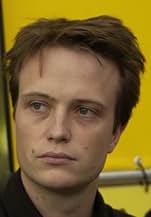
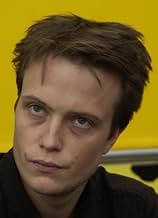
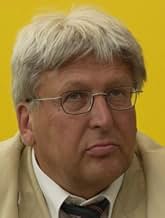
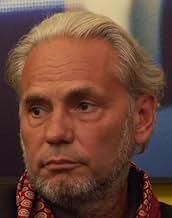


Vladimír Fiser
- Bischof Kozal
- (as Vladimir Fiser)
Peter Varga
- Józef (Polish Inmate)
- (as Petr Varga)


- Director
- Writers
- All cast & crew
- Production, box office & more at IMDbPro
7.02K
1
2
3
4
5
6
7
8
9
10
Featured reviews
Another Impressive Example of the Powerful German Cinema
In World War II, after a period living hell on earth in the concentration camp of Dachau with other catholic priests, Father Abbé Henri Kremer (Ulrich Matthes) gets a nine days leave to return to his home town for his mother's funeral. Along this period, the SS Gestapo lieutenant Gebhardt (August Diehl) tries to persuade Henri, who was born in silver-spoon and member of an influent Luxembourgian family, to convince the local bishop to give-up resisting to the Germans and write a letter to the Vatican in the name of the Catholic Church of Luxemburg convincing the Pope to support Hitler and the Nazi regime. The ambivalent Henri questions himself and the bishop what he shall do.
Based on a true story, "Der Neunte Tag" is an awesome movie and another impressive example of the powerful German cinema, of which I am a great fan. The philosophical duel between the characters of Ulrich Matthes and August Diehl is simply fantastic, with magnificent silence and dialogs. Sometimes, silence associated to the expression of the face is more significant than words. The direction is stunning and very realistic, particularly in the concentration camp; the music score and the cinematography are very beautiful; and the performances are perfect, with the two lead actors deserving nominations to the Oscar. My vote is nine.
Title (Brazil): "9o Dia" ("9th Day")
Based on a true story, "Der Neunte Tag" is an awesome movie and another impressive example of the powerful German cinema, of which I am a great fan. The philosophical duel between the characters of Ulrich Matthes and August Diehl is simply fantastic, with magnificent silence and dialogs. Sometimes, silence associated to the expression of the face is more significant than words. The direction is stunning and very realistic, particularly in the concentration camp; the music score and the cinematography are very beautiful; and the performances are perfect, with the two lead actors deserving nominations to the Oscar. My vote is nine.
Title (Brazil): "9o Dia" ("9th Day")
a simple story, simply told
I have no great sympathy for the Catholic Church, but I found the movie quite moving while watching it. There were some rank-and-file Catholic (and Protestant) clergy who spoke up against Nazism. They paid a heavy price - in part because there wasn't an outcry on the part of the higher-ups in the church hierarchy. They were more interested in keeping their perks and playing nice with the powers-that-be. This silent betrayal is very well conveyed in the movie.
Unfortunately some of the other dramatic elements don't work as well. I think the movie would have been stronger if Henri Kremer's relationship with his family -- his sister especially, who was willing to put her life on the life so he could flee to freedom -- had been more fleshed out. They don't even show their parting! So although I was interested throughout the movie, it was not quite satisfying.
Unfortunately some of the other dramatic elements don't work as well. I think the movie would have been stronger if Henri Kremer's relationship with his family -- his sister especially, who was willing to put her life on the life so he could flee to freedom -- had been more fleshed out. They don't even show their parting! So although I was interested throughout the movie, it was not quite satisfying.
Very interesting
It showed just all the considerations that the Vatican and the clergy had to make and how complicated and not black and white their decisions were based upon. Not everything is as obvious as it seems. And it was not a Catholic based excuse movie for decisions made, it was just the facts. And it wasn't just the church that had to make these difficult considerations in WW2, but many governments and institutions. When your dealing with a madman who can like current day Putin, kill tens of and hundreds of thousands of people because of a single slight, you certainly have to be careful in your decisions. Just as the NATO decision on a no fly zone over Ukraine decision is. Sure we want to do it but is it worth starting WW3 over? Decisions I'm certainly glad I'll never have to make.
Magnificent film with some memorably unsettling scenes which involve the concentration of Duchau
During WW2 a priest named Henry Kremer(Ulrich Matthes) imprisoned in concentration camp of Dachau is freed along a period of 9 days. He's threatened by a SS Unterstumfuhrer(August Dhiel) to convince the Luxemburg bishop(Tathe) to write a declaration for supporting the Nazi regime . The priest is affected because of his decision whether or not to collaborate with the Nazis.
This is an intelligent and thought-provoking film , correctly based on real events. The director covers a wide variety of plot developments at a rare pace by means of continuous flashbacks in which remembers horrible events at concentration camp of Duchau. Excellent performances by main cast as Ulrich Matthes (Goebbles in ¨The downfall¨) and August Dhiel(Ingorious bastards). Good secondary cast as Bibiana Beglau (Legend of Rita by Schlondorff) as the affecting sister . The musical score is often despairing and screeching with surprising witty touches , it is composed by Russian musician Alfred Schnitke(1934-88). The motion picture is well directed by Volker Scholondorff. He's an expert on Nazi issues as proved in ¨Tim drum¨ , ¨The ogre¨ and this one. Schlondorff does a very unusual pictures with important insight into how the past affects the present and root causes of war. His first feature film, ¨Young Torless¨ was showed around the world and he was pretty heard by international viewers when directed ¨The lost honour of Katharine Blum¨, getting similar success his fellow-countrymen as Fassbinder, Herzog and Wenders. His reputation was greatly enhanced when his phenomenal movie ¨Tin drum¨ was awarded the Oscar as best foreign-language film. Later on,Schlondorff consolidated with ¨Circle of deceits¨. Since then his films have been less satisfactory as ¨Murder in the Bayou¨ , ¨Handmaid's tale¨and ¨Palmetto¨.
Rating : Very good , Schlondorff's one the last impressive film to date. The film is admirable coherent , though in complicated narrative and never sags under its approx. hundred minutes . The movie will appeal to Nazi theme buffs
This is an intelligent and thought-provoking film , correctly based on real events. The director covers a wide variety of plot developments at a rare pace by means of continuous flashbacks in which remembers horrible events at concentration camp of Duchau. Excellent performances by main cast as Ulrich Matthes (Goebbles in ¨The downfall¨) and August Dhiel(Ingorious bastards). Good secondary cast as Bibiana Beglau (Legend of Rita by Schlondorff) as the affecting sister . The musical score is often despairing and screeching with surprising witty touches , it is composed by Russian musician Alfred Schnitke(1934-88). The motion picture is well directed by Volker Scholondorff. He's an expert on Nazi issues as proved in ¨Tim drum¨ , ¨The ogre¨ and this one. Schlondorff does a very unusual pictures with important insight into how the past affects the present and root causes of war. His first feature film, ¨Young Torless¨ was showed around the world and he was pretty heard by international viewers when directed ¨The lost honour of Katharine Blum¨, getting similar success his fellow-countrymen as Fassbinder, Herzog and Wenders. His reputation was greatly enhanced when his phenomenal movie ¨Tin drum¨ was awarded the Oscar as best foreign-language film. Later on,Schlondorff consolidated with ¨Circle of deceits¨. Since then his films have been less satisfactory as ¨Murder in the Bayou¨ , ¨Handmaid's tale¨and ¨Palmetto¨.
Rating : Very good , Schlondorff's one the last impressive film to date. The film is admirable coherent , though in complicated narrative and never sags under its approx. hundred minutes . The movie will appeal to Nazi theme buffs
A Seven for "The Ninth Day"
"The Ninth Day" is one of Volker Schlondorff's finest directorial feats. It covers an episode of the Nazi concentration Camp of Dachau in which there was a lesser known group of Catholic priests who were incarcerated and half of them exterminated by the oppressive regime that had enveloped Germany in the 30's and 40's during WW II. It particularly revolves around a priest from Luxemburg, Father Henri Kremer, who is released for a nine day period from the camp in order to develop positive relationships between the Bishop of Luxemburg and the Pope and Adolph Hitler's Nazi goals of extermination of specific groups of peoples. Ulrich Matthes plays Henri Kremer and he is very convincing in his strength of faith and love of family in his struggle to accomplish what he has been requested by the Gestapo to do. August Diehl is brilliant in his portrayal of Unterstumfuhrer Gebhardt, the demanding and ruthless Gestapo leader who degrades and tortures his victims to the nth degree. The cruel treatment and crucifixions of the priests is difficult to watch, yet this is a true recollection of events documented by the writer of the book by the same name. He was one of the few Catholic priest survivors of the camp. This film was released in 2004, and it is now on DVD and well worth the viewing for an historical standpoint with a different twist.


Did you know
- GoofsWhile their fellow-prisoner is being crucified, the priests are singing the hymn "Pange, lingua, gloriosi" by Thomas Aquinas (1264). However, they are singing a German version of this song, which was not in use before 1969. In addition, even if they happened to know a German version, it would be more likely for them to sing the original Latin version, as there were priests from all over Europe imprisoned in this block.
- ConnectionsReferenced in Yes Man (2008)
- SoundtracksConcerto Grosso No. 1
Music by Alfred Schnittke
- How long is The Ninth Day?Powered by Alexa
Details
- Release date
- Countries of origin
- Official site
- Languages
- Also known as
- Den nionde dagen
- Filming locations
- Production companies
- See more company credits at IMDbPro
Box office
- Gross US & Canada
- $72,888
- Opening weekend US & Canada
- $8,786
- May 29, 2005
- Gross worldwide
- $135,311
- Runtime
- 1h 38m(98 min)
- Sound mix
- Aspect ratio
- 1.85 : 1
Contribute to this page
Suggest an edit or add missing content