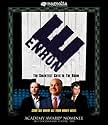
Enron: The Smartest Guys in the Room
- Episode aired Oct 13, 2005
- R
- 1h 49m


Corporate audio and videotapes tell the inside story of the scandal involving one company's manipulation of California's energy supply and its, and how its executives wrung a billion dollars... Read allCorporate audio and videotapes tell the inside story of the scandal involving one company's manipulation of California's energy supply and its, and how its executives wrung a billion dollars out of the resulting crisis.Corporate audio and videotapes tell the inside story of the scandal involving one company's manipulation of California's energy supply and its, and how its executives wrung a billion dollars out of the resulting crisis.
- Director
- Writers
- Stars


- Self
- (archive footage)


- Self
- (as Jim Chanos)


- Self
- (archive footage)

- Self - Young man the stripper dances in front of
- (as Reggie Deets II)


- Director
- Writers
- All cast & crew
- Production, box office & more at IMDbPro
Featured reviews
Boys gone amok
In the eighties we called people like the Enron Executives "Masters of the Universe." Now we can call at as we see it, Over grown former nerds with no morality and no conscience.
.
Harvard Professor to student "How smart are you?" "I'm *@#% smart", Jeff Skilling
The great debacle of the beginning of the century was the Enron downfall. At the same time, it is a cautionary tale for a lot of people about the way some unscrupulous manipulators can wreck havoc in the lives of the people that give their lives working for a any corporation. The Enron workers paid the ultimate price because a few people at the top had an unstoppable greed.
Mr. Gibney is smart in presenting the facts without taking sides. The director is not making a moral judgment at all, he is just letting us absorb how Enron operated and how it was able to pull the wool over everyone's eyes in believing this was the greatest company in the world.
Not only did Enron go down, but it took the Arthur Anderson accounting firm as well. There are thousands of people that are victims of this reckless disregard for the people under these scheming executives, who thought of nothing, but themselves. It's ironic that Jeff Skilling is paying more than twenty million dollars for his own defense, and who knows how much more will Kenneth Lay and Andy Fastow pay to star lawyers in their legal processes.
Ultimately, the real winner seems to be the oriental executive, whose name I don't recall, with an appetite for strippers who ended up being the biggest landowner in Colorado and now is living happily ever after in Hawaii. Compare that picture with the people the Enron workers who lost it all and must now make ends meet with little.
The Enron tragedy should be taught at Harvard as Greed 101, or how to get away with murder in America.
Very very interesting... must see.
Thankfully, I was quite wrong. I found the film to be both factual and evenhanded, and it's portrayal of the key Enron players provided depth, character, and even compassion at times.
There's no doubt that Enron was the defining business fiasco of the last 20 years, but what struck me about this films presentation (and which was wholly lost in most of the media coverage) is that its downfall was not entirely driven by greed. At least, not at the highest levels of the firm.
The primary contributing factor to the disaster was, in fact, ego. These guys didn't wake up in the morning looking to rip off their employees and shareholders and tank the company. They had (what they thought was) a revolutionary idea on how to sell energy in the marketplace. As far as they could tell, it was dynamite on paper, and they had their egos so wrapped up in these ideas, that they became completely blind to the reality that they were hemorrhaging capital because it simply didn't work in reality. It got to the point that in order to conceal their intellectual failure, they embarked on ever-more radical measures to hide the firms losses. Mind you, they all seemed to genuinely believe that eventually these new ideas would begin to work, and they would recoup all the losses and then some. At times, it seemed to resemble the attitude of a gambler who can't get up from the card game because he's waiting for that one perfect hand that never comes, and loses the house and car in the process. It's not what he intended when he sat down, but its the result nonetheless.
Of course, Enron was cheered on by the irrational exuberance of the late-90's boom market, which only served to enable this attitude, and in fact attracted a lot of genuinely greedy and sleazy traders, brokers and banker who were eager to make a buck off of the Enron business model.
Which leads me to the one disappointment that I have with this film, which is that it omits entirely the role that the Clinton Administration played in fostering the irrationally exuberant Wall Street culture of the era. If Ken Lay and Jeff Skilling were the degenerate gamblers, Bill Clinton was the enabling wife who never put her foot down and demanded he get help or get out. (The film, does, however detail the business dealings that Enron had with the Bush family... they should have either left politics out, or been more evenhanded in this regard.) What is remarkable, however, is the relatively short amount of time this all occurred in. Enron went from modest pipeline company, to energy juggernaut to total bust in, what, 5-6 years? Amazing.
Some will walk away from the Enron story convinced that the system will never work. I, however, see it differently. To me, the system worked. If it has proved anything, it's that no matter how rich, powerful or influential you are, you simply can't cook the books for very long in a free market environment before everything comes crashing down around you in a big way. The Enron story should make powerful executives think twice when tempted to do something unethical, regardless of intention. Which really should be a comforting thought for everyone.
See this film. It's definitely worth the time.
In the dictionary next to "hubris"....
Yes, it is a movie with a point of view, but this is not a Michael Moore documentary. Director Alex Gibney brilliantly tells the story simply by interviewing people who were participants in the events, showing the time lines of those events, and interweaving an astonishing amount of video and audio footage taped at Enron, by Enron itself. The movie resolved for me the question: "What did they know, and when did they know it?" They knew. They not only knew; they designed the company to be the ultimate shell game, with no pea. The only thing Enron ever had to sell was its stock price. And they did know that was their only product.
As a Houstonian, I admit that I, a supposedly sophisticated business professional, was intimidated by Enron's assertion in its glory days that the reason I didn't understand its business was just that I wasn't smart enough. My friends, managers and lawyers, some from Harvard thenselves, also admit to the same intimidation. It was not that the questions were not being asked; it was just that we were silenced when Enron avowed that they were the smartest guys in the room. They asserted it, and we believed them. Thank good Fortune that one reporter, Bethany McLean, in almost too soft a voice to be credible as a giant killer, kept asking.
I wish this movie might inspire a larger remedy than the one being attempted by the Department of Justice. Why doesn't Harvard deny admission to people like Jeff Skilling, who, when questioned in his entrance interview whether he was smart, replied, "I'm (expletive deleted) smart"? Why isn't some humility and modesty still ranked a virtue? Why do we celebrate the rise of the specialist educated only in his field, and wholly ignorant of the inevitability of the fall of the Greek protagonist who becomes blinded by arrogance, power, greed---- in short, hubris? Why is ethics a specialty study, instead of integral to every field of study? I sat open-mouthed as the tape showed Jeff Skilling seriously selling a new business idea: selling futures in the weather. He parodied himself on tape: he had a new, better idea than the "mark to market" booking which allowed Enron to book future theoretical profits once they had signed a deal; now he would institute "hypothetical to book", booking profits as soon as he had an idea. What, ultimately, was the difference between the parody and the reality? The horror of listening to traders, who sat in a room directly below Ken Lay and Jeff Skilling, with staircases between their executive offices and the trading floor, laughing at the misery they were inflicting on California as they extorted profits from that misery, leaves me outraged long after the movie is over. They threatened and may have cost lives with their fraudulent tactics. They admit it on tape, laughing. They knew. It was their business plan. To make Andrew Fastow the scapegoat for what Enron was developing as its business plan before he was ever hired is simply the continuation of the shell game with no pea. Look for the "designated fall guy". They still think they are the smartest guys in the room.
No, I'll never be selected for the jury pool now, but I wouldn't have been anyway. I'll buy the DVD and watch it a few times during the trials and seethe, lest I forget. Excellent movie, the best kind of documentary.
This movie is a must-see

Did you know
- TriviaAmong the protesters who disrupt the meeting with Jeff Skilling at San Francisco's Commonwealth Club is Marla Ruzicka, who was killed on 16 April 2005 in Iraq by a suicide bomber. She founded CIVIC (Campaign for Innocent Victims of Conflict) which worked to help the victims of the war in Iraq and she was a former Global Exchange activist.
- Quotes
Gray Davis: [upon being asked whether the rumors that he was responsible for the black outs in California are just a plot by the Republican party to get him recalled]
[shouts]
Gray Davis: Hello!
- Crazy creditsSpecial thanks includes "all the `Deep Throats' - you know who you are!"
- ConnectionsFeatured in 2006 Independent Spirit Awards (2006)
Details
- Runtime
- 1h 49m(109 min)
- Color
- Sound mix
- Aspect ratio
- 1.85 : 1