IMDb RATING
7.6/10
4.3K
YOUR RATING

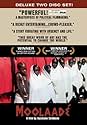
When a woman shelters a group of girls from suffering female genital mutilation, she starts a conflict that tears her village apart.When a woman shelters a group of girls from suffering female genital mutilation, she starts a conflict that tears her village apart.When a woman shelters a group of girls from suffering female genital mutilation, she starts a conflict that tears her village apart.
- Director
- Writer
- Stars
- Awards
- 6 wins & 10 nominations total


Rasmané Ouédraogo
- Ciré Bathily
- (as Rasmane Ouedraogo)
Théophile Sowié
- Ibrahima
- (as Moussa Théophile Sowié)
Sory Ibrahima Koïta
- Kémo Ansumana
- (as Ibrahima Sory Koita)
- Director
- Writer
- All cast & crew
- Production, box office & more at IMDbPro
7.64.3K
1
2
3
4
5
6
7
8
9
10
Featured reviews
Another gem from an African icon
One of legendary Senagalese director Ousmane Sembene's defining films. A fascinating study of the clash between pragmatic modern thinking and staunch religious traditionalism in Senegal. The film focuses on the controversial procedure of 'purification', in which young girls are forced to undergo genital mutilation to supposedly make them better, more faithful, wives in the future. When six young girls flee the process, four of them seek refuge with a well-known woman, Collé (Fatoumata Coulibaly), who is viewed with suspicion in the community for her stubborn refusal to adhere to all the societal 'norms'. Collé offers the girls protection (moolaadé), a spell which can only be broken if she herself utters the words which will end the moolaadé. Collé herself had refused to let her daughter be 'purified' and her actions prove to be inflammatory, causing the elders to become increasingly nervy about her failure to conform. As their control mechanism is slowly eroded they lash out and the community takes on alarming animalistic tendencies. Although the film ends in a rather idealistic fashion, Sembene's work is both moving and engaging. His stance on the core debate is clear but the views of the various community members are not so. In this way he is able to explore ideas of male hegemony while simultaneously studying the difficulties faced by the patriarch in striving towards accepted constructions of masculinity. Sembene understands the quirks of this society and his representations of these offer both light relief and food for thought. Ultimately the film swings back to the debate at its core - the battle between old and new. The modern approach is symbolised by the women's radios (and the knowledge acquired from them) and by the chief's French-educated son, who becomes the first to turn his back on the male elders. Religious traditionalism manifests itself through a ruthless and outdated male hegemony and it is clear that Sembene sees feminism as a crucial means by which modernisation can be achieved. His film provides an insight into an under-represented part of the world. It is a beautifully told story which offers a multi-layered yet concise analysis of ongoing issues which are relevant to us all.
Outstanding, creative, original, deeply moving
Moolaade is a present-day story of the impact that female genital mutilation has on one African village that lives very much according to tradition, yet has been touched by communication from the outside world. It's a simple, yet gripping, story, beautifully and creatively filmed. The people come across as thoroughly real people (in spite of the fact, or because, several of the actors are not professionals), yet the story is presented in such a way that each element, abstracted and beautifully caught by the camera, is isolated from whatever else is happening. It is filmed in an Africa language (and occasionally in French) so most viewers have to depend on subtitles, which appear at times to be abstracts of what has actually been said. Because the subtitles are short, they are readable and tend to reinforce the simplicity and directness of the story. It is a film with a message, educational but also a feast for the eyes.
Africa ought to be proud of this film
Ousmane Sembene is a colossus among African filmmakers. He is what Kurosawa and Ray are to Asia. At 82, this man is making films on women's problems, on colonialism, on human rights without losing sight of African culture.
"Moolaade" deals with rebellion by African women against female circumcision, a tradition upheld by elders, Muslim and animist, in a swathe of countries across Saharan and sub-Saharan Africa. Interestingly, the film is an uprising within the social traditions that allow the husband full powers over his wives and acceptance of other social codes to whip his wife in public into submission. How many women (and feminist) directors who preach about female emancipation would have dared to make a film on this subject in Africa? The subject could cause riots in countries such as Egypt. Sembene is more feminist than women and I admire this veteran for this and other films he has made. He graphically shows how women are deprived of sexual pleasures through this practice and how thousands die during the crude operation.
"Moolaade" deals with other aspects of Africa as well. It comments on the adherence to traditional values that are good--six women get protection through a code word and piece of cloth tied in front of the entrance to the house. It comments on materialism (including a bread vendor with a good heart for the oppressed who is called a "mercenary" by the women who claim to know the meaning of the word) that pervades pristine African villages (the return of a native from Europe and the increasing dependence on radios for entertainment and information).
Sembene's cinema is not stylish--its style stems from its simplicity and its humane values. Sembene's films allow non-Africans to get inside the world of the real Africa far removed from the world of the Mandelas, constant hunger and the epidemic of AIDS that the media underlines as Africa today. Sembene's film is not history, it is Africa today. The performances are as close to reality as you could get.
At the end of the film shown at the recent Dubai Film Festival, I could not but marvel at a man concerned not at making great cinema for arts' sake but using it creatively to improve the human condition of a slice of humanity the world (and the media) prefers to ignore.
"Moolaade" deals with rebellion by African women against female circumcision, a tradition upheld by elders, Muslim and animist, in a swathe of countries across Saharan and sub-Saharan Africa. Interestingly, the film is an uprising within the social traditions that allow the husband full powers over his wives and acceptance of other social codes to whip his wife in public into submission. How many women (and feminist) directors who preach about female emancipation would have dared to make a film on this subject in Africa? The subject could cause riots in countries such as Egypt. Sembene is more feminist than women and I admire this veteran for this and other films he has made. He graphically shows how women are deprived of sexual pleasures through this practice and how thousands die during the crude operation.
"Moolaade" deals with other aspects of Africa as well. It comments on the adherence to traditional values that are good--six women get protection through a code word and piece of cloth tied in front of the entrance to the house. It comments on materialism (including a bread vendor with a good heart for the oppressed who is called a "mercenary" by the women who claim to know the meaning of the word) that pervades pristine African villages (the return of a native from Europe and the increasing dependence on radios for entertainment and information).
Sembene's cinema is not stylish--its style stems from its simplicity and its humane values. Sembene's films allow non-Africans to get inside the world of the real Africa far removed from the world of the Mandelas, constant hunger and the epidemic of AIDS that the media underlines as Africa today. Sembene's film is not history, it is Africa today. The performances are as close to reality as you could get.
At the end of the film shown at the recent Dubai Film Festival, I could not but marvel at a man concerned not at making great cinema for arts' sake but using it creatively to improve the human condition of a slice of humanity the world (and the media) prefers to ignore.
6Nzup
Tribute to the African Woman
Moolaade is a tribute to the African Woman, our Mother, That which gave us birth, that which gives birth to kings, that which gives birth to the fiercest hunters and fighters, and unfortunately... that which circumcise too!
Sembene's movie is a true and genuine portrait of the African society, it is great when showing the rapports between Man and Woman, Man and Man, Woman and Woman, as we know from other great African wise Men as the late Francis Bebey (Agatha Moudio's Son). Wit Moolaade, Sembene goes even further and shows us the flip side of the coin of the African traditions, the Tyrany and hypocrisy of the Men and Society Eldest against the Women and the others.
I have no idea of film making, but Moolaade could have been, maybe, a little bit shorter. In my eyes, 2 hours was a bit too long...
Sembene's movie is a true and genuine portrait of the African society, it is great when showing the rapports between Man and Woman, Man and Man, Woman and Woman, as we know from other great African wise Men as the late Francis Bebey (Agatha Moudio's Son). Wit Moolaade, Sembene goes even further and shows us the flip side of the coin of the African traditions, the Tyrany and hypocrisy of the Men and Society Eldest against the Women and the others.
I have no idea of film making, but Moolaade could have been, maybe, a little bit shorter. In my eyes, 2 hours was a bit too long...
Empowering and applicable
This is a movie that you should not miss. This is the type of movie that has the potential to change the world. I know that may sound cliché and cheesy, but it's the truth. The movie comes from Senegal and deals with the still common practice of female circumcision.
This masterpiece has been created by Ousmane Sembene, the 81-year old father of African cinema. Besides having such a powerful a surprisingly applicable theme, it is artfully filmed. The fact that it is created by someone who has lived in Africa making movies his entire life is reason enough to see this movie. Although there are many films are about Africa, there are very few that capture Africa as it really is. Sembene is a master of it.
Then there's the colorful story. It's hard to believe that this type of lifestyle is still very common in parts of Africa. The urgency of this message will captivate you. It may make you appreciate living in a country like the US, that seems to have come so far when it comes to woman's rights, but even more than that, it will hopefully create a common tie across the board knowing that every human desires and deserves their right to life. The humanity of this film is painfully clear. There's no avoiding a change of heart and mind. All this said, Senegal has some difficultly finding actors that can handle the depth of this subject. But don't let that take anything away from your experience. It's possible the most empowering movie I've this this year or any.
This masterpiece has been created by Ousmane Sembene, the 81-year old father of African cinema. Besides having such a powerful a surprisingly applicable theme, it is artfully filmed. The fact that it is created by someone who has lived in Africa making movies his entire life is reason enough to see this movie. Although there are many films are about Africa, there are very few that capture Africa as it really is. Sembene is a master of it.
Then there's the colorful story. It's hard to believe that this type of lifestyle is still very common in parts of Africa. The urgency of this message will captivate you. It may make you appreciate living in a country like the US, that seems to have come so far when it comes to woman's rights, but even more than that, it will hopefully create a common tie across the board knowing that every human desires and deserves their right to life. The humanity of this film is painfully clear. There's no avoiding a change of heart and mind. All this said, Senegal has some difficultly finding actors that can handle the depth of this subject. But don't let that take anything away from your experience. It's possible the most empowering movie I've this this year or any.


Did you know
- TriviaThe meaning of the word Moolaadé is magical protection.
- GoofsMercenaire's shirt is drenched with sweat when he takes a drink before setting up shop, but is dry when customers begin to arrive.
- ConnectionsFeatured in Siskel & Ebert: The Best Films of 2004 (2005)
- How long is Moolaadé?Powered by Alexa
Details
- Release date
- Countries of origin
- Languages
- Also known as
- Moolaade - Fristaden
- Filming locations
- Production companies
- See more company credits at IMDbPro
Box office
- Gross US & Canada
- $215,646
- Opening weekend US & Canada
- $11,982
- Oct 17, 2004
- Gross worldwide
- $495,270
- Runtime
- 2h 4m(124 min)
- Color
- Sound mix
- Aspect ratio
- 1.85 : 1
Contribute to this page
Suggest an edit or add missing content