

A profile of Ian Curtis, the enigmatic singer of Joy Division whose personal, professional, and romantic troubles led him to die by suicide at the age of 23.A profile of Ian Curtis, the enigmatic singer of Joy Division whose personal, professional, and romantic troubles led him to die by suicide at the age of 23.A profile of Ian Curtis, the enigmatic singer of Joy Division whose personal, professional, and romantic troubles led him to die by suicide at the age of 23.
- Director
- Writers
- Stars
- Won 1 BAFTA Award
- 31 wins & 36 nominations total


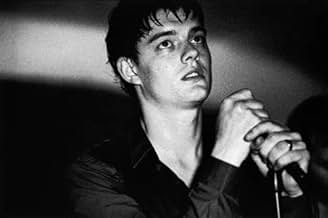
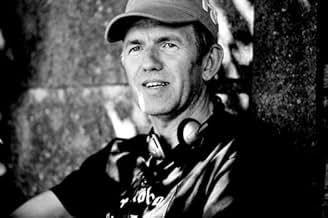



Martha Myers Lowe
- Ian's Sister
- (as Martha Myers-Lowe)


Mary Jo Randle
- Debbie's Mother
- (as Mary-Jo Randle)
- Director
- Writers
- All cast & crew
- Production, box office & more at IMDbPro
7.671K
1
2
3
4
5
6
7
8
9
10
Featured reviews
An extremely moving experience
Days away from embarking on a long dreamed about tour of the United States, Ian Curtis, the lead singer of the band Joy Division, hanged himself on May 23, 1980 from a rope in the kitchen of his apartment. His suicide not only ended his promising young life but also the dreams of a generation. Twenty seven years after his death, the eulogizing continues. Last year saw a documentary by Christian Davies: Joy Division: Under Review and this year has brought two more films: Joy Division: The Last True Story In Pop by Grant Gee and Control, the winner of the Camera d'Or at the Cannes Film Festival. Based on the 1996 memoir "Touching From a Distance" by Ian's widow Deborah Curtis, the film follows Curtis' life from his teenage years to his tragic death at age twenty three.
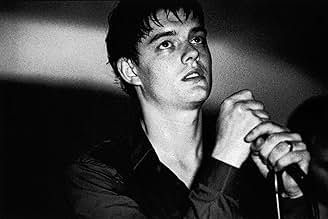
Unlike conventional bio-pics like Ray and Walk the Line with their star glamorizing propensities, Control delivers a three-dimensional portrait of a real human being and how his troubles affected the people closest to him. The film is directed by photographer and video director Anton Corbijn, a celebrated photographer who took some of the most recognized photos of Joy Division. Because he knew and worked with the band, the emotional connection to its subject is palpable. The film is shot in black and white and the choice underscores the grayness of Curtis' home town of Macclesfield, England and the grim mood of much of the work.
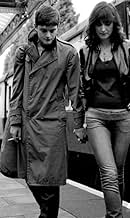
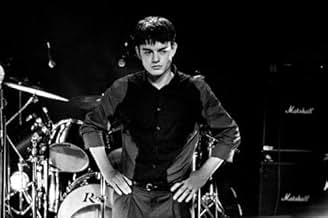
The major reason for the film's success, however, rests with lead actor Sam Riley who eerily recreates Curtis in appearance and voice. He performs all of the band's iconic songs such as Atmosphere, Love Will Tear Us Apart, and Twenty-Four Hours himself, using Curtis' robotic hand motions on stage to great effect. Another outstanding performance is that of Samantha Morton who plays Deborah Curtis, Ian's loving and patient wife who is overwhelmed by her husband's success and her new responsibilities as a mother of their daughter. Married at a very young age, both husband and wife lack the strength to make a go of it especially with the pressure of Curtis' epileptic seizures growing worse, and Ian's on again off again affair with Belgian journalist Annik (Alexandra Maria Lara).
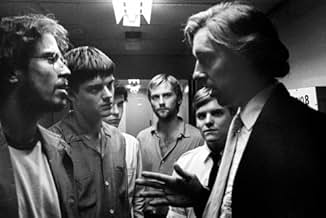
Though the subject matter is melancholy, Matt Greenhalgh's script provides a light touch filled with trenchant one-liners from the group's manager Rob Gretton (Tony Kebbell) and witty remarks from band members Joe Anderson, James Anthony Pearson and Harry Treadaway. Although Curtis has become one of rock's most mythologized figures, Riley plays him simply as a very innocent, down to earth young man whose talent was much greater than his ability to handle it. Control is an extremely moving experience whether or not you have foreknowledge of the events of Curtis' life. It is a film that has the power to touch and leave memories that are indelible.
Unlike conventional bio-pics like Ray and Walk the Line with their star glamorizing propensities, Control delivers a three-dimensional portrait of a real human being and how his troubles affected the people closest to him. The film is directed by photographer and video director Anton Corbijn, a celebrated photographer who took some of the most recognized photos of Joy Division. Because he knew and worked with the band, the emotional connection to its subject is palpable. The film is shot in black and white and the choice underscores the grayness of Curtis' home town of Macclesfield, England and the grim mood of much of the work.
The major reason for the film's success, however, rests with lead actor Sam Riley who eerily recreates Curtis in appearance and voice. He performs all of the band's iconic songs such as Atmosphere, Love Will Tear Us Apart, and Twenty-Four Hours himself, using Curtis' robotic hand motions on stage to great effect. Another outstanding performance is that of Samantha Morton who plays Deborah Curtis, Ian's loving and patient wife who is overwhelmed by her husband's success and her new responsibilities as a mother of their daughter. Married at a very young age, both husband and wife lack the strength to make a go of it especially with the pressure of Curtis' epileptic seizures growing worse, and Ian's on again off again affair with Belgian journalist Annik (Alexandra Maria Lara).
Though the subject matter is melancholy, Matt Greenhalgh's script provides a light touch filled with trenchant one-liners from the group's manager Rob Gretton (Tony Kebbell) and witty remarks from band members Joe Anderson, James Anthony Pearson and Harry Treadaway. Although Curtis has become one of rock's most mythologized figures, Riley plays him simply as a very innocent, down to earth young man whose talent was much greater than his ability to handle it. Control is an extremely moving experience whether or not you have foreknowledge of the events of Curtis' life. It is a film that has the power to touch and leave memories that are indelible.
Rise and fall of a rock legend in evocative black and white
The first thing that strikes you about 'Control' is its silence, and the chilly beauty of its black and white images. As a still photographer first-time director Anton Corbijn photographed Joy Division in black and white during their short existence. He knows how to get the remorselessly grim feel of the north of England in the late Seventies. (The boys came from the outskirts of Manchester. Joy Division formed in 1976.) This film (there's a documentary just coming out on the band too) is loosely based on a memoir of her marriage by Deborah Curtis, lead singer Ian Curtis' young wife, who had a baby girl by him and then tragically found him after he'd hanged himself in 1980, two months short of his twenty-fourth birthday, just as the band was to tour America for the first time.
'Control's' strength is a certain recessiveness. In the English style, it's offhand and avoids huge dramatic crescendos. That's refreshing. And besides the images and the restraint, the film is worth seeing for the concert sequences. The cast actually plays the Joy Division music live, and Sam Riley, who plays Ian Curtis, not only closely resembles him, but is a riveting and intense, almost at times scary, performer. When he says the public doesn't know how much of himself he puts into his performances, we know what he means.
The film is excellent at showing Ian's dilemmas. The band is a sudden success. He has an attack in their car as the band returns from a gig. Doctors tell him he has a form of epilepsy. He's given a fistful of pills to take every day and told to have early nights and stay off the booze. How faithfully he takes the pills is unclear but he suffers from their side effects in various ways, while late nights and booze are essentials of his existence. It doesn't seem that the English doctors knew very well how to treat him, and he was so busy performing he didn't take the time to go to specialists and have more extensive tests.
Ian had gotten married to Deborah (Samantha Morton) early--too early. On the road he meets a Belgian part-time journalist, Annik Honoré (Alexandra Maria Lara), and they fall uneasily in love. He's not strong enough to decide between the two women. Fear that his disease will only get worse hounds him, and the fits go on. Riley is fascinating to watch as he undergoes an increasingly visible meltdown. Other cast members are cyphers, though Joe Anderson, who has the role of Max in Taymor's Across the Universe, is the lead guitarist. Morton has a drab role but Deborah's unfortunate situation is present as a constant counterpart to Ian's story. The two other important characters are the Manchester music guru Tony Wilson (Craig Parkinson) and the band's wise-guy manager Rob Gretton (Toby Kebbell).
The creative inspiration of the band, the nature of their songs, the cast of their lyrics, the reason why Joy Division is a cult band today when it only existed for four years--these are matters the film is unable to elucidate. Watch it for the cool visuals, for the tall, soulful Sam Riley, and for the terrific live performance scenes. Enjoy the understatement, and the silence. Don't expect more.
Harvey Weinstein has chosen both for Control and for the soon-to-open Todd Haynes Bob Dylan film I'm Not There to have a slowly-unrolling distribution system, and hopes to bestow early cult status on both films by having them premiere at that temple of cinephilia, Film Forum, in lower Manhattan, New York City, and wait for the buzz of the cognoscenti to multiply and spread. It may work. But both films are tough sells. But A.E. Scott of the NYTimes has said Control is "enigmatic and moving, much in the manner of Joy Division's best songs." And that's a good send-off.
'Control's' strength is a certain recessiveness. In the English style, it's offhand and avoids huge dramatic crescendos. That's refreshing. And besides the images and the restraint, the film is worth seeing for the concert sequences. The cast actually plays the Joy Division music live, and Sam Riley, who plays Ian Curtis, not only closely resembles him, but is a riveting and intense, almost at times scary, performer. When he says the public doesn't know how much of himself he puts into his performances, we know what he means.
The film is excellent at showing Ian's dilemmas. The band is a sudden success. He has an attack in their car as the band returns from a gig. Doctors tell him he has a form of epilepsy. He's given a fistful of pills to take every day and told to have early nights and stay off the booze. How faithfully he takes the pills is unclear but he suffers from their side effects in various ways, while late nights and booze are essentials of his existence. It doesn't seem that the English doctors knew very well how to treat him, and he was so busy performing he didn't take the time to go to specialists and have more extensive tests.
Ian had gotten married to Deborah (Samantha Morton) early--too early. On the road he meets a Belgian part-time journalist, Annik Honoré (Alexandra Maria Lara), and they fall uneasily in love. He's not strong enough to decide between the two women. Fear that his disease will only get worse hounds him, and the fits go on. Riley is fascinating to watch as he undergoes an increasingly visible meltdown. Other cast members are cyphers, though Joe Anderson, who has the role of Max in Taymor's Across the Universe, is the lead guitarist. Morton has a drab role but Deborah's unfortunate situation is present as a constant counterpart to Ian's story. The two other important characters are the Manchester music guru Tony Wilson (Craig Parkinson) and the band's wise-guy manager Rob Gretton (Toby Kebbell).
The creative inspiration of the band, the nature of their songs, the cast of their lyrics, the reason why Joy Division is a cult band today when it only existed for four years--these are matters the film is unable to elucidate. Watch it for the cool visuals, for the tall, soulful Sam Riley, and for the terrific live performance scenes. Enjoy the understatement, and the silence. Don't expect more.
Harvey Weinstein has chosen both for Control and for the soon-to-open Todd Haynes Bob Dylan film I'm Not There to have a slowly-unrolling distribution system, and hopes to bestow early cult status on both films by having them premiere at that temple of cinephilia, Film Forum, in lower Manhattan, New York City, and wait for the buzz of the cognoscenti to multiply and spread. It may work. But both films are tough sells. But A.E. Scott of the NYTimes has said Control is "enigmatic and moving, much in the manner of Joy Division's best songs." And that's a good send-off.
Beautiful movie, depends who's watching
Control, the story of Ian Curtis, singer of British alternative band Joy Division. The film is made in black and white, which adds a certain edge to the film. There isn't much drama or fast-paced scenes (until the very end, I guess), and that seems to be what everyone criticizes about the movie. Why do you think the director wanted it black and white? If it had been a sincerely boring film, why release it?
Of course they made up some aspects of Ian's life, but the fact is that Ian was a dull, depressed human being. He couldn't handle love, or fame overall. He doesn't show signs of emotion in the film, and doesn't speak much at all. Truth is, black and white was exactly what he saw, while he was spiraling towards the end of his life.
The acting is incredible. Absolutely spot on. Very very noteworthy.
I enjoyed Control, but that's only because I love indie films and rock and roll movies. If you're looking into this movie expecting some delicious drama and edge-of-your-seat thrills, just don't watch it. It's about a man who gradually fell apart, who gradually lost control. And if you can't see that in the film, it's definitely not worth watching.
Of course they made up some aspects of Ian's life, but the fact is that Ian was a dull, depressed human being. He couldn't handle love, or fame overall. He doesn't show signs of emotion in the film, and doesn't speak much at all. Truth is, black and white was exactly what he saw, while he was spiraling towards the end of his life.
The acting is incredible. Absolutely spot on. Very very noteworthy.
I enjoyed Control, but that's only because I love indie films and rock and roll movies. If you're looking into this movie expecting some delicious drama and edge-of-your-seat thrills, just don't watch it. It's about a man who gradually fell apart, who gradually lost control. And if you can't see that in the film, it's definitely not worth watching.
Walk in silence, don't walk away in silence.
For me personally writing a comment for Control has proved to be a very difficult thing, my love of the band Joy Division has stayed with me from the very first moment I listened to the Unknown Pleasures album back in 1979. I remember Ian Curtis's death like it was yesterday, and no matter how many years roll by, I still feel an immense sadness when listening to the bands poetic beauty. I was mightily relieved after reading Deborah Curtis's book Touching From A Distance, for I found it refreshingly honest, and certainly it helped people get in a bit deeper to just what a troubled young man Ian Curtis was. So here we are in 2008 and the film adaptation of that book has arrived with truly brilliant results.
I have found it hard to write a comment for it because I have to cast aside my biased love of the band, but hopefully I've managed to view it objectively with both my head and my heart. Control is a film about Ian Curtis, the lead singer of the band Joy Division, people expecting an in-depth film about the band will be a little disappointed because this is the story of their lead singer, a troubled young man who just couldn't face it anymore. Filmed in black & white to perfectly capture the essence of the man the film is about, director Anton Corbijn has stayed loyal to the source material and crafted a haunting piece of work that lingers long after the final credits roll.
We follow Ian Curtis from his humble music leanings in the early 70s, here he meets Deborah who is soon to become his wife, a married man at the age of 18. We watch him join a group of Manchester lads at a Sex Pistols concert, it is here that the roots of Joy Division are formed. Then it's on to the formation of Factory records and the influential Svengali Tony Wilson. As the band start to make waves Ian Curtis becomes ill with epilepsy, and it's here that Corbijn crucially shows that the doctors involved really didn't have a clue how to treat him properly, trial and error with cocktails of drugs indeed.
Deborah and Ian become parents to Natalie, but Ian is away on the road for many days and nights, and it's here that he yearns for love from another quarter, and it's here that his infidelity will hang heavy on his already sunken shoulders. The band are set to make it big, their manager announces that they are about to tour America for the first time, this only adds another fraught string to Ian's already fractured bow, the pressure of fame a lethal bedfellow with Messrs epilepsy and infidelity, and then? I can't praise the work on this film enough, Sam Riley {relatively unknown outside of his hometown of Leeds} is simply brilliant as Curtis, dragging the viewer in completely on this desperately sad journey. Samantha Morton as Deborah is immense, she nails the emotional see-saw role with professional aplomb, and I would also like to raise a glass for the performance of the criminally undervalued Toby Kebbell (Dead Man's Shoes, Wilderness) his turn as Joy Division's manager Rob Gretton is down pat. Director Corbijn clearly had love for the project, and thankfully he was sensible enough to not over do the sentimental aspect of the troubled star. What Corbijn has done is perfectly frame the bleaker side of the story with old terraced houses and monstrous looking high rise's, they scream out as dank and dreary statements in black & white, yet they are overlooked by rolling hills to serve as a reminder when Curtis was at his happiest during the courtship with Deborah. Some scenes are unforgettable, such is the power of the emotion on offer, look out for the stunning appearance of heart tugging song Love Will Tear Us Apart, a crucial and poignant scene, and of course the film's tragic outcome hits like a sledgehammer. To which I thank Corbijn for giving us a very tasteful conclusion to this sad sad story.
So there it is, was I biased? I like to think I wasn't because I honestly feel that one doesn't have to be a fan of the band to get much from this movie. The film has won many awards, and I'm happy to report that Control has brought renewed interest in the beautiful/haunting work of one of England's greatest ever bands. Remastered CDs, reissued books, and even T-shirts are selling well in the shops as I type.
Control is a very sobering experience for fans and newcomers alike. 10/10
RIP Ian Curtis, you are very much missed.
I have found it hard to write a comment for it because I have to cast aside my biased love of the band, but hopefully I've managed to view it objectively with both my head and my heart. Control is a film about Ian Curtis, the lead singer of the band Joy Division, people expecting an in-depth film about the band will be a little disappointed because this is the story of their lead singer, a troubled young man who just couldn't face it anymore. Filmed in black & white to perfectly capture the essence of the man the film is about, director Anton Corbijn has stayed loyal to the source material and crafted a haunting piece of work that lingers long after the final credits roll.
We follow Ian Curtis from his humble music leanings in the early 70s, here he meets Deborah who is soon to become his wife, a married man at the age of 18. We watch him join a group of Manchester lads at a Sex Pistols concert, it is here that the roots of Joy Division are formed. Then it's on to the formation of Factory records and the influential Svengali Tony Wilson. As the band start to make waves Ian Curtis becomes ill with epilepsy, and it's here that Corbijn crucially shows that the doctors involved really didn't have a clue how to treat him properly, trial and error with cocktails of drugs indeed.
Deborah and Ian become parents to Natalie, but Ian is away on the road for many days and nights, and it's here that he yearns for love from another quarter, and it's here that his infidelity will hang heavy on his already sunken shoulders. The band are set to make it big, their manager announces that they are about to tour America for the first time, this only adds another fraught string to Ian's already fractured bow, the pressure of fame a lethal bedfellow with Messrs epilepsy and infidelity, and then? I can't praise the work on this film enough, Sam Riley {relatively unknown outside of his hometown of Leeds} is simply brilliant as Curtis, dragging the viewer in completely on this desperately sad journey. Samantha Morton as Deborah is immense, she nails the emotional see-saw role with professional aplomb, and I would also like to raise a glass for the performance of the criminally undervalued Toby Kebbell (Dead Man's Shoes, Wilderness) his turn as Joy Division's manager Rob Gretton is down pat. Director Corbijn clearly had love for the project, and thankfully he was sensible enough to not over do the sentimental aspect of the troubled star. What Corbijn has done is perfectly frame the bleaker side of the story with old terraced houses and monstrous looking high rise's, they scream out as dank and dreary statements in black & white, yet they are overlooked by rolling hills to serve as a reminder when Curtis was at his happiest during the courtship with Deborah. Some scenes are unforgettable, such is the power of the emotion on offer, look out for the stunning appearance of heart tugging song Love Will Tear Us Apart, a crucial and poignant scene, and of course the film's tragic outcome hits like a sledgehammer. To which I thank Corbijn for giving us a very tasteful conclusion to this sad sad story.
So there it is, was I biased? I like to think I wasn't because I honestly feel that one doesn't have to be a fan of the band to get much from this movie. The film has won many awards, and I'm happy to report that Control has brought renewed interest in the beautiful/haunting work of one of England's greatest ever bands. Remastered CDs, reissued books, and even T-shirts are selling well in the shops as I type.
Control is a very sobering experience for fans and newcomers alike. 10/10
RIP Ian Curtis, you are very much missed.
the enigma of Ian Curtis
It's 1973 Macclesfield, England. Ian Curtis (Sam Riley) is a quiet enigmatic student. He marries Debbie Woodruff (Samantha Morton) in 1975. He works as an employment agent. On June 4, 1976, they attend a small Sex Pistols concert. Also in attendance are Bernard Sumner, Peter Hook, and Terry Mason. Ian joins them as their lead singer. They call themselves Warsaw and eventually Joy Division.
There is a sense of disconnection from this movie and a mystery about Ian Curtis. Sam Riley's performance, the long takes, and the black and white photography all make Ian an enigma. It's a slow burn but compelling. The tone is sad and respectful. It's very fitting of the band and its music.
There is a sense of disconnection from this movie and a mystery about Ian Curtis. Sam Riley's performance, the long takes, and the black and white photography all make Ian an enigma. It's a slow burn but compelling. The tone is sad and respectful. It's very fitting of the band and its music.


Did you know
- TriviaThe actors playing Joy Division learned how to play the songs themselves. So the scenes where the band is playing live is not from tape, but actually the actors playing live.
- GoofsJoy Division is shown performing "Transmission" on Tony Wilson's television show in September 1978, but in reality, they performed "Shadowplay". The performance that is represented in this scene actually took place a year later in September 1979 on the BBC2 program "Something Else", when they performed "Transmission" (a performance which was used as the music video for the song) and "She's Lost Control".
- Quotes
Ian Curtis: Existence. Well, what does it matter? I exist on the best terms I can. The past is now part of my future. The present is well out of hand.
- Crazy creditsSPOILER: Epilogue: "Ian Curtis died May 18, 1980. He was 23 years old."
- SoundtracksDrive-In Saturday
(David Bowie)
Published by kind permission of Tintoretto Music/RZO Music Ltd/EMI Music Publishing Ltd/Chrysalis Music Ltd © 1973
Performed by David Bowie
Courtesy of RZO Music
Details
- Release date
- Countries of origin
- Official site
- Language
- Also known as
- Контроль
- Filming locations
- Production companies
- See more company credits at IMDbPro
Box office
- Budget
- €4,500,000 (estimated)
- Gross US & Canada
- $872,252
- Opening weekend US & Canada
- $27,674
- Oct 14, 2007
- Gross worldwide
- $8,159,996
- Runtime
- 2h 2m(122 min)
- Color
- Sound mix
- Aspect ratio
- 2.35 : 1
Contribute to this page
Suggest an edit or add missing content