

A profile of Ian Curtis, the enigmatic singer of Joy Division whose personal, professional, and romantic troubles led him to die by suicide at the age of 23.A profile of Ian Curtis, the enigmatic singer of Joy Division whose personal, professional, and romantic troubles led him to die by suicide at the age of 23.A profile of Ian Curtis, the enigmatic singer of Joy Division whose personal, professional, and romantic troubles led him to die by suicide at the age of 23.
- Director
- Writers
- Stars
- Won 1 BAFTA Award
- 31 wins & 36 nominations total






Martha Myers Lowe
- Ian's Sister
- (as Martha Myers-Lowe)


Mary Jo Randle
- Debbie's Mother
- (as Mary-Jo Randle)
- Director
- Writers
- All cast & crew
- Production, box office & more at IMDbPro
7.671K
1
2
3
4
5
6
7
8
9
10
Featured reviews
8tmk1
Style and Romance
I saw this film last night then I went home and read a lot of the comments here. I think some things have been missed between the glowing reviews and the bitter disappointments.
First, it is a truly beautiful film and I found the acting uniformly excellent. That has already been said plenty of times.
More interesting to me are the comments about this not being an accurate or fair portrait of Ian Curtis and those around him. I've read plenty of accounts that characterize Ian and his band-mates as relentless practical jokers -- the book Torn Apart by Mick Middles and Lindsay Reade is full of these anecdotes. But I also think it's naive to expect a film like this to be anything close to a fair and objective telling of anyone's life. This is a dramatic interpretation, not a documentary.
In addition to the multiple meanings the title has for the characters in the film, this film is itself an exercise in CONTROL: Deborah Curtis's control over her husband's legacy; the surviving band members' control over the public image of Joy Division.
No, the film does not show the laughs and good times the band had, but this is in keeping with all of Joy Division's work. Their entire output as a living band was highly stylized. Almost everything they issued was in stark black and white; their imagery was overwhelmingly bleak and funereal; and they certainly courted controversy with their name and imagery. All of which was very consciously and tightly CONTROLLED by the band and the people at Factory. They gave few interviews and preferred to let the work speak for itself.
My point is that this film simply continues that project. It is yet another highly stylized piece of work in the Joy Division canon. To paraphrase the Tony Wilson remark that has been cited elsewhere in these comments -- when you have the choice between the legend and the facts, go with the legend. Their work has always had an epic, legendary quality. This movie is absolutely in keeping with that aesthetic.
I think it's also worth noting that Corbijn was a participant in shaping the Joy Division legacy from the very start -- his photographs of the band helped shape their image and his video for "Atmosphere" set the tone for how their legacy would be preserved. CONTROL is simply another collaboration with the band and their music. An extension of that original project.
I think that ultimately this film is an excellent piece of work. Just as Joy Division produced music of astonishing beauty and resonance out of the misery of life in post-industrial England, this film turns personal pain and loss into a powerful piece of art.
First, it is a truly beautiful film and I found the acting uniformly excellent. That has already been said plenty of times.
More interesting to me are the comments about this not being an accurate or fair portrait of Ian Curtis and those around him. I've read plenty of accounts that characterize Ian and his band-mates as relentless practical jokers -- the book Torn Apart by Mick Middles and Lindsay Reade is full of these anecdotes. But I also think it's naive to expect a film like this to be anything close to a fair and objective telling of anyone's life. This is a dramatic interpretation, not a documentary.
In addition to the multiple meanings the title has for the characters in the film, this film is itself an exercise in CONTROL: Deborah Curtis's control over her husband's legacy; the surviving band members' control over the public image of Joy Division.
No, the film does not show the laughs and good times the band had, but this is in keeping with all of Joy Division's work. Their entire output as a living band was highly stylized. Almost everything they issued was in stark black and white; their imagery was overwhelmingly bleak and funereal; and they certainly courted controversy with their name and imagery. All of which was very consciously and tightly CONTROLLED by the band and the people at Factory. They gave few interviews and preferred to let the work speak for itself.
My point is that this film simply continues that project. It is yet another highly stylized piece of work in the Joy Division canon. To paraphrase the Tony Wilson remark that has been cited elsewhere in these comments -- when you have the choice between the legend and the facts, go with the legend. Their work has always had an epic, legendary quality. This movie is absolutely in keeping with that aesthetic.
I think it's also worth noting that Corbijn was a participant in shaping the Joy Division legacy from the very start -- his photographs of the band helped shape their image and his video for "Atmosphere" set the tone for how their legacy would be preserved. CONTROL is simply another collaboration with the band and their music. An extension of that original project.
I think that ultimately this film is an excellent piece of work. Just as Joy Division produced music of astonishing beauty and resonance out of the misery of life in post-industrial England, this film turns personal pain and loss into a powerful piece of art.
the enigma of Ian Curtis
It's 1973 Macclesfield, England. Ian Curtis (Sam Riley) is a quiet enigmatic student. He marries Debbie Woodruff (Samantha Morton) in 1975. He works as an employment agent. On June 4, 1976, they attend a small Sex Pistols concert. Also in attendance are Bernard Sumner, Peter Hook, and Terry Mason. Ian joins them as their lead singer. They call themselves Warsaw and eventually Joy Division.
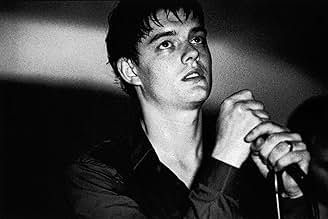
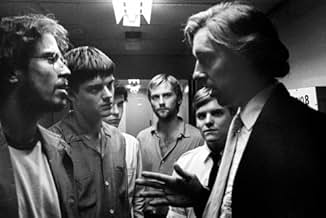
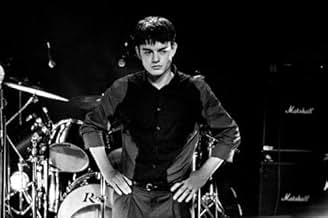
There is a sense of disconnection from this movie and a mystery about Ian Curtis. Sam Riley's performance, the long takes, and the black and white photography all make Ian an enigma. It's a slow burn but compelling. The tone is sad and respectful. It's very fitting of the band and its music.
There is a sense of disconnection from this movie and a mystery about Ian Curtis. Sam Riley's performance, the long takes, and the black and white photography all make Ian an enigma. It's a slow burn but compelling. The tone is sad and respectful. It's very fitting of the band and its music.
Beautiful movie, depends who's watching
Control, the story of Ian Curtis, singer of British alternative band Joy Division. The film is made in black and white, which adds a certain edge to the film. There isn't much drama or fast-paced scenes (until the very end, I guess), and that seems to be what everyone criticizes about the movie. Why do you think the director wanted it black and white? If it had been a sincerely boring film, why release it?
Of course they made up some aspects of Ian's life, but the fact is that Ian was a dull, depressed human being. He couldn't handle love, or fame overall. He doesn't show signs of emotion in the film, and doesn't speak much at all. Truth is, black and white was exactly what he saw, while he was spiraling towards the end of his life.
The acting is incredible. Absolutely spot on. Very very noteworthy.
I enjoyed Control, but that's only because I love indie films and rock and roll movies. If you're looking into this movie expecting some delicious drama and edge-of-your-seat thrills, just don't watch it. It's about a man who gradually fell apart, who gradually lost control. And if you can't see that in the film, it's definitely not worth watching.
Of course they made up some aspects of Ian's life, but the fact is that Ian was a dull, depressed human being. He couldn't handle love, or fame overall. He doesn't show signs of emotion in the film, and doesn't speak much at all. Truth is, black and white was exactly what he saw, while he was spiraling towards the end of his life.
The acting is incredible. Absolutely spot on. Very very noteworthy.
I enjoyed Control, but that's only because I love indie films and rock and roll movies. If you're looking into this movie expecting some delicious drama and edge-of-your-seat thrills, just don't watch it. It's about a man who gradually fell apart, who gradually lost control. And if you can't see that in the film, it's definitely not worth watching.
Walk in silence, don't walk away in silence.
For me personally writing a comment for Control has proved to be a very difficult thing, my love of the band Joy Division has stayed with me from the very first moment I listened to the Unknown Pleasures album back in 1979. I remember Ian Curtis's death like it was yesterday, and no matter how many years roll by, I still feel an immense sadness when listening to the bands poetic beauty. I was mightily relieved after reading Deborah Curtis's book Touching From A Distance, for I found it refreshingly honest, and certainly it helped people get in a bit deeper to just what a troubled young man Ian Curtis was. So here we are in 2008 and the film adaptation of that book has arrived with truly brilliant results.
I have found it hard to write a comment for it because I have to cast aside my biased love of the band, but hopefully I've managed to view it objectively with both my head and my heart. Control is a film about Ian Curtis, the lead singer of the band Joy Division, people expecting an in-depth film about the band will be a little disappointed because this is the story of their lead singer, a troubled young man who just couldn't face it anymore. Filmed in black & white to perfectly capture the essence of the man the film is about, director Anton Corbijn has stayed loyal to the source material and crafted a haunting piece of work that lingers long after the final credits roll.
We follow Ian Curtis from his humble music leanings in the early 70s, here he meets Deborah who is soon to become his wife, a married man at the age of 18. We watch him join a group of Manchester lads at a Sex Pistols concert, it is here that the roots of Joy Division are formed. Then it's on to the formation of Factory records and the influential Svengali Tony Wilson. As the band start to make waves Ian Curtis becomes ill with epilepsy, and it's here that Corbijn crucially shows that the doctors involved really didn't have a clue how to treat him properly, trial and error with cocktails of drugs indeed.
Deborah and Ian become parents to Natalie, but Ian is away on the road for many days and nights, and it's here that he yearns for love from another quarter, and it's here that his infidelity will hang heavy on his already sunken shoulders. The band are set to make it big, their manager announces that they are about to tour America for the first time, this only adds another fraught string to Ian's already fractured bow, the pressure of fame a lethal bedfellow with Messrs epilepsy and infidelity, and then? I can't praise the work on this film enough, Sam Riley {relatively unknown outside of his hometown of Leeds} is simply brilliant as Curtis, dragging the viewer in completely on this desperately sad journey. Samantha Morton as Deborah is immense, she nails the emotional see-saw role with professional aplomb, and I would also like to raise a glass for the performance of the criminally undervalued Toby Kebbell (Dead Man's Shoes, Wilderness) his turn as Joy Division's manager Rob Gretton is down pat. Director Corbijn clearly had love for the project, and thankfully he was sensible enough to not over do the sentimental aspect of the troubled star. What Corbijn has done is perfectly frame the bleaker side of the story with old terraced houses and monstrous looking high rise's, they scream out as dank and dreary statements in black & white, yet they are overlooked by rolling hills to serve as a reminder when Curtis was at his happiest during the courtship with Deborah. Some scenes are unforgettable, such is the power of the emotion on offer, look out for the stunning appearance of heart tugging song Love Will Tear Us Apart, a crucial and poignant scene, and of course the film's tragic outcome hits like a sledgehammer. To which I thank Corbijn for giving us a very tasteful conclusion to this sad sad story.
So there it is, was I biased? I like to think I wasn't because I honestly feel that one doesn't have to be a fan of the band to get much from this movie. The film has won many awards, and I'm happy to report that Control has brought renewed interest in the beautiful/haunting work of one of England's greatest ever bands. Remastered CDs, reissued books, and even T-shirts are selling well in the shops as I type.
Control is a very sobering experience for fans and newcomers alike. 10/10
RIP Ian Curtis, you are very much missed.
I have found it hard to write a comment for it because I have to cast aside my biased love of the band, but hopefully I've managed to view it objectively with both my head and my heart. Control is a film about Ian Curtis, the lead singer of the band Joy Division, people expecting an in-depth film about the band will be a little disappointed because this is the story of their lead singer, a troubled young man who just couldn't face it anymore. Filmed in black & white to perfectly capture the essence of the man the film is about, director Anton Corbijn has stayed loyal to the source material and crafted a haunting piece of work that lingers long after the final credits roll.
We follow Ian Curtis from his humble music leanings in the early 70s, here he meets Deborah who is soon to become his wife, a married man at the age of 18. We watch him join a group of Manchester lads at a Sex Pistols concert, it is here that the roots of Joy Division are formed. Then it's on to the formation of Factory records and the influential Svengali Tony Wilson. As the band start to make waves Ian Curtis becomes ill with epilepsy, and it's here that Corbijn crucially shows that the doctors involved really didn't have a clue how to treat him properly, trial and error with cocktails of drugs indeed.
Deborah and Ian become parents to Natalie, but Ian is away on the road for many days and nights, and it's here that he yearns for love from another quarter, and it's here that his infidelity will hang heavy on his already sunken shoulders. The band are set to make it big, their manager announces that they are about to tour America for the first time, this only adds another fraught string to Ian's already fractured bow, the pressure of fame a lethal bedfellow with Messrs epilepsy and infidelity, and then? I can't praise the work on this film enough, Sam Riley {relatively unknown outside of his hometown of Leeds} is simply brilliant as Curtis, dragging the viewer in completely on this desperately sad journey. Samantha Morton as Deborah is immense, she nails the emotional see-saw role with professional aplomb, and I would also like to raise a glass for the performance of the criminally undervalued Toby Kebbell (Dead Man's Shoes, Wilderness) his turn as Joy Division's manager Rob Gretton is down pat. Director Corbijn clearly had love for the project, and thankfully he was sensible enough to not over do the sentimental aspect of the troubled star. What Corbijn has done is perfectly frame the bleaker side of the story with old terraced houses and monstrous looking high rise's, they scream out as dank and dreary statements in black & white, yet they are overlooked by rolling hills to serve as a reminder when Curtis was at his happiest during the courtship with Deborah. Some scenes are unforgettable, such is the power of the emotion on offer, look out for the stunning appearance of heart tugging song Love Will Tear Us Apart, a crucial and poignant scene, and of course the film's tragic outcome hits like a sledgehammer. To which I thank Corbijn for giving us a very tasteful conclusion to this sad sad story.
So there it is, was I biased? I like to think I wasn't because I honestly feel that one doesn't have to be a fan of the band to get much from this movie. The film has won many awards, and I'm happy to report that Control has brought renewed interest in the beautiful/haunting work of one of England's greatest ever bands. Remastered CDs, reissued books, and even T-shirts are selling well in the shops as I type.
Control is a very sobering experience for fans and newcomers alike. 10/10
RIP Ian Curtis, you are very much missed.
Depressingly Beautiful
For every icon, there is an unknown predecessor who paves the way. Before there was Kurt Cobain, there was Ian Curtis, lead singer of the post-punk band, Joy Division. 27 years after his tragic death, Curtis' incredible contribution to music is finally being recognized in Anton Corbijn's film, "Control." It's only fitting that Corbijn serve as director since it was his early photographs of Joy Division that reflected the band's dark, introspective songs. Corbijn went on to photograph and direct videos for such musical greats as U2, David Bowie, Depeche Mode, R.E.M. and Metallica.
With his first feature film, Corbijn avoids the pitfalls of many music video directors who inundate us with flashy and unnecessary edits and camera angles. Instead, he lets the stark black and white of the film tell the story of a lead singer tortured by epilepsy, guilt, depression and suicidal thoughts. The use of black and white also captures the factory town of Manchester, England in the late 1970s, a city crumbling under industrial and economic stress. Manchester has since rebounded and is once again thriving.
Curtis is played by relative newcomer, Sam Riley, who's quiet and unassuming approach portrays an artist inspired by his heroes, David Bowie and Iggy Pop. At a chance meeting following a Sex Pistols concert, Curtis bonds with three fellow musicians to form the band.
As Joy Division begins to flourish, Ian's relationship with his young wife, Deborah, continues to distance itself. Academy Award nominee, Samantha Morton plays the confused wife trying to understand her husband's depressed soul. The film is based on Deborah Curtis' autobiography, "Touching From A Distance", so it comes as a surprise that Morton's character does not have more scenes in the movie.
The key to Control is understanding Curtis' depression, which the film accomplishes to near perfection. As he battles epilepsy, the young singer lives in constant fear that his next seizure will be his last. His only option is to swallow a daily cocktail of prescription drugs with side effects so terrible, that most of us would rather tempt fate than endure the aftermath of the pills.
Ian's spirit is also tortured by overwhelming guilt brought on by an extra-marital affair with a part-time journalist, played by Romanian-born Alexandra Maria Lara.
The most telling scene comes when Ian records an in-studio track for the song "Isolation." While Curtis stoically sings into the microphone, his band mates are distracted with the normal banter that typically occurs in a studio.
"Mother, I tried, please believe me. I'm doing the best that I can. I'm ashamed of the things I've been put through. I'm ashamed of the person I am." The lyrics seem to fall on deaf ears except for those of the sound engineer who refers to it as "genius." But Ian's brilliance is also a desperate cry for help ignored by everyone in the studio.
The 27-year-old Riley does an excellent job of capturing Curtis' aloofness on stage. Singers such as Jim Morrison, Kurt Cobain and even the early years of Michael Stipe would often drift into the moment of the song. But when Curtis performed, he immersed himself into his own world where the music simply served as the soundtrack. Riley skillfully draws us into Ian's dark world with a range of subtle head movements and facial expressions to a whirling explosion of arm gyrations that came to personify the singer's stage performances.
Overwhelmed with grief, shame and depression, Ian finally succumbs to his demons at the young age of 23. He left behind a wife, a child and a musical legacy that is finally receiving its just rewards nearly three decades later.
For those looking for a story solely about Joy Division, Control may not be for you. But for those seeking an intuitive perspective into the anguished spirit of one of the most influential alternative bands in history, you will certainly find it in this depressing but incredibly beautiful film.
With his first feature film, Corbijn avoids the pitfalls of many music video directors who inundate us with flashy and unnecessary edits and camera angles. Instead, he lets the stark black and white of the film tell the story of a lead singer tortured by epilepsy, guilt, depression and suicidal thoughts. The use of black and white also captures the factory town of Manchester, England in the late 1970s, a city crumbling under industrial and economic stress. Manchester has since rebounded and is once again thriving.
Curtis is played by relative newcomer, Sam Riley, who's quiet and unassuming approach portrays an artist inspired by his heroes, David Bowie and Iggy Pop. At a chance meeting following a Sex Pistols concert, Curtis bonds with three fellow musicians to form the band.
As Joy Division begins to flourish, Ian's relationship with his young wife, Deborah, continues to distance itself. Academy Award nominee, Samantha Morton plays the confused wife trying to understand her husband's depressed soul. The film is based on Deborah Curtis' autobiography, "Touching From A Distance", so it comes as a surprise that Morton's character does not have more scenes in the movie.
The key to Control is understanding Curtis' depression, which the film accomplishes to near perfection. As he battles epilepsy, the young singer lives in constant fear that his next seizure will be his last. His only option is to swallow a daily cocktail of prescription drugs with side effects so terrible, that most of us would rather tempt fate than endure the aftermath of the pills.
Ian's spirit is also tortured by overwhelming guilt brought on by an extra-marital affair with a part-time journalist, played by Romanian-born Alexandra Maria Lara.
The most telling scene comes when Ian records an in-studio track for the song "Isolation." While Curtis stoically sings into the microphone, his band mates are distracted with the normal banter that typically occurs in a studio.
"Mother, I tried, please believe me. I'm doing the best that I can. I'm ashamed of the things I've been put through. I'm ashamed of the person I am." The lyrics seem to fall on deaf ears except for those of the sound engineer who refers to it as "genius." But Ian's brilliance is also a desperate cry for help ignored by everyone in the studio.
The 27-year-old Riley does an excellent job of capturing Curtis' aloofness on stage. Singers such as Jim Morrison, Kurt Cobain and even the early years of Michael Stipe would often drift into the moment of the song. But when Curtis performed, he immersed himself into his own world where the music simply served as the soundtrack. Riley skillfully draws us into Ian's dark world with a range of subtle head movements and facial expressions to a whirling explosion of arm gyrations that came to personify the singer's stage performances.
Overwhelmed with grief, shame and depression, Ian finally succumbs to his demons at the young age of 23. He left behind a wife, a child and a musical legacy that is finally receiving its just rewards nearly three decades later.
For those looking for a story solely about Joy Division, Control may not be for you. But for those seeking an intuitive perspective into the anguished spirit of one of the most influential alternative bands in history, you will certainly find it in this depressing but incredibly beautiful film.


Did you know
- TriviaThe actors playing Joy Division learned how to play the songs themselves. So the scenes where the band is playing live is not from tape, but actually the actors playing live.
- GoofsJoy Division is shown performing "Transmission" on Tony Wilson's television show in September 1978, but in reality, they performed "Shadowplay". The performance that is represented in this scene actually took place a year later in September 1979 on the BBC2 program "Something Else", when they performed "Transmission" (a performance which was used as the music video for the song) and "She's Lost Control".
- Quotes
Ian Curtis: Existence. Well, what does it matter? I exist on the best terms I can. The past is now part of my future. The present is well out of hand.
- Crazy creditsSPOILER: Epilogue: "Ian Curtis died May 18, 1980. He was 23 years old."
- SoundtracksDrive-In Saturday
(David Bowie)
Published by kind permission of Tintoretto Music/RZO Music Ltd/EMI Music Publishing Ltd/Chrysalis Music Ltd © 1973
Performed by David Bowie
Courtesy of RZO Music
Details
- Release date
- Countries of origin
- Official site
- Language
- Also known as
- Контроль
- Filming locations
- Production companies
- See more company credits at IMDbPro
Box office
- Budget
- €4,500,000 (estimated)
- Gross US & Canada
- $872,252
- Opening weekend US & Canada
- $27,674
- Oct 14, 2007
- Gross worldwide
- $8,159,996
- Runtime
- 2h 2m(122 min)
- Color
- Sound mix
- Aspect ratio
- 2.35 : 1
Contribute to this page
Suggest an edit or add missing content