IMDb RATING
6.6/10
2.3K
YOUR RATING

An emotionally cold man leaves the safety of his Alpine home to seek a heart transplant and an estranged son.An emotionally cold man leaves the safety of his Alpine home to seek a heart transplant and an estranged son.An emotionally cold man leaves the safety of his Alpine home to seek a heart transplant and an estranged son.
- Director
- Writers
- Stars
- Awards
- 4 nominations total



Yekaterina Golubeva
- La jeune femme russe
- (as Katia Golubeva)

Florence Loiret Caille
- Antoinette
- (as Florence Loiret-Caille)


- Director
- Writers
- All cast & crew
- Production, box office & more at IMDbPro
6.62.2K
1
2
3
4
5
6
7
8
9
10
Featured reviews
A Mysterious Life Revealed Visually
"The Intruder (L'Intrus)" is a visual pilgrimage through a mysterious life.
Grizzled Michel Subor plays "Louis Trebor" like Jason Bourne as an old man with a hidden past, living simply in an isolated hut in the woods for justifiably paranoid reasons (but attracting pretty young women who can be useful to him). We learn more about him through dreams, flashbacks and a journey that may unfold chronologically or not, as well as through his brusque interactions with family, lovers, business associates and a striking nemesis. Like "The Limey," the film resonates with parent/child regrets and a suspicious past revealed through clips from an old film with the same actor as a young man (here Paul Gégauff's 1965 adventure film "Le Reflux").
In a complete contrast of moods, we meet his son Sidney (Grégoire Colin) who has to be the sexiest house husband in the world, as he sweetly and seductively does household repairs and cares for a baby, a toddler and every need of his working wife. Surely director/co-writer Claire Denis must have created him as a woman's fantasy if ever there was one and a lesson to other filmmakers on filming foreplay. There's an additional extended scene where he seeks his father in the woods while carefully carrying his angelic baby in a pouch. He is everything his father is not and has every relationship his father is incapable of sustaining; no wonder he thinks his father is "a lunatic." I spent the rest of the film in dread that something bad would happen to him as the true nature of the heart of his alienated father is very gradually played out before our eyes.
The film is a puzzle, but Subor is ruthlessly fascinating as we watch him traverse countries and negotiate nefarious deals, and the voice-over narration for Denis's "Beau Travail" was annoying anyway. We have to figure out from skylines and incidental signage that he is traveling to Geneva, Korea and the South Pacific. Time passing is indicated by the seasons changing and scars being created and healing. There are lots of images of water for cleansing and for distancing.
Continuing her fascination with the morphing of colonialism into globalization, as well as playing a bit on stereotypes of the Mysterious Orient and Russian criminals, Denis has incorporated elements from Robert Louis Stevenson, Paul Gauguin and Marlon Brando's Tahiti idylls and a 40-page memoir by French philosopher Jean-Luc Nancy, the last for the title and heart-transplant plot used for an ironic theme of limited immortality which does have consequences.
While "Louis" thinks he's succeeded in being above boundaries, rules and morals, there is some amusement in the last act as the locals don't quite know what to do with him and try to help him solve his quixotic odyssey, even as he again lies in isolation.
Several people in the audience left in frustration at the elliptical, but strikingly beautiful, story telling method. The unconventional narrative does raise a lot of plot questions on details.
Grizzled Michel Subor plays "Louis Trebor" like Jason Bourne as an old man with a hidden past, living simply in an isolated hut in the woods for justifiably paranoid reasons (but attracting pretty young women who can be useful to him). We learn more about him through dreams, flashbacks and a journey that may unfold chronologically or not, as well as through his brusque interactions with family, lovers, business associates and a striking nemesis. Like "The Limey," the film resonates with parent/child regrets and a suspicious past revealed through clips from an old film with the same actor as a young man (here Paul Gégauff's 1965 adventure film "Le Reflux").
In a complete contrast of moods, we meet his son Sidney (Grégoire Colin) who has to be the sexiest house husband in the world, as he sweetly and seductively does household repairs and cares for a baby, a toddler and every need of his working wife. Surely director/co-writer Claire Denis must have created him as a woman's fantasy if ever there was one and a lesson to other filmmakers on filming foreplay. There's an additional extended scene where he seeks his father in the woods while carefully carrying his angelic baby in a pouch. He is everything his father is not and has every relationship his father is incapable of sustaining; no wonder he thinks his father is "a lunatic." I spent the rest of the film in dread that something bad would happen to him as the true nature of the heart of his alienated father is very gradually played out before our eyes.
The film is a puzzle, but Subor is ruthlessly fascinating as we watch him traverse countries and negotiate nefarious deals, and the voice-over narration for Denis's "Beau Travail" was annoying anyway. We have to figure out from skylines and incidental signage that he is traveling to Geneva, Korea and the South Pacific. Time passing is indicated by the seasons changing and scars being created and healing. There are lots of images of water for cleansing and for distancing.
Continuing her fascination with the morphing of colonialism into globalization, as well as playing a bit on stereotypes of the Mysterious Orient and Russian criminals, Denis has incorporated elements from Robert Louis Stevenson, Paul Gauguin and Marlon Brando's Tahiti idylls and a 40-page memoir by French philosopher Jean-Luc Nancy, the last for the title and heart-transplant plot used for an ironic theme of limited immortality which does have consequences.
While "Louis" thinks he's succeeded in being above boundaries, rules and morals, there is some amusement in the last act as the locals don't quite know what to do with him and try to help him solve his quixotic odyssey, even as he again lies in isolation.
Several people in the audience left in frustration at the elliptical, but strikingly beautiful, story telling method. The unconventional narrative does raise a lot of plot questions on details.
5cwx
A bit too far over most of our heads
Well shucks, I tried to like it, and at least I succeeded in not hating it and in getting something out of it (whereas several walked out of the theater during the "festival" screening that I attended). That said, filmmaker Claire Denis clearly wasn't willing to meet me halfway. This film is clearly inaccessible by design. Not only do you not quite know what things mean, you don't even know why things are happening or even what is happening. In fact, you're not even sure what thematic ballpark we're supposed to be in. Entire sequences and characters are introduced with no rhyme or reason. And while there are plenty of films I've seen lately that have similar obstacles to enjoyment, there is often enough beauty or artfulness that those concerns don't ruin the experience. Denis, however, prefers to assail the viewer with images that fail to even appeal to the viewer in any aesthetically comprehensible manner. I'm not saying it's crap. I'm just saying it's not for me, or for most people, and that there's nothing wrong with that.
gnomic
Like another commentator, I have hoped for a film as good as 'Chocolat' in vain. Still, obscure and rambling as this is, it's interesting, often beautiful, and I sucked some kind of story-satisfaction out of it, perhaps more satisfying because it was hard-won. Less so because some of the puzzles - like why does the protagonist have two identical sons, one in Tahiti and one in France, one alive and one dead? - seem to be there just to obfuscate, as though the film-maker were holding her hand in front of your eyes. Fantasy and symbolism are fine, but there has to be some structure in which to classify and interpret them. Other puzzles, like who most of the characters are and why they are doing what they are doing and what it has to do with the 'story', are part of the challenge of Mlle Denis's narrative technique, which I hope she continues to develop and refine to the point where everyone understands inexpressible things without quite knowing how, instead of not knowing how things are meant to express anything at all.
A cinematic poem that conveys a mood of abiding loneliness and loss
Films such as Chocolat, Beau Travail, and others have propelled French director Claire Denis into the top echelon of the world's most unique and accomplished filmmakers and her 2004 film The Intruder (L'Intrus) adds to the depth of her portfolio. A cinematic poem that conveys a mood of abiding loneliness and loss, the film provides a glimpse into the psyche of a man who is deteriorating physically and mentally and who travels to various parts of the globe seeking redemption and peace but finds it hard to come by. Loosely based on Jean-Luc Nancy's memoir of a heart transplant, The Intruder is a film of such unrelenting opaqueness that even after two viewings it is difficult to describe it in other than subjective, impressionistic terms.
Louis Trebor (Michael Subor) is a man in his seventies who is likely dying of a heart condition and who, like the professor in Ingmar Bergman's Wild Strawberries, attempts to come to terms with the mistakes of his life while he has time. It is clear that he is physically rugged and very wealthy but seems emotionally drained and the look on his face is one of quiet resignation. Though we see only one episode of violence, where he gets out of bed in the middle of night to kill an intruder, there is a sinister sense about him. He might be an intelligence officer, a foreign agent, or a hit man.
Whatever the case, he apparently is under some kind of surveillance and acts like a man that has been involved in criminal wrongdoing and is only now able to see the consequences. Facial close-ups throughout the movie create a strong sense of isolation. He lives with his dogs in a cabin in the Jura Mountains near the French-Swiss border and has an estranged son Sidney (Gregoire Collin) whom he has long neglected. Sidney lives nearby with his wife Antoinette (Florence Loiret-Caille) and their two children. In one telling scene, he meets up with his father on the street and calls him a lunatic, but that does not prevent him from taking his money.
When the film opens, we meet Antoinette, a Swiss border guard, who boards a van with a trained dog to sniff out some contraband. When she comes home, she is greeted by her husband who asks her with tongue-in-cheek if she has "anything to declare?" Other than these three individuals, the people and circumstances we see during the rest of the film may exist only in Louis' imagination. Louis has three women in his life and we meet them all in the film's first half hour: a pharmacist (Bambou) who prepares his medication, a neighbor (Béatrice Dalle) who is a dog breeder who refuses to care for his dogs when he goes away on a trip telling him that they are as crazy as he is, and a young Russian organ dealer (Katia Golubeva) who he tells he wants a "young man's heart".
Relentlessly, she stalks him throughout the film but it is apparently only in his mind. In the last section of the film, Louis travels to South Korea in search of a heart transplant and to Tahiti to deliver a gift to a different son, one whom he has not seen for many years or perhaps has never seen. His heart transplant, however, appears to be a metaphor for a man without a heart, a man whose life has been fascinating but ultimately directionless, intruding into other people's lives with little real empathy. The Intruder contains a haunting guitar soundtrack by Stuart Staples of the band Tindersticks, reminiscent of the guitar riff in Jim Jarmusch's Dead Man, and gorgeous cinematography by Denis regular Agnes Godard.
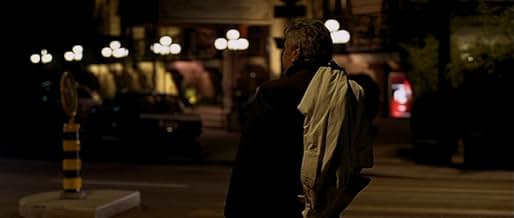
Godard creates memorable images that convey a mood of longing and regret: a heart beating alone in the snow, an infant in a sling looking up at his father for a good two minutes, the baby's expression gradually turning from morose to a half smile, colored streamers blowing from a newly christened ship, a massage in a dark room by a mysterious Korean masseuse, and the vast expanse of ocean seen from a bobbing ship deck. While The Intruder can be frustrating because of its elliptical nature, Denis forces us to respond out of our own experience, to understand the images on the screen on a very personal level. If there is any theme, a hint might be found in the opening that tells us what is revealed piecemeal in the film - "your worst enemies are hiding, in the shadow, in your heart."
Louis Trebor (Michael Subor) is a man in his seventies who is likely dying of a heart condition and who, like the professor in Ingmar Bergman's Wild Strawberries, attempts to come to terms with the mistakes of his life while he has time. It is clear that he is physically rugged and very wealthy but seems emotionally drained and the look on his face is one of quiet resignation. Though we see only one episode of violence, where he gets out of bed in the middle of night to kill an intruder, there is a sinister sense about him. He might be an intelligence officer, a foreign agent, or a hit man.
Whatever the case, he apparently is under some kind of surveillance and acts like a man that has been involved in criminal wrongdoing and is only now able to see the consequences. Facial close-ups throughout the movie create a strong sense of isolation. He lives with his dogs in a cabin in the Jura Mountains near the French-Swiss border and has an estranged son Sidney (Gregoire Collin) whom he has long neglected. Sidney lives nearby with his wife Antoinette (Florence Loiret-Caille) and their two children. In one telling scene, he meets up with his father on the street and calls him a lunatic, but that does not prevent him from taking his money.
When the film opens, we meet Antoinette, a Swiss border guard, who boards a van with a trained dog to sniff out some contraband. When she comes home, she is greeted by her husband who asks her with tongue-in-cheek if she has "anything to declare?" Other than these three individuals, the people and circumstances we see during the rest of the film may exist only in Louis' imagination. Louis has three women in his life and we meet them all in the film's first half hour: a pharmacist (Bambou) who prepares his medication, a neighbor (Béatrice Dalle) who is a dog breeder who refuses to care for his dogs when he goes away on a trip telling him that they are as crazy as he is, and a young Russian organ dealer (Katia Golubeva) who he tells he wants a "young man's heart".
Relentlessly, she stalks him throughout the film but it is apparently only in his mind. In the last section of the film, Louis travels to South Korea in search of a heart transplant and to Tahiti to deliver a gift to a different son, one whom he has not seen for many years or perhaps has never seen. His heart transplant, however, appears to be a metaphor for a man without a heart, a man whose life has been fascinating but ultimately directionless, intruding into other people's lives with little real empathy. The Intruder contains a haunting guitar soundtrack by Stuart Staples of the band Tindersticks, reminiscent of the guitar riff in Jim Jarmusch's Dead Man, and gorgeous cinematography by Denis regular Agnes Godard.
Godard creates memorable images that convey a mood of longing and regret: a heart beating alone in the snow, an infant in a sling looking up at his father for a good two minutes, the baby's expression gradually turning from morose to a half smile, colored streamers blowing from a newly christened ship, a massage in a dark room by a mysterious Korean masseuse, and the vast expanse of ocean seen from a bobbing ship deck. While The Intruder can be frustrating because of its elliptical nature, Denis forces us to respond out of our own experience, to understand the images on the screen on a very personal level. If there is any theme, a hint might be found in the opening that tells us what is revealed piecemeal in the film - "your worst enemies are hiding, in the shadow, in your heart."
Comfortably Comforting
My take on this, at our local festival where people would see me so often they thought me a better source than I may actually have been, began with a head shake: "Well, I can't summarize the plot, but it's a really superb character study of an extremely scary man." Then, slight embarrassment, I ran into someone who actually knew what had gone down, that is, from whom Trebor unwittingly gets his new heart. It'd been my last film in a long, long day halfway through the festival. Maybe I'd dozed. The better a film is the more likely it triggers daydreams that send me really dreaming. Don't know. Did know there was an O'Henry twist achingly just beyond my ken as things finished. And knew it had to do with the heart, hence the quietly hilarious talent search. My plot-loss remark had more to do with intricacies of Trebor's connections in France, his relation to the dog woman and so on, stuff I'd been wide awake for. Denis barely glances at details that might have anchored another director's treatment.
But I write these things too often from memory, especially festival films, films whose DVD I don't have at hand (Le Lait de la tendresse humaine is one of many examples.), and plot kinks fade much more quickly than broader impressions. Still, or already, L'Inrus in my memory is beyond all else a character study of a sort of dark-side superman, a super fiend not ensconced in genre or historical trappings but active and plausible, relatively soft-spoken, driven but patient, right among us. The scar, once he attains it, makes him, just visually I mean, in image, a sort of hybrid Frankenstein monster, mad doctor and creation all in one. The actual doctors are his tools. If he doesn't extract and install the heart himself, it's only because it's not possible. He's the force, always, the parasite consuming everyone he touches and finally himself. What else is he? To suggest that he's us, the First World versus the Third, seems too simple since he feeds no less on his fellow First Worlders, on all of us.
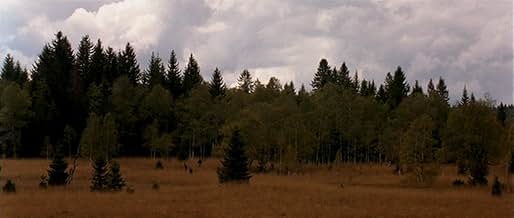
Denis's camera's eye - when it looks at things I know - goes usually where mine would, so I tend to trust her when she looks at things I don't know. Snow trekking, too-fast bicycling, and forest darkness I've known in small ways, but the South Seas not at all, so I made better entry into L'Intrus, both France and the crystalline isles of its finish, than into Beau Travail. L'Intrus is, for me, a very comfortable discomforting film. It's a sequence of places portrayed familiarly, with a intimacy that allows us to know them whether we've seen the reality or not. A single image, Trebor cycling, his massive weight on the thin racing frame, the sounds of violated air and shrieking tires, the asphalt ribbon, the dark-in-bright-sun evergreens, cued me that the film would be linear, a road trip, a single will-driven thrust.
Despite Trebor's personal power, he's a human failure. No matter who he's with, he's alone, though apparently he hasn't always been. His body aborts life twice, first to need the new heart, then despite it. L'Intrus is tragedy. Trebor is hubris.
I'm navigating perilously the thread of what I remember. Let's leave it at that.
But I write these things too often from memory, especially festival films, films whose DVD I don't have at hand (Le Lait de la tendresse humaine is one of many examples.), and plot kinks fade much more quickly than broader impressions. Still, or already, L'Inrus in my memory is beyond all else a character study of a sort of dark-side superman, a super fiend not ensconced in genre or historical trappings but active and plausible, relatively soft-spoken, driven but patient, right among us. The scar, once he attains it, makes him, just visually I mean, in image, a sort of hybrid Frankenstein monster, mad doctor and creation all in one. The actual doctors are his tools. If he doesn't extract and install the heart himself, it's only because it's not possible. He's the force, always, the parasite consuming everyone he touches and finally himself. What else is he? To suggest that he's us, the First World versus the Third, seems too simple since he feeds no less on his fellow First Worlders, on all of us.
Denis's camera's eye - when it looks at things I know - goes usually where mine would, so I tend to trust her when she looks at things I don't know. Snow trekking, too-fast bicycling, and forest darkness I've known in small ways, but the South Seas not at all, so I made better entry into L'Intrus, both France and the crystalline isles of its finish, than into Beau Travail. L'Intrus is, for me, a very comfortable discomforting film. It's a sequence of places portrayed familiarly, with a intimacy that allows us to know them whether we've seen the reality or not. A single image, Trebor cycling, his massive weight on the thin racing frame, the sounds of violated air and shrieking tires, the asphalt ribbon, the dark-in-bright-sun evergreens, cued me that the film would be linear, a road trip, a single will-driven thrust.
Despite Trebor's personal power, he's a human failure. No matter who he's with, he's alone, though apparently he hasn't always been. His body aborts life twice, first to need the new heart, then despite it. L'Intrus is tragedy. Trebor is hubris.
I'm navigating perilously the thread of what I remember. Let's leave it at that.


Did you know
- TriviaArchival footage from Paul Gégauff's Le Reflux is used for the scenes with a younger Michel Stubor.
- ConnectionsEdited from Le reflux (1965)
- How long is The Intruder?Powered by Alexa
Details
Box office
- Gross US & Canada
- $40,853
- Opening weekend US & Canada
- $3,527
- Dec 25, 2005
- Gross worldwide
- $40,853
- Runtime
- 2h 10m(130 min)
- Color
- Sound mix
- Aspect ratio
- 2.35 : 1
Contribute to this page
Suggest an edit or add missing content