IMDb RATING
7.6/10
1.2K
YOUR RATING
In the wake of Argentina's economics collapse of 2001, factory workers break into abandoned factories and restart production. Could these pioneers of cooperative ownership be a model for reb... Read allIn the wake of Argentina's economics collapse of 2001, factory workers break into abandoned factories and restart production. Could these pioneers of cooperative ownership be a model for rebuilding Argentina's economy?In the wake of Argentina's economics collapse of 2001, factory workers break into abandoned factories and restart production. Could these pioneers of cooperative ownership be a model for rebuilding Argentina's economy?
- Awards
- 1 win & 5 nominations total
Bill Clinton
- Self
- (archive footage)
Gustavo Cordera
- Self (singer)
- (as Bersuit)
Carlos Saúl Menem
- Self
- (as Carlos Menem)
Juan Domingo Perón
- Self
- (archive footage)
- Director
- Writer
- All cast & crew
- Production, box office & more at IMDbPro
7.61.2K
1
2
3
4
5
6
7
8
9
10
Featured reviews
10protek22
End Results of Globalization, and What to Do About It!
The Take is one of the most informative economic and political documentaries currently available. The issues Ms. Klein and her colleagues chronicle, are of extreme importance for anyone seeking to gain a factual understanding of today's most pressing economic and political issues. Argentina had been a poster child for the globalization and neoliberal economic policies promoted by the U.S., the World Bank, and the IMF. While these policies are still being widely hailed by the mainstream media as the wave of the future, their truly destructive nature is actually understood by very few. This film allows the viewer to witness the catastrophic economic and political challenges that brought Argentina to it's knees, and the inspired solution implemented by Argentinian workers, as they rallied from the depths of economic and political despair, to redeem themselves from the clutches of corrupt politicians, and global financiers.
an above-average doc on a great subject
I saw this on television (CBC) yesterday night and thought it was a good documentary. I had heard of the film and its topic before and was deeply intrigued. Having also read Klein's "No Logo", you could say I had more interest in this than most. Lewis and Klein move swiftly in telling their tale of Argentinian workers' plight for dignity and labour. A balanced interplay of rhetoric that appeals to the intellect and the emotions will win over many of the viewers. The length is such that the film does not become boring or drawn-out and good editing judgment focuses on relevant segments. Regardless of their take on these events in Argentina, I think everyone has something to learn from this film. A project like this gives me faith in our country's National Film Board ... also thanks to CBC Newsworld for not fearing to air this several times (even though late at night).
Good news for once
For folks of the leftist persuasion there's not really been a lot of cheerful stuff in the news for the past decade or three. The trouble with normal, as they say, is that it always gets worse. Most political documentaries are the same way -- something terrible is happening, the polemical narrator assures us, and other than the go-out-and-do-something last ten minutes of the film things are kind of universally bleak.
The Take opposes all of that, and is the rare piece of media in which the revolution is not just a vague series of values but an actual practise, made up mostly of hard work and disagreement, but moving forward in a positive direction nonetheless. Avi Lewis and Naomi Klein aren't the slickest filmmakers in the world, but they know enough to get out of the way and let the incredible story before them unfold. One of the few documentaries -- one of the few films period -- that I've left feeling genuine hope, this is a must-see for anyone who believes (or wants to believe) that another world is possible.
The real "Yes We Can"
This documentary is the real "Yes, We Can", only instead of an empty political statement it's a true demonstration of "How You Can" make a real change.
When someone tells you that an enterprise cannot run without a boss and a hierarchy of power, don't believe them. Just let them watch "The Take" (La Toma) and see how it's possible to replace the "hierarchy of power" with a "network of cooperation". At first, I didn't believe it myself, but now I know it's possible. Imagine workers cooperating and taking decisions by voting, effectively managing a successful enterprise. Even if the people are inexperienced at first, even if they disagree sometimes, things can be worked out.
"The Take" simply shows something that Capitalism says cannot exist, something that's supposedly impossible: people cooperating for a common purpose, dividing profits equally, taking decisions democratically and managing the enterprise successfully. No leaders, no power struggles, just cooperation. The incentive is the common success, not just personal gain.
"The Take" is even more topical today in the so-called Global financial crisis, because it poses the question: "what should happen to a failed business? Should it be bailed out by the people only to repeat the same mistakes again? Should it be liquidated and sold for scrap metal, leaving the workers without jobs? Or should everything start anew, but this time as a democratic cooperation between workers?" So next time a business fails and the government decides to take your money to save a corporation, know that you have the right to say "NO, I deserve to be compensated. Your factory will do nicely."
I simply cannot express how inspiring and eye-opening this documentary is, you just have to see it for yourself.
When someone tells you that an enterprise cannot run without a boss and a hierarchy of power, don't believe them. Just let them watch "The Take" (La Toma) and see how it's possible to replace the "hierarchy of power" with a "network of cooperation". At first, I didn't believe it myself, but now I know it's possible. Imagine workers cooperating and taking decisions by voting, effectively managing a successful enterprise. Even if the people are inexperienced at first, even if they disagree sometimes, things can be worked out.
"The Take" simply shows something that Capitalism says cannot exist, something that's supposedly impossible: people cooperating for a common purpose, dividing profits equally, taking decisions democratically and managing the enterprise successfully. No leaders, no power struggles, just cooperation. The incentive is the common success, not just personal gain.
"The Take" is even more topical today in the so-called Global financial crisis, because it poses the question: "what should happen to a failed business? Should it be bailed out by the people only to repeat the same mistakes again? Should it be liquidated and sold for scrap metal, leaving the workers without jobs? Or should everything start anew, but this time as a democratic cooperation between workers?" So next time a business fails and the government decides to take your money to save a corporation, know that you have the right to say "NO, I deserve to be compensated. Your factory will do nicely."
I simply cannot express how inspiring and eye-opening this documentary is, you just have to see it for yourself.
Sixteen lefties in search of a dream
No one is more rad-chic than Naomi Klein, with her cool war-resister parents, alternative doctor father and militant feminist mother. She crossed Canada at 16 years old campaigning against nuclear power and wrote a hit book attacking globalisation in her 20s.
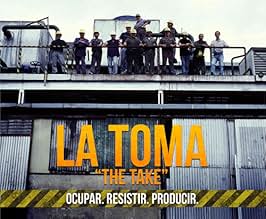
Now she has made a feel-good movie out of the economic catastrophe that hit Argentina, by following the weary campaign of unemployed steel workers to join a couple of hundred other factory occupations and take control of their abandoned steel works.
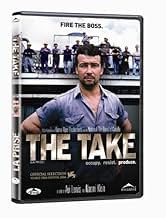
Klein and spouse Avi Lewis were in Argentina for some six months, with a crew of 16 and a budget of about C$1m, so we could certainly expect results. Whether this resounding endorsement of worker co-ops (slogan: Fire The Boss) is quite what the NFB had in mind is not clear.
At a couple of points, I felt the film ruined Argentina offered was about the repulsive imp Carlos Menem and the murderous bourgeois traitors he represented. Who is going to purge those secret policemen who rubbed out some 30,000 lefties? When are those generals going to face a court? Why was Menem not in prison instead of running for president? But the survival tactics of the workers on the ground was a more humane story, and that is to Klein's credit.
Now she has made a feel-good movie out of the economic catastrophe that hit Argentina, by following the weary campaign of unemployed steel workers to join a couple of hundred other factory occupations and take control of their abandoned steel works.
Klein and spouse Avi Lewis were in Argentina for some six months, with a crew of 16 and a budget of about C$1m, so we could certainly expect results. Whether this resounding endorsement of worker co-ops (slogan: Fire The Boss) is quite what the NFB had in mind is not clear.
At a couple of points, I felt the film ruined Argentina offered was about the repulsive imp Carlos Menem and the murderous bourgeois traitors he represented. Who is going to purge those secret policemen who rubbed out some 30,000 lefties? When are those generals going to face a court? Why was Menem not in prison instead of running for president? But the survival tactics of the workers on the ground was a more humane story, and that is to Klein's credit.
Details
- Release date
- Countries of origin
- Official sites
- Languages
- Also known as
- Захват
- Filming locations
- Production companies
- See more company credits at IMDbPro
Box office
- Gross US & Canada
- $30,380
- Opening weekend US & Canada
- $8,625
- Sep 26, 2004
- Gross worldwide
- $30,380
- Runtime
- 1h 27m(87 min)
- Color
Contribute to this page
Suggest an edit or add missing content