Gabrielle
- 2005
- 1h 30m
IMDb RATING
6.3/10
2.2K
YOUR RATING

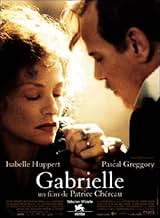
The marriage between Gabrielle and Jean begins to fray after the discovery of a letter that belongs to Gabrielle.The marriage between Gabrielle and Jean begins to fray after the discovery of a letter that belongs to Gabrielle.The marriage between Gabrielle and Jean begins to fray after the discovery of a letter that belongs to Gabrielle.
- Director
- Writers
- Stars
- Awards
- 3 wins & 6 nominations total



Florent Bigot de Nesles
- Invité
- (uncredited)
Philippe Calvario
- Guest
- (uncredited)
- Director
- Writers
- All cast & crew
- Production, box office & more at IMDbPro
6.32.2K
1
2
3
4
5
6
7
8
9
10
Featured reviews
Another Chereau Masterpiece
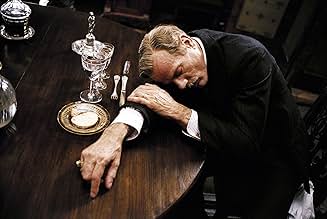
Joseph Conrad wrote his novella, "The Return" in tribute to Henry James, whose "The Spolis of Poynton" inspired him to write about a man who regards people as objects of ownership-- and is gobsmacked when his most prized possession, his wife, walks out on him. On the page it's a tight little chamber piece, with overtones of Ibsen and Strindberg. On the screen the great Patrice Chereau turns it into something else -- an opera in which the images sing rather than the performers. Pascale Greggory is in top form as a haute bourgeois "man who has everything" whose smugness masks a total disdain for feeling. When the superb Isabelle Huppert leaves a note to say she's leaving, the brandy decanter he drops echoes like the sword of Siegfried in Chereau's famed production of Wagner's "Ring" cycle. (Fabio Vacchi's amazing Alban Berg-like score seals the deal on this aspect of the work.) The dramatic set-to that results finds our non-hero groping for words to speak to the feelings he's never experienced before -- longing, regret, and finally grief at the loss of a love he's never allowed himself to know.
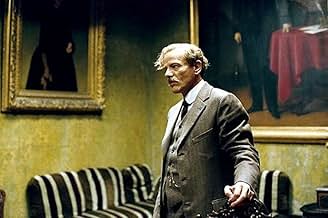
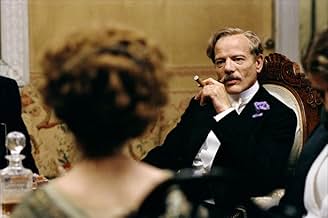
As far from Merchant-Ivory as one can possibly imagine Chereau and production designer Olivier Radot (new to la famille Chereau) place the action in a museum-like mansion where a small army of servants move about at the service of this infernal couple and their friends. Scenes of their fashionable parties suggest the Verdurins in Proust with cinematographer Eric Gauthier indulging in a color palette that makes the screen seem like a Manet come to life.
Chereau is doubtless familiar with what Georges Bataille wrote of Manet: "A little superficial perhaps, but driven by inner forces that gave him no rest, Manet was possessed by a desire for something beyond his reach which he never fully understood and which left him for ever tantalized and unsatisfied, on the brink of nervous exhaustion." That's perfect description of the emotional heart of this very great film.
As far from Merchant-Ivory as one can possibly imagine Chereau and production designer Olivier Radot (new to la famille Chereau) place the action in a museum-like mansion where a small army of servants move about at the service of this infernal couple and their friends. Scenes of their fashionable parties suggest the Verdurins in Proust with cinematographer Eric Gauthier indulging in a color palette that makes the screen seem like a Manet come to life.
Chereau is doubtless familiar with what Georges Bataille wrote of Manet: "A little superficial perhaps, but driven by inner forces that gave him no rest, Manet was possessed by a desire for something beyond his reach which he never fully understood and which left him for ever tantalized and unsatisfied, on the brink of nervous exhaustion." That's perfect description of the emotional heart of this very great film.
Signe, Gabrielle Chilled on the Rocks
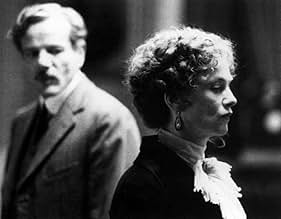
I've been watching & thoroughly enjoying Isabelle Huppert's films since 'The Lacemaker'. This time, what struck me was the intensity of Huppert's next-to-passive, almost casually indifferent postures of contempt for her husband. It is because of her being so minimal and apathetic that her performance harnesses its power and devastation. And this is what enhances Greggory's reactive performance as being so complementary, that of a once smug now tortured soul who slips and struggles to re-grasp a heart turned cold. He's just left grabbing air in the end. The looks on the faces of the chorus, their social clique & the servants in the troubled Hervey household says it all.
Going in, I was reminded of another story of martial discord, David Hughes Jone's 'Betrayal' but 'Gabrielle' hit me as being more incisive and oppressive than anything I've seen adapted for Pinter. I don't need to state the obvious that parlor films of this variety appeal only to those with an acquired taste. As for me, I can only say that I prefer the ice cubes that go with my scotch jagged & stinging cold like the ingredients in this film.
Going in, I was reminded of another story of martial discord, David Hughes Jone's 'Betrayal' but 'Gabrielle' hit me as being more incisive and oppressive than anything I've seen adapted for Pinter. I don't need to state the obvious that parlor films of this variety appeal only to those with an acquired taste. As for me, I can only say that I prefer the ice cubes that go with my scotch jagged & stinging cold like the ingredients in this film.
A Dark,Textured, Many Faceted Thing
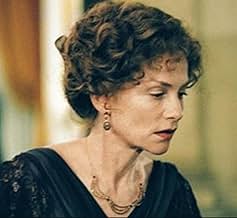
I saw this dark oeuvre yesterday at the Boston French Film Festival at the MFA.It was chosen to be the Opening night Film and was sold out.The director was present and spoke at length about what drew him to make the film and what was important about it- for him. I felt the film-making was fascinating. From the opening sequence, where the footage in the train station is SO realistic in its early 20th c. appearance, and throughout the film, I found the cinematography to be lush, stylized, extremely well-framed and riveting .It is a perfect voice for the story. The actors are always IN YOUR FACE and this fact, combined with an economic and well written script, heavy dark music, tremendously accurate and effective set design, and spot-on acting, made for an extremely moving and interesting exploration of the story. For me, in tone and context, it felt a bit like Henry James' Portrait of a Lady (and probably works by Ibsen and others) Isabelle Huppert and her husband are extremely wealthy, cold, unemotional,detached from themselves and others, and 'safe' in that world. Their house-where 99% of the film takes place, is a dark, heavy, classical, structured prison.(The director's background in stage directing is very evident in this film.) One little bubble bursts from that prison and then things change and the disintegration begins. It gives one a great deal to think about. My only problem with the film is the MUSIC.The music is as much an element of the film as the actors. That is not, in and of itself, a bad thing, but in the last 20 minutes of the film, it is just WAY TOO MUCH: too heavy, too loud, and too repetitive;a bit like Bruchner at his worst. But if you are able to see a DVD of this, you can turn down this overkill. If you are lucky enough to see the film live (so important for major artistic cinematography like this) you'll just have to deal with it; maybe it won't bother you so much.At any rate, the film will provide those so inclined with many things to think about and discuss. And visuals to remember. For me,I will always carry the image of Huppert, dressed in black, on that enormous settee... it's a Degas.
Chereau a masterful director
This up close study of a marriage in crisis is Chereau at his subtle, rich best. The infant terrible of '82 Bayreuth has matured into a maestro of cinema.
Gabrielle wants more but is unwilling to spend the effort or pay the price to get it. Her husband wants less and will settle for nothing less than less. The machinery of their marriage was running so flawlessly that it required no work by either and only modest attention. Their relations were on automatic pilot and they both seemed massively content to keep it that way. Then the machinery, briefly but ruinously, goes crazy.
Huppert and Greggory are riveting. And, not counting the credits, run time is less than 90 minutes. Good artistic judgment there by Chereau. Any longer and this film could be painful for the viewer. Jim Smith
Gabrielle wants more but is unwilling to spend the effort or pay the price to get it. Her husband wants less and will settle for nothing less than less. The machinery of their marriage was running so flawlessly that it required no work by either and only modest attention. Their relations were on automatic pilot and they both seemed massively content to keep it that way. Then the machinery, briefly but ruinously, goes crazy.
Huppert and Greggory are riveting. And, not counting the credits, run time is less than 90 minutes. Good artistic judgment there by Chereau. Any longer and this film could be painful for the viewer. Jim Smith
Sure it made me cry, but not in the way you'd expect.
French language period set chick flick that was so banally turgid and pretentious that I wanted to scratch thine own eyes out in those brief lucid periods I was awake. One thing I did share with what I expect the females in the audience were experiencing was the shedding of tears, the stark difference being that mine were tears of blood. If it had been a play I would have rushed out, brought a gun, then rushed back to shoot the actors on stage for in my opinion they deserve nothing but death. Put briefly, in turn of the century Paris a rather arrogant man rather abruptly finds out that his wife of 10 years desires to leave him for another man. Much talking is done. Then much more talking is done. This is followed by lengthy periods of talking. More talking. Then wrapped up with, surprisingly, talking. But it's all done in an almost monologue method , briefly interspersed with large titles on screen which I expect the makers of the movie thought to be profound yet I found completely ridiculous (the film ends with the words "AND HE NEVER RETURNED!". I thought it rude of me to puke on the floor of so gorgeous a theatre (the State in Sydney, such a beautiful and elaborate place) so I resisted with all my might). I left the cinema with a headache. Not in any way due to the complexity and depth of the story I'd just seen, but because I just wasted what I now consider to be the most valuable 90 minutes of my life ever. Even now I want to cry.
I see a great number of art-house films, so I'm not a pop culture heathen and I own many great titles in my own private DVD collection that I watch and treasure. I have nothing against glacial pacing, indeed for many wonderful films it is often delicious to slowly savour the unfolding occurrences (In My Fathers Den, Lantana, Insomnia, Mar Adentro etc) and my own favorites are indie films like Requiem For A Dream and Mysterious Skin (tho honestly a film one need watch only once due to its power and disturbing subject matter). But in this instance I would never have thought a "French language art-house drama" would be the type of film that in my opinion, gives the Adam Sandler film The Waterboy a run for it's money.
Complete dross.
I see a great number of art-house films, so I'm not a pop culture heathen and I own many great titles in my own private DVD collection that I watch and treasure. I have nothing against glacial pacing, indeed for many wonderful films it is often delicious to slowly savour the unfolding occurrences (In My Fathers Den, Lantana, Insomnia, Mar Adentro etc) and my own favorites are indie films like Requiem For A Dream and Mysterious Skin (tho honestly a film one need watch only once due to its power and disturbing subject matter). But in this instance I would never have thought a "French language art-house drama" would be the type of film that in my opinion, gives the Adam Sandler film The Waterboy a run for it's money.
Complete dross.


Did you know
- ConnectionsReferenced in Law & Order: Criminal Intent: Blind Spot (2006)
- How long is Gabrielle?Powered by Alexa
Details
Box office
- Gross US & Canada
- $332,829
- Opening weekend US & Canada
- $30,676
- Jul 16, 2006
- Gross worldwide
- $2,775,311
- Runtime
- 1h 30m(90 min)
- Color
- Sound mix
- Aspect ratio
- 2.35 : 1
Contribute to this page
Suggest an edit or add missing content