The Yellow Iris
- Episode aired Jan 31, 1993
- TV-14
- 50m
IMDb RATING
7.8/10
1.8K
YOUR RATING
A man celebrates the two-year anniversary of his wife's sudden death by cyanide while in Argentina - a death which Poirot himself had witnessed, but could not solve at the time.A man celebrates the two-year anniversary of his wife's sudden death by cyanide while in Argentina - a death which Poirot himself had witnessed, but could not solve at the time.A man celebrates the two-year anniversary of his wife's sudden death by cyanide while in Argentina - a death which Poirot himself had witnessed, but could not solve at the time.
- Director
- Writers
- Stars
Yolanda Vazquez
- Lola
- (as Yolanda Vasquez)
- Director
- Writers
- All cast & crew
- Production, box office & more at IMDbPro
7.81.7K
1
2
3
4
5
6
7
8
9
10
Featured reviews
Very good but part of the story seemed a bit farfetched.
"The Yellow Iris" is a most unusual episode. This is because the murder occurred in Argentina two years ago. Poirot was there and working the case when a coup d'etat occurred and the new government tossed him out of the country because they thought he was a spy! This is of course ridiculous...and he cannot help but leave the case unsolved.
Two years have passed. Now the dead woman's husband is trying to recreate the events leading to her death at a dinner party. This includes inviting the same guests and having the party at the same restaurant owner's new restaurant in London. ANd, of course, Poirot is on hand.
The episode is very enjoyable. But there are two HUGE plot problems that ruined it for me. First, the episode is supposed to begin in 1932...but the coup in Argentina occurred in 1930! Additionally, when you learn the solution to the murder, it makes ALL the behaviors of the killer confusing and illogical. Overall, an episode which needed a bit of a rewrite, as it's just not particularly logical and should have been better.
Two years have passed. Now the dead woman's husband is trying to recreate the events leading to her death at a dinner party. This includes inviting the same guests and having the party at the same restaurant owner's new restaurant in London. ANd, of course, Poirot is on hand.
The episode is very enjoyable. But there are two HUGE plot problems that ruined it for me. First, the episode is supposed to begin in 1932...but the coup in Argentina occurred in 1930! Additionally, when you learn the solution to the murder, it makes ALL the behaviors of the killer confusing and illogical. Overall, an episode which needed a bit of a rewrite, as it's just not particularly logical and should have been better.
A standout episode.
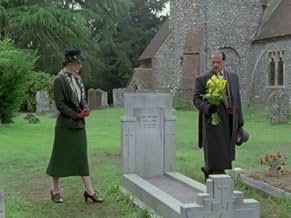
Barton Russell celebrates his beautiful wife Iris, only to watch her collapse after sipping poisoned champagne. Two years later, Barton stages another celebration in her honour - but could tragedy really strike twice?
The Yellow Iris is one of Christie's neatest short stories, packed with interesting characters, a clever setup, an audacious killer, and a resolution that asks you to stretch your imagination ever so slightly. I also love the way Poirot is removed from the scene of the first murder, giving the killer the delicious illusion that they've escaped his scrutiny - only for him to return later, quietly and methodically unpicking every thread they thought they'd tied off.
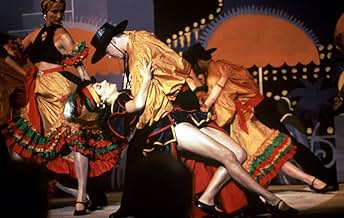
In terms of direction, this episode is an utter triumph. It looks glorious - all decadent sets, atmospheric lighting, and surprisingly convincing Argentine interiors. The music plays a huge part in the mood, and both female vocalists elevate the whole experience.
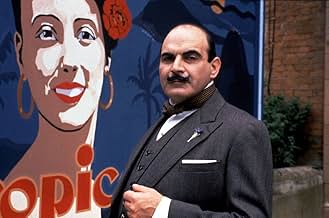
Beautifully acted throughout. Suchet is, as always, immaculate, but the brilliance of David Troughton steals the episode for me.
Superior to both versions of Sparkling Cyanide. Perhaps it might have breathed a little more over a 90-minute format, but as it stands, it's one of my firm favourites.
9/10.
The Yellow Iris is one of Christie's neatest short stories, packed with interesting characters, a clever setup, an audacious killer, and a resolution that asks you to stretch your imagination ever so slightly. I also love the way Poirot is removed from the scene of the first murder, giving the killer the delicious illusion that they've escaped his scrutiny - only for him to return later, quietly and methodically unpicking every thread they thought they'd tied off.
In terms of direction, this episode is an utter triumph. It looks glorious - all decadent sets, atmospheric lighting, and surprisingly convincing Argentine interiors. The music plays a huge part in the mood, and both female vocalists elevate the whole experience.
Beautifully acted throughout. Suchet is, as always, immaculate, but the brilliance of David Troughton steals the episode for me.
Superior to both versions of Sparkling Cyanide. Perhaps it might have breathed a little more over a 90-minute format, but as it stands, it's one of my firm favourites.
9/10.
Very interesting
The Yellow Iris is a very interesting, albeit not entirely successful, adaptation. It does maintain the spirit of the story, which is a well-written and fun one with some parallels to Sparkling Cyanide in the means of the killing, and while I would have liked the pace to have steadied a little and one or two of the characters more drawn out, I really liked The Yelloe Iris overall.
The final solution is very much like the episode, very interesting if not exactly ingenious. The production values are top notch, with some gorgeous scenery and costumes and I loved the photography, and the music is both beautiful and haunting. The dialogue is excellent, the direction is good and the cast are top drawer, David Suchet is an outstanding Poirot and he is supported very well by Hugh Fraser, Pauline Moran and David Troughton.
All in all, a good and interesting episode without being one of the best. 7/10 Bethany Cox
The final solution is very much like the episode, very interesting if not exactly ingenious. The production values are top notch, with some gorgeous scenery and costumes and I loved the photography, and the music is both beautiful and haunting. The dialogue is excellent, the direction is good and the cast are top drawer, David Suchet is an outstanding Poirot and he is supported very well by Hugh Fraser, Pauline Moran and David Troughton.
All in all, a good and interesting episode without being one of the best. 7/10 Bethany Cox
Poirot and the unsolved case
In mentioning a new restaurant in London, Hastings reminds Poirot of his only unsolved case. Two years ago he was in Buenos Aires, Argentina, at a restaurant of the same name, when a woman at a nearby table, Iris Russell, died of cyanide poisoning. It looked like suicide, but Poirot believed it was murder. However, before he able to investigate her death he was deported from the country - Argentina was in the middle of a coup and Poirot was persona non grata. The London restaurant's name is not a coincidence and Poirot now has a chance to reopen his investigation.
Reasonably interesting and intriguing. The fact that the murder occurs two years earlier and in another country makes it even more unique.
However, the conclusion isn't entirely satisfactory. The murder method just seems a bit implausible.
Still quite interesting though
Reasonably interesting and intriguing. The fact that the murder occurs two years earlier and in another country makes it even more unique.
However, the conclusion isn't entirely satisfactory. The murder method just seems a bit implausible.
Still quite interesting though
Poirot in Buenos Aires
Poirot tells Miss Lemon and Hastings that there was a murder he never solved in "The Yellow Iris." The story is prompted by the opening of a new restaurant, and a delivery of yellow irises. A restaurant of that name and irises were involved in the case, which took place two years earlier when Poirot went to visit Hastings on his ranch in Argentina.
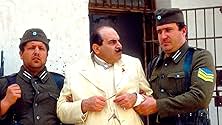
Poirot found himself stranded in Buenos Aires during a military coup. While he is out to dinner, a woman named Iris Russell was poisoned at her table. Cyanide was found in her purse, and it is ruled a suicide. Her husband vehemently disagrees. Poirot begins an investigation, but he is deported.
Now, in London, Iris' husband has set the stage again in order to unmask the murderer, with everyone present at the dinner invited to another dinner. Poirot decides that he will be present and this time, catch the killer.
Good mystery, using a device Christie used in a couple of other stories, if memory serves. The tone of the episode is serious. I prefer the episodes that have a little humor in them, which the early ones with Miss Lemon and Hastings often had. However, this was still good. Love the production values and the cast, especially Suchet. How can any actor ever follow him as Poirot?
Poirot found himself stranded in Buenos Aires during a military coup. While he is out to dinner, a woman named Iris Russell was poisoned at her table. Cyanide was found in her purse, and it is ruled a suicide. Her husband vehemently disagrees. Poirot begins an investigation, but he is deported.
Now, in London, Iris' husband has set the stage again in order to unmask the murderer, with everyone present at the dinner invited to another dinner. Poirot decides that he will be present and this time, catch the killer.
Good mystery, using a device Christie used in a couple of other stories, if memory serves. The tone of the episode is serious. I prefer the episodes that have a little humor in them, which the early ones with Miss Lemon and Hastings often had. However, this was still good. Love the production values and the cast, especially Suchet. How can any actor ever follow him as Poirot?
Did you know
- TriviaYellow Iris was both a short story and a radio play adaptation written by Agatha Christie in 1937. In 1945, she reworked the plot --changing character names, replacing Poirot with Col. Race, and altering the ending-- for the novel Sparkling Cyanide.
- GoofsDuring Poirot's visit to Buenos Aires (which takes place in 1934), there is a military coup which is said to depose Argentine President Yrigoyen. Hipolito Yrigoyen was indeed deposed by the military, but the coup took place on Sept. 6, 1930, not in 1934.
- Quotes
Anthony Chapell: [Poirot is being led away by the Spanish policemen] Don't worry Monsieur Poirot! I'll call the French Embassy!
Hercule Poirot: [shouting as he is being dragged away] No, no! The BELGIAN EMBASSY!
- ConnectionsVersion of Sparkling Cyanide (1983)
Details
- Release date
- Country of origin
- Official sites
- Language
- Filming locations
- Production companies
- See more company credits at IMDbPro
- Runtime
- 50m
- Color
Contribute to this page
Suggest an edit or add missing content