IMDb RATING
7.6/10
2.8K
YOUR RATING


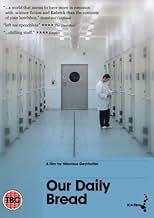
OUR DAILY BREAD is a wide-screen tableau of a feast which isn't always easy to digest - and in which we all take part. A pure, meticulous and high-end film experience that enables the audien... Read allOUR DAILY BREAD is a wide-screen tableau of a feast which isn't always easy to digest - and in which we all take part. A pure, meticulous and high-end film experience that enables the audience to form their own ideas.OUR DAILY BREAD is a wide-screen tableau of a feast which isn't always easy to digest - and in which we all take part. A pure, meticulous and high-end film experience that enables the audience to form their own ideas.
- Director
- Writers
- Stars
- Awards
- 4 wins & 5 nominations total




- Director
- Writers
- All cast & crew
- Production, box office & more at IMDbPro
7.62.7K
1
2
3
4
5
6
7
8
9
10
Featured reviews
This bread's hard to chew
The recent film "Fast Food Nation" imposes a fictional narrative onto the factual expose of Eric Schlosser's informative and horrifying book about (among other things) the industrialization of agriculture. The documentary "Our Daily Bread" makes no such concession to its audience's need for story, presenting virtually wordlessly scene after scene of modern food production in action.
It's a cliché at this point to note how modern consumers are alienated from their diets, making no connection between the plastic-wrapped pieces of muscle they purchase in the supermarket and the animals they were once part of. Still, Austrian director Nikolaus Geyrhalter presents dozens of memorable and fascinating images, not all of them of the gross-out variety. In fact, there's even an abstract beauty to some of what we see, at least until we realize it's all part of a vast killing machine.
Difficult to sit through, "Our Daily Bread" is nonetheless an important record, invaluable for those with the courage to watch it.
It's a cliché at this point to note how modern consumers are alienated from their diets, making no connection between the plastic-wrapped pieces of muscle they purchase in the supermarket and the animals they were once part of. Still, Austrian director Nikolaus Geyrhalter presents dozens of memorable and fascinating images, not all of them of the gross-out variety. In fact, there's even an abstract beauty to some of what we see, at least until we realize it's all part of a vast killing machine.
Difficult to sit through, "Our Daily Bread" is nonetheless an important record, invaluable for those with the courage to watch it.
Grim, alien
This might be a film aliens exploring the human food system would produce. There is no dialogue, no explanations. Everything you see is repeated ten times. There is no particular order to what you see. There is no gross animal cruelty, just a clean, clinical, efficient Germanic lack of concern for animal welfare.
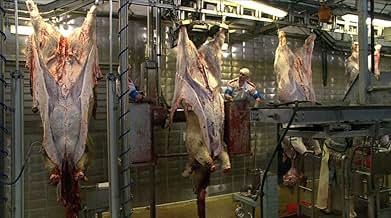
The silence and monotony gives a creepy feel about even things you might not normally consider sinister, like mining fertiliser. The sheer scale made me nauseous. The flow of pig, cow and chicken carcases goes on forever without pause. The hypnotic repetition creates a horrible inevitability.
Scenes that stick out: banks of chickens like inmates "heckling" two "guards" who walk down between the rows.
A cow that knows it is about to be killed and puts up a valiant attempt to escape.
A machine for vacuuming up chickens.
A Rube Goldberg contraption for gutting fish.
A man whose job is to mount fish on a sort of hobbyhorse to prepare them for further mechanised treatment. Hour after after he performs the same little grab and twist movement.
Men picking cabbages mounting in a frame that drives them at management's rate.
African immigrants without the money to buy the vegetables they grow in a greenhouse.
Casual calm castration, debeaking, slaughter and interfering with reproduction.
We humans have a sort of compact with domestic animals. We protect them from predators, we ensure they have food, we protect their health. In return they give us milk and meat. I think we are obligated to give them lives free from cruelty, reasonably close to life in the wild. But we have reneged. We care not a whit for their well being. Everything is for human convenience. We cheated. We ripped them off.
The silence and monotony gives a creepy feel about even things you might not normally consider sinister, like mining fertiliser. The sheer scale made me nauseous. The flow of pig, cow and chicken carcases goes on forever without pause. The hypnotic repetition creates a horrible inevitability.
Scenes that stick out: banks of chickens like inmates "heckling" two "guards" who walk down between the rows.
A cow that knows it is about to be killed and puts up a valiant attempt to escape.
A machine for vacuuming up chickens.
A Rube Goldberg contraption for gutting fish.
A man whose job is to mount fish on a sort of hobbyhorse to prepare them for further mechanised treatment. Hour after after he performs the same little grab and twist movement.
Men picking cabbages mounting in a frame that drives them at management's rate.
African immigrants without the money to buy the vegetables they grow in a greenhouse.
Casual calm castration, debeaking, slaughter and interfering with reproduction.
We humans have a sort of compact with domestic animals. We protect them from predators, we ensure they have food, we protect their health. In return they give us milk and meat. I think we are obligated to give them lives free from cruelty, reasonably close to life in the wild. But we have reneged. We care not a whit for their well being. Everything is for human convenience. We cheated. We ripped them off.
Documentary of the food industry in Europe
The quality of the this film, how it focuses on the various aspects of large and highly advanced agricultural processes used in Europe is very interesting and seems to include a great amount of detail in the various processes that result in the meat and vegetables that are destined to show up on people's dinner tables. From feeding beef cattle to harvesting Irish potatoes we get fine quality shots that include so much information both close-up and deep shots. Most of us are so distanced from how our food is produced. Most producers I would imagine don't really want to let us in on what goes on before the products shows up in our market showcase. The candidness of the images that show the operations where the food is grown and processed is great. I bet that few food producers in the U.S would allow such filming in the establishments
What do you want to eat today?
Don't watch this movie if you have bad stomach or you won't be able to eat for a while. It shows quite a bit of shocking footage of modern food processing facilities. Dehumanization of food processing is well shown by creative camera placement. Camera placement resembles Kubrick's in some scenes - scenes of machines and people moving through corridors. Some of machines and procedures shown in the movie are really shocking. Movie doesn't have any narration, only sounds that you hear are sounds of the environment. A bit of well picked music would make this movie even better. If you want to know how the food you eat comes to your table this is the movie to watch.
Our Daily Bread
In contrast to the well-meaning but didactic and dry FOOD INC., this documentary explores the process of mass food production without preaching or judgment. Because it is entirely wordless (well, not entirely... we hear some of the workers chatting, but since it's left untranslated, I assume it's the inconsequential small talk it appears to be). While this might make it less informative, the images speak volumes about how cold and impersonal the process is. Machines invented for extremely specific animal-rendering tasks (the "chicken vacuum" is a total mindf*ck), people performing repetitive and methodical jobs, massive facilities crammed with rigidly parceled animals. The cinematography is superb, with framing that is Kubrickian in its sense of scale, depth and symmetry. The film is hypnotic and meditative, giving the viewer room to form his own opinions, to wander down different avenues of thought regarding how we produce and consume food. Geyrhalter is careful not to dehumanize the workers, no matter how inhuman the process is. We often see them hanging out, or enjoying their own meals. Don't hate the playa, hate the game. And one doesn't get the sense is Geyrhalter is merely finger-wagging. Although there are brutally disturbing images (maybe worse than any other slaughterhouse footage I've seen), there is almost an admiration for how efficient these routines are. But again, any conclusions you draw are your own. Will I change my consumption habits? Knowing me, probably not, but it certainly got me thinking about it.


Did you know
- ConnectionsReferenced in Film Junk Podcast: Episode 232: Inglourious Basterds (2009)
Details
Box office
- Gross worldwide
- $71,810
- Runtime
- 1h 32m(92 min)
- Color
- Sound mix
- Aspect ratio
- 1.85 : 1
Contribute to this page
Suggest an edit or add missing content