Release calendarTop 250 moviesMost popular moviesBrowse movies by genreTop box officeShowtimes & ticketsMovie newsIndia movie spotlight
    What's on TV & streamingTop 250 TV showsMost popular TV showsBrowse TV shows by genreTV news
    What to watchLatest trailersIMDb OriginalsIMDb PicksIMDb SpotlightFamily entertainment guideIMDb Podcasts
    OscarsBest Of 2025Holiday Watch GuideGotham AwardsCelebrity PhotosSTARmeter AwardsAwards CentralFestival CentralAll events
    Born todayMost popular celebsCelebrity news
    Help centerContributor zonePolls
For industry professionals
  • Language
  • Fully supported
  • English (United States)
    Partially supported
  • Français (Canada)
  • Français (France)
  • Deutsch (Deutschland)
  • हिंदी (भारत)
  • Italiano (Italia)
  • Português (Brasil)
  • Español (España)
  • Español (México)
Watchlist
Sign in
  • Fully supported
  • English (United States)
    Partially supported
  • Français (Canada)
  • Français (France)
  • Deutsch (Deutschland)
  • हिंदी (भारत)
  • Italiano (Italia)
  • Português (Brasil)
  • Español (España)
  • Español (México)
Use app
  • Cast & crew
  • User reviews
  • Trivia
IMDbPro

Black Sun

Original title: Kuroi taiyô
  • 1964
  • Not Rated
  • 1h 35m
IMDb RATING
6.7/10
528
YOUR RATING
Black Sun (1964)
JapaneseCrimeMusicThriller

One is a young, jazz-obsessed Japanese drifter and other is a black American GI on the lam in Tokyo. The two outsiders become outlaws and the movie depicts their growing bond as an alternate... Read allOne is a young, jazz-obsessed Japanese drifter and other is a black American GI on the lam in Tokyo. The two outsiders become outlaws and the movie depicts their growing bond as an alternately absurd and tragic culture clash.One is a young, jazz-obsessed Japanese drifter and other is a black American GI on the lam in Tokyo. The two outsiders become outlaws and the movie depicts their growing bond as an alternately absurd and tragic culture clash.

  • Director
    • Koreyoshi Kurahara
  • Writers
    • Tensei Kono
    • Nobuo Yamada
  • Stars
    • Tamio Kawachi
    • Chico Lourant
    • Yuko Chishiro
  • See production info at IMDbPro
  • IMDb RATING
    6.7/10
    528
    YOUR RATING
    • Director
      • Koreyoshi Kurahara
    • Writers
      • Tensei Kono
      • Nobuo Yamada
    • Stars
      • Tamio Kawachi
      • Chico Lourant
      • Yuko Chishiro
    • 5User reviews
    • 13Critic reviews
  • See production info at IMDbPro
  • See production info at IMDbPro
  • Photos6

    View Poster
    View Poster
    View Poster
    View Poster
    + 3
    View Poster

    Top Cast30

    Edit
    Tamio Kawachi
    Tamio Kawachi
    • Akira
    Chico Lourant
    • Gill
    • (as Chico Roland)
    Yuko Chishiro
    • Yuki
    Hideji Ôtaki
    • Old Man at the Junk Shop
    Shôgen Nitta
    • Engineer
    Zenji Yamada
    • Owner
    Tatsuya Fuji
    Tatsuya Fuji
    • Akira's Buddy
    Ryûsei Itô
    Toshizô Kudô
    Gô Kuroda
    Hyôe Enoki
    Tôru Sumikawa
    Takashi Nomura
    Yû Izumi
    Katsumi Ishizaki
    Masaaki Yamamoto
    Hiroshi Atami
    Hayato Tani
      • Director
        • Koreyoshi Kurahara
      • Writers
        • Tensei Kono
        • Nobuo Yamada
      • All cast & crew
      • Production, box office & more at IMDbPro

      User reviews5

      6.7528
      1
      2
      3
      4
      5
      6
      7
      8
      9
      10

      Featured reviews

      kuciak

      who was chico roland

      While watching Black Sun, one can't but think of The Defiant Ones, but one also has to look into the future with John Boormans Hell in The Pacific, which feature Lee Marvin and Toshiro Mifune. It is somewhat about communication, and perhaps how some iconic images sometimes are a barrier to that Communcation.

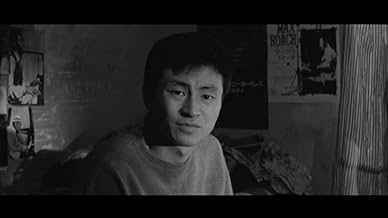
      the main protagonist of the film, Akira, also known as Mei, likes Jazz and Blues, those done by blacks. He is a common criminal, a squatter living in a soon to be demolished Christian church. The Japan we are presented with appears to be that occupied by the occupation of the US. American MP's seem to be all over the place, and appear to have more authority than the Japanese police. It is a Japan still recovering from WWII, with bombed out buildings.

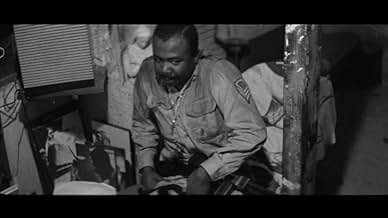
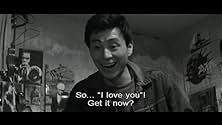
      Our main protagonist is a little bit on the crazy side, and would appear that if he were living as a youth in todays culture, he would be right at home. While he lives music by blacks, it will become very apparent that he knows nothing about them, and only thinks he does by the music he hears. He will shortly be getting a rude awakening, and he is confronted by a wounded black soldier named Gil, played by Chico Rolands, who may have killed another white American soldier, though this is never made clear.

      During his time with Gil, he will find that he also can hate blacks when Gil does a wrong to him. though he has said to the wounded and desperate Gil, that blacks are his friends.

      The film shows stills of what black people suffer in the US at the time, but while this may be an indictment of the US, and perhaps trying to compare some kind of oppression for the Japanese underclass, and well as the American Negro in America, the director in a very key scene in a seedy nightclub, filled with the iconic images of American Jazz musicians, that these so called Japanese fans, are really not much better than the American white racists.

      Gil at one point mumbles out, that the pictures of the Jazz musicians are also the enemy. This person is in a very delirious state, but this filmed story will suggest, that when the record collection of our protagonist is destroyed, that it is only then that some form of communication and bond can be really formed, even with the language difficulties. the ending, also is quite powerful, and will explain something about the film.

      if their is a problem with the film. It is that sometimes it feels as if the director is making some kind of enthnograph film. often with the Chico Rolland character we can barely make what he is saying. Is this intentional, were his English lines dubbed or subtitled in Japanese at the time of this release. Also he does not appear to be a full fledged human being, as he is sometimes because of the desperate nature of his predicament, just a symbol of 'what blacks suffer in this world'. Also sometimes the performance that he is forced to give, is occasionally embarrassing.

      this film has recently been released by Criterion on their Eclipse series, along with four other films, 'The Warped Ones' included. It is ashame their are no extras, as it would be interesting to learn about some of the actors, and the reception it received in Japan. Who was Chico Roland's? was he an American? He and the main protagonist did make other films with this director. I plan to see those other films, and I recommend that readers try to get a hold of this one.
      8chriswhaskell

      May be the perfect visual representation of jazz

      A freeform, stochastic, jazzy movie from the mind of a man that clearly loves music and wanted to make a visual love letter to his favorite genre.

      I'm going to editorialize slightly here and say that Director Kurahara probably based parts of his character of Akira on himself. Akira is obsessed with jazz. He uses the little money he has from grifting or stealing to buy new albums and is especially crazy for the drummer Max Roach. Roach is one of the best drummers of all time, certainly the most influential. When he wasn't playing for Miles Davis, Dizzy Gillespie, Charlie Parker, Thelonius Monk and many others, he was starting one of the first artist owned record labels. He was all over the jazz world, and Akira is obsessed.

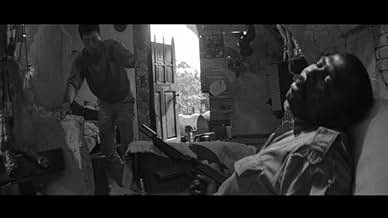
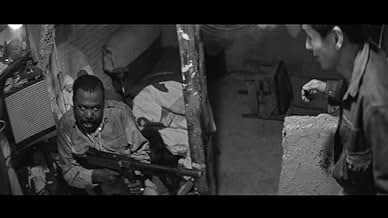
      So much so, that when an a Black American GI, named Gil, busts into Akira's attic and points a gun at him he tries to win the American over by showing him jazz records. In his mind, every African American dude uses jazz as a love language. It's obviously an outdated stereotype, but it makes sense in the context of this being a Japanese movie from 1964. Both the French and Japanese New Wave filmmakers had an obsession over American jazz. Truffaut paid homage to jazz in Shoot the Piano Player, Malle brought Miles Davis over to make some music for Elevator to the Gallows, and jazz was all over the Japanese new Wave including this movie where Max Roach actually agreed to do the soundtrack.

      I'm paying so much attention to that piece because, to me, the jazz is the movie. There is plot around this GI getting shot at and bleeding out while him and Akira move around the city to avoid the military police looking for Gil. It's a buddy movie in that sense. These two unlikely characters coming together and improvising and getting emotional and learning how to survive together on the stage of war.

      So jazz.

      This movie makes no sense if you really think about it, especially the ending. But that's not what jazz is about. It's about the experience of being alive and spontaneous in the moment. It's about two souls coming together from different schools and theory and experiences and making something harmonious and beautiful. That's what Black Sun gives us, and Kurahara is damn genius for pulling this off.
      3Delrvich

      Had to Ffwd this one

      Lots of shouting, bad dialogue, illogical actions (eg wading in sewage with open wound, etc...) ... that ending was out of an old Twilight Zone episode.

      More like this

      The Warped Ones
      6.9
      The Warped Ones
      Cruel Gun Story
      7.1
      Cruel Gun Story
      The Sword of Doom
      7.9
      The Sword of Doom
      Thirst for Love
      7.3
      Thirst for Love
      Celine and Julie Go Boating
      7.2
      Celine and Julie Go Boating
      El Planeta
      6.4
      El Planeta
      Intimidation
      7.2
      Intimidation
      Youth of the Beast
      7.3
      Youth of the Beast
      I Hate But Love
      6.7
      I Hate But Love
      Midori
      6.3
      Midori
      Black River
      7.2
      Black River
      Black Cat
      7.7
      Black Cat

      Related interests

      Hidetoshi Nishijima and Tôko Miura in Drive My Car (2021)
      Japanese
      James Gandolfini, Edie Falco, Sharon Angela, Max Casella, Dan Grimaldi, Joe Perrino, Donna Pescow, Jamie-Lynn Sigler, Tony Sirico, and Michael Drayer in The Sopranos (1999)
      Crime
      Prince and Apollonia Kotero in Purple Rain (1984)
      Music
      Cho Yeo-jeong in Parasite (2019)
      Thriller

      Storyline

      Edit

      Did you know

      Edit
      • Trivia
        Music performed by Max Roach Quartet with Abbey Lincoln.
      • Connections
        Referenced in Best in Action: 1964 (2020)

      Top picks

      Sign in to rate and Watchlist for personalized recommendations
      Sign in

      Details

      Edit
      • Release date
        • April 19, 1964 (Japan)
      • Country of origin
        • Japan
      • Languages
        • Japanese
        • English
      • Also known as
        • 黒い太陽(1964)
      • Production company
        • Nikkatsu
      • See more company credits at IMDbPro

      Tech specs

      Edit
      • Runtime
        • 1h 35m(95 min)
      • Color
        • Black and White
      • Aspect ratio
        • 2.35 : 1

      Contribute to this page

      Suggest an edit or add missing content
      • Learn more about contributing
      Edit page

      More to explore

      Recently viewed

      Please enable browser cookies to use this feature. Learn more.
      Get the IMDb App
      Sign in for more accessSign in for more access
      Follow IMDb on social
      Get the IMDb App
      For Android and iOS
      Get the IMDb App
      • Help
      • Site Index
      • IMDbPro
      • Box Office Mojo
      • License IMDb Data
      • Press Room
      • Advertising
      • Jobs
      • Conditions of Use
      • Privacy Policy
      • Your Ads Privacy Choices
      IMDb, an Amazon company

      © 1990-2025 by IMDb.com, Inc.