IMDb RATING
7.6/10
2K
YOUR RATING
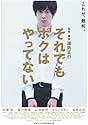
A young man is falsely accused of molesting a high-school girl on a train. He is arrested and charged, and goes through endless court sessions, all the while insisting that he is innocent.A young man is falsely accused of molesting a high-school girl on a train. He is arrested and charged, and goes through endless court sessions, all the while insisting that he is innocent.A young man is falsely accused of molesting a high-school girl on a train. He is arrested and charged, and goes through endless court sessions, all the while insisting that he is innocent.
- Awards
- 19 wins & 12 nominations total
- Director
- Writer
- All cast & crew
- Production, box office & more at IMDbPro
7.61.9K
1
2
3
4
5
6
7
8
9
10
Featured reviews
Human Life
One day man is suspected as a criminal of a groper. He has never done such a thing, however he is wrongly labeled as a criminal. He cannot accept it and decides to bring the case into court. He strongly insists that he is innocent but his claims are rejected. The police struggle for their pride. He fights for his innocent for a long time and in the end
I am very sorry that this kind of accident really occurs. Of course groping should not be accepted. However, someone who is under suspicion also has his life. If he is not a criminal, his life will be unexpectedly changed. I cannot accept such a thing. This film shows us very serious problem of Japan. I want many people to watch this film and rethink about Japanese trials.
Welcome Back, Mr Suo
Japan's foreign-film entry to the 2008 Academy Awards is a doozy and arrives from one of the country's preeminent filmmakers, Masayuki Suo. In his first film since 1996's "Shall We Dansu?", he brings the same discriminating eye back to Japan's cultural and social norms and in "I Just Didn't Do It", zeros in on its oppressively rigid judicial system. Observed on a level that can only be described as stark realism, a true departure from Suo's august social comedies and a distinct legal procedural going by its narrative trajectory of showing the inciting incident, investigation and to the courtroom in its various stages of due process Teppei Kaneko (Ryo Kase) is accused of molesting a schoolgirl on his way to a job interview, subsequently coerced by weary detectives to accept the charge and pay the fine instead of pursuing vindication a system that Suo notes as the reason for Japan's almost perfect conviction rate and institutionalised prejudice against the accused.
Very Heavy Talk but Good!
This movie provides a deep look into a legal system (not sure if it is unique to Japan actually).
What made this movie worked really well is that I believe it is honest in splashing out as much as it can on how much injustice and unfavourable circumstances can happen in a legal proceeding, and the outcome can continue to be unfavourable for a very long period of time. Acting performances are commendable, though I hope that the main character should have been more serious rather than portraying himself as panicky all the time. But anyway, some scenes were really an eye-opener and all in it is a splendid work!
10dragonrk
A painstakingly researched film (4 years of research). Worthy of highest praise.
Obviously, this is not an entertainment film, or your typical narrative film, and should not be critiqued at that level. It is most relevant to those living in Japan, or those who have an interest in what the Japanese judicial system is like. Rather, it is an almost documentary-like investigation into the intricacies of the flaws in a judicial system.
What Suo has done here is a public service worthy of the highest praise.
I lived and grew up in Japan for 13 years, and understood that it was not a good thing to get involved in the legal system, but Suo has given viewers a clear understanding of what it is like to be held, accused, and tried for this crime (and indirectly, other crimes). It is pretty much an introduction to Japanese court procedure. This is not something that you get to see on an everyday basis. As Suo is pointing out by making this film, it is something worth trying to understand.
As for the fairness of the Japanese judicial system, the film speaks for itself. I have no knowledge of the Japanese legal system, but what I witnessed when watching this film is the sharpest, cutting social commentary on the incredible and unbelievable flaws in the legal system, and ultimately, its lack of humanity.
Some people have commented that they do not know whether it is an accurate portrayal of the judicial system. It is, although it focuses only on this one case. Suo spent four years of intensive research to make sure that the film was completely accurate. (see: http://search.japantimes.co.jp/cgi-bin/nn20070202a6.html and http://search.japantimes.co.jp/cgi-bin/ff20070105a1.html)
If you are planning on living in Japan, have lived in Japan, or are living there right now, watch this movie. I am not aware of how the legal system has changed since this movie was made, but you need to understand the flaws of the system which you are a potential victim of, just as the protagonist of this film was. He is just one representation of the many people who have been charged and tried just as he was.
What Suo has done here is a public service worthy of the highest praise.
I lived and grew up in Japan for 13 years, and understood that it was not a good thing to get involved in the legal system, but Suo has given viewers a clear understanding of what it is like to be held, accused, and tried for this crime (and indirectly, other crimes). It is pretty much an introduction to Japanese court procedure. This is not something that you get to see on an everyday basis. As Suo is pointing out by making this film, it is something worth trying to understand.
As for the fairness of the Japanese judicial system, the film speaks for itself. I have no knowledge of the Japanese legal system, but what I witnessed when watching this film is the sharpest, cutting social commentary on the incredible and unbelievable flaws in the legal system, and ultimately, its lack of humanity.
Some people have commented that they do not know whether it is an accurate portrayal of the judicial system. It is, although it focuses only on this one case. Suo spent four years of intensive research to make sure that the film was completely accurate. (see: http://search.japantimes.co.jp/cgi-bin/nn20070202a6.html and http://search.japantimes.co.jp/cgi-bin/ff20070105a1.html)
If you are planning on living in Japan, have lived in Japan, or are living there right now, watch this movie. I am not aware of how the legal system has changed since this movie was made, but you need to understand the flaws of the system which you are a potential victim of, just as the protagonist of this film was. He is just one representation of the many people who have been charged and tried just as he was.
A poignant film that reflects a perfect society's imperfections
I applaud the film director, Masayuki Suo, for having the courage to put out such a poignant film that speaks volumes about Japan's flawed justice system as a Japanese citizen. The 99.9% guilty rate is a reality not taken seriously by foreigners and many of those living in Japan. As a foreigner, it was interesting to see how laws are applied within the context of such a seemingly modernized and developed country. We follow the main character, Teppei, who is caught at the wrong place at the wrong time as he is accused of committing a crime he did not commit. With the assumption that standing by his innocence will set him free quickly and painlessly, we soon learn about the psychological battle he and those close to him have to battle.
Japan's judicial system is very different from westernized systems. In Canada for instance, much of our outcries and screams of injustice belies on the fact that the justice system "protects" criminals. More guilty people walk away or serve light sentences for crimes committed here. In Japan, it is quite the opposite and it makes one ponder... how many innocent people exactly are locked up? How easy is it for individuals to take advantage on that "trust" and falsely accuse another person of a crime they did not commit for the purpose of a hefty out-of-court settlement? In all, this film was excellent and is an important tool for us to reflect upon how "justice" is applied in different nations. It is exceptionally accurate in its portrayals of the daily ins and outs of those in Japanese jails. To assume that the Japanese system "can't really be THAT bad" is a slap in the face to all those who had to undergo that kind of psychological hardship as INNOCENT men and women. I am saying this as a fact. My boyfriend had spent close to a month in jail with accusations for a crime he did NOT commit. The prosecutor's only goal is to dig up any kind of confession by any means necessary - verbal coercion, bending stories, refusing or providing menial legal counsel, etc. When your ultimate verdict is guilty from the start, what kind of justice does an innocent individual have left? Is it right for an innocent man to say that he is guilty when he is absolutely innocent? Think about that.
Did you know
- TriviaJapan's Official Submission to the Best Foreign Language Film Category of the 80th Annual Academy Awards (2008).
Details
- Release date
- Country of origin
- Official site
- Language
- Also known as
- Even So, I Didn't Do It
- Filming locations
- Production companies
- See more company credits at IMDbPro
Box office
- Gross worldwide
- $9,666,242
- Runtime
- 2h 23m(143 min)
- Color
- Sound mix
- Aspect ratio
- 1.85 : 1
Contribute to this page
Suggest an edit or add missing content
