How I Celebrated the End of the World
Original title: Cum mi-am petrecut sfârsitul lumii
IMDb RATING
7.1/10
3.3K
YOUR RATING

In Communist-era Romania, people live with hope for a new life of freedom.In Communist-era Romania, people live with hope for a new life of freedom.In Communist-era Romania, people live with hope for a new life of freedom.
- Director
- Writers
- Stars
- Awards
- 7 wins & 7 nominations total



- Director
- Writers
- All cast & crew
- Production, box office & more at IMDbPro
Featured reviews
I saw this film at the Toronto International Film Festival. This was an earnest but uneven film about life in Romania during the final months of Ceausescu's rule in 1989. Teenaged Eva and her young brother Lalalilu live with their parents and suffer the hardships of living under a hated dictator. Since their neighbour is a cop, they have to be careful what they say, and Eva's parents encourage her budding romance with the policeman's son Alex because of what the family connection could do for them. Instead, her rebellious attitude gets her expelled from her school and sent to a technical school for troubled students. There she connects with another neighbour, Andrei, whose family have already been punished for protesting against the regime. Together they make plans to escape Romania by swimming across the Danube, but when the crucial moment comes, Eva turns back.
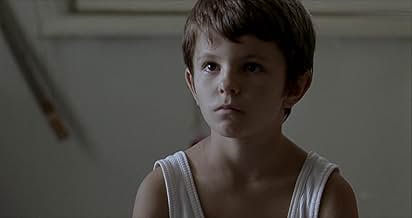
Meanwhile, Lilu is plotting with his friends how to kill the dictator. Young Timotei Duma is very reminiscent of Salvatore Cascio, who played young Salvatore (Toto) in Cinema Paradiso. Which means he was extremely cute, and some of his scenes were the best in the film. There are two whimsical scenes where we seem to enter his childlike world: one is set in a submarine taxi where all the villagers can be taken to whatever city in Europe they wish to visit, and the other visualizes the boy blowing a huge chewing gum bubble that becomes so large that it floats away. Clearly, the theme of escape is on everyone's mind.
I wish there had been more scenes like that. Instead, most of the film consists of Eva's various meetings with Alex or Andrei and very little dialogue. For a main character, she was just a little too enigmatic. I definitely felt the film could have used a bit more dialogue and a bit more editing to speed the pace a bit. As well, the ending could have used a bit more explication. There are some pictures of Ceaucescu on live television and what appears to be live coverage of him fleeing but there is no explanation. For Romanians this might be self- evident but for the rest of the world, we could use a little bit of help.
The ending itself is quite lovely, with the increasing tension suddenly released with Ceaucescu's fall. And there were some moments of dark humour, as when the students are required to sing patriotic songs about how wonderful their lives are in Romania when it's plain that everyone is living in misery. But there is a bit of unexplained business at the end surrounding the policeman and his son Alex that bothered me. As well, there were a few strange cinematographic choices throughout the film that proved distracting. Scenes would be clumsily blocked by objects as if the director didn't quite know where to place his camera. It's not a huge surprise to discover that this is Catalin Mitulescu's first feature film.
Meanwhile, Lilu is plotting with his friends how to kill the dictator. Young Timotei Duma is very reminiscent of Salvatore Cascio, who played young Salvatore (Toto) in Cinema Paradiso. Which means he was extremely cute, and some of his scenes were the best in the film. There are two whimsical scenes where we seem to enter his childlike world: one is set in a submarine taxi where all the villagers can be taken to whatever city in Europe they wish to visit, and the other visualizes the boy blowing a huge chewing gum bubble that becomes so large that it floats away. Clearly, the theme of escape is on everyone's mind.
I wish there had been more scenes like that. Instead, most of the film consists of Eva's various meetings with Alex or Andrei and very little dialogue. For a main character, she was just a little too enigmatic. I definitely felt the film could have used a bit more dialogue and a bit more editing to speed the pace a bit. As well, the ending could have used a bit more explication. There are some pictures of Ceaucescu on live television and what appears to be live coverage of him fleeing but there is no explanation. For Romanians this might be self- evident but for the rest of the world, we could use a little bit of help.
The ending itself is quite lovely, with the increasing tension suddenly released with Ceaucescu's fall. And there were some moments of dark humour, as when the students are required to sing patriotic songs about how wonderful their lives are in Romania when it's plain that everyone is living in misery. But there is a bit of unexplained business at the end surrounding the policeman and his son Alex that bothered me. As well, there were a few strange cinematographic choices throughout the film that proved distracting. Scenes would be clumsily blocked by objects as if the director didn't quite know where to place his camera. It's not a huge surprise to discover that this is Catalin Mitulescu's first feature film.
I've been trying to watch all Romanian films of late, although without much success. Some are just too ludicrous and others simply can't arouse any interest on my behalf.
I'd seen Trafic from Mitulescu, a slice of life piece from the busy happenings of Bucharest, which was a celebrated achievement of Romanian cinema at that time - with some merit. Now, "Cum mi-am petrecut sfarsitul lumii" is, firstly, a film with a striking title that can lead you on - erroneously. Going beyond the metaphor, I guess you can accept it as what the end of communism symbolized: the end of an era.
The film itself is about a young girl, Eva, (very well played by D. Petre) who is not only passing through the usual problems which come with adolescence, but who must also bear the weight of communism and its effects on her shoulders. I myself saw in her a prototype of the modern woman, the one who wants to think for herself and act as she deems is correct (but who also understands the importance of sacrificing herself at times), and all this burden of age and political restraints are fantastically mirrored on D. Petre's face. However, the film doesn't really go far beyond illustrating the last segment of the Ceausescu era - the fear, the hate, the desire to flee. While Eva's constant struggle, between responsibility (family) and rebellion, does deliver a certain dose of tension and dynamics, the film felt unsatisfying in the end.
What I'm referring to is that feeling you expect to encounter after a rather warm film about a different kind of childhood with a rather different sort of dreams: that overwhelming experience of fulfillment - both what the characters are concerned and the audience. So while "Cum mi-am petrecut sfarsitul lumii" has its good moments and conveys a very true perspective of those days, it simply did not satisfy me. Maybe it's the fact that I "missed out" on the era and, consequently, can't truly understand them. But what I felt was real enough for me, so the problem must lie within the story.
I'd seen Trafic from Mitulescu, a slice of life piece from the busy happenings of Bucharest, which was a celebrated achievement of Romanian cinema at that time - with some merit. Now, "Cum mi-am petrecut sfarsitul lumii" is, firstly, a film with a striking title that can lead you on - erroneously. Going beyond the metaphor, I guess you can accept it as what the end of communism symbolized: the end of an era.
The film itself is about a young girl, Eva, (very well played by D. Petre) who is not only passing through the usual problems which come with adolescence, but who must also bear the weight of communism and its effects on her shoulders. I myself saw in her a prototype of the modern woman, the one who wants to think for herself and act as she deems is correct (but who also understands the importance of sacrificing herself at times), and all this burden of age and political restraints are fantastically mirrored on D. Petre's face. However, the film doesn't really go far beyond illustrating the last segment of the Ceausescu era - the fear, the hate, the desire to flee. While Eva's constant struggle, between responsibility (family) and rebellion, does deliver a certain dose of tension and dynamics, the film felt unsatisfying in the end.
What I'm referring to is that feeling you expect to encounter after a rather warm film about a different kind of childhood with a rather different sort of dreams: that overwhelming experience of fulfillment - both what the characters are concerned and the audience. So while "Cum mi-am petrecut sfarsitul lumii" has its good moments and conveys a very true perspective of those days, it simply did not satisfy me. Maybe it's the fact that I "missed out" on the era and, consequently, can't truly understand them. But what I felt was real enough for me, so the problem must lie within the story.
It's an excellent movie but unfortunately it's hard to understand this movie unless u are Romanian and u lived in Romania during the communist era. I realize there were some scenes that were quite tricky for non-Romanians and the movie was full of symbols that were quite difficult to follow but for Romanian people were full of significance. The music is as well full of significance for people who grew up in the communist time. Maybe non-Romanian people will only see how Romanian during that communist era lived without power, out of running water and out of food but the film is a little bit more than that....maybe after seeing this movie u can get a little understanding about what does it mean to live in a communist country. Maybe the director is young and quite unexperienced but I think it's a really interesting movie to be seen and I definitely recommend it.
I've seen the film by mistake as there was nothing else on TV...i didn't what it was about but the title seemed exciting...What can I say?It was absolutely breath taking...Although most people would dismiss it as being yet another stupid film about communism,I would say that this one is by far the best Romanian film in quite a while...And the nomination for the Academy's Awards says it all...I loved because it was simple...It didn't make use of complex language or of extraordinary characters...It just showed the true face of Romania under the communist regime....It had beautiful characters...The images were perfect...The music was perfect...It's a small piece of jewelery...And what's more...Dorotheea is absolutely stunning...:D
Beautiful indeed. The beauty of this film is that it presents with high fidelity a era not so long ago in our life but so long ago in our memories. It's like you were closing your eyes and go back in those time. The atmosphere is recreated in the smallest details. Even the bottles of milk are the same they were 20 years ago. The director is not a judge, he just presents facts through eyes of different persons, as he recreates the every day life of people. this film is not a film of hate as we were used 17 years when we saw film about that times. It is a film to see with your heart open, with your soul free of any ideeas. It is a film of making peace with the past and with ourself. Take just little from your time and go see it.


Did you know
- TriviaRomania's official submission to the 79th Academy Awards (2007) for Best Foreign Language Film.
- GoofsThere is a longer scene in the movie showing a bus trying to turn around on muddy soil. The bus is a Rocar bus, which has been produced only after 1990, and it has stickers on its doors, which surely have not been used before 1989.
- SoundtracksMarsul de Intampinace
Written by anonymous
Copyright 2006 by Strada Films & Les Films Pelléas
- How long is How I Celebrated the End of the World?Powered by Alexa
Details
- Release date
- Countries of origin
- Official site
- Language
- Also known as
- The Way I Spent the End of the World
- Filming locations
- Production companies
- See more company credits at IMDbPro
Box office
- Budget
- €1,500,000 (estimated)
- Gross worldwide
- $296,980
- Runtime
- 1h 46m(106 min)
- Color
Contribute to this page
Suggest an edit or add missing content