
Feverish from food poisoning, Tony Soprano's surreal dreams intersect with Meadow's graduation and growing crew unrest, leading to a decisive test of loyalty.Feverish from food poisoning, Tony Soprano's surreal dreams intersect with Meadow's graduation and growing crew unrest, leading to a decisive test of loyalty.Feverish from food poisoning, Tony Soprano's surreal dreams intersect with Meadow's graduation and growing crew unrest, leading to a decisive test of loyalty.
- Director
- Writers
- Stars





- Director
- Writers
- All cast & crew
- Production, box office & more at IMDbPro
Featured reviews
masterpiece
A perfect 10,5
The episode ingeniously blends surreal dream sequences with brutal realism to explore betrayal, identity, and the inescapability of violence
The episode follows Tony Soprano as he suffers from severe food poisoning, which precipitates vivid and symbolic dreams that allow viewers a window into his conflicted subconscious. These dream sequences-ranging from disconcerting to bizarre-serve as metaphors for Tony's anxieties and suspicions, particularly regarding Big Pussy Bonpensiero's loyalty. As Tony investigates Pussy's betrayal, searching his home and confronting the painful truth, the tension escalates to a climactic and harrowing execution by the water's edge. This act reverberates with moral ambiguity and profound personal loss, illustrating the devastating costs of loyalty and survival within the mafia. Interspersed with this are personal moments involving Tony's family, including Meadow's college graduation celebration, illustrating the series' interplay between public violence and private life.
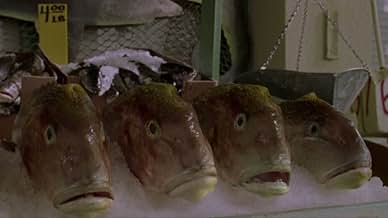
John Patterson's direction seamlessly integrates the episode's tonal shifts from surreal, dreamlike imagery to stark, unflinching reality. The dream sequences are visually arresting, employing vivid color, symbolic characters, and unsettling motifs such as talking fish, which underscore Tony's psychological turmoil and facilitate narrative development through symbolism rather than exposition.
Contrastively, the practical, direct cinematography used in the raid on Pussy's apartment and subsequent execution grounds the episode in grim reality, providing an effective counterbalance to the fantastical sequences. Patterson's rhythmic control over pacing enhances suspense while allowing emotional beats to resonate deeply with the audience.
The cinematography expertly uses lighting and framing to reflect the episode's themes of duplicity and internal conflict. The saturated, almost hallucinatory tones of the dream scenes visually signal Tony's altered state, while the muted, shadowed compositions during the execution scene emphasize the darkness and finality of betrayal. Editing intercuts between these realms with precision, maintaining cohesion and thematic unity, while the sound design incorporates eerie silences and ambient noise to heighten tension. The deliberate use of The Rolling Stones' "Thru and Thru" as the episode's recurring musical motif reinforces emotional intensity and underlines motifs of descent and moral decay.
The performances are outstanding, with James Gandolfini delivering one of his most memorable portrayals of Tony Soprano's complex psyche-simultaneously vulnerable, angry, tortured, and resolute. Vincent Pastore's Big Pussy embodies the tragic weight of betrayal, his final moments heart-wrenching and irrevocable. The supporting cast, including Lorraine Bracco's Dr. Melfi and Jamie-Lynn Sigler's Meadow, enrich the episode's emotional texture, depicting the personal and familial reverberations of Tony's violent decisions. These nuanced performances anchor the episode's thrilling plot twists in genuine human emotion.
"Funhouse" delves deep into the nature of loyalty, identity, and self-deception. Tony's dreams provide insight into his conflicted mind, highlighting the tension between his violent lifestyle and his desire for personal and familial stability. The episode confronts the brutal realities beneath mafia loyalty, revealing that betrayal often comes from those closest to us, and must be met with harsh consequences. The sea, a potent symbol throughout, evokes themes of cleansing, mystery, and inevitability, aligning with the episode's exploration of fate and finality. Through its symbolism and narrative, The Sopranos critiques the romanticized notions of power in gangster mythology, exposing its lonely and destructive heart.
"Funhouse" is also culturally resonant, reflecting Italian-American identity's complex interplay with American organized crime mythos, juxtaposing traditional familial loyalty against the unforgiving realities of criminal enterprise. It innovatively uses dream sequences-a departure from conventional crime drama-to flesh out psychological complexity and narrative foresight, influencing subsequent television storytelling structures. The episode's artistry and depth invite ongoing academic and popular discourse about television as a medium capable of profound philosophical inquiry.
While the heavy focus on dream imagery may perplex some viewers, the symbolism and emotional payoff are integral to the episode's profound impact and legacy. Its bold stylistic choices reinforce its themes and deepen audience engagement, marking a turning point in the series' evolution. The shocking climax, where Tony resolves a personal betrayal in cold blood, crystallizes The Sopranos' unflinching exploration of violence and humanity.
Miss you Gandolfini


Did you know
- TriviaJames Gandolfini requested ice and cold water to stand in so he would really be shaking during his sick scenes.
- GoofsTony's sister Barbara says she does not understand what Livia means when she tells Tony that she did not conspire with Uncle Junior. A bemused Barbara says she has no idea what they are talking about, showing that she was not aware of Livia and Uncle Junior's plot to have Tony killed from season one. This, however, contradicts episode fourteen "Do Not Resuscitate," the first one of the season, where Barbara tells Janice not to get involved in Tony and Livia's fight. Barbara says to Janice "Look what Ma tried to do to Tony." This leads one to believe that Barbara knew exactly what went down.
- Quotes
Anthony 'Tony' Soprano Sr.: [Tony is having a fever dream where Pussy is a fish on ice at a food market] How much you weigh?
Salvatore 'Big Pussy' Bompensiero: Eight pounds.
Anthony 'Tony' Soprano Sr.: Lost a lot of weight!
Salvatore 'Big Pussy' Bompensiero: Swimmin'! The best exercise. Works every muscle group.
Anthony 'Tony' Soprano Sr.: Get the fuck outta here! You never exercised once in your life!
Salvatore 'Big Pussy' Bompensiero: Anyway, $4 a pound.
[pause]
Salvatore 'Big Pussy' Bompensiero: You know I've been working with the government, right, Ton'?
Anthony 'Tony' Soprano Sr.: Don't say it.
Salvatore 'Big Pussy' Bompensiero: C'mon, Ton'. Sooner or later, you gotta face facts.
Anthony 'Tony' Soprano Sr.: I don't want to hear it.
Salvatore 'Big Pussy' Bompensiero: Well you're *gonna* hear it.
Anthony 'Tony' Soprano Sr.: [dejectedly] Fuck.
Salvatore 'Big Pussy' Bompensiero: You passed me over for promotion, Ton'. You knew.
Anthony 'Tony' Soprano Sr.: How much shit you give 'em?
Salvatore 'Big Pussy' Bompensiero: A lot.
Anthony 'Tony' Soprano Sr.: Jesus, Puss.
[pause]
Anthony 'Tony' Soprano Sr.: Fuck of a way for it all to end, huh?
Salvatore 'Big Pussy' Bompensiero: Yeah.
Anthony 'Tony' Soprano Sr.: Yeah.
Salvatore 'Big Pussy' Bompensiero: [referring to the fish lying next to him] These guys, on either side of me... they're asleep.
Anthony 'Tony' Soprano Sr.: Don't say that! Not fuckin' funny!
[angrily turns over the table and knocks all the fish to the ground]
- ConnectionsFeatured in The 52nd Annual Primetime Emmy Awards (2000)
- SoundtracksBaubles, Bangles, and Beads
(uncredited)
Written by Chet Forrest, Bob Wright and Aleksandr Borodin
Performed by Frank Sinatra
Details
- Runtime
- 59m
- Color
- Sound mix
- Aspect ratio
- 1.78 : 1