The Alternative Factor
- Episode aired Mar 30, 1967
- TV-PG
- 50m
IMDb RATING
5.7/10
4.3K
YOUR RATING

Existence itself comes under threat from a man's power-struggle with his alternate self, with the Enterprise's strained dilithium crystals presenting his key to a final solution.Existence itself comes under threat from a man's power-struggle with his alternate self, with the Enterprise's strained dilithium crystals presenting his key to a final solution.Existence itself comes under threat from a man's power-struggle with his alternate self, with the Enterprise's strained dilithium crystals presenting his key to a final solution.




Bill Blackburn
- Lieutenant Hadley
- (uncredited)
Vince Cadiente
- Security Guard
- (uncredited)

Bill Catching
- Anti-Matter Lazarus Being #2
- (uncredited)
Frank da Vinci
- Crewman
- (uncredited)

Carey Foster
- Enterprise crewmember
- (uncredited)
Tom Lupo
- Security Guard
- (uncredited)

Al Wyatt Sr.
- Anti-Matter Lazarus Being #1
- (uncredited)
- Director
- Writer
- All cast & crew
- Production, box office & more at IMDbPro
5.74.3K
1
2
3
4
5
6
7
8
9
10
Featured reviews
Flawed, but I don't hate it.
One thing that must be considered is that the show didn't have any single dedicated writer or writers, there were many different writers of any one episode to the next.
The person who wrote this particular episode was Don Ingalls, who was a fairly prolific television writer from the early 1960's to mid 1980's. If not prolific, he received a lot of work. It's the only Star Trek episode he is credited with "written by." He is also has a "story by" credit for the 'A Private Little War' episode. That's it.
There were numerous other writers in the series, many for just one episode, so there almost has to be a few misfires, just based on simple probability. This one isn't the strongest, admittedly. It was probably too ambitious and ended up spinning it's wheels. To start with, there's some goofy special effects. Interesting sci-fi themes are explored, but the explanations are vague (or wrong) and unfortunately never tied up. Guest star Robert Brown as Lazarus is in some scenes brilliant, and in others seems over the top. Still, I feel there's enough done well here to make it a worthwhile watch. If nothing else, it's memorable.
The person who wrote this particular episode was Don Ingalls, who was a fairly prolific television writer from the early 1960's to mid 1980's. If not prolific, he received a lot of work. It's the only Star Trek episode he is credited with "written by." He is also has a "story by" credit for the 'A Private Little War' episode. That's it.
There were numerous other writers in the series, many for just one episode, so there almost has to be a few misfires, just based on simple probability. This one isn't the strongest, admittedly. It was probably too ambitious and ended up spinning it's wheels. To start with, there's some goofy special effects. Interesting sci-fi themes are explored, but the explanations are vague (or wrong) and unfortunately never tied up. Guest star Robert Brown as Lazarus is in some scenes brilliant, and in others seems over the top. Still, I feel there's enough done well here to make it a worthwhile watch. If nothing else, it's memorable.
But what of Lazarus?
Enterprise encounters a violent and unusual physical phenomenon.
This is an interesting episode based on a brilliant idea, but unfortunately the screenplay does not translate to the screen very well.
The plot must have sounded fantastic when it was first discussed and its introductory scene is very intriguing. Unfortunately it unfolds in a sometimes boring way, with several long winded, repetitive visuals and some big exposition dialogues.
I love parallel universe stories and the matter v antimatter concept is a great idea, unfortunately what presents on screen makes little sense by the description of it's own technobabble.
There are also some plot points that are ludicrous. Lazarus is obviously a threat yet has free run of the ship on more than one occasion.
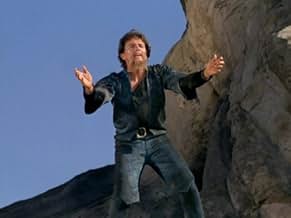
It's not all bad. Some visuals work well, like Lazarus's spacecraft on the planet surface, along with the cinematography and acting. Also it finishes strongly with Kirk helping to save two universes and leaves on poignant note about the poor guest character.
William Shatner, Leonard Nimoy and Robert Brown are solid, particularly Brown playing the two versions of the guest character.
For me it's a 5.5/10, but I round upwards.
This is an interesting episode based on a brilliant idea, but unfortunately the screenplay does not translate to the screen very well.
The plot must have sounded fantastic when it was first discussed and its introductory scene is very intriguing. Unfortunately it unfolds in a sometimes boring way, with several long winded, repetitive visuals and some big exposition dialogues.
I love parallel universe stories and the matter v antimatter concept is a great idea, unfortunately what presents on screen makes little sense by the description of it's own technobabble.
There are also some plot points that are ludicrous. Lazarus is obviously a threat yet has free run of the ship on more than one occasion.
It's not all bad. Some visuals work well, like Lazarus's spacecraft on the planet surface, along with the cinematography and acting. Also it finishes strongly with Kirk helping to save two universes and leaves on poignant note about the poor guest character.
William Shatner, Leonard Nimoy and Robert Brown are solid, particularly Brown playing the two versions of the guest character.
For me it's a 5.5/10, but I round upwards.
Lazarus Blinks and the Universe Disappears
The threat which Kirk and the Federation face here is nothing less than the complete annihilation of our entire universe - surely the gravest cosmic problem encountered in Trek's history. It's one of those wild cosmic concepts more prevalent on the TNG series, not restricted to a quadrant or even just our galaxy, but everything. However, the execution of this story and the faulty pace of this episode is rather deplorable. There's way too much repetition throughout: Kirk and some crew beam down to a planet's surface, they go back up to the Enterprise, then back down to the planet, over & over, it seems, with no results; Lazarus falls off a cliff a 2nd time...or is it a 3rd? Much of the attempted efforts to explain the dangerous cosmic effect come off as gobbledygook - is it a doorway in space? A hole between two universes? A corridor with explosions at both ends? Say what? There's also confusion on whether Kirk is dealing with a time traveler here or hopping to parallel dimensions (better realized in "Mirror,Mirror" early in the 2nd season). I finally gathered in the end that the threat revolved around matter and anti-matter of two duplicate objects coming together; but, boy, what a headache to get there.
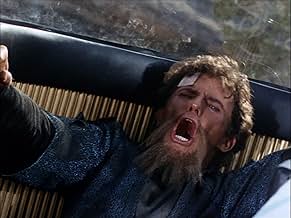
Kirk, Spock and the others encounter a weird guy named Lazarus on a barren planet following a 'winking out' of all existence. He rants on about his nemesis, an enemy which looks humanoid but is a monster. By the 2nd act, we realize this Lazarus is insane, but Kirk & especially McCoy aren't so quick on the uptake, while Spock just calls him a liar. After a few very spacey phrases by this Lazarus, I would think they'd realize the guy's not all there when Lazarus says "Kill! Kill! Kill! Kill! Kill!" Yet, as in a few other weak episodes, an obvious nutcase like this one is given free reign within the Enterprise and this causes problems later (I think Kirk did assign security at some point, but they lost Lazarus a minute later). Then we get that 'cosmic effect' and negative images in slow motion for the 4th or 5th time, meant to convey a struggle between - wait for it - two Lazarus dudes! And as we all know, two into one won't go. This episode gets my vote for the worst one of the first season, a precursor to all those really bad, boring ones in the third season. I do give it more stars than those due to a genuinely chilling denouement at the conclusion.
Kirk, Spock and the others encounter a weird guy named Lazarus on a barren planet following a 'winking out' of all existence. He rants on about his nemesis, an enemy which looks humanoid but is a monster. By the 2nd act, we realize this Lazarus is insane, but Kirk & especially McCoy aren't so quick on the uptake, while Spock just calls him a liar. After a few very spacey phrases by this Lazarus, I would think they'd realize the guy's not all there when Lazarus says "Kill! Kill! Kill! Kill! Kill!" Yet, as in a few other weak episodes, an obvious nutcase like this one is given free reign within the Enterprise and this causes problems later (I think Kirk did assign security at some point, but they lost Lazarus a minute later). Then we get that 'cosmic effect' and negative images in slow motion for the 4th or 5th time, meant to convey a struggle between - wait for it - two Lazarus dudes! And as we all know, two into one won't go. This episode gets my vote for the worst one of the first season, a precursor to all those really bad, boring ones in the third season. I do give it more stars than those due to a genuinely chilling denouement at the conclusion.
Awful but quite memorable
There is a solid sci-fi premise here, though the stakes should have been dialed way back. I hated this as a kid and now just see it as extremely silly.
But turkey though it may be, EVERYBODY remembers this one. I actually liked the George Jettson personal spaceship.
To be fair, any potential this episode had was destroyed by the original actor cast as Lazarus not showing up. The replacement went directly from casting to shooting with no time to prepare. Despite being handed a quite complex role.
But turkey though it may be, EVERYBODY remembers this one. I actually liked the George Jettson personal spaceship.
To be fair, any potential this episode had was destroyed by the original actor cast as Lazarus not showing up. The replacement went directly from casting to shooting with no time to prepare. Despite being handed a quite complex role.
A bit of a klunker.
According to "Star Trek; the Inside Story" by Solow and Justman (the two original producers of the Star Trek series) there were some contractual issues with the actor who was supposed to play the guest lead, and thus this caused some scheduling issues which cascaded into other areas of production.
Result; this episode.
Well, what can a guy say about an installment that was supposed to be the crown jewel of Trek, but wound up being a bucket of swill? An "A" for effort... err... maybe.
Things that I spotted; there's an exterior shot showing Kirk and Spock leading a search team, but the actors are their stunt doubles, and not Shatner and Nimoy. The lead character seems prone to injury, and the science fiction in this episode is more fiction than science.
I'll say this, the reason I tend to prefer classic 1960's Trek to the TNG+ era, is because the first season of TOS Trek is psychological; the second season is sociological, while the third season is more interpersonal (with all its flaws). This episode really strove to be a true science-fiction story, and not some encoded amalgam conveying a comment on contemporary society.
No, this episode really wanted to post the question of sacrifice to save two realms of existence. As stated earlier, director Gerd Oswald wanted the son of a famous actor who had star power (the name escapes me). Said actor was drunk and didn't show up for the shoot. SAG threw the book at the actor for breaking his contract, and torpedoing what could've been an interesting, and a true first pure sci-fi masterpiece for this very memorable series.
But, blaming the guest star for all the foibles isn't fair. Truth is the writing was a little weak in this episode. Without a psychological formula to rely on this episode was truly trying to break new ground. But, because the author(s) did not know enough about the science they were dealing with, and only the philosophical dilemma of what they wanted to pose for the audience, the story falls flat.
Even so, it's still fun to see our favorites run around on the screen to save the Federation (and everyone else in this case) from a fate worse than death.
Not a sterling installment. Watch only in passing... if at all.
Result; this episode.
Well, what can a guy say about an installment that was supposed to be the crown jewel of Trek, but wound up being a bucket of swill? An "A" for effort... err... maybe.
Things that I spotted; there's an exterior shot showing Kirk and Spock leading a search team, but the actors are their stunt doubles, and not Shatner and Nimoy. The lead character seems prone to injury, and the science fiction in this episode is more fiction than science.
I'll say this, the reason I tend to prefer classic 1960's Trek to the TNG+ era, is because the first season of TOS Trek is psychological; the second season is sociological, while the third season is more interpersonal (with all its flaws). This episode really strove to be a true science-fiction story, and not some encoded amalgam conveying a comment on contemporary society.
No, this episode really wanted to post the question of sacrifice to save two realms of existence. As stated earlier, director Gerd Oswald wanted the son of a famous actor who had star power (the name escapes me). Said actor was drunk and didn't show up for the shoot. SAG threw the book at the actor for breaking his contract, and torpedoing what could've been an interesting, and a true first pure sci-fi masterpiece for this very memorable series.
But, blaming the guest star for all the foibles isn't fair. Truth is the writing was a little weak in this episode. Without a psychological formula to rely on this episode was truly trying to break new ground. But, because the author(s) did not know enough about the science they were dealing with, and only the philosophical dilemma of what they wanted to pose for the audience, the story falls flat.
Even so, it's still fun to see our favorites run around on the screen to save the Federation (and everyone else in this case) from a fate worse than death.
Not a sterling installment. Watch only in passing... if at all.


Did you know
- TriviaThis is the first time that live two-way communication with Starfleet Command is depicted. In previous episodes, communication with Starfleet Command was through delayed radio messages.
- GoofsAt the very beginning when Spock is reporting the atmospheric composition of the planet he has scanned he says "Oxygen Hydrogen atmosphere". This would be a very explosive combination. He meant to say "Oxygen Nitrogen atmosphere" (similar to Earth) but just got his line wrong.
- Crazy creditsThe closing credits are set against a combination background of stills from that episode and previous episodes.
- Alternate versionsSpecial Enhanced version Digitally Remastered with new exterior shots and remade opening theme song
- ConnectionsFeatured in Mr. Plinkett's Star Trek 2009 Review (2010)
- SoundtracksTheme From Star Trek
Written by and credited to Alexander Courage
Details
- Release date
- Country of origin
- Official sites
- Language
- Filming locations
- Production companies
- See more company credits at IMDbPro
Contribute to this page
Suggest an edit or add missing content