
Slavoj Zizek credited as playing...
Self

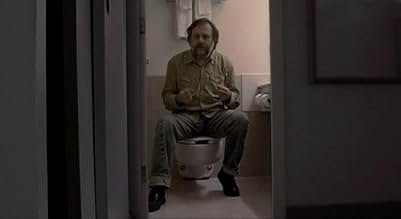
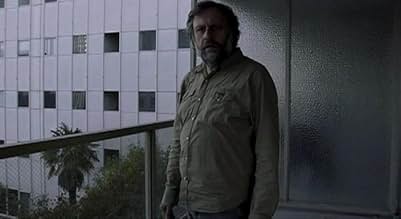

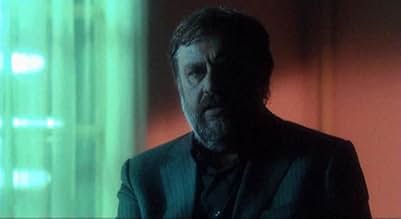

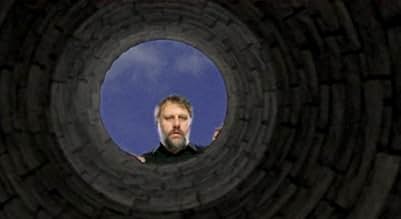
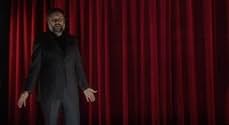
- [last lines]
- Slavoj Zizek: In order to understand today's world, we need cinema, literally. It's only in cinema that we get that crucial dimension which we are not ready to confront in our reality. If you are looking for what is in reality more real that reality itself, look into the cinematic fiction.
- Slavoj Zizek: My relationship towards tulips is inherently Lynchian. I think they are disgusting. Just imagine. Aren't these some kind of, how do you call it, vagina dentata, dental vaginas threatening to swallow you? I think that flowers are something inherently disgusting. I mean, are people aware what a horrible thing these flowers are? I mean, basically it's an open invitation to all insects and bees, "Come and screw me," you know? I think that flowers should be forbidden to children.
- Slavoj Zizek: Our fundamental delusion today is not to believe in what is only a fiction, to take fictions too seriously. It's, on the contrary, not to take fictions seriously enough. You think it's just a game? It's reality. It's more real than it appears to you. For example, people who play video games, they adopt a screen persona of a sadist, rapist, whatever. The idea is, in reality I'm a weak person, so in order to supplement my real life weakness, I adopt the false image of a strong, sexually promiscuous person, and so on and so on. So this would be the naïve reading... But what if we read it in the opposite way? That this strong, brutal rapist, whatever, identity is my true self. In the sense that this is the psychic truth of myself and that in real life, because of social constraints and so on, I'm not able to enact it. So that, precisely because I think it's only a game, it's only a persona, a self-image I adopt in virtual space, I can be there much more truthful. I can enact there an identity which is much closer to my true self.
- Slavoj Zizek: In sexuality, it's never only me and my partner, or more partners, whatever you are doing. It's always... There has to be always some fantasmatic element. There has to be some third imagined element which makes it possible for me, which enables me, to engage in sexuality. If I may be a little bit impertinent and relate to and unfortunate experience, probably known to most of us, how it happens that while one is engages in sexual activity, all of a sudden one feels stupid. One loses contact with it. As if, 'My God, what am I doing here, doing these stupid repetitive movements?' And so on and so on. Nothing changes in reality, in these strange moments where I, as it were, disconnect. It's just that I lose the fantasmatic support.
- Slavoj Zizek: All too often, when we love somebody, we don't accept him or her as what the person effectively is. We accept him or her insofar as this person fits the co-ordinates of our fantasy. We misidentify, wrongly identify him or her, which is why, when we discover that we were wrong, love can quickly turn into violence. There is nothing more dangerous, more lethal for the loved person than to be loved, as it were, for not what he or she is, but for fitting the ideal.
- [first lines]
- Slavoj Zizek: Cinema is the art of appearances, it tells us something about reality itself. It tells us something about how reality constitutes itself.
- Slavoj Zizek: Pornography is, and it is, a deeply conservative genre. It's not a genre where everything is permitted. It's a genre based on a fundamental prohibition. We cross one threshold, you can see everything, close ups and so on, but the price you pay for it is that the narrative with justifies sexual activity should not be taken seriously. The screenwriters for pornography cannot be so stupid. You know, these vulgar narratives of a housewife alone at home, a plumber comes, fixes the hole, then the housewife turns to him, 'Sorry, but I have another hold to be fixed. Can you do it?' or whatever. Obviously there is some kind of a censorship here. You have either an emotionally engaging film, but then you should stop just before showing it all, sexual act, or you can see it all but you are now allowed then to be emotionally seriously engaged. So that's the tragedy of pornography.
- Slavoj Zizek: The problem is, "How do we know what we desire?" There is nothing spontaneous, nothing natural, about human desires. Our desires are artificial. We have to be taught to desire. Cinema is the ultimate pervert art. It doesn't give you what you desire, it tells you how to desire.
- Slavoj Zizek: I think this is what liberation means. In order to attack the enemy, you first have to beat the shit out of yourself. To get rid, in yourself, of that which in yourself attaches you to the leader, to the conditions of slavery, and so on and so on.
- Slavoj Zizek: We men, at least in our standard phallogocentric mode of sexuality, even when we are doing it with the real women, we are effectively doing it with our fantasy. Woman is reduced to a masturbatory prop. Woman arouses us in so far as she enters our fantasy frame. With women, it's different. The true enjoyment is not in doing it but in telling about it afterwards. Of course, women do enjoy sex immediately, but I hope I'm permitted as a man to propose a daring hypothesis, that maybe, while they are doing it, they already enact or incorporate this minimal narrative distance, so that they are already observing themselves and narrativising it.
- Slavoj Zizek: And that's the paradox of cinema, the paradox of belief. We don't simply believe or do not believe. We always believe in a kind of conditional mode. I know very well it's a fake but, nonetheless, I let myself be emotionally effected. his strange status of belief accounts for the efficiency of one of the most interesting characters, not only in cinema, but also in theatre, in staging as such, the character of prologue.
- Slavoj Zizek: The best way to imagine what Mystery Man is, is to imagine somebody who doesn't want anything from us. That's the true horror of this Mystery Man. Not any evil, demoniac intentions and so on. Just the fact that when he is in front of you, he, as it were, sees through you.
- [on Lost Highway]
- Slavoj Zizek: What's the archetypal comic situation of Chaplin's films? It's being mistaken for somebody or functioning as a disturbing spot, as a disturbing stain. He distorts the vision. Or people don't even note him, take note of him, so he wants to be noted. Or, if they perceive him, he's misperceived, identified for what he's not.
- Slavoj Zizek: The first key to horror films is to say, 'Let's imagine the same story but without the horror element.'
- Slavoj Zizek: There is an old Gnostic theory that our world was not perfectly created, that the god who created our world was an idiot who bungled the job, so that our world is a half-finished creation. There are voids, openings, gaps. It's not fully real, fully constituted. In the wonderful scene in the last instalment of the Alien saga, Alien Resurrection, when Ripley, the cloned Ripley, enters a mysterious room, she encounters the previous failed version of herself, of cloning herself. Just a horrified creature, a small foetus-like entity, then more developed forms. Finally, a creature which almost looks like her, but her limbs are like that of the monster. This means that all the time our previous alternate embodiments, what we might have been but are not, that these alternate versions of ourselves are haunting us. That's the ontological view of reality that we get here, as if it's an unfinished universe. This is, I think, a very modern feeling. It is through such ontology of unfinished reality that cinema became a truly modern art.
- Slavoj Zizek: This is the most terrorising experience you can imagine, to directly being the thing itself, to assume that I am a phallus. And the provocative greatness of these Lynchian, obscene, paternal figures, is that not only they don't have any anxiety, not only they are not afraid of it, they fully enjoy being it.
- Slavoj Zizek: The mystery is that even if we know that it's only staged, that it's a fiction, it still fascinates us. That's the fundamental magic of film. You witness a certain seductive scene, then you are shown that it's just a fake, stage machinery behind, but you are still fascinated by it. Illusion persists. There is something real in the illusion, more real than in the reality behind it.
- Slavoj Zizek: There are no specifically fake emotions because, as Freud puts it literally, the only emotion which doesn't deceive is anxiety.
- Slavoj Zizek: But the choice between the blue and the red pill is not really a choice between illusion and reality. Of course Matrix is a machine for fictions, but these are fictions which already structure our reality: if you take away from our reality the symbolic fictions that regulate it, you lose reality itself. So what is the third pill? Definitely not some kind of transcendental pill which enables a fake fast-food religious experience, but a pill that would enable me to perceive not the reality behind the illusion but the reality in illusion itself. If something gets too traumatic, too violent, gets too, even too filled in with enjoyment, it shatters the coordinates of our reality: we have to fictionalise it.