The Shakespeare Code
- Episode aired Jul 13, 2007
- TV-PG
- 45m
IMDb RATING
7.5/10
8.7K
YOUR RATING

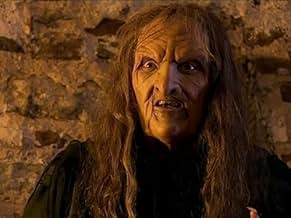
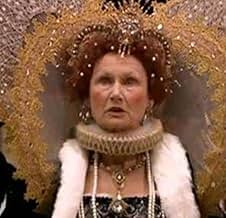
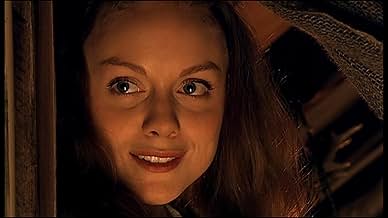
The Doctor takes Martha to London in 1599, where William Shakespeare's new play is being used by three witches in an evil plan.The Doctor takes Martha to London in 1599, where William Shakespeare's new play is being used by three witches in an evil plan.The Doctor takes Martha to London in 1599, where William Shakespeare's new play is being used by three witches in an evil plan.
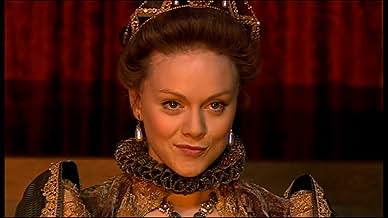


Paul Bateman
- Groundling
- (uncredited)

Martin Alexander Colton
- Juliet
- (uncredited)
- Director
- Writer
- All cast & crew
- Production, box office & more at IMDbPro
7.58.6K
1
2
3
4
5
6
7
8
9
10
Featured reviews
Rather Meta.
Gareth Roberts' "The Shakespeare Code" is an episode I originally disliked upon first watching as a kid when it aired & yet as I've grown in to an adult, I've also equally grown to really admire it over time.
The installment boasts a brilliant sense of humour - littered with topical jokes which equate to continuously self aware winks to the camera - ones I wouldn't have understood as a child; a probable contributing factor as to why I initially responded so badly to its release. Additionally, it has a lot of jokes which aren't considered politically correct anymore - but this seems like a deliberate creative choice considering he (the writer) later makes an accurate observational jab about the ever-changing terms which are considered acceptable & how new names / ways of referencing one another / words or phrases continue to modify & be invented throughout history as public perceptions shift & whilst time slowly progresses.
It's an acknowledgement of the unavoidable - embracing it rather than fighting against that inevitability & instead of attempting to remain current & ensure the relevancy of his script for decades to come, he alternatively (& rather boldly) revels in the finality of it - as (like "Love's Labours Won") those words will surely be gone forever some day - so we're encouraged to enjoy them while they last.
Hence, this works in the outing's favour because (as was preemptively predicted by the episode) watching it 13 years later, it has grown a little dated with the terminologies used - just as all works of literature do - but these works persist regardless, as great stories are timeless, irrespective of when they're told to an audience or read - which is the main point conveyed in the narrative - reaffirmed cleverly merely by its existence, in & of itself.
It's an ode to writers - past, present & future - (playing on lines by Shakespeare, Dylan Thomas, JK Rowling etc.) paying homage to their collective contributions whilst restyling & refashioning them for what was then (in 2007) a modern audience.
This culminates to form something potentially controversial in 2020 - but that doesn't detract from the power of the central themes - it actually ironically validates them.
The installment boasts a brilliant sense of humour - littered with topical jokes which equate to continuously self aware winks to the camera - ones I wouldn't have understood as a child; a probable contributing factor as to why I initially responded so badly to its release. Additionally, it has a lot of jokes which aren't considered politically correct anymore - but this seems like a deliberate creative choice considering he (the writer) later makes an accurate observational jab about the ever-changing terms which are considered acceptable & how new names / ways of referencing one another / words or phrases continue to modify & be invented throughout history as public perceptions shift & whilst time slowly progresses.
It's an acknowledgement of the unavoidable - embracing it rather than fighting against that inevitability & instead of attempting to remain current & ensure the relevancy of his script for decades to come, he alternatively (& rather boldly) revels in the finality of it - as (like "Love's Labours Won") those words will surely be gone forever some day - so we're encouraged to enjoy them while they last.
Hence, this works in the outing's favour because (as was preemptively predicted by the episode) watching it 13 years later, it has grown a little dated with the terminologies used - just as all works of literature do - but these works persist regardless, as great stories are timeless, irrespective of when they're told to an audience or read - which is the main point conveyed in the narrative - reaffirmed cleverly merely by its existence, in & of itself.
It's an ode to writers - past, present & future - (playing on lines by Shakespeare, Dylan Thomas, JK Rowling etc.) paying homage to their collective contributions whilst restyling & refashioning them for what was then (in 2007) a modern audience.
This culminates to form something potentially controversial in 2020 - but that doesn't detract from the power of the central themes - it actually ironically validates them.
A Tempestuous Tetradecagal...
The first away day with the Doctor for Martha and it is off to 1599 and a rather affectionate William Shakespeare, as well as some nasally challenged witches whose...
Double, double toil and trouble, fire burn and caldron bubble, if they manage to cut just the slightest of stubble, your lights will fade, and your spirit will crumble.
All facilitated by the Carrionites who wish to bring forth their sisters and consume the world in darkness and all the other stuff witchlike creatures like to do. However, there a no cats or toads or frogs or tongues of dogs, so not true Shakespearean necromancers.
Double, double toil and trouble, fire burn and caldron bubble, if they manage to cut just the slightest of stubble, your lights will fade, and your spirit will crumble.
All facilitated by the Carrionites who wish to bring forth their sisters and consume the world in darkness and all the other stuff witchlike creatures like to do. However, there a no cats or toads or frogs or tongues of dogs, so not true Shakespearean necromancers.
As You Like It.
Martha's first real adventure takes the Tardis back to Elizabethan London, for a fun and expensive looking episode that's chock full of in-jokes.
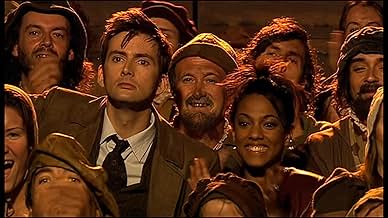
The Doctor (David Tennant) takes Martha (Freema Agyeman) to the Globe theatre for a performance of Shakespeare's Love's Labours Lost. They are surprised when the man himself (Dean Lennox Kelly) appears on stage and announces that tomorrow night, they will put on the sequel, the now missing Love's Labours Won. Further investigations reveal that three 'witches' are influencing the writer and trying to bring a conquering army to our realm.
In an interesting parallel to his time with Rose, The Doctor again takes his companion on her first trip into history back to meet a famous author, indeed, there is lots of talk about Rose, particularly some blunt scenes when an oblivious Doctor tells Martha that Rose would have spotted the problem straight away. Gareth Roberts would become a regular writer for the show throughout the Davies and Moffatt era's and you can see why, based on a well written episode that ties in some real life historical situations, with some clever dialogue using lots of literary quotes and playing in the Doctors continuing grief over the loss of Rose and not quite being able to see Martha as anything other than a temporary replacement.
The visual effects for the witches was really well done, and there's some nice "Evil Dead" like movements in their reveals at the beginning, there's quite a large dressed set for the episode which is decent too, as well as interiors for Bedlam and some shooting inside the actual recreated Globe theatre in Southwark. The CGI work, with the witches flying and the cataclysmic portal over the Globe are nicely done too.
Overall it was a solid, amusing addition, even if the villains are a little underwhelming.
The Doctor (David Tennant) takes Martha (Freema Agyeman) to the Globe theatre for a performance of Shakespeare's Love's Labours Lost. They are surprised when the man himself (Dean Lennox Kelly) appears on stage and announces that tomorrow night, they will put on the sequel, the now missing Love's Labours Won. Further investigations reveal that three 'witches' are influencing the writer and trying to bring a conquering army to our realm.
In an interesting parallel to his time with Rose, The Doctor again takes his companion on her first trip into history back to meet a famous author, indeed, there is lots of talk about Rose, particularly some blunt scenes when an oblivious Doctor tells Martha that Rose would have spotted the problem straight away. Gareth Roberts would become a regular writer for the show throughout the Davies and Moffatt era's and you can see why, based on a well written episode that ties in some real life historical situations, with some clever dialogue using lots of literary quotes and playing in the Doctors continuing grief over the loss of Rose and not quite being able to see Martha as anything other than a temporary replacement.
The visual effects for the witches was really well done, and there's some nice "Evil Dead" like movements in their reveals at the beginning, there's quite a large dressed set for the episode which is decent too, as well as interiors for Bedlam and some shooting inside the actual recreated Globe theatre in Southwark. The CGI work, with the witches flying and the cataclysmic portal over the Globe are nicely done too.
Overall it was a solid, amusing addition, even if the villains are a little underwhelming.
the shakesphere code
hey, i thought the episode was really good. funny. upbeat and generally very well acted. the witches were very well costumed. visual effect were very well done. we can still see that the doctor is still in love with rose as he still thinks about her and her name keeps him going. shake-sphere is played by dean Lennox Kelly Also known as Kev from shameless. very very good indeed. David Tennant still puts a lot of energy into the work and plays hes character brilliantly . Freema is doing very well as a person shes settled in extremely well and has been welcomed into the family of doctor who!
a great episode!!!
The Shakespeare code is a great episode for the third series! it shows Martha's first trip in the Tardis.they go back to 1599 to find Shakespeare being possessed by witches to try and open some kind of portal by using one of his plays that he's just written. This episode is good , it had some goofs like when they were relating to 'back to the future' , but they also had some bits where it also had some seriousness like when the doctor was wondering if rose could figure out the mystery if she was with him.(also when the witch crept up on the doctor in the prison cell it kinda made me jump!!! David Tennant you rock as the doc!!!!!!!


Did you know
- Trivia"Love's Labours Won" is an actual lost William Shakespeare play, the text of which has never been located. Some scholars believe that it is not really lost, but is simply a working title for one of his romantic comedies such as As You Like It, Much Ado About Nothing, or All's Well That Ends Well, all of which have interchangeable titles which don't describe the play's content very well. Or even The Two Gentlemen of Verona, Twelfth Night, or The Taming of the Shrew, which all revolve around exhaustive efforts in pursuit of love.
- GoofsBecause of poor lighting, among other things, in William Shakespeare's day plays were performed during the day. That was why theaters like The Globe had no roofs, so that the sun could light up the stage. It wasn't until much later that performances became a night-time affair.
- Quotes
Martha Jones: So, magic and stuff? It's a surprise, it's all a bit Harry Potter.
The Doctor: Wait till you read book seven. Oh, I cried.
- Alternate versionsOn Disney XD, edits for content were made: Martha Jones using the word "hell" is muted and her race concerns about being in 1599 - "I'm not going to get carted off as a slave or anything?" "Why ever would you think that?" "Well, not exactly white, in case you hadn't noticed." - are completely cut.
- ConnectionsFeatured in Doctor Who Confidential: Meet Martha Jones (2007)
- SoundtracksDoctor Who Theme
(uncredited)
Written by Ron Grainer
Arranged by Murray Gold
Performed by BBC National Orchestra of Wales
Details
- Runtime
- 45m
- Color
Contribute to this page
Suggest an edit or add missing content