
Documents the rise of Mary Whitehouse during the 1960s, and the relationship between her and Sir Hugh Carleton Greene, the Director General of the BBC.Documents the rise of Mary Whitehouse during the 1960s, and the relationship between her and Sir Hugh Carleton Greene, the Director General of the BBC.Documents the rise of Mary Whitehouse during the 1960s, and the relationship between her and Sir Hugh Carleton Greene, the Director General of the BBC.
- Awards
- 1 win & 2 nominations total


- Bevins
- (as James Wooley)
- Director
- Writers
- All cast & crew
- Production, box office & more at IMDbPro
Featured reviews
A Quite Fair Portrayal
Filth: The Mary Whitehouse Story
In reality she was a voice that was heard by broadcasters. One among many others.
It was only in the 1980s with Mrs Thatcher in power she found an ally. Whitehouse's voice became more powerful especially as she was a Christian conservative. Thatcher did not like television and the BBC.
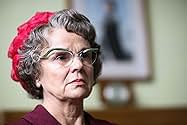
This is a satirical comedy drama as Mrs Whitehouse (Julie Walters) launches a campaign against the libertarian Director General of the BBC Sir Hugh Carleton Greene (Hugh Bonneville.)
The 1960s saw a change in broadcasting. Censorship became lax, satire became more harsher and cruder. The swinging 1960s and the permissive society was a step too far for Mrs Whitehouse.
Her band of followers created the Clean Up TV campaign group. It consisted of writing lots of letters to the BBC and politicians. It was a form of intimidation and she just wanted another kind of state censorship.
The program makes clear that Mrs Whitehouse had no time for lefties or gays or just modern Britain.
I found this television film disappointing and disjointed. The media poked fun of Mrs Whitehouse straight as she came into prominence. The show Swizzlewick satirised her in the 1960s much to her displeasure.
It has a fantasy sequence where Mrs Whitehouse has an erotic dream about Carleton Greene. It was unnecessarily crude.
Her views should had been combated, instead it decides to go for boorish slogans against her.
It is heavily implied that Mrs Whitehouse eventually saw off Carleton Greene. That is not so. Then prime minister Harold Wilson disliked what Carleton Greene was up to and provocatively appointed a former ITV man as the new chairman of the BBC.
Engaging, well made TV drama about a misguided but principled woman
Early sixties Britain is still a fairly innocent place and Mary Whitehouse (Julie Walters), a suburban local art teacher and church-goer, lives a dainty little English existence in her quiet, dainty little Midlands village. But she becomes outraged by what she sees as declining standards on British TV, with more regular, casual bad language, sex talk and violence. The film portrays her real life crusade to 'clean up TV', bringing her into conflict with Hugh Greene (Hugh Bonneville) the new Programmes Commissioner at the BBC, who's moving with the times more and showing programmes more suited to the changing social attitudes.
It's interesting to note what a puritanical society we used to be not really so long ago, especially when we comment on the Americans and their prudish standards they still have on mainstream TV. Maybe it's the age I've been raised in but I've always been one for freedom of expression and mature adults being allowed to see what they want, so Mary Whitehouse was never a character that was going to agree with me. But even if you think her campaigns were misguided, you have to admire her determination and conviction of her will, which this very well made TV drama has portrayed.
The main thing that drives it is two superb lead performances. In the title role, Walters gives it her all as the quaint English lady with an unwavering moral compass who is forced to come to terms with society's changing ideals, attitudes, morals and beliefs while leading her campaign and similarly Bonneville is also great as the arrogant TV chief who bites off more than he can chew with the little guy.
Both the characters are very well written too, along with the script, which really gets you involved with the story, which is engaging and enthralling but refreshingly humorous, too, although in a manner risqué enough, ironically, to get Mrs Whitehouse up in arms about. ****
Mussolini in twin-set and pearls
"Filth" starts off portraying her as a sympathetic, matronly type, a school mistress with a genuine affection for her students, and a caring wife and mother, quite prepared to enjoy a bit of the old heave-ho herself in the sanctity of the marriage bed. But the moment television started to reflect the real world as it was in the early sixties, (heaving and ho-ing outside the marriage bed, cussing and swearing on every street corner), Mary had apoplexy and demanded that Sir Hugh Carleton Greene, Director General of the BBC, call a halt to it.
Now I am not knocking morality. There is right and there is wrong and there is the expression of both but there is also freedom of speech; there are often two sides of almost every story and there's nowt as queer as folk, as they say. Mary simply didn't see it that way. She didn't so much quote the Bible as rewrite it in her own words. Interestingly, "Filth" began by making her sympathetic, (as I've said, her heart was in the right place), and making Carleton Greene the villain of the piece, (sexist, patronizing, condescending, arrogant, you name it), but as Mary's fame grew, (she came to love the limelight, the attention and above all, the power she wielded), our sympathies shifted to the poor, put-upon Greene, driven close to bonkers by this needling, insidious little woman.
Were it not for the fact that she strove to silence all forms of expression with which she didn't agree, destroying reputations and careers as she went, she might just have been considered another eccentric and I worried that Julie Walters would play her as an extension of her eccentric persona's such as Mrs Overall. However, I really ought to have had more faith in Walters who is one of our finest actresses and who is outstanding here. (The fact that she made me almost like Mary is testimony to that). Hugh Bonneville, too, had a lot to do with making Greene change from arrogant snob to crusader to victim in the space of ninety minutes. (The film only concentrates on the period of the 'feud' between Whitehouse and Greene).
Perhaps the writing could have been sharper at times, though the period was beautifully delineated from the outset. This was indeed a vanished England of simplicity and innocence that made you wonder, at least initially, if Mrs. W might not have been right about the tide of 'filth' that was coming down the tube to change it all. But as you watched her change from village school-ma-rm to Mussolini in a twin-set and pearls, you realized it wasn't the 'filth' was was the problem but the knight in very tarnished armour.
Entertaining more than informative
Mary Whitehouse went after more than the BBC, in fact more than TV she went after movies and print media. This movie never goes there. It does try to inject some humor but rarely with any success although it is possible it was successful with a British audience.
I am fairly familiar with Mary Whitehouse and some of her appearances on TV are available on YouTube. This didn't provide any new information unless you are completely unfamiliar with her you might learn the basics.
This was just a lighthearted look at the period and doesn't make any real judgement calls. Worth a watch.


Did you know
- TriviaThe footage of Doctor Who (1963), seen on a television screen and used to depict the violence of the series, was edited to suggest that the scene takes place at the end of the episode. In fact, the scene in question took place around halfway through Doctor Who (1963) season five, episode four, "The Tomb of the Cybermen Episode 4". This clip was followed by part of the opening sequence, showing the title and Patrick Troughton's face.
- GoofsThe sign on the door of Lord Hill's office reads "Lord Charles Hill". This is incorrect as such a style implies that he was the son of a Duke or a Marquess. The sign should have read "Charles, Lord Hill", "Lord Hill of Luton" or, more likely, simply "Lord Hill".
- Quotes
David Turner: I've just had a spot of bother in Birmingham - I was ganged-up on by a group of schoolgirls and that demented housewife.
Sir Hugh Carleton Greene: Ah yes, of course. Now what *is* her name? No, don't tell me. Well you know what they say, old chap? Writing well is the best revenge.
[he turns to walk away]
Sir Hugh Carleton Greene: Though garrotting your enemy with cheesewire runs a close second.
- Crazy creditsOpening titles: "The story you are about to see really took place... only with less swearing and more nudity".
Details
- Release date
- Country of origin
- Language
- Also known as
- Becstelenség: Mary Whitehouse története
- Production company
- See more company credits at IMDbPro