

In Washington, D.C., a reporter faces a possible jail sentence for outing a CIA agent and refusing to reveal her source.In Washington, D.C., a reporter faces a possible jail sentence for outing a CIA agent and refusing to reveal her source.In Washington, D.C., a reporter faces a possible jail sentence for outing a CIA agent and refusing to reveal her source.
- Awards
- 2 wins & 2 nominations total





Angelica Page
- Molly Meyers
- (as Angelica Torn)

- Director
- Writer
- All cast & crew
- Production, box office & more at IMDbPro
7.141.3K
1
2
3
4
5
6
7
8
9
10
Featured reviews
The kind of intelligent movie Hollywood rarely makes anymore
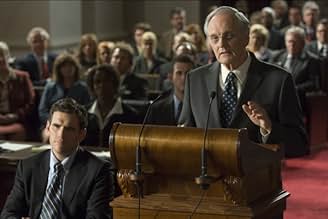
This was shown last night at the Toronto International Film Festival and was very well received. It is a beautifully acted, deftly written examination of the tension between freedom of the press and the power of the state, based very loosely on the Valerie Plame case. The fact that writer and director Rod Lurie spent 13 years in the newspaper business is evident throughout, making for one of the most compelling and believable portrayals of what it is like to be a political reporter for a major newspaper since All the President's Men. Kate Beckinsale (the reporter) and Vera Farmiga (as the CIA operative) are outstanding and each delivers an Oscar-worthy performance. Matt Dillon gives one of his best performances as the smarmy, ambitious and self-righteous prosecuting attorney. David Schwimmer, an odd casting choice, does a fine job within a fairly narrow range. Surprisingly, I even enjoyed Alan Alda's performance as a high-powered, rather cynical and self-obsessed Washington lawyer, hired to defend the beleaguered reporter. But the two women really steal the show.
There was much discussion in our group about the ending and whether it enhanced or undercut the basic message of the film. No point in spoiling it here, but I can assure you it will provoke debate.
There was much discussion in our group about the ending and whether it enhanced or undercut the basic message of the film. No point in spoiling it here, but I can assure you it will provoke debate.
Something you don't see regularly on Hollywood's menu - Definitely worth your time!
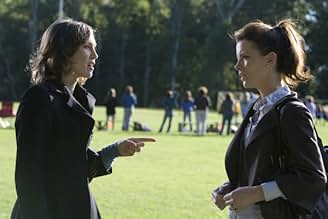
The ending reminded me of "The Sixth Sense". The only thing is, it was just us (the viewers) this time. Although the major part of the script was focused on Beckinsale's character which she flawlessly portrays, but it was Vera Fermiga who stole the show with her limited screen time. Since, it was a work of fiction which was somewhat inspired by real events, a more screen space to Fermiga's character would have certainly maintained the intensity in the plot which clearly declined after she parts away. You have to watch it to believe it. These two ladies faced off each other twice in the movie and I have to say those were the moments you couldn't forget.
As for the whole movie, it is something you don't see regularly on Hollywood's menu and therefore is definitely worth your time.
The ending will leave you asking this question to yourself - "Was she really protecting the source? Was it really about her principles?" And yes, you will get your answers shortly and that answer changes every opinion you had about the characters that you could have vouched for.
And this my friend is what makes this piece of work alluring!
The ending will leave you asking this question to yourself - "Was she really protecting the source? Was it really about her principles?" And yes, you will get your answers shortly and that answer changes every opinion you had about the characters that you could have vouched for.
And this my friend is what makes this piece of work alluring!
Ripped from the headlines writing
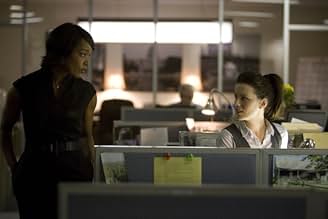
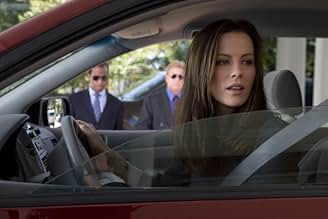
After a Presidential assassination attempt, he orders an attack against Venezuela. Columnist Rachel Armstrong (Kate Beckinsale) writes that the President ignored CIA operative Erica Van Doren (Vera Farmiga) when ordering the attack. The media descends on Erica and her life is turned upside down. The government moves to force Rachel to name her secret source. She refuses and is jailed for contempt.
Of course, it's a ripped-from-the-headlines kind of story. They make sure to say that this is fictional. Writer/director Rod Lurie does a reasonable job but this has a bit too much TV movie feel. Maybe he should have not copied so much from the headlines. There are big enough actors involved but it needs big cinematic flourishes. I won't give any spoilers, but I do love the big reveal at the end.
Of course, it's a ripped-from-the-headlines kind of story. They make sure to say that this is fictional. Writer/director Rod Lurie does a reasonable job but this has a bit too much TV movie feel. Maybe he should have not copied so much from the headlines. There are big enough actors involved but it needs big cinematic flourishes. I won't give any spoilers, but I do love the big reveal at the end.
How the Film Missed the Scoop
The great strength of films about investigative journalism often lies in the rising tension, the meticulous progression of a discovery, and the suffocating sense of danger. Nothing But the Truth takes a different approach. Instead of throwing us into a spiral of increasing revelations and unsettling suspense, it hands us the bomb right from the start: journalist Rachel Armstrong (Kate Beckinsale) has the story ready, a national scoop revealing that the president ignored the findings of a CIA agent, and now the film follows her as her life unravels in the wake of the consequences of her publication.
It's a valid approach, of course, but inevitably less engaging for those who appreciate the weight of a thorough investigation and the unfolding of a growing mystery. Here, the game has already begun, and what remains for the viewer is to watch the protagonist struggle against a system that demands one non-negotiable thing from her: the revelation of her source. The issue is relevant, resonating with the debate over press freedom and professional confidentiality, but the film chooses to tell this story more through the lens of personal drama than through the tension of the legal or political conflict.
The narrative structure reinforces this focus by adopting a nearly diary-like format, highlighting Rachel's endless days in prison as her marriage collapses and her relationship with her son weakens. The intention is clear: to humanize her resistance, to make the audience feel every lost day due to her moral stubbornness. But was this the best approach? The drama works, but something is missing to make it truly impactful. Rachel's imprisonment could have been a suffocating hell, an overwhelming existential dilemma - but instead, the film takes a predictable path, lacking that unbearable sense of weight that would have made this journey memorable.
Furthermore, the film could have enriched its narrative by better exploring characters like the Special Prosecutor (Matt Dillon). He isn't a villain, just a man doing his job within the system - which, in itself, could have been an interesting point of conflict. But he remains functional, with no space for his perspective to be explored in a way that would have further challenged both the protagonist and the audience. What if we had seen a glimpse of hesitation in him? There is a clear choice to keep the drama centered on the journalist, without delving too much into the other players in this legal chess game.
The ending, however, partly compensates for the lack of impact, with a final ironic revelation about the source's identity. It's a nice touch, even though it doesn't resolve the feeling that the film was lacking a more intense energy, a more penetrating suspense. Nothing But the Truth is competent, with a solid script and effective performances, but its more sentimental and less investigative approach may not be for everyone. It's a film that fervently defends press freedom, but in the end, it feels like a highly important article that, out of fear of crossing boundaries, settles for merely skimming the surface. It lacked the boldness of a daring investigation, that scoop that turns an ordinary story into something unforgettable.
It's a valid approach, of course, but inevitably less engaging for those who appreciate the weight of a thorough investigation and the unfolding of a growing mystery. Here, the game has already begun, and what remains for the viewer is to watch the protagonist struggle against a system that demands one non-negotiable thing from her: the revelation of her source. The issue is relevant, resonating with the debate over press freedom and professional confidentiality, but the film chooses to tell this story more through the lens of personal drama than through the tension of the legal or political conflict.
The narrative structure reinforces this focus by adopting a nearly diary-like format, highlighting Rachel's endless days in prison as her marriage collapses and her relationship with her son weakens. The intention is clear: to humanize her resistance, to make the audience feel every lost day due to her moral stubbornness. But was this the best approach? The drama works, but something is missing to make it truly impactful. Rachel's imprisonment could have been a suffocating hell, an overwhelming existential dilemma - but instead, the film takes a predictable path, lacking that unbearable sense of weight that would have made this journey memorable.
Furthermore, the film could have enriched its narrative by better exploring characters like the Special Prosecutor (Matt Dillon). He isn't a villain, just a man doing his job within the system - which, in itself, could have been an interesting point of conflict. But he remains functional, with no space for his perspective to be explored in a way that would have further challenged both the protagonist and the audience. What if we had seen a glimpse of hesitation in him? There is a clear choice to keep the drama centered on the journalist, without delving too much into the other players in this legal chess game.
The ending, however, partly compensates for the lack of impact, with a final ironic revelation about the source's identity. It's a nice touch, even though it doesn't resolve the feeling that the film was lacking a more intense energy, a more penetrating suspense. Nothing But the Truth is competent, with a solid script and effective performances, but its more sentimental and less investigative approach may not be for everyone. It's a film that fervently defends press freedom, but in the end, it feels like a highly important article that, out of fear of crossing boundaries, settles for merely skimming the surface. It lacked the boldness of a daring investigation, that scoop that turns an ordinary story into something unforgettable.
Great story, great tension, great film
Kate Beckinsale, Vera Farmiga, Alan Alda, Matt Dilon. Such great cast alone was enough "quality stamp" for me to get me interested in this film. I must say Nothing But The Truth has exceeded my expectations many times over.
Based on a true story, the basic plot line has close focus on a reporter of a Washington D.C. major newspaper Rachel Armstrong (Kate Beckinsale) who after writing an article on the US president's actions revealing the identity of a secret CIA agent Erica Van Doren (Vera Farmiga) is being pressured to reveal her secret source by the government in such ways she could never have imagined.
The story flows flawlessly, picks up nicely and slowly drags you into a twist of controversial emotions, drawing the characters with all their pros and cons and letting you slowly get acquainted with their moral inner fights.
Beckinsale and Farmiga have a great energy between them that will have you forget you're watching a movie and catch your breath at the few scenes at which they confront each other. Alda, as usual is a brilliant defender of humanity and freedom. Dilon's take on the "hyenous prosecutor" is so tremendously real will all aspects of belief in his work it's simply scary.
Alik Sakharov great DoP work on this film shows every muscle moving on the actors' faces, which underlines the great work of the actors.
This film definitely proves Lurie knows what he's doing out there and I'll definitely have my eye on his future work.
Based on a true story, the basic plot line has close focus on a reporter of a Washington D.C. major newspaper Rachel Armstrong (Kate Beckinsale) who after writing an article on the US president's actions revealing the identity of a secret CIA agent Erica Van Doren (Vera Farmiga) is being pressured to reveal her secret source by the government in such ways she could never have imagined.
The story flows flawlessly, picks up nicely and slowly drags you into a twist of controversial emotions, drawing the characters with all their pros and cons and letting you slowly get acquainted with their moral inner fights.
Beckinsale and Farmiga have a great energy between them that will have you forget you're watching a movie and catch your breath at the few scenes at which they confront each other. Alda, as usual is a brilliant defender of humanity and freedom. Dilon's take on the "hyenous prosecutor" is so tremendously real will all aspects of belief in his work it's simply scary.
Alik Sakharov great DoP work on this film shows every muscle moving on the actors' faces, which underlines the great work of the actors.
This film definitely proves Lurie knows what he's doing out there and I'll definitely have my eye on his future work.


Did you know
- TriviaThere is a scene in the movie where Erica Van Doren (Vera Farmiga) is given a lie detector test because the CIA suspects that she leaked her own identity. Rod Lurie brought in a real life polygraphist to polygraph her for the scene. He asked her if her name was Erica Van Doren and if she worked for the CIA. After the scene was over the polygraphist called Lurie over to tell him that Farmiga beat the polygraph test because the machine said that she was telling the truth.
- GoofsWhen Rachel is beaten up in jail, she gets serious scars on her lower lip and her right eye. In a later scene, the scars are completely gone. In later subsequent scenes, the scars are back, and seen to be gradually healing.
- Quotes
Alan Burnside: A man can live a good life, be honorable, give to charity, but in the end, the number of people who come to his funeral is generally dependent on the weather.
- ConnectionsFeatured in The 14th Annual Critics' Choice Awards (2009)
Details
Box office
- Budget
- $11,500,000 (estimated)
- Gross worldwide
- $409,832
- Runtime
- 1h 48m(108 min)
- Color
- Sound mix
- Aspect ratio
- 2.35 : 1
Contribute to this page
Suggest an edit or add missing content