Three Sundays
- Episode aired Aug 17, 2008
- TV-14
- 48m
IMDb RATING
8.1/10
3.1K
YOUR RATING

Freddy and Ken take a client out to lunch who stirs Roger Sterling's heart.Freddy and Ken take a client out to lunch who stirs Roger Sterling's heart.Freddy and Ken take a client out to lunch who stirs Roger Sterling's heart.
- Director
- Writers
- Stars



- Director
- Writers
- All cast & crew
- Production, box office & more at IMDbPro
8.13.1K
1
2
3
4
5
6
7
8
9
10
Featured reviews
The course of three significant Sundays-Palm Sunday, Easter Sunday, and Good Friday to examine the spiritual and emotional crises faced by several key characters
"Three Sundays," the fourth episode of the second season of "Mad Men," directed by Tim Hunter is an exploration of guilt, faith, and the consequences of moral compromise. The episode unfolds over the course of three significant Sundays-Palm Sunday, Easter Sunday, and Good Friday-using the religious calendar as a framework to examine the spiritual and emotional crises faced by several key characters. The narrative centers on Don Draper (Jon Hamm), Peggy Olson (Elisabeth Moss), and Roger Sterling (John Slattery), whose personal and professional struggles mirror the themes of redemption and betrayal that permeate the episode.
The episode opens with Don and his family preparing for Palm Sunday, a scene that sets the tone for the episode's examination of domestic tension and emotional distance. Don's interactions with his children, particularly Bobby, reveal his ambivalence toward discipline and his own troubled relationship with authority. The cinematography in these scenes is intimate and understated, using natural lighting and subtle camera movements to underscore the emotional weight of the moments. The production design, from the family home to the office, immerses viewers in the world of early 1960s America, while the editing is seamless, highlighting the contrasts between Don's public and private personas.
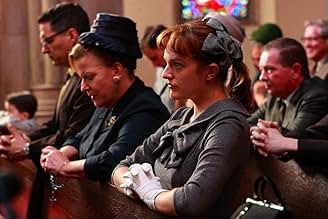
Peggy's storyline is marked by a sense of spiritual crisis and the burden of her past. She attends church with her family, seeking solace and forgiveness for the child she gave up for adoption. The episode's portrayal of Peggy's inner turmoil is handled with sensitivity, capturing her sense of displacement and the ordinariness of her suffering. The direction and editing in these scenes are dreamlike, with a slow, floating quality that underscores the sense of dislocation and the characters' emotional distance from one another.
Roger's subplot is equally significant, as he is captivated by the wife of a client, leading to a series of morally ambiguous decisions. The episode's portrayal of Roger's emptiness and his search for validation is handled with nuance, capturing the complexity of his relationship with his daughter and the ways in which he is marginalized by his peers. The production design, from the office furniture to the costumes, immerses viewers in the world of 1960s America, while the editing is sharp and deliberate, highlighting the contrasts between Roger's public and private personas.
The episode also delves into the lives of other characters, particularly Betty Draper (January Jones), whose frustration with Bobby's misbehavior and Don's lack of discipline comes to a head. The direction and editing in these scenes are sharp and deliberate, highlighting the contrasts between Betty's public and private personas.
The episode opens with Don and his family preparing for Palm Sunday, a scene that sets the tone for the episode's examination of domestic tension and emotional distance. Don's interactions with his children, particularly Bobby, reveal his ambivalence toward discipline and his own troubled relationship with authority. The cinematography in these scenes is intimate and understated, using natural lighting and subtle camera movements to underscore the emotional weight of the moments. The production design, from the family home to the office, immerses viewers in the world of early 1960s America, while the editing is seamless, highlighting the contrasts between Don's public and private personas.
Peggy's storyline is marked by a sense of spiritual crisis and the burden of her past. She attends church with her family, seeking solace and forgiveness for the child she gave up for adoption. The episode's portrayal of Peggy's inner turmoil is handled with sensitivity, capturing her sense of displacement and the ordinariness of her suffering. The direction and editing in these scenes are dreamlike, with a slow, floating quality that underscores the sense of dislocation and the characters' emotional distance from one another.
Roger's subplot is equally significant, as he is captivated by the wife of a client, leading to a series of morally ambiguous decisions. The episode's portrayal of Roger's emptiness and his search for validation is handled with nuance, capturing the complexity of his relationship with his daughter and the ways in which he is marginalized by his peers. The production design, from the office furniture to the costumes, immerses viewers in the world of 1960s America, while the editing is sharp and deliberate, highlighting the contrasts between Roger's public and private personas.
The episode also delves into the lives of other characters, particularly Betty Draper (January Jones), whose frustration with Bobby's misbehavior and Don's lack of discipline comes to a head. The direction and editing in these scenes are sharp and deliberate, highlighting the contrasts between Betty's public and private personas.
Strong episode with standout moments
Several characters are pursuing objectives in this episode with mixed results and it makes for an intriguing plot. Some of the standard Mad Men tropes are nicely subverted, which is refreshing.
One of the most impressive aspects involves the writing and acting of the parenting conflict between Don and Betty. Betty's repressed anger at Don and the tension present through the season set this up well. It is also a testament to the cleverness and manipulation of the filmmaking when you side with Don in a situation and feel sympathy as more of his backstory is revealed.
Peggy's scenes are equally as interesting. The portrayal of her family and their church going activities has good drama as it continues to explore the career focussed female in the 1960s. It is very plausible that attitudes from others would be as portrayed here. I also note the physical resemblance between Colin Hanks' character and Pete Campbell, which if intentional is a nice piece of visual storytelling.
As ever all performances are strong and the visuals are superb.
It is an 8.5/10 for me but I round up.
One of the most impressive aspects involves the writing and acting of the parenting conflict between Don and Betty. Betty's repressed anger at Don and the tension present through the season set this up well. It is also a testament to the cleverness and manipulation of the filmmaking when you side with Don in a situation and feel sympathy as more of his backstory is revealed.
Peggy's scenes are equally as interesting. The portrayal of her family and their church going activities has good drama as it continues to explore the career focussed female in the 1960s. It is very plausible that attitudes from others would be as portrayed here. I also note the physical resemblance between Colin Hanks' character and Pete Campbell, which if intentional is a nice piece of visual storytelling.
As ever all performances are strong and the visuals are superb.
It is an 8.5/10 for me but I round up.
Peggy's secret...
This is an excellent episode, one of the finest of the season. We are taken back to remembering Peggy's actions in the first season and we are taken with the question as to what happened as the consequence of Peggy and Pete's actions. Elisabeth Moss is at her best here, one of her shining moments, and it is a shame that she did not win her much deserved Emmy award. We are also faced with quite a number of dilemmas for both Peggy and her family. I think this episode takes us a bit from the advertising world and into one of the characters' lives deeply, which is not a problem at all because the show knows how to handle it's separate story lines. Let's see of what else will come for Peggy...

Did you know
- TriviaBoth Jon Hamm and John Slattery were ill with colds throughout the filming of this episode.
- GoofsWhen Father Gill visits the Olson home for dinner, on April 8th, there is audio of a Yankees game in the background. The Yankee season in 1962 didn't begin until April 10th.
- Quotes
Sally Draper: [to Joan] You have big ones. My mommy has big ones too. And I'm going to have big ones when I grow up.
Details
- Release date
- Country of origin
- Official sites
- Language
- Filming locations
- Production companies
- See more company credits at IMDbPro
Contribute to this page
Suggest an edit or add missing content