A Night to Remember
- Episode aired Sep 14, 2008
- TV-14
- 48m
IMDb RATING
8.3/10
3.1K
YOUR RATING

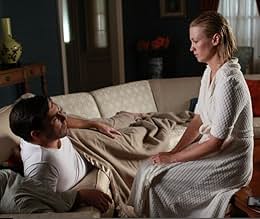
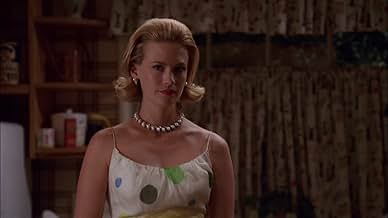
Betty becomes suspicious that Don is having an affair after her conversation with Jimmy Barrett, Joan helps out in the television department, and Peggy helps the church with a dance flyer.Betty becomes suspicious that Don is having an affair after her conversation with Jimmy Barrett, Joan helps out in the television department, and Peggy helps the church with a dance flyer.Betty becomes suspicious that Don is having an affair after her conversation with Jimmy Barrett, Joan helps out in the television department, and Peggy helps the church with a dance flyer.
- Director
- Writers
- Stars


- Director
- Writers
- All cast & crew
- Production, box office & more at IMDbPro
8.33K
1
2
3
4
5
6
7
8
9
10
Featured reviews
Days Of Our Lives
Never was a fan of the movie Orange County, but Colin Hanks is a good actor because he can play such a nice guy and such a creep at the same time... I mean, he's not creepy, but he's a total user... Good character, and pretty good looking, and that's the only reason poor Peggy's helping him...
I prefer their story to Don's affair with Bobbie... although she was great relating to Peggy in The New Girl episode, in which this one continues on a good, steady flow unlike the first several Season 2 episodes which were lacking...
Meanwhile Betty's story... she's finally on to Don's cheating... is very sad, and shows what a blockhead Don is, but... don't most of the women on this show throw themselves AT Don as opposed to the other way around?
Like the Joan story too... She had more talent than Spectacles Boy... never really liked him... but the characters, the good and bad, are all gelling now...
There just needs more Roger, and way more ad/pitch/conquests, those really showcase Don's (and Jon's) power...
I prefer their story to Don's affair with Bobbie... although she was great relating to Peggy in The New Girl episode, in which this one continues on a good, steady flow unlike the first several Season 2 episodes which were lacking...
Meanwhile Betty's story... she's finally on to Don's cheating... is very sad, and shows what a blockhead Don is, but... don't most of the women on this show throw themselves AT Don as opposed to the other way around?
Like the Joan story too... She had more talent than Spectacles Boy... never really liked him... but the characters, the good and bad, are all gelling now...
There just needs more Roger, and way more ad/pitch/conquests, those really showcase Don's (and Jon's) power...
Very strong Betty episode
A Night To Remember follows Betty's encounter with Jimmy Barrett in The Gold Violin. The focus remains on Don's infidelity and the interactions between the Drapers are portrayed brilliantly by the actors and filmmakers.
Joan has some very strong scenes in both work and home life. The situation involving her job role is very impactful and you cannot help but feel a strong sympathy. In contrast to Betty's expression of feelings, Joan's repression is equally well portrayed. Equally so in her home life, which causes an alarming feeling of impending dread.
Peggy's scenes with Father Gill continue to be intriguing. In a show with so many men out to coerce or manipulate women, it is difficult to fully accept that someone is genuinely trying to help. This gives these scenes an edge for me, but they make you hope Peggy acknowledges her actions at the end of season one.
As always, the performances are excellent, with the standouts being John Hamm, January Jones, Christina Hendricks, and Elizabeth Moss.
The cinematography and production design is fantastic as always. The final montage in particular is very memorable.
Joan has some very strong scenes in both work and home life. The situation involving her job role is very impactful and you cannot help but feel a strong sympathy. In contrast to Betty's expression of feelings, Joan's repression is equally well portrayed. Equally so in her home life, which causes an alarming feeling of impending dread.
Peggy's scenes with Father Gill continue to be intriguing. In a show with so many men out to coerce or manipulate women, it is difficult to fully accept that someone is genuinely trying to help. This gives these scenes an edge for me, but they make you hope Peggy acknowledges her actions at the end of season one.
As always, the performances are excellent, with the standouts being John Hamm, January Jones, Christina Hendricks, and Elizabeth Moss.
The cinematography and production design is fantastic as always. The final montage in particular is very memorable.
Shows what can happen to an affecting action...
Betty Draper is torn apart in this episode, and she finally lets her emotions out on Don in one of the finest episodes of the series.
The episode masterfully executes the emotional and over-bearing aspect that Don and Betty have in their home, that tension that was always hidden inside Betty comes out. She might have just realized it, but it was a long time coming. Both Jon Hamm and January Jones are brilliant in their scenes together, and if anyone has seen the film Revolutionary Road or the novel it is based upon one can only imagine what a problem like this will turn out.
On the other side of the episode we have Peggy dealing with her shame and guilt with a priest, and Moss is playing Peggy so well that she might upstage Hamm in the future of the show. Ultimately, this is a very strong episode and one that is sure to become the beginning of a downward spiral for Don, Betty, and Peggy.
The episode masterfully executes the emotional and over-bearing aspect that Don and Betty have in their home, that tension that was always hidden inside Betty comes out. She might have just realized it, but it was a long time coming. Both Jon Hamm and January Jones are brilliant in their scenes together, and if anyone has seen the film Revolutionary Road or the novel it is based upon one can only imagine what a problem like this will turn out.
On the other side of the episode we have Peggy dealing with her shame and guilt with a priest, and Moss is playing Peggy so well that she might upstage Hamm in the future of the show. Ultimately, this is a very strong episode and one that is sure to become the beginning of a downward spiral for Don, Betty, and Peggy.
The episode marks the point of no return for the Drapers and sets the stage for the radical reinventions that will define the later seasons
"A Night to Remember," the eighth episode of Mad Men's second season, stands as a watershed moment in Matthew Weiner's opus, operating as a grim structural counterpart to the show's pilot. The title itself, borrowed from Walter Lord's 1955 book and the subsequent film about the Titanic, serves as a macabre ironic framing device. Just as the ocean liner was deemed unsinkable, the Draper marriage was constructed on a foundation of seemingly impenetrable mid-century perfection-a hull of white picket fences and suburban etiquette designed to keep the cold water of reality at bay. In this episode, directed with claustrophobic precision by Lesli Linka Glatter, the iceberg finally strikes. The episode does not merely advance the plot; it dissects the very mechanism of denial that fuels both the advertising industry and the domestic lives of its characters. By placing the machinery of commerce-specifically the marketing of Heineken beer-directly alongside the machinery of a failing marriage, the writers expose the transactional nature of Don Draper's existence. The year is 1962, a time of precarious balance in American history, and Glatter visualizes this tension by trapping her characters in spaces that feel less like homes or offices and more like stage sets where the actors have forgotten their lines.
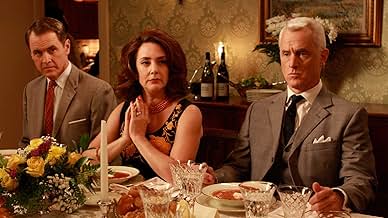
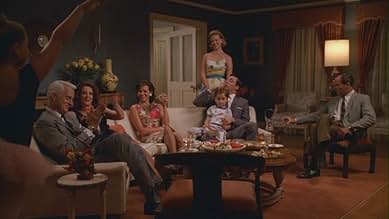
The narrative spine of the episode is built around the acquisition of the Heineken account, a storyline that Duck Phillips pursues with desperate ambition. Duck, struggling to assert his relevance at Sterling Cooper, views the Dutch beer not just as a client but as a conquest of the upscale market that Don usually dominates. The strategy requires selling a foreign luxury to an American public that is suspicious of the "other," a thematic echo of the characters' own xenophobia towards emotional honesty. Don, initially dismissive, realizes he must perform his role as the creative genius to appease the client, leading to a cynical conflation of his professional and private lives. He suggests to Betty that she host a dinner party with an "Around the World" theme to subtly test the beer on their suburban peers. This plot point is crucial because it transforms Betty from a spouse into an unwitting employee, a focus group participant in her own home. The tragedy lies in the fact that Betty believes she is curating a perfect evening to support her husband, unaware that she is merely a variable in an ad campaign, a realization that later shatters her composure.
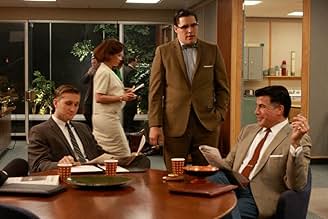
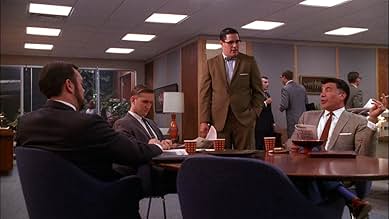
Parallel to the Draper domestic drama, the episode offers a scathing critique of the limited avenues available to women in the corporate sphere through Joan Holloway. With the television department overwhelmed, Harry Crane enlists Joan to help read scripts to determine ad placement. For a brief, shining moment, Joan steps out of her role as the office manager and sexual object, displaying a keen, intuitive understanding of media logistics that arguably surpasses Harry's own. She thrives in the intellectual engagement, revealing a suppressed ambition that the audience rarely glimpses. However, the subplot resolves with a crushing return to the status quo: Harry hires a young, inexperienced man named Danny to take over the role permanently. The scene where Joan is introduced to her replacement is a masterclass in understated devastation; she is forced to train the man who is stealing the future she didn't know she wanted. It is a stark reminder of the era's rigid gender stratification-competence is secondary to gender, and Joan is painfully reminded that her power is confined to her silhouette, not her intellect.
Peggy Olson's storyline continues to serve as a theological counterweight to the show's secular consumerism. Father Gill, the young, progressive priest, pressures Peggy to contribute her copywriting skills to a flyer for a church dance. The dynamic between them is fraught with an unspoken tension regarding Peggy's secret child and her lapsed Catholic guilt. Gill acts as a mirror that Peggy refuses to look into; he urges her to make a confession, to unburden her soul, using language that eerily mimics the persuasion techniques of advertising. He tries to "sell" her salvation just as she sells products. Peggy's resistance is a testament to her compartmentalization; she has learned from Don that the only way to survive a traumatic past is to move forward and never look back. The conflict culminates in a tense exchange where Peggy rejects the narrative of sin and redemption Gill offers, choosing instead the autonomy of her own silence. This subplot reinforces the episode's central thesis: that confession, whether to a priest or a spouse, is a dangerous act that these characters avoid at all costs.
At its core, "A Night to Remember" is a deconstruction of the American Dream as a marketing construct. The episode suggests that the nuclear family, like a bottle of imported beer, is a product that must be sold and maintained through constant effort and deception. The "night to remember" is ironic because the characters are desperate to forget. Don wants to forget his past; Peggy wants to forget her pregnancy; Betty wants to forget the affair. The inability to forget, forced upon them by external agents (Jimmy Barrett, Father Gill), creates the conflict. The series posits that America itself in 1962 is caught in this dynamic, trying to maintain an image of wholesome prosperity while rot spreads beneath the surface, prefiguring the cultural explosions of the later 1960s.
"A Night to Remember" is a perfect storm of narrative payoff, visual storytelling, and thematic resonance. It systematically dismantles the structures-marriage, career, religion-that the characters use to define themselves. The creators, Weiner and Glatter, present an unsparing vision of human frailty, suggesting that the "good life" sold by Madison Avenue is a hollow vessel. The episode ends not with a bang, but with a lingering sense of displacement. Don Draper, the man who owns the world, is reduced to a transient figure, drinking a beer he doesn't like in a room he doesn't own. It is a profound statement on the cost of the lies we tell ourselves.
This episode is essential viewing for understanding the trajectory of Mad Men. It marks the point of no return for the Drapers and sets the stage for the radical reinventions that will define the later seasons. It compels the viewer to reflect on their own "performances" in social and private spheres. The final image of Don alone in the dark office kitchen is one of the series' most enduring icons-a portrait of a man who has successfully sold everything, only to find he has nothing left to keep.
The narrative spine of the episode is built around the acquisition of the Heineken account, a storyline that Duck Phillips pursues with desperate ambition. Duck, struggling to assert his relevance at Sterling Cooper, views the Dutch beer not just as a client but as a conquest of the upscale market that Don usually dominates. The strategy requires selling a foreign luxury to an American public that is suspicious of the "other," a thematic echo of the characters' own xenophobia towards emotional honesty. Don, initially dismissive, realizes he must perform his role as the creative genius to appease the client, leading to a cynical conflation of his professional and private lives. He suggests to Betty that she host a dinner party with an "Around the World" theme to subtly test the beer on their suburban peers. This plot point is crucial because it transforms Betty from a spouse into an unwitting employee, a focus group participant in her own home. The tragedy lies in the fact that Betty believes she is curating a perfect evening to support her husband, unaware that she is merely a variable in an ad campaign, a realization that later shatters her composure.
Parallel to the Draper domestic drama, the episode offers a scathing critique of the limited avenues available to women in the corporate sphere through Joan Holloway. With the television department overwhelmed, Harry Crane enlists Joan to help read scripts to determine ad placement. For a brief, shining moment, Joan steps out of her role as the office manager and sexual object, displaying a keen, intuitive understanding of media logistics that arguably surpasses Harry's own. She thrives in the intellectual engagement, revealing a suppressed ambition that the audience rarely glimpses. However, the subplot resolves with a crushing return to the status quo: Harry hires a young, inexperienced man named Danny to take over the role permanently. The scene where Joan is introduced to her replacement is a masterclass in understated devastation; she is forced to train the man who is stealing the future she didn't know she wanted. It is a stark reminder of the era's rigid gender stratification-competence is secondary to gender, and Joan is painfully reminded that her power is confined to her silhouette, not her intellect.
Peggy Olson's storyline continues to serve as a theological counterweight to the show's secular consumerism. Father Gill, the young, progressive priest, pressures Peggy to contribute her copywriting skills to a flyer for a church dance. The dynamic between them is fraught with an unspoken tension regarding Peggy's secret child and her lapsed Catholic guilt. Gill acts as a mirror that Peggy refuses to look into; he urges her to make a confession, to unburden her soul, using language that eerily mimics the persuasion techniques of advertising. He tries to "sell" her salvation just as she sells products. Peggy's resistance is a testament to her compartmentalization; she has learned from Don that the only way to survive a traumatic past is to move forward and never look back. The conflict culminates in a tense exchange where Peggy rejects the narrative of sin and redemption Gill offers, choosing instead the autonomy of her own silence. This subplot reinforces the episode's central thesis: that confession, whether to a priest or a spouse, is a dangerous act that these characters avoid at all costs.
At its core, "A Night to Remember" is a deconstruction of the American Dream as a marketing construct. The episode suggests that the nuclear family, like a bottle of imported beer, is a product that must be sold and maintained through constant effort and deception. The "night to remember" is ironic because the characters are desperate to forget. Don wants to forget his past; Peggy wants to forget her pregnancy; Betty wants to forget the affair. The inability to forget, forced upon them by external agents (Jimmy Barrett, Father Gill), creates the conflict. The series posits that America itself in 1962 is caught in this dynamic, trying to maintain an image of wholesome prosperity while rot spreads beneath the surface, prefiguring the cultural explosions of the later 1960s.
"A Night to Remember" is a perfect storm of narrative payoff, visual storytelling, and thematic resonance. It systematically dismantles the structures-marriage, career, religion-that the characters use to define themselves. The creators, Weiner and Glatter, present an unsparing vision of human frailty, suggesting that the "good life" sold by Madison Avenue is a hollow vessel. The episode ends not with a bang, but with a lingering sense of displacement. Don Draper, the man who owns the world, is reduced to a transient figure, drinking a beer he doesn't like in a room he doesn't own. It is a profound statement on the cost of the lies we tell ourselves.
This episode is essential viewing for understanding the trajectory of Mad Men. It marks the point of no return for the Drapers and sets the stage for the radical reinventions that will define the later seasons. It compels the viewer to reflect on their own "performances" in social and private spheres. The final image of Don alone in the dark office kitchen is one of the series' most enduring icons-a portrait of a man who has successfully sold everything, only to find he has nothing left to keep.

Did you know
- TriviaJanuary Jones loved the scene where Betty attacks one of the dining room chairs. The chair was made of balsa wood so it would break easily.
- GoofsWhen Harry is talking to Sal, Ken, and Paul about needing someone to read scripts, the last shot of the scene reverses the negative of the film, as can be seen by Sal's and Harry's suit breast pockets and handkerchiefs being on the right side of their suits, instead of the left.
- Quotes
Peggy Olson: A Night to Remember is every girl's dream. It holds the wholesome promise of the kind of hand holding that eventually leads to marriage.
- ConnectionsFeatured in The 61st Primetime Emmy Awards (2009)
Details
- Release date
- Country of origin
- Official sites
- Language
- Filming locations
- Production companies
- See more company credits at IMDbPro
Contribute to this page
Suggest an edit or add missing content