IMDb RATING
6.7/10
1.2K
YOUR RATING

In a society in which gender roles are switched, will men tolerate being unequal?In a society in which gender roles are switched, will men tolerate being unequal?In a society in which gender roles are switched, will men tolerate being unequal?
- Director

6.71.2K
1
2
3
4
5
6
7
8
9
10
Featured reviews
Oblique Reference ?
His is a very short take on a very serious subject. The dilution of the subject was done by the name of the clip, not the execution of the plot. "The Consequence of Feminism" is a misnomer.
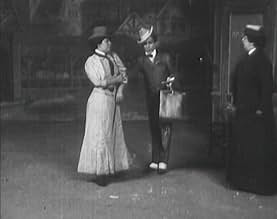
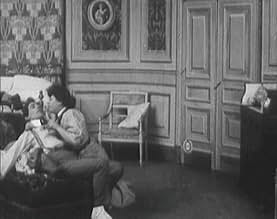
The story is basically - if the gender roles are completely reversed - the men do the household and other menial chores, and sit in Kitty parties, while the women are in Wall-street, Bars, clubs and the controller - including wooing the 'boy'-friend, how would the men in audience would take it. Would they learn something from it ? The ending where the males rebel against oppression - could have as well happened with women against oppression - and hence it is not the 'consequence of feminism" - but a biting take on the 'probable consequence of masculinism"
On that aspect it is a very interesting watch.
Too short ? May be, but probably making it longer would have blunted the sword.
Of course most of the reviewers here don't seem to have got the pinch of it.
Incidentally the most intelligent thing about the movie are the genders - had that been reversed, which naturally Director meant, probably this movie would have faced fire due to suuffragacy.
Gender politics in 1906!
Subversion reigns in this 1906 short silent film from the pioneering French female director Alice Guy in which gender roles are subverted and women 'wear the trousers'. An early attempt to make people think about gender politics - the kind of thing we take for granted nowadays but which back then was a bit radical.
Alice Guy - a more serious film-maker than her misguided fans would have us believe
This is a very important little film by Alice Guy and, unlike many of the films around this time wrongly ascribed to her, is very definitely her work. She would later remake the film, in a somewhat less anti-feminist mode, in the US as In the Year 2000 in 1912. Alas, although we have descriptions of the film, the film itself does not sruvive. It has sometimes been suggested (on no very good grounds) that Guy was pressured by Gaumont into giving this film an anti-feminist slant. This is rather improbable and it is worth remembering that Guy was not a particularly unconventional woman and, when this film was made (probably in fact early 1907) she was on the point of getting married (4 March 1907).
It was in fact probably made in January-February 1907 (it comes shortly after the Christmas 1906 films in the Gaumont 1908 cataogue) and, along with L'Assassin (a "grand guignol" melodrama about a demi-mondaine who finds a known killer has broken into her flat). This second film was part of a fashion for "grand guignol" (they might best be described as "terror" films to distinguish them from the later "horror" genre) which had been set by Lucien Nonguet's Terrible Angoisse (Pathé, 1905) based on André de Lorde's play Au téléphone (subsequently refilmed by Pathé -Le chàteau du médecin - and then remade by Edwin Porter, D. W.Griffith The Lonely Villa - Lois Weber - Suspense - and Yakov Protazonov). Earlier in 1906 Guy had also made Lèvres closes (based on the play La Paralytique) about a paralysed man unable to prevent a house-breaker from murdering his grand-daughter). These films were probably written by Louis Feuillade (who would later remake La Paralytique himself) but very definitely directed by Guy, who discusses them in he biography.
In 1906 Guy also went with scriptwriter Feuillade and future husband Herbert Blaché to the South of France to film Frédéric Mistral's classic novel Mireille. Unfortunately the film did not come out (botched by Blaché, nevertheless forgiven by a love-lorn Guy). Had it been made, this film would have been an important addition to her repertoire.
She was also of course in 1906 very largely occupied in making phonoscenes, "talkies" with synchronised sound largely based on operas and popular songs, of which over 100 were made at this time, several of which she would later remake in a fashion in the US as silent fiction films.
All this is to emphasise the seriosuness of Guy as a film-maker and how very different her own films are from those - mainly slapstick coedies, chase films, toilet humour etc - made at this same time by her various assistants - Feuillade, Étienne Arnaud and Roméo Bosetti.
Unfortunately the Alice Guy fan club (including her biographer and abetted by Gaumont itself, misascribing films willy-nilly) is characterised more by enthusiasm than intelligence and, in its determination to ascribe anything and everything to Alice Guy (see my reviews of La Vérité sur l'homme-singe, La Course à la saucisson, Le Billet de banque, Le Frotteur and La Glu) does her reputation no good at all.
No doubt, if and when Gaumont trouble to unearth Feuillade's C'est papa qui a pris la purge about a man with an incontinence probem - the Pathé version of the same film is available - or Concours des fumeurs about men making themseves sick in a smoking contest, the fan club will be just as eager to ascribe them to Guy as well and damage her reputaion yet further.
In the meantime, those of us who are interested in the more serious side of Alice Guy's film-making might prefer to hope that the remake of this US film is rediscovered in a biscuit-tin somewhere and that Gaumont stirs itself to publish Lèvres closes and L'Assassin which very probably do still survive somehere in their archives.
It was in fact probably made in January-February 1907 (it comes shortly after the Christmas 1906 films in the Gaumont 1908 cataogue) and, along with L'Assassin (a "grand guignol" melodrama about a demi-mondaine who finds a known killer has broken into her flat). This second film was part of a fashion for "grand guignol" (they might best be described as "terror" films to distinguish them from the later "horror" genre) which had been set by Lucien Nonguet's Terrible Angoisse (Pathé, 1905) based on André de Lorde's play Au téléphone (subsequently refilmed by Pathé -Le chàteau du médecin - and then remade by Edwin Porter, D. W.Griffith The Lonely Villa - Lois Weber - Suspense - and Yakov Protazonov). Earlier in 1906 Guy had also made Lèvres closes (based on the play La Paralytique) about a paralysed man unable to prevent a house-breaker from murdering his grand-daughter). These films were probably written by Louis Feuillade (who would later remake La Paralytique himself) but very definitely directed by Guy, who discusses them in he biography.
In 1906 Guy also went with scriptwriter Feuillade and future husband Herbert Blaché to the South of France to film Frédéric Mistral's classic novel Mireille. Unfortunately the film did not come out (botched by Blaché, nevertheless forgiven by a love-lorn Guy). Had it been made, this film would have been an important addition to her repertoire.
She was also of course in 1906 very largely occupied in making phonoscenes, "talkies" with synchronised sound largely based on operas and popular songs, of which over 100 were made at this time, several of which she would later remake in a fashion in the US as silent fiction films.
All this is to emphasise the seriosuness of Guy as a film-maker and how very different her own films are from those - mainly slapstick coedies, chase films, toilet humour etc - made at this same time by her various assistants - Feuillade, Étienne Arnaud and Roméo Bosetti.
Unfortunately the Alice Guy fan club (including her biographer and abetted by Gaumont itself, misascribing films willy-nilly) is characterised more by enthusiasm than intelligence and, in its determination to ascribe anything and everything to Alice Guy (see my reviews of La Vérité sur l'homme-singe, La Course à la saucisson, Le Billet de banque, Le Frotteur and La Glu) does her reputation no good at all.
No doubt, if and when Gaumont trouble to unearth Feuillade's C'est papa qui a pris la purge about a man with an incontinence probem - the Pathé version of the same film is available - or Concours des fumeurs about men making themseves sick in a smoking contest, the fan club will be just as eager to ascribe them to Guy as well and damage her reputaion yet further.
In the meantime, those of us who are interested in the more serious side of Alice Guy's film-making might prefer to hope that the remake of this US film is rediscovered in a biscuit-tin somewhere and that Gaumont stirs itself to publish Lèvres closes and L'Assassin which very probably do still survive somehere in their archives.
Gay guys?! Not quite...watch and see.
You gotta see this one!! This film is an extremely odd one for director Alice Guy. She was the first female director and you'd think she's push really hard for the public to accept women in traditionally male roles. Well, don't you believe it! This film is a tongue-in-cheek look at what COULD happen if women begin assuming male roles. Throughout the film, the men are very effeminate--wearing flowers in their hair, behaving as if they were gay and doing the housework. It's an interesting juxtaposition. What's also interesting is how the ladies respond. In a scene in a bar, the ladies make sexist advances at men who enter and they sit around drinking, smoking and carousing! It's all quite funny but I just can't imagine Guy having done this in light of her very feminist leanings in everyday life.
"WOMAN UP-TO-DATE" title of the original English version distributed in 1908 by Gaumont U.S.
From the very first images, I sensed something was wrong. After the first third, I knew the title was misleading. I searched, and I found.
Explanation on Alice Guy's Facebook page.
The film is the female point of view of someone who sees and ENJOYS reversing roles.
The behavior of women in the film is symbolic, some may think caricatural, but we are in the silent era, which was common at the time, not to mention that the film is from the early days of cinema, which was only... 9 years old!
The film had a few minutes to express a critical view in the eyes of those who considered behavior that was widely accepted... in a sense, to be normal.
Most people are incapable of shifting their subjectivity. Cinema is the tool for that.
Alice Guy was the first to understand this.
Explanation on Alice Guy's Facebook page.
The film is the female point of view of someone who sees and ENJOYS reversing roles.
The behavior of women in the film is symbolic, some may think caricatural, but we are in the silent era, which was common at the time, not to mention that the film is from the early days of cinema, which was only... 9 years old!
The film had a few minutes to express a critical view in the eyes of those who considered behavior that was widely accepted... in a sense, to be normal.
Most people are incapable of shifting their subjectivity. Cinema is the tool for that.
Alice Guy was the first to understand this.


Did you know
- TriviaIncluded on the "Alice Guy Blanche Vol. 1: The Gaumont Years" Blu-ray, released by Kino.
- ConnectionsFeatured in Be Natural: The Untold Story of Alice Guy-Blaché (2018)
Details
- Release date
- Country of origin
- Language
- Also known as
- Las consecuencias del feminismo
- Production company
- See more company credits at IMDbPro
- Runtime
- 7m
- Color
- Sound mix
- Aspect ratio
- 1.33 : 1
Contribute to this page
Suggest an edit or add missing content