IMDb RATING
6.9/10
4.6K
YOUR RATING
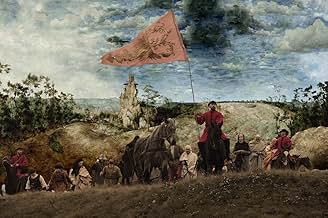
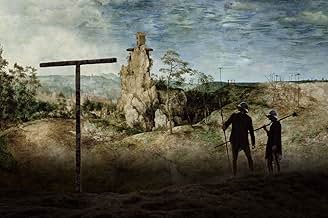
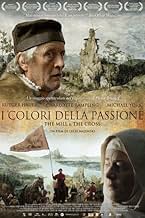
This movie focuses on a dozen of the five hundred characters depicted in Bruegel's painting. The theme of Christ's suffering is set against religious persecution in Flanders in 1564.This movie focuses on a dozen of the five hundred characters depicted in Bruegel's painting. The theme of Christ's suffering is set against religious persecution in Flanders in 1564.This movie focuses on a dozen of the five hundred characters depicted in Bruegel's painting. The theme of Christ's suffering is set against religious persecution in Flanders in 1564.
- Director
- Writers
- Stars
- Awards
- 10 wins & 7 nominations total
- Director
- Writers
- All cast & crew
- Production, box office & more at IMDbPro
6.94.5K
1
2
3
4
5
6
7
8
9
10
Featured reviews
True gem!
I really like when the come out with a film like this. I like costume dramas, but this one is so interesting because it was made based on a painting and it works with a very interesting subject of Protestantism in Flanders and tryouts of Spanish militia to eradicate it. Not a lot of the films was made about the subject, and it clearly shows desperation of the Spanish militia to eradicate, at that time, very strong Protestant movement in Flanders. How state of the affairs came to that? I would track it down to Pope Alexander VI Borgia and total corruption of the Curria of the late 1490s. It was inevitable that someone like Martin Luther to show up, and it was a downhill for the northern Europe from that time onwards as far as Roman Catholicism.
Beside that, cinematography is great and costimography as well. True holiday for the eyes. I enjoyed every moment of it.
At the time when everything was not still.
An art movie about the 16th century's arts. It was based on the book of the same name which details the landscaper Pieter Bruegel's painting 'The Procession to Calvary'. A movie specially made for classical painting lovers.
The movie had very less talkings and everything should be learnt by watching the pictures which depicts painting like series of frames. So there's nothing much to talk about the movie. One of the best ever production designs. Frankly, I was less enjoyed due to lack of knowledge about Bruegel, but glad I saw it and come to know few things about 1500s culture through his paintings.
After all, I was not stranger to 'The Procession to Calvary' only by a few weeks before watching this movie. Recently I saw a movie called 'Museum Hours' and it helped a bit to understand this movie. In that movie a guide, an expert briefs in a scene about this painting and the reason behind it.
It was a very unique movie, which still won't exactly portray as it had happened. A glimpse about the idea of it might have been like that. More like an imaginary world created behind the magnificent art work. Not suitable for all, especially those who watch movies for entertainment should stay away from it.
The movie had very less talkings and everything should be learnt by watching the pictures which depicts painting like series of frames. So there's nothing much to talk about the movie. One of the best ever production designs. Frankly, I was less enjoyed due to lack of knowledge about Bruegel, but glad I saw it and come to know few things about 1500s culture through his paintings.
After all, I was not stranger to 'The Procession to Calvary' only by a few weeks before watching this movie. Recently I saw a movie called 'Museum Hours' and it helped a bit to understand this movie. In that movie a guide, an expert briefs in a scene about this painting and the reason behind it.
It was a very unique movie, which still won't exactly portray as it had happened. A glimpse about the idea of it might have been like that. More like an imaginary world created behind the magnificent art work. Not suitable for all, especially those who watch movies for entertainment should stay away from it.
Painterly and absorbing
I found this film to inspire the same contemplative mood and heightened awareness of similar films that build power without reliance on lots of dialogue, music or usual cinematic cues. If you appreciated "Into Great Silence" or "Vision" or "The Tree of Life" or even "2001" you will appreciate the poetic quality of this film. It is important for us to slow down occasionally and allow some films to affect us without the necessity of being slammed over the head with noise and speed and highly charged emotions. After all, for a film placed in its time, that is a more realistic portrayal of life during those centuries. This film illuminates the artistic process and aims of the artist. We are fortunate that the makers of this film dared to create this unique journey into a canvas of one of the world's great artists.
5lixy
Gorgeous but flat and clunky
This gorgeous reconstruction of Bruegel's painting is ultimately more impressive than inspiring. There is no character, no narrative, no emotion in this piece and there's not that much analysis, either, despite the director's claims. I just saw it at the SF Film Fest, and the likable and knowledgeable director gave a lengthy lecture a) on how long it took to find the fabric for the costumes and b) on the loss of our ability to read pictorial symbols. Sadly, the latter was not related to (or within) the film directly--that would have been interesting indeed!--and neither is the impressive (expensive) production design enough to make this work compelling.
If you are interested in symbology and art history, see Peter Greenaway's, far superior Nightwatching, a film with a plot and lively characters as well as a fascinating view into the meanings (and the USE of meanings and symbols) of another famous Dutch painting, which, despite also suffering from some bombastic elements, still manages to engage the viewer in its own right as a movie.
Also Derek Jarman's Caravaggio comes to mind as a film that uses tableaux to evoke the painter of the title. Despite--or perhaps due to--being somewhat opaque and strange, the Greenaway and Jarman films (and almost any of their work) are far more interesting than The Mill and the Cross, because they use the medium of film to SHOW and not TELL. This literal and slavish reproduction of the painting was impressive in its verisimilitude but ultimately pointless and superficial.
If you are interested in symbology and art history, see Peter Greenaway's, far superior Nightwatching, a film with a plot and lively characters as well as a fascinating view into the meanings (and the USE of meanings and symbols) of another famous Dutch painting, which, despite also suffering from some bombastic elements, still manages to engage the viewer in its own right as a movie.
Also Derek Jarman's Caravaggio comes to mind as a film that uses tableaux to evoke the painter of the title. Despite--or perhaps due to--being somewhat opaque and strange, the Greenaway and Jarman films (and almost any of their work) are far more interesting than The Mill and the Cross, because they use the medium of film to SHOW and not TELL. This literal and slavish reproduction of the painting was impressive in its verisimilitude but ultimately pointless and superficial.
Astonishing and boring...not that everything needs a plot, but this needs more than just visuals
The Mill and the Cross (2011)
Maybe I anticipated this for too long, hearing about its production, and teaching in an Art History department myself. The result is both astonishing and boring as heck. I know, there is a kind of absorption that happens through silence and slow appreciation. And there is even the astonishment of looking without really thinking, or feeling, for the narrative or the characters.
This is, for sure, a visually wonderful movie. The way it works out the scenery and milieu of a period based on a single painting is brilliant and ambitious. The mise-en-scene might in fact be the only and singular point of it all. So on that level, eleven stars. Terrific. Mind-blowing.
But that exercise in naturalistic re-creation, in enlivening a masterpiece on canvas by Bruegel from 1564, is not, to me, enough. You will know after ten minutes whether to continue. I have heard of people being just spellbound by it all, so that hopefully would be your feeling.
I tried to make the characters have meaning on some level, either in their interactions, or in their actions alone, or through what they did to the world around them. Much of what happens feels more medieval than Renaissance, to me, but I'm sure that was researched thoroughly. (Bruegel was painting at a time when the Renaissance from Italy had made its way thoroughly north to the lowland countries and beyond.)
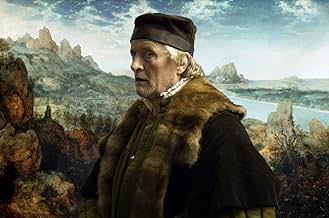
It is fun (and indicative of the seriousness here) that both Michael York and Charlotte Rampling took part, late in their careers. That was one of the draws, for sure. But don't expect revelations there, either. Expect in fact only what the director, Lech Majewski, intended—a film version of the painting, set in its larger context but always based on and drawing from this one admittedly fantastic painting. Which might be your starting point, before launching into this one and half hour homage.
Maybe I anticipated this for too long, hearing about its production, and teaching in an Art History department myself. The result is both astonishing and boring as heck. I know, there is a kind of absorption that happens through silence and slow appreciation. And there is even the astonishment of looking without really thinking, or feeling, for the narrative or the characters.
This is, for sure, a visually wonderful movie. The way it works out the scenery and milieu of a period based on a single painting is brilliant and ambitious. The mise-en-scene might in fact be the only and singular point of it all. So on that level, eleven stars. Terrific. Mind-blowing.
But that exercise in naturalistic re-creation, in enlivening a masterpiece on canvas by Bruegel from 1564, is not, to me, enough. You will know after ten minutes whether to continue. I have heard of people being just spellbound by it all, so that hopefully would be your feeling.
I tried to make the characters have meaning on some level, either in their interactions, or in their actions alone, or through what they did to the world around them. Much of what happens feels more medieval than Renaissance, to me, but I'm sure that was researched thoroughly. (Bruegel was painting at a time when the Renaissance from Italy had made its way thoroughly north to the lowland countries and beyond.)
It is fun (and indicative of the seriousness here) that both Michael York and Charlotte Rampling took part, late in their careers. That was one of the draws, for sure. But don't expect revelations there, either. Expect in fact only what the director, Lech Majewski, intended—a film version of the painting, set in its larger context but always based on and drawing from this one admittedly fantastic painting. Which might be your starting point, before launching into this one and half hour homage.
Did you know
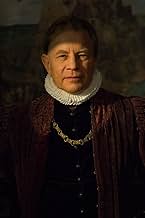
- TriviaIn the movie, the two large paintings displayed behind Nicolaes Jonghelinck (Michael York) and his wife (Dorota Lis) in their house, are also works by Pieter Bruegel the Elder, "The Tower of Babel" (1563) and "Hunters in the Snow" (1565). They were indeed commissioned or at any rate owned by Jonghelinck at the time.
- GoofsA few minutes before the end of the movie, a red automobile crosses the background between two houses, while Bruegel and Nicholas Jonghelinck are speaking in the foreground.
- SoundtracksMiserere, Opus 44
By Henryk Mikolaj Górecki
Performed by the Silesia Philharmonic Choir (Chorus Master Jan Wojtacha)
- How long is The Mill and the Cross?Powered by Alexa
Details
- Release date
- Countries of origin
- Official site
- Languages
- Also known as
- El molino y la cruz
- Filming locations
- Wieliczka, Malopolskie, Poland(mill interiors)
- Production companies
- See more company credits at IMDbPro
Box office
- Gross US & Canada
- $312,187
- Opening weekend US & Canada
- $11,354
- Sep 18, 2011
- Gross worldwide
- $1,116,180
- Runtime
- 1h 32m(92 min)
- Color
- Sound mix
- Aspect ratio
- 1.85 : 1
Contribute to this page
Suggest an edit or add missing content