IMDb RATING
6.9/10
4.6K
YOUR RATING


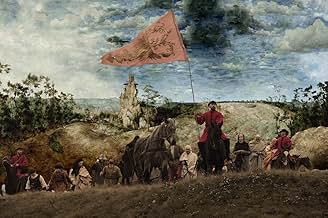
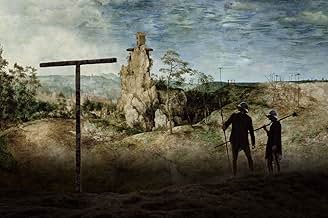
This movie focuses on a dozen of the five hundred characters depicted in Bruegel's painting. The theme of Christ's suffering is set against religious persecution in Flanders in 1564.This movie focuses on a dozen of the five hundred characters depicted in Bruegel's painting. The theme of Christ's suffering is set against religious persecution in Flanders in 1564.This movie focuses on a dozen of the five hundred characters depicted in Bruegel's painting. The theme of Christ's suffering is set against religious persecution in Flanders in 1564.
- Director
- Writers
- Stars
- Awards
- 10 wins & 7 nominations total


- Director
- Writers
- All cast & crew
- Production, box office & more at IMDbPro
6.94.5K
1
2
3
4
5
6
7
8
9
10
Featured reviews
Astonishing and boring...not that everything needs a plot, but this needs more than just visuals
The Mill and the Cross (2011)
Maybe I anticipated this for too long, hearing about its production, and teaching in an Art History department myself. The result is both astonishing and boring as heck. I know, there is a kind of absorption that happens through silence and slow appreciation. And there is even the astonishment of looking without really thinking, or feeling, for the narrative or the characters.
This is, for sure, a visually wonderful movie. The way it works out the scenery and milieu of a period based on a single painting is brilliant and ambitious. The mise-en-scene might in fact be the only and singular point of it all. So on that level, eleven stars. Terrific. Mind-blowing.
But that exercise in naturalistic re-creation, in enlivening a masterpiece on canvas by Bruegel from 1564, is not, to me, enough. You will know after ten minutes whether to continue. I have heard of people being just spellbound by it all, so that hopefully would be your feeling.
I tried to make the characters have meaning on some level, either in their interactions, or in their actions alone, or through what they did to the world around them. Much of what happens feels more medieval than Renaissance, to me, but I'm sure that was researched thoroughly. (Bruegel was painting at a time when the Renaissance from Italy had made its way thoroughly north to the lowland countries and beyond.)
It is fun (and indicative of the seriousness here) that both Michael York and Charlotte Rampling took part, late in their careers. That was one of the draws, for sure. But don't expect revelations there, either. Expect in fact only what the director, Lech Majewski, intended—a film version of the painting, set in its larger context but always based on and drawing from this one admittedly fantastic painting. Which might be your starting point, before launching into this one and half hour homage.
Maybe I anticipated this for too long, hearing about its production, and teaching in an Art History department myself. The result is both astonishing and boring as heck. I know, there is a kind of absorption that happens through silence and slow appreciation. And there is even the astonishment of looking without really thinking, or feeling, for the narrative or the characters.
This is, for sure, a visually wonderful movie. The way it works out the scenery and milieu of a period based on a single painting is brilliant and ambitious. The mise-en-scene might in fact be the only and singular point of it all. So on that level, eleven stars. Terrific. Mind-blowing.
But that exercise in naturalistic re-creation, in enlivening a masterpiece on canvas by Bruegel from 1564, is not, to me, enough. You will know after ten minutes whether to continue. I have heard of people being just spellbound by it all, so that hopefully would be your feeling.
I tried to make the characters have meaning on some level, either in their interactions, or in their actions alone, or through what they did to the world around them. Much of what happens feels more medieval than Renaissance, to me, but I'm sure that was researched thoroughly. (Bruegel was painting at a time when the Renaissance from Italy had made its way thoroughly north to the lowland countries and beyond.)
It is fun (and indicative of the seriousness here) that both Michael York and Charlotte Rampling took part, late in their careers. That was one of the draws, for sure. But don't expect revelations there, either. Expect in fact only what the director, Lech Majewski, intended—a film version of the painting, set in its larger context but always based on and drawing from this one admittedly fantastic painting. Which might be your starting point, before launching into this one and half hour homage.
10JvH48
Must-see guided tour through Bruegel's picture
Many thanks to the Rotterdam filmfestival 2011 for screening this guided tour through Christ Carrying the Cross, the painting by Pieter Bruegel the Elder. I learned a lot about the ideas behind it and the way it was set up. Seeing it explained gradually throughout the story, will let me remember it better than reading about it in a book.
We also learned a lot about how people lived those days. A special mention should be devoted to the parts where this film demonstrates that life goes on, regardless of politics, war, and religions. We also saw many forgotten customs about bread, threshold cleaning, and much more that I want to leave as an exercise to the close observer.
A dramatic moment at ¾ of the film is where the painter raises his hand, and life comes to a stand still, including the mill on the hill that stops by a hand signal of the miller. It seems no coincidence that the miller very much resembles how our Lord is pictured usually, and also that he oversees the whole panorama from his high position. As soon as he signals the mill to resume working, the whole picture relives from its frozen state.
A large part of the audience stayed for the final Q&A. We got much information about the post production effort required to get the colors right, and creating the different layers to get everything in focus. Further, the film maker told he wanted to make a feature film from the start. It was considered a Mission Impossible by the people around him. How wrong they were!
All in all, a lot goes on in the film, much more than I could oversee during the screening. Maybe I should try to grasp more of the fine details during a second viewing. I don't think I saw everything that the film makers did put into this production.
We also learned a lot about how people lived those days. A special mention should be devoted to the parts where this film demonstrates that life goes on, regardless of politics, war, and religions. We also saw many forgotten customs about bread, threshold cleaning, and much more that I want to leave as an exercise to the close observer.
A dramatic moment at ¾ of the film is where the painter raises his hand, and life comes to a stand still, including the mill on the hill that stops by a hand signal of the miller. It seems no coincidence that the miller very much resembles how our Lord is pictured usually, and also that he oversees the whole panorama from his high position. As soon as he signals the mill to resume working, the whole picture relives from its frozen state.
A large part of the audience stayed for the final Q&A. We got much information about the post production effort required to get the colors right, and creating the different layers to get everything in focus. Further, the film maker told he wanted to make a feature film from the start. It was considered a Mission Impossible by the people around him. How wrong they were!
All in all, a lot goes on in the film, much more than I could oversee during the screening. Maybe I should try to grasp more of the fine details during a second viewing. I don't think I saw everything that the film makers did put into this production.
10shunder
A lusciously disconcerting work
It can be said that Lech Majewski's 2011 film depicts "art imitating life, imitating art, imitating life, which also typifies the layer upon layer of meaning and implication to be found in the film. Pieter Bruegel the Elder's 1564 painting "The Way to Calvary" creates the story line for this completely unconventional portrayal of life in the 1600's and Bruegel's technique or the process he may of worked through while creating the painting. Bruegal's painting is much more than a back drop and can almost be seen as a central character, perhaps even a brilliant supporting actor.
As the film weaves in and out of scenes found in the painting, the characters are brought to life portraying their personal reality behind the snippet of time in which they are actually portrayed. In a further layer in the film consider the juxtaposition of good and evil, peasants innocently awaking to begin a day's work, the musicians playing and dancing with merry abandon, contrasted with the whipping and murder of the young husband by the Spaniards. As Bruegel considers the crucifixion scene he actually begins to interact with the painting. He signals to the miller (a euphemism for God) to stop; and as the miller brings the mill (and seemingly life itself) to a standstill the moment is so unsettling as the windmill, looking mysteriously like the cross Christ has suffered on, turns counterclockwise.
The final shot in this lusciously disconcerting film pans out from the painting "The Way to Calvary" as it hangs in Kunsthistorisches Museum in Vienna, and leaves one to ponder the art each of us has seen, and the snapshots in time that art depicts. Majewski's brilliant film gives pause to consider the lives lived behind all the images of all the art over the ages, and so much more.
As the film weaves in and out of scenes found in the painting, the characters are brought to life portraying their personal reality behind the snippet of time in which they are actually portrayed. In a further layer in the film consider the juxtaposition of good and evil, peasants innocently awaking to begin a day's work, the musicians playing and dancing with merry abandon, contrasted with the whipping and murder of the young husband by the Spaniards. As Bruegel considers the crucifixion scene he actually begins to interact with the painting. He signals to the miller (a euphemism for God) to stop; and as the miller brings the mill (and seemingly life itself) to a standstill the moment is so unsettling as the windmill, looking mysteriously like the cross Christ has suffered on, turns counterclockwise.
The final shot in this lusciously disconcerting film pans out from the painting "The Way to Calvary" as it hangs in Kunsthistorisches Museum in Vienna, and leaves one to ponder the art each of us has seen, and the snapshots in time that art depicts. Majewski's brilliant film gives pause to consider the lives lived behind all the images of all the art over the ages, and so much more.
True gem!
I really like when the come out with a film like this. I like costume dramas, but this one is so interesting because it was made based on a painting and it works with a very interesting subject of Protestantism in Flanders and tryouts of Spanish militia to eradicate it. Not a lot of the films was made about the subject, and it clearly shows desperation of the Spanish militia to eradicate, at that time, very strong Protestant movement in Flanders. How state of the affairs came to that? I would track it down to Pope Alexander VI Borgia and total corruption of the Curria of the late 1490s. It was inevitable that someone like Martin Luther to show up, and it was a downhill for the northern Europe from that time onwards as far as Roman Catholicism.
Beside that, cinematography is great and costimography as well. True holiday for the eyes. I enjoyed every moment of it.
Beside that, cinematography is great and costimography as well. True holiday for the eyes. I enjoyed every moment of it.
A Painting Come to Life
The Mill and the Cross is a painting (so not a lot of plot!) come to life and it is unlike any movie I have ever seen before (and I have seen a few)! Directed by Polish filmmaker, Lech Majewski, it is a recreation and interpretation of the famous 1564 painting by Pieter Bruegel, "The Way to Calvary".
Glacially-paced and nearly-silent (at first) ... one film critic (Stephen Cole of "Globe and Mail") said that this film's detractors will likely lament that watching this "is like watching a painting dry" (a point I can understand some having). If it doesn't grab one's interest early-on -- the film's opening is the painting coming to life and than slowly drying back onto the canvas -- there is no point in watching it.
Another film about the inspiration of a painting (that I loved) -- The Girl with the Pearl Earring -- told a possible story of how a Vermeer masterpiece came into being AND each scene was as lovely as a painted picture. Here each scene looks like a painting as well; but this story isn't necessarily one about a "what-if" (although as a film it technically is). Instead, The Mill and the Cross pretends to show us THIS painting (not the inspiration behind it) as it is being painted.
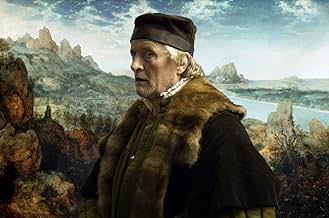
The painting is of the re-imagined crucifixion of Christ in 16th Century Flanders while the region is under BRUTAL Spanish occupation. As Bruegel (Rutger Hauer - Batman Begins, Hobo with a Shotgun, Blade Runner) draws and explains his painting, the scene comes to life so that the audience sees what Bruegel "sees". The premise and style are highly unusual but I appreciated the delicate take (layer-upon-layer of computer imaging) of telling this story.
The Mill and the Cross isn't content with looking at a piece of art -- this film is about experiencing it which is rather marvelous as the Flanders countryside comes to life (and it is as if the audience has stumbled upon the same setting/scene as Bruegel). We get bits and pieces of story but no major plot other than the painting and its scenes/images coming to life.
This wasn't a favorite of mine by any means; but I do like the originality of it and anybody with a serious interest in art might want to check it out.
Glacially-paced and nearly-silent (at first) ... one film critic (Stephen Cole of "Globe and Mail") said that this film's detractors will likely lament that watching this "is like watching a painting dry" (a point I can understand some having). If it doesn't grab one's interest early-on -- the film's opening is the painting coming to life and than slowly drying back onto the canvas -- there is no point in watching it.
Another film about the inspiration of a painting (that I loved) -- The Girl with the Pearl Earring -- told a possible story of how a Vermeer masterpiece came into being AND each scene was as lovely as a painted picture. Here each scene looks like a painting as well; but this story isn't necessarily one about a "what-if" (although as a film it technically is). Instead, The Mill and the Cross pretends to show us THIS painting (not the inspiration behind it) as it is being painted.
The painting is of the re-imagined crucifixion of Christ in 16th Century Flanders while the region is under BRUTAL Spanish occupation. As Bruegel (Rutger Hauer - Batman Begins, Hobo with a Shotgun, Blade Runner) draws and explains his painting, the scene comes to life so that the audience sees what Bruegel "sees". The premise and style are highly unusual but I appreciated the delicate take (layer-upon-layer of computer imaging) of telling this story.
The Mill and the Cross isn't content with looking at a piece of art -- this film is about experiencing it which is rather marvelous as the Flanders countryside comes to life (and it is as if the audience has stumbled upon the same setting/scene as Bruegel). We get bits and pieces of story but no major plot other than the painting and its scenes/images coming to life.
This wasn't a favorite of mine by any means; but I do like the originality of it and anybody with a serious interest in art might want to check it out.


Did you know
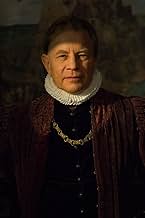
- TriviaIn the movie, the two large paintings displayed behind Nicolaes Jonghelinck (Michael York) and his wife (Dorota Lis) in their house, are also works by Pieter Bruegel the Elder, "The Tower of Babel" (1563) and "Hunters in the Snow" (1565). They were indeed commissioned or at any rate owned by Jonghelinck at the time.
- GoofsA few minutes before the end of the movie, a red automobile crosses the background between two houses, while Bruegel and Nicholas Jonghelinck are speaking in the foreground.
- SoundtracksMiserere, Opus 44
By Henryk Mikolaj Górecki
Performed by the Silesia Philharmonic Choir (Chorus Master Jan Wojtacha)
- How long is The Mill and the Cross?Powered by Alexa
Details
- Release date
- Countries of origin
- Official site
- Languages
- Also known as
- El molino y la cruz
- Filming locations
- Wieliczka, Malopolskie, Poland(mill interiors)
- Production companies
- See more company credits at IMDbPro
Box office
- Gross US & Canada
- $312,187
- Opening weekend US & Canada
- $11,354
- Sep 18, 2011
- Gross worldwide
- $1,116,180
- Runtime
- 1h 32m(92 min)
- Color
- Sound mix
- Aspect ratio
- 1.85 : 1
Contribute to this page
Suggest an edit or add missing content