IMDb RATING
7.0/10
4.4K
YOUR RATING


In 1930s southern France, a father is torn between his sense of honor and his deep love for his daughter when she gets in trouble with the wealthy son of a shopkeeper.In 1930s southern France, a father is torn between his sense of honor and his deep love for his daughter when she gets in trouble with the wealthy son of a shopkeeper.In 1930s southern France, a father is torn between his sense of honor and his deep love for his daughter when she gets in trouble with the wealthy son of a shopkeeper.
- Director
- Writers
- Stars
- Awards
- 2 wins total
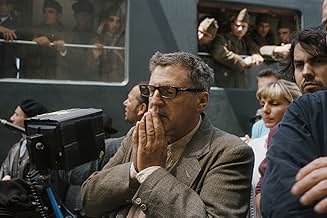
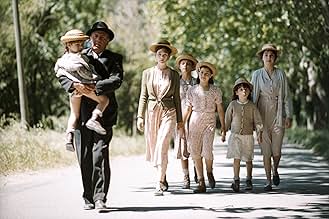

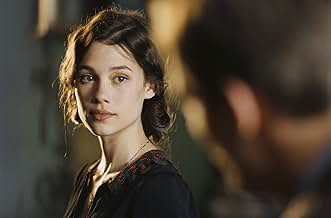
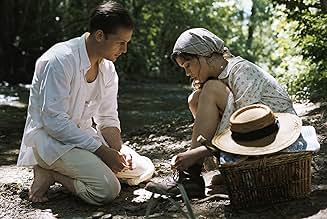


- Director
- Writers
- All cast & crew
- Production, box office & more at IMDbPro
7.04.3K
1
2
3
4
5
6
7
8
9
10
Featured reviews
A powerful and emotional drama of Provence in days gone by
Another reviewer has rightly pointed out that the title of this film in English is going to keep audiences away from the English-speaking cinemas in droves. But the original French title of which it is a translation, LA FILLE DU PUISATIER, had to be retained in France. That is because it is a remake of a famous and classic film of 1940 directed by Marcel Pagnol from his own novel, and thus it needed to have the same title, so that French people would know what it was. The screenplay adaptation of the remake is by Daniel Auteuil, who also directed the film and starred in it (playing the part of the well-digger). Auteuil, one of France's most famous actors, has a long history of association with Marcel Pagnol's tales of early 20th century Provence. Those who like French movies will certainly remember the pair of immensely popular films based on Pagnol novels which were directed by Claude Berri and starred Daniel Auteuil, JEAN DE FLORETTE and MANON DES SOURCES (both 1986). At the moment three further Pagnol remakes are being filmed, with Auteuil in the leading role of César, of Pagnol's famous trilogy of films, known as 'The Marseilles Trilogy'. The individual tiles of the trilogy are CÉSAR, FANNY, and MARIUS. Let us hope that a full-fledged Pagnol revival gets going, as the old films as well as the new are a pure delight. Credit for keeping the flame alive must go to Pagnol's remarkable daughter, whom I visited long ago in her office on the far side of the Periphérique. She is a powerful and determined personality and she kept the old Pagnol films in distribution and arranged for all the new ones to be made, and is a fierce guardian of the integrity and continuity of the family's creative flame. The Pagnol films are about 'real people' in the South of France, where Pagnol came from, and the thick accents in the Marseilles Trilogy are a marvel to the ear, and as different from Parisian French as a Mississippi drawl is from the speech of an inhabitant of Brooklyn, or as an impenetrable Glasgow accent is from the way they speak in London. This film is a pure delight, beautifully directed by Auteuil, and featuring as his eldest daughter (the one of the title) a fresh young actress of the utmost charm named Astrid Bergès-Frisbey, aged 25, who is part Spanish and as beautiful as a rose petal sparking with Provencal dew in the morning. The story allows her to have been sent away and educated in Paris, to explain why she does not speak like the locals. She is absolutely perfect casting, has all the right qualities for the part, and does a wonderful job. Auteuil is, as usual, superb. The rest of the cast are also excellent. This is a very poignant and emotional tale, as Pagnol stories usually are, and I would rate it as an instant classic. Everyone should see it, though outside of France, I wonder how many really will. It would be a shame for anyone who enjoys and looks forward to a superb French film to miss it, as this is in the top rank.
Great Film needs new English title!
This marvelous film is based on a Pagnol novel which I had never heard of. Maybe it's well-known in France and so the title is familiar to audiences there. But in the US "The Well Digger's Daughter" should keep people away from this film in droves. In fact, the film is an old fashioned fable set in the French countryside during the period of World War I. Even though the plot turns are seen coming a mile away, the film has such charm and simple feeling and wisdom, that there is enormous pleasure in watching the story unfold. Auteuil is perfect as the father, as is every other actor, especially Astrid Bergès-Frisbey as the daughter of the title and Nicolas Duvauchelle as her 'prince'. And the music by Andre Desplat is one of his best scores. The setting and the lives of the characters are so beautifully depicted, there is so much pleasure to be had in entering their world for two hours, that it seems a shame that American audiences will have to overcome their disinclination to see a movie about a well-digger and his daughter when there is this rich and deeply emotional story waiting for them in the cinema.
in hands of red clay, down the well
A wonderful cast facilitate Daniel Auteuil's vision of wartime France in this gentle, love-filled drama/comedy about a working man's attempt to maintain the honour of his family after his eldest of six daughters go astray.
Pascal has always wanted a son, but finds himself a hard-working widowed father of six daughters instead. When the son of local bourgeoisie, the Mazels, seduces his daughter before being packed off to war, Pascal and his daughter are ill-treated by the frosty Mazels. Pascal learns not to trust people "who sell tools, but never use them." But he is also honorable, exiling his disgraced daughter Patricia, who herself refuses compromise by rejecting the repeated proposals of her father's co-worker Félipe, an honest, industrious, but prosaic individual. Pascal has honour, but Félipe has love. The war intervenes in events, not once but several times, becoming a catalyst that brings to resolution the feud between the two families from opposite classes.
Auteuil handles the comedy effortlessly, but also shows depth and steel when darker tones are needed, such as handling the humiliations dished out carelessly by the shallow, emotionally volatile Mrs. Mazel. Astrid Bergès-Frisbey is simply superb as the much-wronged Patricia. Her expression when waiting by the church for a lover she believes has spurned her is exquisitely pained.
The direction keeps most of the action outdoors or in daytime, allowing Provence to glimmer and shine. There are small moments of poetry here; Pascal turn-taking a kiss with his youngest daughter as they wait for guests;interactions with a baby who melts everyone's heart, cast and audience alike; the strong bond of friendship between Pascal and Félipe.
This is a well-crafted tale of love, family, work and honour that never gets too sentimental and earns the many tears and smiles it evokes. An uplifting, joyful film, and we all need one of those from time to time.
Pascal has always wanted a son, but finds himself a hard-working widowed father of six daughters instead. When the son of local bourgeoisie, the Mazels, seduces his daughter before being packed off to war, Pascal and his daughter are ill-treated by the frosty Mazels. Pascal learns not to trust people "who sell tools, but never use them." But he is also honorable, exiling his disgraced daughter Patricia, who herself refuses compromise by rejecting the repeated proposals of her father's co-worker Félipe, an honest, industrious, but prosaic individual. Pascal has honour, but Félipe has love. The war intervenes in events, not once but several times, becoming a catalyst that brings to resolution the feud between the two families from opposite classes.
Auteuil handles the comedy effortlessly, but also shows depth and steel when darker tones are needed, such as handling the humiliations dished out carelessly by the shallow, emotionally volatile Mrs. Mazel. Astrid Bergès-Frisbey is simply superb as the much-wronged Patricia. Her expression when waiting by the church for a lover she believes has spurned her is exquisitely pained.
The direction keeps most of the action outdoors or in daytime, allowing Provence to glimmer and shine. There are small moments of poetry here; Pascal turn-taking a kiss with his youngest daughter as they wait for guests;interactions with a baby who melts everyone's heart, cast and audience alike; the strong bond of friendship between Pascal and Félipe.
This is a well-crafted tale of love, family, work and honour that never gets too sentimental and earns the many tears and smiles it evokes. An uplifting, joyful film, and we all need one of those from time to time.
Terrific...as you'd expect from a Pagnol story.
Marcel Pagnol was a wonderful French writer, director and playwright. His stories are indeed classics and have been filmed, re-filmed and even re-filmed again. So, it's not at all surprising that Daniel Auteuil has decided to take a stab at Pagnol's classic stories--not just starring in them but writing the new screenplays and directing them. I say that's not surprising because not only are these wonderful stories, but Auteuil also has previously been in a couple other Pagnol stories--"Jean de Florette" and "Manon Des Sources". His four new films consist of this film, "The Well-Digger's Daughter" as well as the wonderful trilogy consisting of "Marius", "Fanny" and "Cesar"--which just recently debuted and which are not yet available here in the States. I cannot wait to see these three most recent movies.
"The Well-Digger's Daughter" is a story with many similarities to the Fanny Trilogy Auteuil made following this film. All are set in Provence, concern ordinary folks and are about the complications that arise from an unplanned pregnancy.
The story begins with the daughter, Patricia (Astrid Bergès-Frisbey) meeting a handsome young man, Jacques (Nicolas Duvauchelle) when she's on her way to bring her father, Pascal (Daniel Auteuil), his lunch. The audience KNOWS based on their meeting that the two are destined to be a number. However, there are some complications---such as Felipe (Kad Merad) wanting to marry Patricia. But, of course, much more serious complications arise--and I don't really want to get to them here--just see the film.
I love films about ordinary people--and Pagnol's are about as ordinary as you can find! Some may not be quite so captivated by these folks-- they aren't exactly rich, cultured or the Hollywood types. But, I am pretty ordinary as are 99% of movie viewers! So why not enjoy the lives and loves of folks we can relate to?! Plus, the story is so nicely written, lovingly directed and enjoyable that I strongly recommend you give it a try.
By the way, Pascal's grandson, who he treats as if it's HIS kid is actually Zachary Auteuil--the actor/director's real life son!
"The Well-Digger's Daughter" is a story with many similarities to the Fanny Trilogy Auteuil made following this film. All are set in Provence, concern ordinary folks and are about the complications that arise from an unplanned pregnancy.
The story begins with the daughter, Patricia (Astrid Bergès-Frisbey) meeting a handsome young man, Jacques (Nicolas Duvauchelle) when she's on her way to bring her father, Pascal (Daniel Auteuil), his lunch. The audience KNOWS based on their meeting that the two are destined to be a number. However, there are some complications---such as Felipe (Kad Merad) wanting to marry Patricia. But, of course, much more serious complications arise--and I don't really want to get to them here--just see the film.
I love films about ordinary people--and Pagnol's are about as ordinary as you can find! Some may not be quite so captivated by these folks-- they aren't exactly rich, cultured or the Hollywood types. But, I am pretty ordinary as are 99% of movie viewers! So why not enjoy the lives and loves of folks we can relate to?! Plus, the story is so nicely written, lovingly directed and enjoyable that I strongly recommend you give it a try.
By the way, Pascal's grandson, who he treats as if it's HIS kid is actually Zachary Auteuil--the actor/director's real life son!
It's OUR son!
It should be pointed out that Marcel Pagnol's movie was filmed during the first combats which lead to the 1940 defeat and Pétain's Armistice .It was the first film released in the free zone which was shown in the occupied one in 1941; its success was huge. Just to say that in 2011 ,it has not the same meaning for the audience.
It was not the first time a Pagnol 's movie had been remade in his own country ;Claude Berri remade "Manon des sources " which he divided into two parts , considerably reducing the central role of the schoolteacher ;Auteuil was featured in Berri's film ,so it was only natural that he tackled "la fille du puisatier".
That said ,taking on Raimu's and Fernandel's parts was a challenge ; Auteuil's movie doesn't make them forget , it was insurmountable to surpass these monstres sacrés.
His movie is faithfull to its model ,it's shorter ,which is not a bad thing, for the 1940 work dragged on sometimes ;it was also impossible to transfer it to our era ,for the melodramatic side is obsolete today .
Auteuil adopts a welcome provençal accent ,so does Kad Merad :both actors are as efficient in comedy as in drama ;the same can be said about the excellent Darroussin(taking on Charpin's role) and Sabine Azema but they do not have any accent (because it sounds too prole ?)Azema has a tendency to overact .Auteuil's son portrays his grandson !
The cinematography is impeccable ,taking advantage of the provençal landscapes,where Patricia wanders (the first one ,Josette Day ("la belle et la bête",was IMHO more gracious and had a better way to wear the hat ); it's a good work ,useful to introduce Pagnol to the new generations (colors help),but I hope they 'll try and see the black and white one.
It was not the first time a Pagnol 's movie had been remade in his own country ;Claude Berri remade "Manon des sources " which he divided into two parts , considerably reducing the central role of the schoolteacher ;Auteuil was featured in Berri's film ,so it was only natural that he tackled "la fille du puisatier".
That said ,taking on Raimu's and Fernandel's parts was a challenge ; Auteuil's movie doesn't make them forget , it was insurmountable to surpass these monstres sacrés.
His movie is faithfull to its model ,it's shorter ,which is not a bad thing, for the 1940 work dragged on sometimes ;it was also impossible to transfer it to our era ,for the melodramatic side is obsolete today .
Auteuil adopts a welcome provençal accent ,so does Kad Merad :both actors are as efficient in comedy as in drama ;the same can be said about the excellent Darroussin(taking on Charpin's role) and Sabine Azema but they do not have any accent (because it sounds too prole ?)Azema has a tendency to overact .Auteuil's son portrays his grandson !
The cinematography is impeccable ,taking advantage of the provençal landscapes,where Patricia wanders (the first one ,Josette Day ("la belle et la bête",was IMHO more gracious and had a better way to wear the hat ); it's a good work ,useful to introduce Pagnol to the new generations (colors help),but I hope they 'll try and see the black and white one.


Did you know
- TriviaJacques' motorcycle is a Triumph Speed Twin 5T.
- GoofsWhen Pascal visits her sister Nathalie to check on Patricia, Nathalie is heard humming Nina Rota's Romeo and Juliet theme, which wasn't written until 1968.
- ConnectionsRemake of The Well-Digger's Daughter (1940)
- SoundtracksCore 'n Grato
Written by Salvatore Cardillo and Alessandro Sisca
© BMG Ricordi Publishing
Avec l'autorisation d'Universal Music Vision
Sung by Enrico Caruso
(p) Recorded prior to 1972. All right reserved by BMG Music
Avec l'aimable autorisation de Sony Music Entertainment France
- How long is The Well-Digger's Daughter?Powered by Alexa
Details
- Release date
- Country of origin
- Official sites
- Language
- Also known as
- Brunnsgrävarens dotter
- Filming locations
- Chapelle Saint-Sixte, Eygalières, Bouches-du-Rhône, France(some exteriors)
- Production companies
- See more company credits at IMDbPro
Box office
- Budget
- €12,500,041 (estimated)
- Gross US & Canada
- $386,368
- Opening weekend US & Canada
- $10,273
- Jul 22, 2012
- Gross worldwide
- $13,194,167
- Runtime
- 1h 47m(107 min)
- Color
- Sound mix
- Aspect ratio
- 1.85 : 1
Contribute to this page
Suggest an edit or add missing content