IMDb RATING
6.9/10
3.9K
YOUR RATING


In order to escape her isolation, wheelchair-bound Christine makes a life changing journey to Lourdes, the iconic site of pilgrimage in the Pyrenees Mountains.In order to escape her isolation, wheelchair-bound Christine makes a life changing journey to Lourdes, the iconic site of pilgrimage in the Pyrenees Mountains.In order to escape her isolation, wheelchair-bound Christine makes a life changing journey to Lourdes, the iconic site of pilgrimage in the Pyrenees Mountains.
- Awards
- 12 wins & 7 nominations total
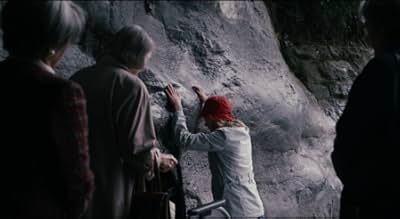
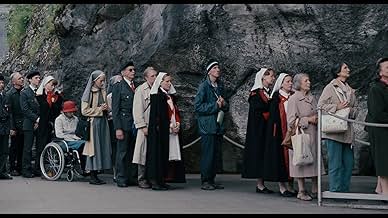


Orsolya Tóth
- Child in Wheelchair
- (as Orsi Tóth)
Gerith Holzinger
- Malteserin
- (as Gerith Alice Holzinger)
- Director
- Writer
- All cast & crew
- Production, box office & more at IMDbPro
6.93.8K
1
2
3
4
5
6
7
8
9
10
Featured reviews
Why me?
Summary
Lourdes is a remarkable psychological and social x-ray of the world around the famous religious complex in the Pyrenees, with that clinical precision so typical of Austrian cinema and with a delicate balance in which hints of irony always give way to respect and piety. The film achieves moments of an absolutely human, moving religiosity, such as I have rarely seen in a film.
Review:
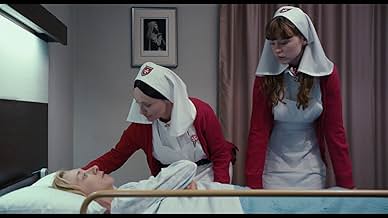
Jessica Hausner's film follows Christine, a motor disabled person, during her journey through the famous tourist-religious complex around the Lourdes Grotto in the French Pyrenees.
Multiple dimensions and themes run through this film. On the one hand, there is a look at the disease, the relationship between the healthy and the sick and how she considers the Catholic religion to the sick and the concept of healing, put into the mouths of their own priests.
On the other hand, Lourdes paints a picture of that touristic-religious universe viewed with that clinical precision so typical of Austrian cinema, with a delicate balance in which hints of irony always give way to respect and piety. It is difficult at first to place oneself in that world of patients, companions, relatives, nuns, priests and volunteers of the Order of Malta (where each one fulfills a precise, transitory or permanent function), where a sociogram is drawn where solidarity intersects , misgivings, hope, desire, jealousy, envy, frustration and, of course, faith, in a setting that is enriched with real shots of masses and mass movements in which the film leans into the documentary . They all follow a kind of procession (with something of a way of the cross) scheduled and methodical, waiting for the miracle of healing to take place.
Why do the sick go to Lourdes? Christine answers that question early in the film, and not exactly from a pious place. Sylvie Testud remarkably puts the body to her character and her evolution, accompanied by Maria (Lea Seydoux, in a rather small role), the companion who embodies health.
As we had already seen in the also notable Little Joe, Hausner beautifully frames her scenes preferably in fixed and geometric planes. Supported by a wonderful use of Bach's music, Lourdes achieves moments of an absolutely human, moving religiosity, such as I have rarely seen in a film.
Lourdes is a remarkable psychological and social x-ray of the world around the famous religious complex in the Pyrenees, with that clinical precision so typical of Austrian cinema and with a delicate balance in which hints of irony always give way to respect and piety. The film achieves moments of an absolutely human, moving religiosity, such as I have rarely seen in a film.
Review:
Jessica Hausner's film follows Christine, a motor disabled person, during her journey through the famous tourist-religious complex around the Lourdes Grotto in the French Pyrenees.
Multiple dimensions and themes run through this film. On the one hand, there is a look at the disease, the relationship between the healthy and the sick and how she considers the Catholic religion to the sick and the concept of healing, put into the mouths of their own priests.
On the other hand, Lourdes paints a picture of that touristic-religious universe viewed with that clinical precision so typical of Austrian cinema, with a delicate balance in which hints of irony always give way to respect and piety. It is difficult at first to place oneself in that world of patients, companions, relatives, nuns, priests and volunteers of the Order of Malta (where each one fulfills a precise, transitory or permanent function), where a sociogram is drawn where solidarity intersects , misgivings, hope, desire, jealousy, envy, frustration and, of course, faith, in a setting that is enriched with real shots of masses and mass movements in which the film leans into the documentary . They all follow a kind of procession (with something of a way of the cross) scheduled and methodical, waiting for the miracle of healing to take place.
Why do the sick go to Lourdes? Christine answers that question early in the film, and not exactly from a pious place. Sylvie Testud remarkably puts the body to her character and her evolution, accompanied by Maria (Lea Seydoux, in a rather small role), the companion who embodies health.
As we had already seen in the also notable Little Joe, Hausner beautifully frames her scenes preferably in fixed and geometric planes. Supported by a wonderful use of Bach's music, Lourdes achieves moments of an absolutely human, moving religiosity, such as I have rarely seen in a film.
Interesting
Lourdes is a famous Catholic shrine in France, visited by pilgrims from around the world seeking miraculous cures for serious medical conditions.
Christine(Sylvie Testud) is wheelchair bound due to multiple sclerosis. Although not deeply religious, she decides to try to be healed by divine intervention. After a few days, she slowly is able to get up and walk. Other visitors with much more faith than Christine have philosophical debates on the fairness of it all.
She meets a man while apparently making progress physically, but the budding romance fizzles quickly when the guy proves to be unable to accept her limitations.
A night view of the city with only the faithful holding up candles while Ave Maria plays in the background is simply breathtaking. I am not personally religious, but I grew up Catholic and can appreciate the beauty of the symbolism and message. Jessica Hausner does not preach to the audience at any point, but gives us the opportunity to make up our own minds about faith and belief in miracles. Lourdes is an interesting conversation starter and a good movie.
Christine(Sylvie Testud) is wheelchair bound due to multiple sclerosis. Although not deeply religious, she decides to try to be healed by divine intervention. After a few days, she slowly is able to get up and walk. Other visitors with much more faith than Christine have philosophical debates on the fairness of it all.
She meets a man while apparently making progress physically, but the budding romance fizzles quickly when the guy proves to be unable to accept her limitations.
A night view of the city with only the faithful holding up candles while Ave Maria plays in the background is simply breathtaking. I am not personally religious, but I grew up Catholic and can appreciate the beauty of the symbolism and message. Jessica Hausner does not preach to the audience at any point, but gives us the opportunity to make up our own minds about faith and belief in miracles. Lourdes is an interesting conversation starter and a good movie.
Lourdes
Forgive my ignorance of neither Lourdes or theology, without a Catholic background, to me the miracles sound hyperbolic and outlandish at first, but after watching the film, even though being an agnostic, some kind of insight surfaced upon my mind's eye that the miracle itself could be a fatal burden to whom it is granted, which is my very direct response, which I am not sure would be the prime aim of the director, for me, it does pique my curiosity definitely.
Due to the fact that the mystery has still been in a moot beyond any explanation by now, the third feature from Austrian director Jessica Hausner (whose previous film is a haunting ghost story - HOTEL 2004) cannily digresses the mythological topic of the epiphanic moment, instead, the film focuses directly on the individuals of the pilgrim group (thought from a restrained distance), the most noteworthy comes from their blunt reactions before/after the miraculous event, which unavoidably compass piety, expectation, sympathy versus selfishness, jealousy, gloating, envy and bitterness. As a matter of fact it is more like a discreet dissertation on a test of humanity, which literally and cruelly reveals the inconvenient truth that it is our soul needs to be cured.
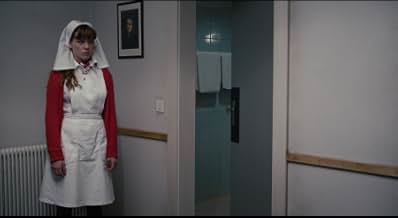
What I truly commend here is the laconic shots, the full-blown palette and a calm stance which is pervasive throughout the entire movie,
all of which establish a sincere austerity and mercy to its views, plus the non-intrusion composition drastically enhances the solemnity and sacrality of its proposition
The female protagonist Sylvie Testud's performance is extraordinarily astute, despite of her word-deficient and gesture-limited role while the supporting group is also tellingly awesome, terse but impressive!
Due to the fact that the mystery has still been in a moot beyond any explanation by now, the third feature from Austrian director Jessica Hausner (whose previous film is a haunting ghost story - HOTEL 2004) cannily digresses the mythological topic of the epiphanic moment, instead, the film focuses directly on the individuals of the pilgrim group (thought from a restrained distance), the most noteworthy comes from their blunt reactions before/after the miraculous event, which unavoidably compass piety, expectation, sympathy versus selfishness, jealousy, gloating, envy and bitterness. As a matter of fact it is more like a discreet dissertation on a test of humanity, which literally and cruelly reveals the inconvenient truth that it is our soul needs to be cured.
What I truly commend here is the laconic shots, the full-blown palette and a calm stance which is pervasive throughout the entire movie,
all of which establish a sincere austerity and mercy to its views, plus the non-intrusion composition drastically enhances the solemnity and sacrality of its proposition
The female protagonist Sylvie Testud's performance is extraordinarily astute, despite of her word-deficient and gesture-limited role while the supporting group is also tellingly awesome, terse but impressive!
Raté
The photography and mise-en-scene are great but the characters lack depth (Testud's room mate for example), the acting is great considering what the skinny script offers them (Testud and Seydoux are remarkables) but lots of subplots are left unexploited
I didn't think the film was that rewarding, it drags a bit towards the end, and the film feels a bit pointless sometimes
The film doesn't know if it should be Christian, critical or ironic, the best parts are when the it's unjudgemenal and contemplative
In the end I don't think Catholics or Agnostics would really like that film very much, it's got a strong sense of aesthetics but lacks personality and determination
I didn't think the film was that rewarding, it drags a bit towards the end, and the film feels a bit pointless sometimes
The film doesn't know if it should be Christian, critical or ironic, the best parts are when the it's unjudgemenal and contemplative
In the end I don't think Catholics or Agnostics would really like that film very much, it's got a strong sense of aesthetics but lacks personality and determination
Brilliant Interaction between Human and Space
Ignorant of the self, one tends to appealing to divine power. Skeptical of that power, one tends to continuously seeking miracles. Such kind of search for answers only out of self-serving, self-consoling is ubiquitous in our daily life. The interaction between human and environment is quiet, a mutual gaze. Unlike the reaction shots between people where there has to be some kind of action, in the human-environment reaction shots, space can't really react; the gaze upon the space in a prolonged duration actually forces the audience to imagine the reaction from spaces, and the best imagination is to place oneself into the observer's shoes -- how incredibly effective it is to involve the audience! Above all, I just couldn't quite figure out the purpose of Léa Seydoux.


Did you know
- TriviaWhen the script for Lourdes (2009) first landed on Sylvie Testud's desk, her initial reaction was that she didn't want to do anything that might involve her playing a nun or taking easy potshots at religion. She instantly changed her mind after reading the script.
- ConnectionsFeatured in Women Make Film: A New Road Movie Through Cinema (2018)
- How long is Lourdes?Powered by Alexa
Details
- Release date
- Countries of origin
- Official sites
- Language
- Also known as
- 奇蹟度假村
- Filming locations
- Production companies
- See more company credits at IMDbPro
Box office
- Budget
- €2,000,000 (estimated)
- Gross worldwide
- $2,947,270
- Runtime
- 1h 36m(96 min)
- Color
- Sound mix
- Aspect ratio
- 1.85 : 1
Contribute to this page
Suggest an edit or add missing content