IMDb RATING
7.4/10
2.6K
YOUR RATING


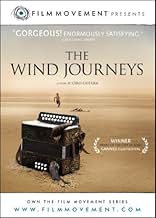
A musician travels a great distance to return an instrument to his elderly teacher.A musician travels a great distance to return an instrument to his elderly teacher.A musician travels a great distance to return an instrument to his elderly teacher.
- Awards
- 11 wins & 7 nominations total




Nibaldo Vergara
- Cowboy
- (as Nibaldo 'Niveo' Vergara)

- Director
- Writer
- All cast & crew
- Production, box office & more at IMDbPro
7.42.6K
1
2
3
4
5
6
7
8
9
10
Featured reviews
Not the tourists' Colombia
Los viajes del viento (2009), shown in the U.S. as The Wind Journeys, was written and directed by Ciro Guerra.
This movie was fascinating to me because it opened up windows to a culture and a music with which I'm not familiar. The setting is rural northeastern Colombia, and the music is vallenato, in which the primary instrument is the accordion.
Los viajes is basically a road movie. The story is that a young man follows an older vallenato master as he wanders through rural Colombia, attempting to return an accordion which has mystical properties.
The plot consists of the people they meet, and the experiences they encounter on the journey.
Being unfamiliar with the region and its music, I can't comment on how accurately these are portrayed. The relationship between the man and the boy certainly doesn't conform to the feel-good connection that would surely develop in a U.S. film. Also, the entire movie is more like fantasy than realistic fiction or documentary. However, I admit that people from the region could say, "Actually, that's the way it is."
This is an unusual and fascinating movie, and definitely worth seeing. It will work better on a large screen than a small one, but it will be worth seeking out in either format. (We saw it at the Rochester 360-365 film festival which, despite its ridiculous name, is an excellent event.)
This movie was fascinating to me because it opened up windows to a culture and a music with which I'm not familiar. The setting is rural northeastern Colombia, and the music is vallenato, in which the primary instrument is the accordion.
Los viajes is basically a road movie. The story is that a young man follows an older vallenato master as he wanders through rural Colombia, attempting to return an accordion which has mystical properties.
The plot consists of the people they meet, and the experiences they encounter on the journey.
Being unfamiliar with the region and its music, I can't comment on how accurately these are portrayed. The relationship between the man and the boy certainly doesn't conform to the feel-good connection that would surely develop in a U.S. film. Also, the entire movie is more like fantasy than realistic fiction or documentary. However, I admit that people from the region could say, "Actually, that's the way it is."
This is an unusual and fascinating movie, and definitely worth seeing. It will work better on a large screen than a small one, but it will be worth seeking out in either format. (We saw it at the Rochester 360-365 film festival which, despite its ridiculous name, is an excellent event.)
And it is quite a journey
(2009) The Wind Journeys/ Los viajes del viento
(In Spanish with English subtitles)
SPIRITUAL DRAMA
If you've seen and liked "The Devil And Daniel Webster" then this movie is something of that nature- that and "The Straight Story" since it's like the "Daniel Webster" of accordions in the spiritual kind of way. Written and directed by Ciro Guerra starring Marciano Martínez as accordion traveler, Ignacio Carrillo while riding on top of a donkey to return his accordion back to the original owner. He gets followed by an ambitious teenager, Fermin Morales (Yull Nunez) who throughout the movie sometimes steals parts of the movie as he aids and helps Ignacio to complete this objective. Fermin's main motivation is to learn how to play the accordion instrument, but what he get instead is what viewers get, which is the customs and practices of accordion music as a result of their traveling. This movie may be too slow to some viewers as we're showed some gorgeous looking landscapes throughout the regions.
If you've seen and liked "The Devil And Daniel Webster" then this movie is something of that nature- that and "The Straight Story" since it's like the "Daniel Webster" of accordions in the spiritual kind of way. Written and directed by Ciro Guerra starring Marciano Martínez as accordion traveler, Ignacio Carrillo while riding on top of a donkey to return his accordion back to the original owner. He gets followed by an ambitious teenager, Fermin Morales (Yull Nunez) who throughout the movie sometimes steals parts of the movie as he aids and helps Ignacio to complete this objective. Fermin's main motivation is to learn how to play the accordion instrument, but what he get instead is what viewers get, which is the customs and practices of accordion music as a result of their traveling. This movie may be too slow to some viewers as we're showed some gorgeous looking landscapes throughout the regions.
People, their music and the natural world they inhabit (and move through).
A beautiful film that is in no hurry to unfold (and it shouldn't be because "being in a hurry" is not something the people in the movie seem to feel). Life is not easy here (you can see this etched into every character's face) but you persevere and along the way you look for, and create, beauty and kindness. I love the way the camera often moves backward, showing the characters moving from one environment into the next (they know where they're headed but we don't. The expressions on Fermin's face at the end are a complex wonder to behold (and a great topic for discussion afterward). If you are looking for an anxiety-inducing, misanthropic action-thriller then keep looking. If you want to see a poetic gem made by people who clearly see beauty in the world and know how to help us see it too, then settle down and enjoy "The Wind Journeys".
Great Representation of Colombia
I'm a frequent visitor to Colombian's northern coast and this film shows this region very well.
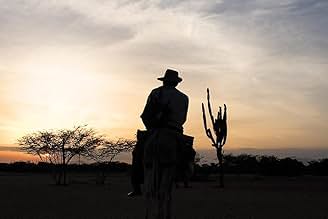
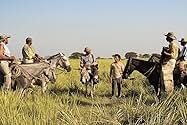
By the film's title and subject, I was not expecting an action film, I knew it would move slow. Maybe because of my low expectations I found this film truly wonderful! The film shows the great variety of the region and its people. The different languages and accents. The mountain and river scenes were great. The regions of Magdalena, César and Guajira are beautifully depicted.
The story was good enough for me. I liked the questions that are left unanswered. But clearly, for me, the scenery more than carried this film.
By the film's title and subject, I was not expecting an action film, I knew it would move slow. Maybe because of my low expectations I found this film truly wonderful! The film shows the great variety of the region and its people. The different languages and accents. The mountain and river scenes were great. The regions of Magdalena, César and Guajira are beautifully depicted.
The story was good enough for me. I liked the questions that are left unanswered. But clearly, for me, the scenery more than carried this film.
the things that are not said or done are the most important
there is a certain depth and a certain shallowness in this movie. i am going to speak about the first.
the little boy chasing his master is not supposed to be getting something explicit, as somebody commented here. the very fact that he has a nervous breakdown in the middle of the story, is enough teaching. As consequence, he tries his own path and is very bold in doing so. Although the story will not allow him to follow this type of courage yet, he does try. This is one of the most important things for him. Saying that I CAN DO IT.
the second thing the boy does get, although the average spectator does not seem to see this, is that the experience is not refused to him by his master. the master constantly taunts him, denies him, etc. as the boy says, but this is just a very select and appropriate way that this great master treats his maybe even greater apprentice. his art is no ordinary school, it's also a way of living, of understanding your place in society, etc. Although this seems very romantic and select, it's the way he does it, and not by being practical, sociable, etc.
the things that are not said or done are the most important. that's why a lot of people don't get this film at all. it's not for everybody. you must be a little rebel and also you must have already followed your rebellion a little in order to get the film.
the boy will also get a full image of his master by the end of the film, a master with many weaknesses, except his talent and spiritual endurance.
the ending has a very special atmosphere. it is a sentimental ending. the dead master teaches the living one a very nice lesson, through his living wife and children. the living one gets to teach the young apprentice a lesson, although still not very explicit (there is only one glaze into the apprentice eyes). it is the first time the master is not singing for money or in order not to get killed, and it is still not for such reasons as pleasure or love. it's a very special reason, or reasons. I see it as a duty.. art becomes a duty for those who are masters. it's not just money or entertainment or ordinary love. it's a duty to God, to true love, to life and to innocence.
i really like the way characters keep to their course in this classical movie, have some kind of modesty in them and are not very informed about the future. the mother sends the boy to the troubadour master, because she knows he can teach him things she cannot. the master itself does not control the situation very well, almost dies or is in the danger to die many times and always keeps this side of him in which he himself is an appearance. The boy is the most risk assuming character, more appropriate to his age, and manages to do well in very difficult situations, like a hero, but without really knowing where he heads to. He admits that in front of a woman who asks him why he made all this long journey. He sincerely admits 'I don't know'.
the director himself portrays beautifully a lot of situations and traditions in which life or beauty surpasses logic and when he himself would admit the same thing as the boy: 'I don't know'
the little boy chasing his master is not supposed to be getting something explicit, as somebody commented here. the very fact that he has a nervous breakdown in the middle of the story, is enough teaching. As consequence, he tries his own path and is very bold in doing so. Although the story will not allow him to follow this type of courage yet, he does try. This is one of the most important things for him. Saying that I CAN DO IT.
the second thing the boy does get, although the average spectator does not seem to see this, is that the experience is not refused to him by his master. the master constantly taunts him, denies him, etc. as the boy says, but this is just a very select and appropriate way that this great master treats his maybe even greater apprentice. his art is no ordinary school, it's also a way of living, of understanding your place in society, etc. Although this seems very romantic and select, it's the way he does it, and not by being practical, sociable, etc.
the things that are not said or done are the most important. that's why a lot of people don't get this film at all. it's not for everybody. you must be a little rebel and also you must have already followed your rebellion a little in order to get the film.
the boy will also get a full image of his master by the end of the film, a master with many weaknesses, except his talent and spiritual endurance.
the ending has a very special atmosphere. it is a sentimental ending. the dead master teaches the living one a very nice lesson, through his living wife and children. the living one gets to teach the young apprentice a lesson, although still not very explicit (there is only one glaze into the apprentice eyes). it is the first time the master is not singing for money or in order not to get killed, and it is still not for such reasons as pleasure or love. it's a very special reason, or reasons. I see it as a duty.. art becomes a duty for those who are masters. it's not just money or entertainment or ordinary love. it's a duty to God, to true love, to life and to innocence.
i really like the way characters keep to their course in this classical movie, have some kind of modesty in them and are not very informed about the future. the mother sends the boy to the troubadour master, because she knows he can teach him things she cannot. the master itself does not control the situation very well, almost dies or is in the danger to die many times and always keeps this side of him in which he himself is an appearance. The boy is the most risk assuming character, more appropriate to his age, and manages to do well in very difficult situations, like a hero, but without really knowing where he heads to. He admits that in front of a woman who asks him why he made all this long journey. He sincerely admits 'I don't know'.
the director himself portrays beautifully a lot of situations and traditions in which life or beauty surpasses logic and when he himself would admit the same thing as the boy: 'I don't know'


Did you know
- TriviaColombia's official submission to 82nd Academy Award's Foreign Language in 2010.
- ConnectionsFeatured in TCM Guest Programmer: Patton Oswalt (2013)
- How long is The Wind Journeys?Powered by Alexa
Details
- Release date
- Countries of origin
- Official site
- Language
- Also known as
- Путешествия ветра
- Filming locations
- Production companies
- See more company credits at IMDbPro
Box office
- Gross worldwide
- $10,988
- Runtime
- 1h 57m(117 min)
- Color
- Sound mix
- Aspect ratio
- 2.35 : 1
Contribute to this page
Suggest an edit or add missing content